

$9 Billion in Iranian Shadow Banking Flows Through U.S. Banks Despite Sanctions
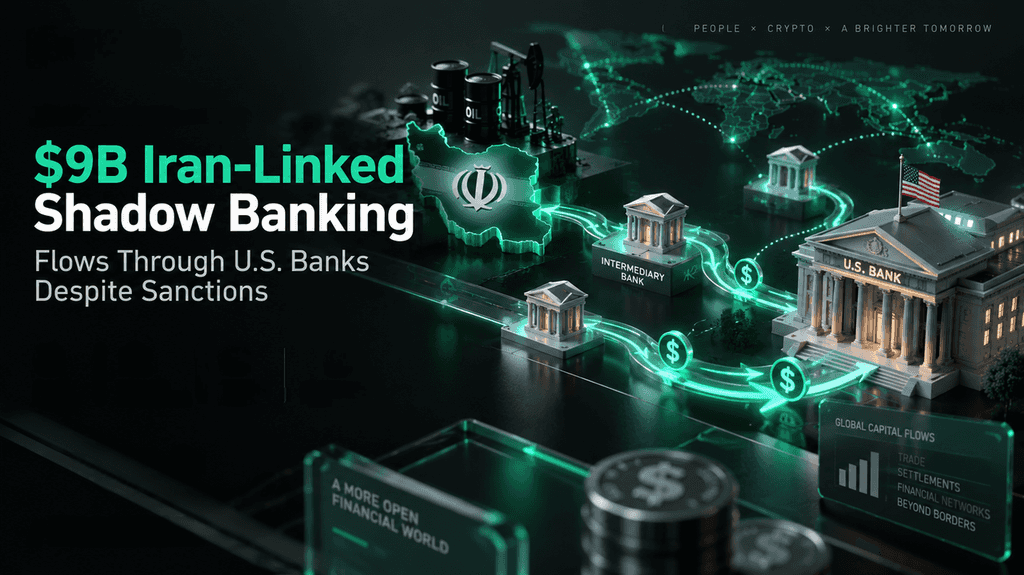
Iran-linked financial networks have come under renewed scrutiny after the U.S. Financial Crimes Enforcement Network (FinCEN) identified approximately $9 billion in potential Iranian shadow banking activity that passed through U.S. correspondent accounts in 2024. The finding highlights how Iran-linked entities can maintain indirect access to the international dollar system despite extensive U.S. sanctions, using foreign companies, overseas banks, oil-trading networks and financial intermediaries rather than relying on straightforward transfers from Iranian banks. FinCEN’s analysis covered 2,027 transactions valued at $500,000 or more, but the agency cautions that Bank Secrecy Act data can include attempted, completed, legal and potentially illicit transactions. As a result, the $9 billion figure should not be interpreted as proof that every transaction violated sanctions or that every financial institution involved knowingly facilitated prohibited activity.
The issue has become increasingly relevant in 2026 as the U.S. Treasury intensifies efforts to cut Iran-linked financial networks off from international banking. Operation Economic Outcast, launched on August 24, has expanded the focus from sanctioned Iranian entities to foreign banks, facilitators, correspondent relationships and commercial networks that U.S. authorities allege help Iran move funds internationally. Understanding these financial channels also matters to digital-asset participants because anti-money laundering in crypto increasingly intersects with sanctions screening, transaction monitoring and cross-border financial compliance. As traditional finance and digital assets become more interconnected, regulators are paying closer attention to how funds can move between banking networks, stablecoins and other payment infrastructure.
How Did $9 Billion in Iran-Linked Shadow Banking Flow Through U.S. Banks Despite Sanctions?
The central point behind the $9 billion figure is often misunderstood. FinCEN did not report that Iranian banks simply maintained ordinary accounts in the United States and directly transferred $9 billion. Instead, the agency identified potential Iran-linked activity that passed through correspondent accounts maintained at U.S.-based financial institutions, demonstrating how international dollar settlement can create a U.S. financial-system connection even when the companies conducting a transaction are located overseas. This distinction is important because correspondent banking sits behind a substantial amount of global trade and cross-border payments, allowing foreign financial institutions to access currencies and settlement infrastructure they may not provide directly themselves.
How Correspondent Banking Gave Iran-Linked Transactions a U.S. Financial Nexus
Correspondent banking allows one financial institution to provide services such as payment settlement, dollar clearing and cross-border transfers for another bank. A foreign bank may therefore maintain a correspondent account at a U.S. bank so its customers can make dollar-denominated international payments. When an overseas company sends dollars through that foreign institution, part of the transaction can pass through the U.S. financial system even if neither commercial counterparty is physically located in the United States. This structure helps explain why sanctions compliance can extend beyond entities with a direct physical presence in America.
FinCEN found that Iran-linked networks frequently involved foreign companies and financial institutions across multiple jurisdictions before funds reached U.S. correspondent accounts. Its analysis also identified $534 million transferred from U.S. bank accounts to Iran-linked entities by two foreign companies, along with $361 million involving foreign branches of U.S. financial institutions and $174 million involving foreign subsidiaries. These figures represent specific U.S.-nexus categories within the wider dataset and should not be interpreted as evidence that U.S. banks knowingly facilitated prohibited transactions. Instead, they demonstrate how complex international payment chains can create multiple points where sanctions screening, customer due diligence and transaction monitoring become relevant.
Where the $9 Billion in Potential Shadow Banking Activity Was Concentrated
The financial flows were heavily concentrated in major international trading and financial centres. FinCEN identified the UAE, Hong Kong and Singapore as particularly important locations for companies connected to suspected Iranian shadow banking. The agency found that UAE-based companies handled approximately $6.4 billion of activity, while Hong Kong-based companies were associated with approximately $4.8 billion and Singapore-based companies with around $2.2 billion. These figures illustrate the importance of major commercial hubs where international trading companies, financial institutions and cross-border payment networks frequently interact.
Several findings help explain the international structure of the network:
-
Companies in the UAE received approximately $5.6 billion, with 99% of the UAE companies identified in that part of the analysis located in Dubai.
-
Hong Kong-based companies originated approximately $4.4 billion in wire transfers, with much of the activity involving shell companies using China-based non-resident accounts.
-
Singapore-based companies handled approximately $2.2 billion, with oil companies responsible for most of that activity.
-
A relatively small group of 166 Iran-linked companies accounted for 95% of activity in FinCEN's dataset.
The concentration of activity among a limited number of companies and jurisdictions helps regulators focus on beneficial ownership, banking relationships and recurring transaction patterns rather than attempting to identify Iranian exposure solely from the name or location of an individual payment. It also highlights why financial institutions increasingly assess networks of counterparties rather than reviewing transactions in isolation. Repeated relationships between companies, banks and jurisdictions can provide important context when identifying potential sanctions-evasion risks.
How Iran Uses Shell Companies, Oil Networks and U.S. Correspondent Banking to Move Money Globally
Iran-linked shadow banking networks can combine front companies, commodity trading, exchange houses and foreign financial institutions to create layers between the original source of money and its eventual recipient. FinCEN defines Iranian shadow banking in this context as networks of front companies, banks and money exchangers used to bypass sanctions and banking controls. That structure can allow sanctioned entities to interact indirectly with international commerce while making the underlying Iran connection more difficult for individual financial institutions to identify. The complexity of these arrangements is one reason sanctions enforcement increasingly focuses on ownership structures, transaction behaviour and relationships between apparently unrelated businesses.
How Shell Companies Can Obscure the Beneficial Owner of a Transaction
FinCEN found that likely shell companies played the largest role in the activity it examined, transacting approximately $5 billion, or 56% of total funds in the dataset. The agency uses the term “likely shell company” for entities displaying indicators such as little verifiable business activity, limited online presence or use of an address shared with multiple companies. Shell structures are not inherently evidence of criminal conduct, but opaque ownership and limited genuine business activity can increase sanctions and anti-money-laundering risks. Identifying who ultimately owns or controls a business can therefore be essential when assessing whether a transaction has connections to sanctioned parties.
FinCEN found that likely shell companies sent approximately $4.2 billion, much of it through China-based non-resident accounts operated by Hong Kong entities, while UAE-based shell companies were significant recipients. By placing companies, bank accounts and counterparties across several jurisdictions, a network can make it more difficult to determine who ultimately controls a payment or benefits economically from it.
Why Iranian Oil, Shipping and Commodity Networks Matter
Oil remains central to the shadow-banking picture because international petroleum sales can generate large amounts of foreign currency that must subsequently be transferred, stored or used to finance purchases. FinCEN identified dozens of foreign oil companies that appeared to be Iranian front companies and found that Iran-linked oil companies transacted approximately $4 billion, or 44% of the total dataset. UAE-based oil companies accounted for about $2.4 billion of that amount, while Singapore-based oil companies accounted for roughly $1 billion. The scale of these transactions explains why petroleum trading, shipping routes and commodity payments remain major areas of U.S. sanctions enforcement.
Other businesses can serve different functions within the wider network:
-
Shipping companies transacted about $707 million potentially connected to the transportation of sanctioned Iranian oil and petrochemicals.
-
Investment companies handled approximately $665 million potentially linked to access to international investment markets.
-
Companies potentially involved in acquiring export-controlled technology transacted about $413 million.
-
FinCEN also identified international legal and commercial intermediaries involved in parts of the oil-shipping ecosystem.
These categories may overlap and therefore should not be added together as separate components of the $9 billion total. They instead illustrate the variety of commercial structures potentially involved in moving, investing or spending Iran-linked funds. Different businesses can perform different roles within the same financial chain, from generating revenue through commodity sales to transporting goods, receiving payments or purchasing equipment abroad.
Why Dollar Clearing Remains Important for Iran Sanctions Enforcement
The global importance of the U.S. dollar means sanctions enforcement can extend far beyond America's borders. A transaction between businesses in Asia or the Middle East may still rely on a foreign bank's U.S. correspondent relationship to settle a dollar payment. That creates a potential enforcement point for FinCEN, OFAC and U.S. financial institutions even when the underlying parties have no direct U.S. presence. Access to dollar clearing is therefore one of the most significant links between international commerce and the U.S. sanctions framework.
For Iran-linked networks, concealing the ultimate beneficiary before funds enter dollar-clearing channels can make individual transactions appear less obviously connected to a sanctioned party. For regulators, however, repeated counterparties, shared addresses, unusual transaction volumes and relationships between exchange houses, front companies and foreign banks can reveal broader patterns. FinCEN has urged financial institutions to monitor these types of indicators when assessing possible Iranian oil smuggling, shadow banking and weapons-procurement activity.
How FinCEN, U.S. Treasury and Operation Economic Outcast Are Targeting Iran’s Shadow Banking Network
U.S. authorities are increasingly targeting the financial infrastructure around Iran's sanctions-evasion networks, not just entities based inside Iran. FinCEN can use financial intelligence and correspondent-account measures, while Treasury's Office of Foreign Assets Control can impose sanctions on foreign banks, businesses and facilitators. Operation Economic Outcast has brought these tools together in a broader 2026 campaign focused on disrupting the foreign financial relationships Treasury says allow Iran to maintain international economic access. The strategy reflects a wider shift toward targeting the intermediaries that provide banking, commercial and logistical support rather than concentrating enforcement exclusively on sanctioned Iranian institutions.
FinCEN Moves to Restrict Banque Misr UAE’s U.S. Banking Access
On August 28, 2026, FinCEN proposed revoking Banque Misr UAE's correspondent banking access to U.S. financial institutions. The Treasury said the UAE operation processed approximately $1.8 billion for 103 companies potentially associated with Iranian shadow banking networks between January 2024 and June 2026. The proposal applies specifically to Banque Misr's UAE operation rather than automatically extending to the bank's operations in other countries, an important distinction when describing the enforcement action. Restricting correspondent access can be significant because it can limit a foreign financial institution's ability to process U.S. dollar transactions through the American banking system.
Treasury Expands Enforcement to Foreign Banks and Financial Facilitators
The campaign expanded beyond the UAE on September 4, when OFAC designated Türkiye-based Golden Global Bank and its subsidiaries. The Treasury alleged that the institution facilitated tens of millions of dollars in transactions for the IRGC-QF and provided correspondent-banking access that allowed Iran-linked funds to move internationally. The action demonstrates how Operation Economic Outcast can target third-country financial institutions when the Treasury concludes they are providing material banking access to sanctioned Iranian interests. It also sends a broader compliance signal to foreign institutions that indirect relationships with sanctioned networks can create exposure to U.S. financial restrictions.
Operation Economic Outcast Broadens Beyond Banking Networks
The enforcement campaign continued to widen on September 8, 2026, when the Treasury sanctioned 36 targets connected to Iran's aviation sector and FinCEN issued an alert asking financial institutions to identify procurement networks supporting Iranian aviation. The Treasury said the measures covered front companies, foreign intermediaries and transshipment routes allegedly used to acquire aircraft and sensitive technology. The latest action suggests Operation Economic Outcast is evolving from a narrowly financial initiative into a broader campaign against the banking, commercial, logistics and procurement infrastructure that U.S. authorities believe supports Iran's access to international markets.
The expansion beyond traditional banking also shows how modern sanctions enforcement can involve multiple parts of the global economy simultaneously. Financial institutions, commodity traders, logistics providers and technology suppliers may all become relevant when authorities investigate how sanctioned entities obtain revenue or purchase restricted goods. This broader approach could make counterparty screening and beneficial-ownership analysis increasingly important for companies operating across international markets.
Conclusion
The $9 billion Iranian shadow banking finding demonstrates how sanctions enforcement has become increasingly dependent on understanding complex international payment networks rather than simply blocking direct transactions involving Iranian banks. FinCEN's analysis shows that potential Iran-linked financial activity can travel through shell companies, oil traders, exchange houses and overseas banks before reaching U.S. correspondent accounts, creating indirect access to the dollar-based financial system. At the same time, the agency's methodology is an important qualification: the figure represents potential shadow-banking activity identified through financial reporting and should not be treated as proof that every transaction was illegal or that U.S. banks knowingly assisted Iran. The distinction is essential for understanding both the scale of the findings and their regulatory significance.
The launch of Operation Economic Outcast has shifted attention toward the foreign institutions and facilitators that Washington believes make these networks possible. Actions involving Banque Misr UAE, Golden Global Bank and Iran-related aviation networks show that U.S. enforcement is increasingly extending across correspondent banking, commercial intermediaries and international procurement. For banks, businesses and crypto-market participants following real-time crypto market data, sanctions and geopolitical developments form part of the wider financial environment that can influence risk sentiment and regulatory scrutiny. However, Iran-related enforcement measures alone should not be treated as a reliable predictor of Bitcoin or broader cryptocurrency market direction.
🔥 Beyond the Headlines: What KuCoin 5.0 Means for You
Market news moves fast — but where you act on it matters just as much. This October, KuCoin launches KuCoin 5.0, transforming KuCoin into a rebuilt platform. Here's what actually changes for you:
-
One account for everything. Older platforms split your money across separate "spot," "margin," and "futures" accounts and expected you to understand why. KuCoin 5.0's unified account removes that entirely — deposit once, and everything is simply there.
-
Stocks, indices, and commodities. KuCoin 5.0 expands beyond crypto into global markets. When crypto chops sideways and equities rally (or the reverse), you rotate in minutes instead of opening a brokerage account and waiting days for fiat rails.
-
Real-world assets (RWA). Tokenized exposure to traditional assets like commodities, right inside your crypto account. One of the fastest-growing segments in global finance is no longer reserved for institutions — you access it from the same balance you trade with.
-
Earn while you learn. Not ready to trade? KCUSD lets your stablecoins earn daily, auto-compounding interest. The lowest-stress way to put your idle deposit to work for 4% yield.
-
An AI assistant in plain language. Ask questions, get market context, understand what you're looking at — built into the platform, no jargon required.
-
An app that doesn't overwhelm. Faster, cleaner, and consistent — intuitive from the first tap, not after a tutorial.
-
Safety you can check, not just trust. A MiCAR-licensed EU entity, Proof of Reserves you can verify yourself, and internationally certified security (SOC 2 Type II, ISO 27001:2022).
Create your account in minutes — and start on the platform built for where crypto is going, not where it's been.
FAQs
What is Iranian shadow banking?
Iranian shadow banking refers to networks of front companies, banks, exchange houses and other intermediaries used to move funds while bypassing sanctions and banking restrictions. These networks can allow Iran-linked entities to access foreign currencies and international financial services through businesses and accounts located outside Iran. The term generally describes financial structures that make the underlying source, destination or beneficiary of funds more difficult to identify.
What does FinCEN’s $9 billion figure actually represent?
The figure represents approximately $9 billion in potential Iranian shadow banking activity identified during 2024. FinCEN's final dataset contained 2,027 transactions valued at $500,000 or more. Because the analysis relies partly on Bank Secrecy Act reporting, it can include attempted, completed, legal and potentially illicit activity. The amount therefore represents activity identified for analysis rather than a finding that the entire $9 billion consisted of proven sanctions violations.
Did U.S. banks knowingly transfer $9 billion for Iran?
FinCEN's report does not establish that U.S. banks knowingly transferred $9 billion for sanctioned Iranian entities. The broader finding is that potential shadow-banking funds passed through U.S. correspondent accounts used by foreign financial institutions. Correspondent banking can provide access to dollar settlement without the underlying foreign customer holding a direct account at an American bank, which is why complex international payments can create a U.S. financial-system connection.
Why are U.S. correspondent accounts important for Iran sanctions?
Correspondent accounts allow foreign banks to use U.S. financial institutions for services such as dollar clearing and international payment settlement. An overseas transaction can therefore acquire a U.S. financial nexus even when both commercial parties operate outside the United States. This makes correspondent banking an important area for sanctions compliance because U.S. institutions may need to evaluate foreign counterparties, transaction patterns and potential connections to sanctioned entities.
Why does Iranian shadow banking matter to crypto investors?
Iranian shadow banking matters to crypto investors because sanctions compliance increasingly extends across crypto exchanges, stablecoin infrastructure, wallets and digital-asset service providers as well as conventional banks. Enforcement actions can increase scrutiny of particular counterparties, transaction routes or digital-asset addresses connected to sanctioned entities. However, sanctions developments should be viewed as one part of the broader geopolitical and regulatory environment rather than a standalone signal for Bitcoin or cryptocurrency prices.
Disclaimer
The information provided on this page may originate from third-party sources and does not necessarily represent the views or opinions of KuCoin. This content is intended solely for general informational purposes and should not be considered financial, investment, or professional advice. KuCoin does not guarantee the accuracy, completeness, or reliability of the information, and is not responsible for any errors, omissions, or outcomes resulting from its use. Investing in digital assets carries inherent risks. Please carefully evaluate your risk tolerance and financial situation before making any investment decisions. For further details, please consult KuCoin’s Terms of Use and Risk Disclosure.