

ZEC Mining Pool vs Solo Mining vs Cloud Mining: Which Is Better for Beginners?
Overview
- Compare solo ZEC mining, Zcash mining pools, and cloud mining across hardware, costs, control, output stability, and beginner difficulty.
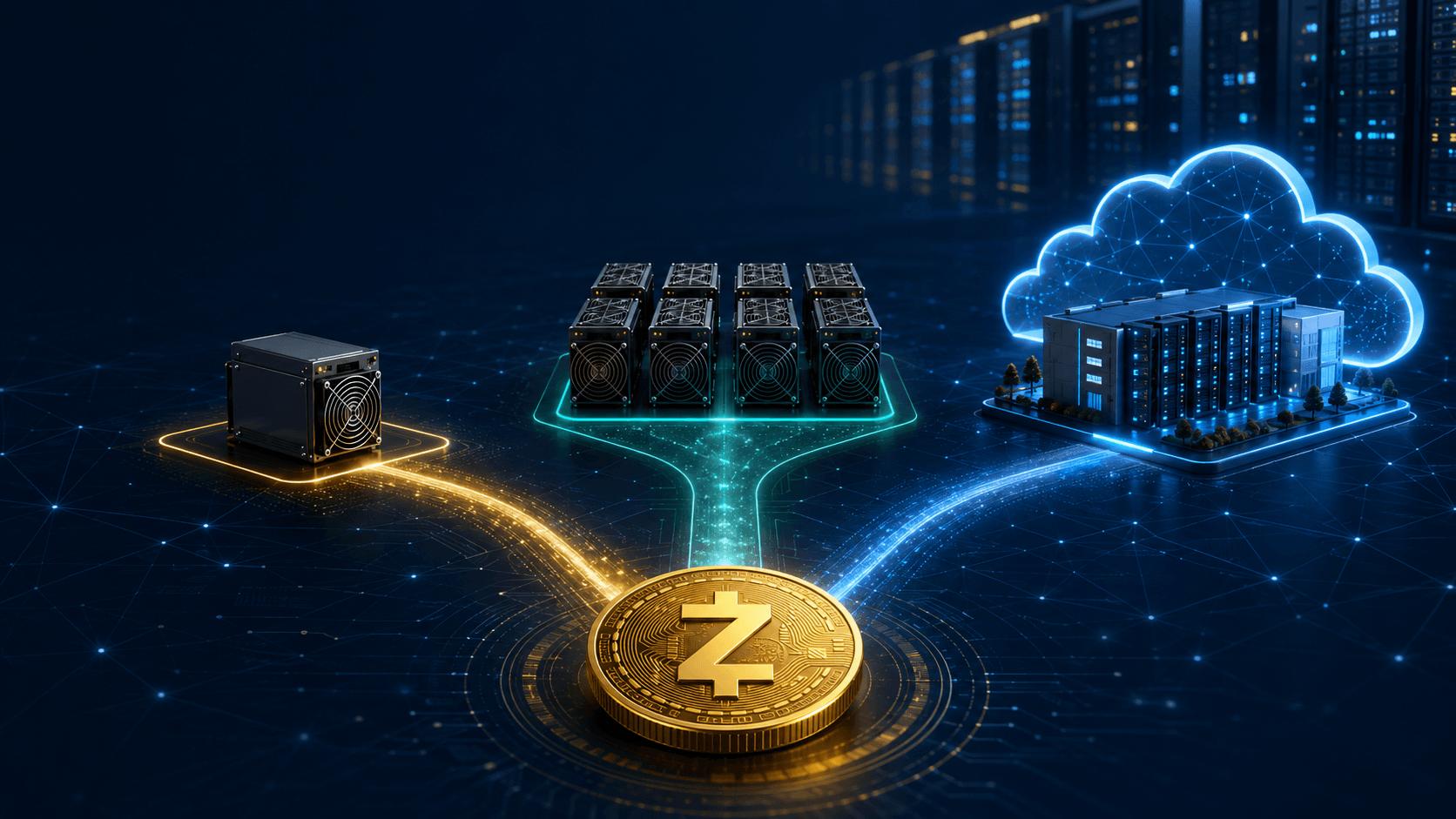
Once a beginner understands what ZEC mining is, the next question is usually practical: should I mine alone, join a mining pool, or use cloud mining?
All three methods can connect a user to Proof-of-Work mining, but the experience is very different. The best choice depends on how much control, technical work, capital, and operating responsibility the user wants.
|
Beginner takeaway: Choose the operating model before comparing expected output. A high-control option also brings more hardware, power, and maintenance responsibility.
|
Option 1: Solo ZEC Mining
Solo mining means operating mining hardware and attempting to find blocks without pooling your hashrate with other miners. If your machine finds a valid block, you receive the miner portion of the reward according to the network rules.
The appeal is control: you select the hardware, configure the software, choose the wallet, and avoid sharing a pool’s block reward. The challenge is variance. A small share of network hashrate may go a long time without finding a block. That makes solo mining difficult for beginners who expect regular output.
-
Best for: technically experienced operators with meaningful hashrate and infrastructure.
-
Main advantage: maximum operational control.
-
Main pain point: irregular rewards and full responsibility for hardware, electricity, cooling, and maintenance.
Option 2: Join a ZEC Mining Pool
A mining pool combines the hashrate of many miners. The pool has a higher collective chance of finding blocks, then distributes rewards according to contributed work and its settlement rules.
Compared with solo mining, a pool usually makes output more frequent and predictable. But the user still needs ASIC hardware, electricity, a stable operating environment, pool configuration, wallet setup, and ongoing monitoring.
-
Best for: users who want to own and operate hardware but prefer lower reward variance.
-
Main advantage: more frequent distributions than solo mining for a small operator.
-
Main pain point: hardware and operations remain the user’s responsibility, and pool fees or payout rules apply.
Option 3: ZEC Cloud Mining
Cloud mining allows users to purchase or rent hashrate from a managed service instead of buying and operating physical mining machines. The service handles mining infrastructure, electricity operations, machine maintenance, and pool connectivity; the user focuses on plan selection and account management.
This lowers the technical barrier, but it also changes the risk profile. The user has less direct control over hardware and must evaluate the provider, fee structure, hashrate transparency, electricity rules, settlement method, and contract conditions.
-
Best for: beginners or users who want mining exposure without operating equipment.
-
Main advantage: no ASIC purchase, no home noise or heat, and no mining-farm maintenance.
-
Main pain point: provider and contract risk require careful due diligence.
Side-by-Side Comparison
|
Decision factor
|
Solo mining
|
Mining pool
|
Cloud mining
|
|
Buy ASIC hardware
|
Required
|
Required
|
Not required
|
|
Manage electricity and cooling
|
User
|
User or host
|
Provider
|
|
Technical setup
|
High
|
Medium–high
|
Low
|
|
Reward pattern
|
Highly variable
|
More frequent
|
Credited under service rules
|
|
Hardware control
|
Highest
|
High
|
Limited
|
|
Upfront complexity
|
Highest
|
High
|
Lower
|
|
Key risk
|
Variance and operations
|
Operations and pool terms
|
Provider, fees, and contract terms
|
Which Option Fits Your Situation?
-
Choose solo mining if you already understand ASIC operations, have suitable power and cooling, and can tolerate irregular rewards.
-
Choose a mining pool if you want to own hardware and perform operations but prefer a smoother distribution pattern.
-
Consider cloud mining if your main barrier is hardware cost, technical setup, noise, heat, or maintenance.
-
Do not choose any option only because of one estimated-return number. Compare total costs, responsibilities, and downside scenarios.
What Beginners Should Check in a Cloud-Mining Service
Cloud mining simplifies operations, but users should not skip due diligence. Before purchasing hashrate, check:
-
Provider identity and reputation
-
Whether the service clearly describes real hashrate and mining infrastructure
-
Hashrate fee, electricity fee, and any other charges
-
Plan duration and mining start timeline
-
How estimated output is calculated and disclosed
-
How daily output and fee deductions can be verified
-
What happens during electricity shortages or service interruptions
-
Withdrawal, account, and settlement rules
How KuMining Simplifies the Beginner Path
KuMining offers managed ZEC cloud mining within the KuCoin ecosystem. Instead of purchasing an ASIC and connecting it to a pool, users can follow a guided process:
-
Open a dedicated Mining Account.
-
Enter KuMining and choose ZEC in the Market section.
-
Use Lite Mode for budget-based recommendations or Pro Mode for more independent configuration.
-
Pay the hashrate fee and review the mining start time.
-
Prepay electricity in the Mining Account or enable Auto Transfer.
-
View daily and cumulative ZEC output in the Mining Account.
The standard timeline is T day for payment and electricity prepayment, T + 1 for machines to go online, and T + 2 for the first output credit. This removes the hardware setup stage while keeping output and electricity records visible in one account.
Cloud Mining Solves Operational Pain—not Network Risk
A professional cloud-mining service can solve several beginner pain points: finding machines, building a safe power environment, controlling heat and noise, maintaining uptime, and configuring a pool. It cannot remove ZEC price volatility, network difficulty changes, block reward changes, or every form of contract risk.
That distinction matters. A good beginner product makes complexity manageable and information visible; it does not promise that external network conditions will never change.
Final Thoughts
Solo mining, pool mining, and cloud mining are not simply three pricing options. They are three different levels of operational responsibility.
For a technical operator, hardware ownership may be worth the work. For a beginner whose biggest pain points are equipment, electricity, noise, and maintenance, cloud mining can offer a more accessible starting point—provided the user understands the fees, rules, and dynamic nature of mining output.
|
Start with the Mining Model That Fits You
Explore KuMining ZEC cloud mining if you want managed infrastructure, flexible plan selection, and daily output tracking without buying an ASIC. Start Mining with KuMining →
|
Frequently Asked Questions
Is solo ZEC mining better than a pool?
It offers more control but much higher reward variance. A pool is generally more practical for smaller hardware operators who want more frequent distributions.
Do I need an ASIC to join a ZEC mining pool?
Under current network conditions, the official Zcash guide says competitive mining requires specialized ASIC hardware.
Does ZEC cloud mining mean I own a mining machine?
Usually not. In a hashrate plan, the user purchases access to computing power while the provider manages the physical infrastructure.