

BTC to PKR Investment Guide: How to Legally Buy and Trade Bitcoin in Pakistan?
Introduction: The Special Significance of BTC to PKR
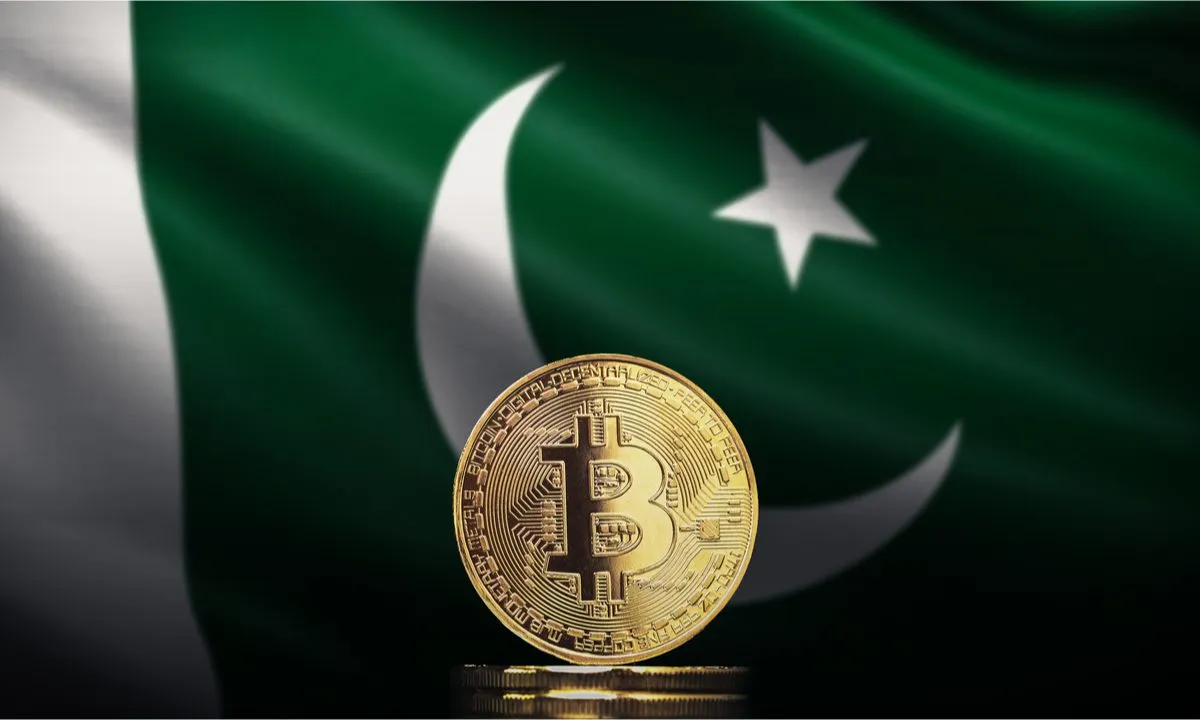
Source:PYMNTS
In the wave of digital asset globalization, Bitcoin (BTC) has become a globally recognized store of value. However, for investors and citizens in Pakistan, the price of BTC against the Pakistani Rupee (BTC to PKR) is more than just a trading figure; it carries a deeper economic significance.
The Pakistani Rupee (PKR) has long faced immense inflationary pressures and currency devaluation risks. In this macroeconomic context, Bitcoin, as an inflation-resistant, non-sovereign asset, has its appeal magnified. For local users, the volatility of the BTC to PKR exchange rate is a key indicator of whether their purchasing power is being effectively hedged. Understanding and navigating the dynamics of BTC to PKR is a core challenge for Pakistani investors aiming for asset preservation and growth.
This comprehensive guide will analyze the macroeconomic factors influencing the BTC to PKR price and provide practical strategies for safely and legally purchasing and trading Bitcoin in Pakistan.
Part I: Macro Factors Influencing the BTC to PKR Price
The price movement of BTC to PKR is a combined result of global crypto market trends and domestic economic pressures in Pakistan.
Global Price Baseline: The Dominance of the US Dollar
Firstly, Bitcoin's price benchmark is always BTC/USD. The global BTC price is determined by the international market denominated in US Dollars, influenced by US monetary policy, global liquidity, and institutional investor sentiment.
-
Transmission Mechanism: An increase in the BTC/USD rate in the international market will directly drive up the BTC to PKR price, and vice versa. However, due to domestic economic factors, this transmission is not a simple linear relationship.
Domestic Economic Pressure: The Amplifying Effect of Rupee Devaluation
The volatility of the Pakistani Rupee (PKR), persistent high inflation, and strained foreign reserves are the most crucial domestic factors amplifying changes in the BTC to PKR price.
-
Inflation Hedge Demand: When inflation is high in Pakistan, domestic demand for hard assets like the US Dollar, gold, and Bitcoin surges. Investors seek to exchange PKR for BTC to preserve value, which pushes up the PKR-denominated BTC to PKR price.
-
Currency Devaluation: If the Rupee depreciates against the US Dollar (i.e., PKR weakens), the BTC to PKR price will automatically rise, even if the international BTC/USD price remains constant. The persistent weakness of the Rupee makes Bitcoin appear to be an asset that passively appreciates for Pakistani investors.
Regulation and Tax Environment: Uncertainty Driving Market Sentiment
The regulatory environment for cryptocurrency in Pakistan remains uncertain. While the State Bank of Pakistan (SBP) maintains a cautious official stance, market activity has not ceased.
-
Latest Regulatory Dynamics (2025): The SBP continues to explore the possibility of a Central Bank Digital Currency (CBDC) but remains cautious about private crypto transactions. Meanwhile, agencies like the Securities and Exchange Commission of Pakistan (SECP) are focusing on taxation issues related to trading gains, suggesting future capital gains tax regulations may be introduced. Any official announcement could cause short-term pressure on the BTC to PKR price.
-
Informal Economy and Premium: Due to restrictions on direct bank integration with international crypto exchanges, a large portion of BTC to PKR transactions occur in P2P markets. This can lead to a Local Premium, where the PKR-denominated Bitcoin price is higher than its theoretical USD conversion.
Part II: Practical BTC to PKR Investment Guide
Given Pakistan's unique regulatory and economic environment, safely and effectively investing in BTC to PKR requires adherence to specific strategies and channels.
Choosing Purchase Channels and Assessing Risks
In Pakistan, buying Bitcoin primarily relies on the following channels:
-
International Exchange P2P Markets (Primary Channel):
-
Platforms: Major international exchanges like KuCoin, Binance, and Bybit.
-
Mechanism: Users engage in P2P (Peer-to-Peer) trading services, using local payment methods like bank transfers, Easypaisa, or JazzCash to exchange PKR directly with verified merchants for BTC or USDT.
-
Safety: This is the most common and relatively secure way to transact BTC to PKR. Platforms provide Escrow Services, ensuring funds are locked and protected until the transaction is complete.
-
-
Local OTC or Informal Networks:
-
Risk: Lacks regulation and third-party protection; the risk of fraud is extremely high and is not recommended for beginners.
-
Regardless of the channel, investors should strictly adhere to Anti-Money Laundering (AML) and Know Your Customer (KYC) requirements. Trading through compliant international platforms aids in the future transparency and legitimacy of assets.
Risk Management Strategy and Asset Allocation
Given the persistent volatility of the Rupee, investors must adopt robust risk management strategies:
-
Long-Term Holding Mindset (HODLing): As a tool against Rupee devaluation, Bitcoin's value lies in long-term holding. Investors should avoid attempting to speculate on the short-term fluctuations of BTC to PKR.
-
Dollar-Cost Averaging (DCA): Given PKR's uncertainty, DCA is the safest strategy. Investors should regularly (e.g., monthly or quarterly) convert a fixed amount of PKR into BTC, rather than attempting a large, lump-sum investment, thereby smoothing the entry cost and effectively managing the price volatility of BTC to PKR.
-
Secure Storage: Once BTC is purchased, it is crucial to withdraw it from the exchange to a personal hardware wallet (Cold Wallet) for storage. Self-custody of private keys is the golden rule for asset security in highly uncertain economic environments.
Part III: Technical Analysis and BTC to PKR Price Forecast
To forecast the BTC to PKR movement, we must combine two critical variables: Bitcoin's global technical landscape and the Rupee's macroeconomic fundamentals.
Global Technical Analysis
Current global technical analysis for Bitcoin focuses on key support and resistance levels. If BTC/USD successfully breaks through its all-time high, it will usher in a new bull cycle, which is essential for Bitcoin's value in Rupees.
Rupee Fundamentals and Price Prediction
When predicting the BTC to PKR price, the focus shifts to the trajectory of the PKR.
Assumption: If the PKR continues to depreciate by 10% against the USD over the next year, the value of your BTC to PKR assets will automatically gain 10%, even if the BTC/USD price remains unchanged. Should a global bull market begin, the increase in BTC to PKR will be the sum of the global appreciation and the Rupee's devaluation rate.
Conclusion: For Pakistani investors, the return on Bitcoin investment depends not only on the crypto market's bull and bear cycles but critically on the extent of the Rupee's weakness. Many local investors view BTC to PKR as an investment with an inherent premium based on the certainty of Rupee devaluation.
Conclusion: The Long-Term Value Proposition of BTC to PKR
In Pakistan's economic environment, trading BTC to PKR is not merely speculation; it is a financial action to hedge risk and protect family wealth. It signifies a shift in assets from a fiat system dependent on central bank and government credit toward a decentralized, hard-asset system.
International platforms like KuCoin and Binance offer secure, high-liquidity P2P channels, making it convenient for Pakistani investors to convert Rupees into a global digital asset. The key to success lies in education, risk management, and long-term holding. By understanding how the domestic economy impacts the BTC to PKR price dynamics, Pakistani investors can navigate this volatile market more wisely and achieve genuine asset preservation and wealth growth.