

CBR Permits Cryptocurrency Storage on Cold Wallets: What This Means for Russian Investors
2026/07/03 11:25:00
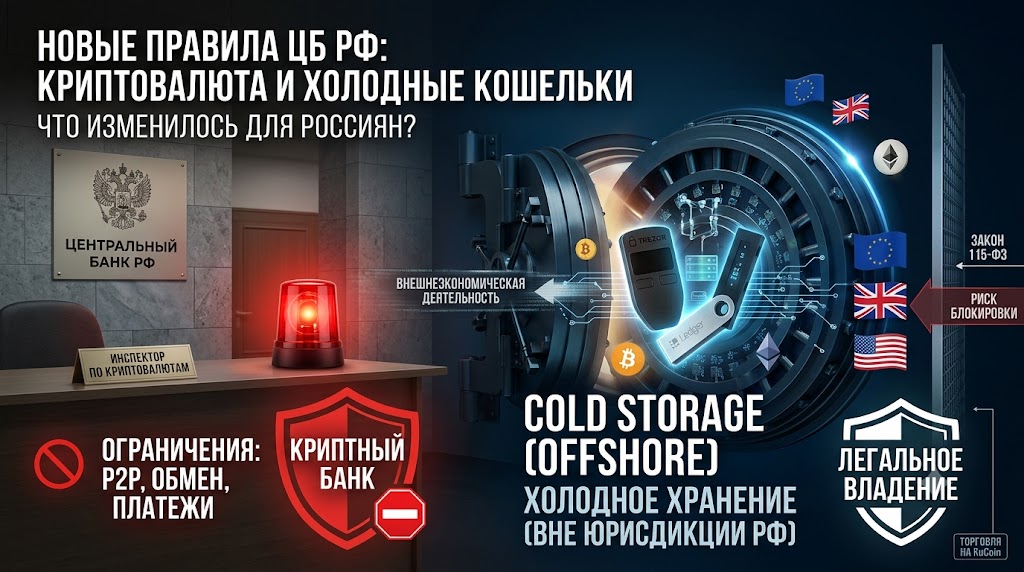
Did you know that over 13 million Russians own cryptocurrency, according to recent financial market research? A landmark statement by the Bank of Russia opens a new chapter in digital asset regulation: the regulator has officially permitted the storage of cryptocurrency on non-custodial (cold) wallets, but with a critical caveat — this space is recognized as being outside Russian jurisdiction. This decision instantly changes the game for all digital currency holders in the country, dividing operations into absolutely legal and potentially criminally punishable. Citizens retain the right to long-term coin ownership, but the use of personal wallets within the Russian financial system will now be strictly limited.
What Does Storing Cryptocurrency on Cold Wallets Outside Russian Jurisdiction Mean?
Storing cryptocurrency on cold wallets outside Russian jurisdiction means that the state officially does not consider these digital assets part of its domestic financial system. According to official explanations from the Bank of Russia published by TASS and RBC, the regulator divides cryptocurrency storage into custodial (within the country through licensed intermediaries) and self-custody (on non-custodial devices).
The legal status of such storage is built on the technical nature of the blockchain, which is confirmed by leading Russian experts. Prominent legal expert Yury Brisov notes that a unique legal compromise arises in this case: even if the physical device — for example, a Ledger or Trezor hardware wallet — is located in your Moscow apartment, legally such storage is recognized as "foreign."
The reason lies in the fact that no Russian licensed intermediary or state body has technical access to the owner's private keys. The digital asset itself exists on a decentralized blockchain network, which is not tied to any specific geographical territory. The state recognizes this technological fact, so instead of a total ban, it chooses to push non-custodial wallets into a foreign legal zone. BitOK AML service founder Dmitry Machikhin also emphasizes that the software of popular hardware solutions is registered in foreign nations, making them de facto foreign infrastructure that cannot be blocked or banned from within Russia using technical methods.
Is It Legal to Store Cryptocurrency on a Cold Wallet Inside Russia?
Yes, simple long-term storage (investment holding or HODL) of cryptocurrency on a cold or hot non-custodial wallet in Russia is completely legal. The Central Bank of the Russian Federation officially confirmed that no one is stripping citizens of their right to own digital coins on personal software and hardware wallets such as MetaMask, Trust Wallet, Ledger, or Trezor.
However, the legality of ownership is preserved only as long as the wallet is used exclusively as a safe for personal savings. The regulator introduces a strict dividing line between passive investing and active asset utilization. Any activity involving the regular receipt of payments from third parties or the constant exchange of cryptocurrency through personal addresses falls under severe restrictions.
The most serious restriction will take effect in the summer of 2027. Starting July 2027, criminal liability will be introduced in Russia for organizing illegal financial intermediation using digital currencies. If a user regularly conducts P2P transfers, engages in commercial arbitrage, or provides cryptocurrency exchange services to other individuals using their cold wallet, their actions will be qualified as a felony. Thus, the law protects the rights of ordinary long-term investors but completely criminalizes the shadow turnover and illegal business built on top of non-custodial wallets.
What Are the CBR Rules and Restrictions on Cryptocurrency Withdrawals and Transfers?
The Bank of Russia has developed strict capital movement rules that provide exclusively for a one-way inflow of cryptocurrency into the state ecosystem and tightly block reverse fund withdrawals. The movement of assets between the personal storage zone and the legal field is entirely subordinated to the interests of state control.
The basic rules for moving digital currencies consist of two key points:
-
The One-Way Gateway Principle: Russian citizens and investors have the right to officially declare their cryptocurrency reserves stored on cold wallets and transfer them to the newly created Russian digital depositories (official regulated custodial platforms). This step allows the complete legalization of capital for conducting state-approved transactions.
-
The Reverse Withdrawal Prohibition (Out-Ramp): As soon as your digital assets enter the official Russian regulated infrastructure — whether it is a digital depository, a state system, or a licensed exchanger — you lose the right to withdraw those coins back to your personal non-custodial cold wallet.
Further movement and fiat visualization of capital are possible only through a strict verification system. Withdrawing funds or transferring them from the regulated zone is allowed exclusively to other custodial accounts that have passed the KYC (Know Your Customer) procedure. These can be either domestic Russian operators or approved foreign crypto exchanges that share information with the regulator. The free exit of cryptocurrency back into the shadow of anonymous wallets is now completely blocked.
What Happens in Case of Refusal to Declare Cryptocurrency on a Cold Wallet?
A refusal to declare cryptocurrency stored on a cold wallet will not lead to an automatic technical seizure of coins, but it will completely strip the owner of legal protection and block their access to the traditional banking system of Russia. Since the state is technically incapable of monitoring non-custodial addresses, punitive measures are implemented at the intersection of the cryptocurrency world and the fiat economy.
The legal and financial consequences of failing to declare include the following critical risks:
| Risk Type | Consequences for the Owner of Undeclared Cryptocurrency |
| Judicial Protection | Complete inability to recover assets through the court in case of theft, fraud, wallet hacking, or deception by a counterparty. |
| Banking Blockade | Automatic blocking of all personal accounts and bank cards under Law 115-FZ when attempting to cash out funds via P2P. |
| Tax Sanctions | Imposition of heavy fines, penalties, and charges of tax evasion upon discovery of concealed income. |
Legal experts warn that without official confirmation of the legality of the cryptocurrency acquisition (purchase documents, statements, and the fact of declaration), the investor becomes disenfranchised before the law. If your coins are stolen by hackers, law enforcement agencies will refuse to initiate a criminal case since the object of law was not officially registered in Russian jurisdiction. Moreover, any attempt to transfer a large sum from the sale of such coins to a card from Sberbank, T-Bank, or any other Russian bank will lead to a lifetime account block without the right to restoration.
Who Is the Main Beneficiary of the Bank of Russia's New Policy?
The main and practically sole beneficiary of the CBR's new liberal policy regarding cold wallets are large Russian companies engaged in foreign economic activity (FEA), meaning importers and exporters. These changes were not created to develop the retail market or support private traders, but to solve the macro-economic tasks of the state.
The new regulation is directly integrated into a large-scale project — the EPR (Experimental Legal Regime) for cross-border settlements. Under conditions of harsh international sanctions, SWIFT system blockades, and refusals by foreign banks to accept payments from Russia, domestic companies faced the impossibility of paying for equipment and goods supplies. Permitting the use of non-custodial wallets abroad gives Russian businesses a legal tool to bypass financial restrictions.
Within the framework of the EPR, large importers can buy cryptocurrency inside Russia, withdraw it to external cold wallets, and use it for direct payment of goods to foreign suppliers. For ordinary retail investors and regular citizens, state policy remains the same — a zone of maximum control, high taxes, and strict restrictions on the daily use of digital money.
Should You Trade Cryptocurrency on KuCoin Under the New CBR Rules?
Yes, trading cryptocurrency on KuCoin under the current regulatory conditions is an optimal and safe solution for Russian users seeking to maintain a balance between personal financial freedom and international security standards. While the domestic Russian market is subjected to severe isolation and restrictions on fund withdrawals, the international KuCoin platform offers a full-fledged, flexible ecosystem for managing your digital assets.
The trading platform provides unique advantages to Russian investors:
-
Flexible Integration with Wallets: You can freely transfer funds from your cold and hot non-custodial wallets to the exchange for trading and return them back without fearing internal platform sanctions.
-
Secure P2P Market: KuCoin maintains the reliable operation of its P2P service, allowing you to quickly and safely exchange cryptocurrency for rubles in compliance with international transaction protection standards.
-
Access to Advanced Tools: Users have access to spot, futures, and margin trading, as well as unique investment products that are completely absent from the planned Russian custodial depositories.
Registering on KuCoin allows Russian investors to operate legally in the international market, diversify risks, and avoid harsh domestic traps associated with blocking reverse withdrawals. Protect your capital and get access to global liquidity today — register a trading account on KuCoin.
Conclusion
The Bank of Russia's new stance on storing cryptocurrency on cold wallets is a pragmatic step dictated by current geopolitical and economic realities, rather than a genuine easing of the regulatory course. The state has officially recognized the existence of decentralized non-custodial wallets, confirming that simple holding (HODL) of assets on devices like Ledger or Trezor is not a legal violation for citizens. Nevertheless, the regulator has built strict barriers: personal wallets are legally assigned to foreign jurisdiction, and their use within the country for regular settlements, commercial exchange, or P2P operations will be severely punished up to criminal liability starting from 2027.
The primary goal of the adopted changes lies in supporting participants of foreign economic activity through the experimental legal regime (EPR), which allows large businesses to carry out cross-border settlements to bypass sanctions. For ordinary investors, the rules are becoming clearer but simultaneously stricter. To maintain capital maneuverability, avoid blockages under Law 115-FZ, and not lose judicial protection, users will have to clearly separate anonymous storage and active trading. Under these conditions, utilizing reliable international platforms such as KuCoin becomes a key element of the strategy to protect and grow cryptocurrency savings.
Frequently Asked Questions
Do I need to pay taxes on crypto held in a cold wallet in the Russian Federation right now?
No, as long as cryptocurrency simply lies in your cold wallet and is not converted into fiat money, the obligation to pay personal income tax (PIT) does not arise. The tax is calculated and paid only at the moment of profit realization — that is, when selling digital currency for rubles or other traditional currencies.
Can my Ledger or Trezor be seized at customs when entering Russia?
No, hardware wallets are legal electronic devices, and their movement across the border of the Russian Federation is not prohibited by law. However, if the customs service suspects you of moving undeclared large volumes of cash or other valuables, additional questions may arise, but they cannot seize the device itself without legal grounds.
Am I obliged to inform the tax service about creating a wallet in MetaMask?
No, current legislation lacks a rule requiring citizens to notify the Federal Tax Service (FTS) about the mere fact of creating or opening a non-custodial wallet. Reporting obligations arise only when filing an annual tax return if the turnover on your wallets exceeded the statutory limits for the year.
Can I pay for goods inside Russia with cryptocurrency from a cold wallet?
No, the use of cryptocurrency as a means of payment for any goods, works, or services is statutorily prohibited within the territory of the Russian Federation. The Russian ruble remains the sole legal tender inside the country.
How will the crypto law affect civil servants in Russia?
For civil servants, officials, employees of law enforcement agencies, and their family members, there is an absolute ban on owning any digital financial assets and cryptocurrency. Since the CBR has categorized cold wallets under foreign jurisdiction, owning them entails immediate dismissal due to loss of trust for this category of citizens.