

XRP 2026 Bottom Price Prediction: Could XRP Hit a Bearish Floor?
2026/05/24 16:10:31
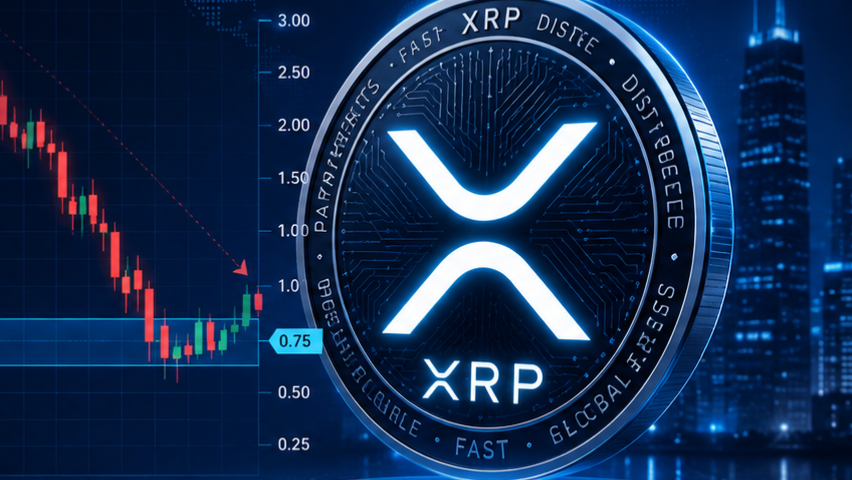
As the cryptocurrency market continues to evolve, investors and traders are closely monitoring XRP (Ripple’s native token) for potential opportunities and risks in 2026. One question dominates the discussion: what could be the bottom price for XRP if bearish conditions prevail?
Understanding possible downside levels is critical for anyone holding, trading, or planning to invest in XRP. By analyzing expert forecasts, technical support zones, macroeconomic trends, and regulatory developments, this guide offers a comprehensive view of XRP’s potential floors. It also explores mild, moderate, and extreme bear-case scenarios, providing a framework for informed decision-making and strategic risk management. Whether you are a seasoned investor or a crypto enthusiast, this analysis helps you anticipate potential challenges and prepare for the range of outcomes that XRP may face in 2026.
Introduction to XRP’s Bottom Price
Before diving into numerical ranges, it is essential to define what the bottom price actually represents.
The bottom price, often referred to as a bear-case floor, is the price level where XRP is likely to encounter strong buying support. At this point, selling pressure diminishes, and further price decline becomes less probable.
It is important to note that a bottom price is not a guaranteed prediction. Instead, it is a conditional estimate, based on various market factors such as regulatory developments, macroeconomic shifts, adoption rates, and investor sentiment. A sound understanding of these dynamics helps investors prepare for potential downside while positioning for long-term opportunities.
Bear Case Forecasts for XRP in 2026
Market analysts and institutional researchers use multiple models to project XRP’s potential bear-case scenarios. These forecasts consider historical price behavior, technical support, macroeconomic indicators, and market sentiment.
Institutional Bear Case
Institutional projections indicate that XRP’s bear-case floor could be around $1.60. This scenario assumes slower adoption of Ripple’s ecosystem, delayed or denied XRP ETFs, and broader crypto market weakness. Under these conditions, XRP faces downside risk but remains above critical psychological levels.
This estimate reflects a cautious approach, emphasizing that while XRP may decline, it is unlikely to drop to extreme lows without major market disruptions.
Deep Bear Scenarios
Some technical and macro stress models suggest that XRP could fall further, potentially revisiting $0.40–$0.80. These deep bear scenarios occur under severe stress, including regulatory uncertainty, liquidity shortages, or macroeconomic turbulence that triggers panic selling.
Although these extreme scenarios are less likely, they are crucial for risk management planning. By understanding these possibilities, investors can develop strategies to mitigate losses in case of market downturns.
AI-Driven Support Estimates
Machine learning and probabilistic models provide additional insight, suggesting that XRP may find support in the $1.20–$1.50 range. These models analyze historical price trends, volatility patterns, and trading behaviors to identify levels where XRP is likely to stabilize if adverse conditions occur.
AI-driven predictions complement traditional technical and institutional analyses, offering a more nuanced view of potential bottom price zones.
Key Technical Support Levels
Technical analysis plays a critical role in identifying potential bottom price levels for XRP. Traders and analysts frequently monitor historical support levels, volume trends, and price action to determine where the token may find stability.
-
Immediate Support: $1.25–$1.30 is a zone where buyers historically step in during pullbacks. High trading volume at this level often strengthens the floor.
-
Deeper Structural Support: $1.10–$1.15 and the psychological $1.00 level represent critical structural supports. Breaking these levels could lead to more significant price declines.
-
Panic or Stress Levels: In extreme scenarios, XRP could test $0.80–$0.60, reflecting panic-selling conditions or severe macro stress.
Understanding these technical levels helps traders anticipate potential rebounds or further downside in response to market activity.
Macro and Regulatory Factors Affecting XRP
XRP’s price does not exist in isolation. Several external factors significantly influence its downside risk:
Regulatory Uncertainty
Even after previous legal settlements with the SEC, XRP remains sensitive to regulatory developments. Future legislation affecting digital assets, stablecoins, or banking access could impact XRP’s price. Regulatory delays or unfavorable rules could increase selling pressure, pushing XRP toward its lower support zones.
Macro Risk-Off Events
Global economic conditions, including interest rate shifts, inflationary pressures, or equity market declines, often influence speculative assets like XRP. During periods of macroeconomic stress, capital tends to flow out of high-risk assets, increasing the likelihood of deeper price corrections.
Monitoring macroeconomic indicators alongside technical signals is therefore essential for anticipating potential bottoms.
Scenario Analysis: Potential Paths to the Bottom
Different scenarios can help investors visualize plausible paths to XRP’s potential floors:
Mild Bear Scenario
In a mild bear scenario, XRP may experience limited downside due to slowed adoption, minor regulatory delays, or modest market weakness. The potential floor in this scenario is $1.20–$1.60.
This scenario reflects a soft landing, where XRP experiences temporary pullbacks but avoids extreme price declines. It aligns with institutional projections for a controlled downside.
Moderate Bear Scenario
A moderate bear scenario emerges when regulatory stagnation, underperforming exchanges, or broader market underperformance contribute to selling pressure. In this case, XRP could reach $1.00–$0.80.
This range represents a more significant correction but still remains within historical support levels. Traders in this scenario may anticipate consolidation near structural support zones before any potential recovery.
Deep Stress Scenario
Under deep stress, macro recessions, liquidity drying, and institutional withdrawals could push XRP to $0.80–$0.40. This extreme scenario reflects panic-selling conditions, extended market downturns, or systemic stress in the cryptocurrency ecosystem.
Although unlikely, this scenario is important for risk planning and long-term strategy development. Investors should prepare for such possibilities by diversifying their portfolios and implementing robust risk management strategies.
Indicators That Signal a Bottom
Identifying a credible bottom requires careful observation of market behavior. Several indicators can suggest that a price floor is forming:
-
Volume Clusters: Sustained trading volume at lower price levels indicates that buyers are defending the support zone.
-
Repeated Price Wicks: When price repeatedly touches a level without closing below it, selling pressure appears weak, signaling potential stabilization.
-
Macro Improvements: Positive macroeconomic signals or renewed inflows into crypto can provide support, increasing the likelihood of a price bottom.
By monitoring these indicators, traders and investors can better anticipate when XRP might stabilize at lower levels.
Understanding Probability and Risk
XRP’s bottom price should be considered probabilistically rather than as a single target. Different ranges carry different probabilities:
-
$1.20–$1.60: High probability under mild bearish conditions.
-
$1.00–$0.80: Lower probability but plausible if macro or regulatory pressures intensify.
-
$0.80–$0.40: Low probability, extreme scenarios, mostly relevant in panic-selling or systemic crises.
Probability-based thinking allows investors to make informed decisions while accounting for uncertainty and volatility in crypto markets.
Market Psychology and Investor Behavior
Market psychology plays a critical role in determining XRP’s potential bottom. Fear, uncertainty, and doubt (FUD) often trigger sharp sell-offs, pushing the token toward lower support levels. Conversely, strong buyer confidence and accumulation at technical support can help stabilize price.
Understanding investor behavior including reactions to regulatory news, macroeconomic reports, and market sentiment helps traders anticipate potential bottoms. Sentiment indicators, social media analysis, and on-chain metrics provide valuable insights into market psychology.
Using Bottom Price Insights for Strategy
Knowledge of potential XRP floors allows investors and traders to develop effective strategies:
-
Risk Management: Setting stop-loss thresholds or position sizing according to bottom price zones can limit losses.
-
Layered Buying Strategies: Investors can accumulate gradually near technical support zones, reducing exposure to short-term volatility.
-
Avoiding Unrealistic Expectations: Understanding that bottoms are probabilistic prevents anchoring to fixed targets and encourages evidence-based decision-making.
These strategies help market participants navigate XRP’s volatility while positioning for potential long-term gains.
How to Buy XRP on KuCoin
-
Create a KuCoin Account Visit KuCoin’s official website and click Sign Up. Register with your email or phone number and set a strong password. Complete the KYC (identity verification) process by uploading a valid ID to unlock higher withdrawal limits.
-
Secure Your Account Enable Two-Factor Authentication (2FA) using Google Authenticator or SMS. Set up anti-phishing codes and configure a withdrawal whitelist for added security.
-
Deposit Funds a. To deposit cryptocurrency, go to Assets → Main Account → Deposit, select your crypto (e.g., USDT, BTC, or ETH), copy the deposit address, and send funds from your external wallet or exchange. b. To deposit fiat currency (if available in your region), go to Buy Crypto → Bank Transfer / Credit Card and follow the instructions to purchase USDT or BTC.
-
Access the XRP Trading Market After funding your account, navigate to Markets and search for XRP/USDT, XRP/BTC, or another XRP trading pair. Click on the desired pair to open the trading interface.
-
Place a Buy Order Choose your order type. Select Limit Order to set a specific price for XRP, or Market Order to buy immediately at the current market price. Enter the amount of XRP you want to purchase and confirm by clicking Buy XRP.
-
Verify Your XRP Balance Go to Assets → Main Account and confirm that your purchased XRP appears. You can leave it in your main account, transfer it to the trading account for active trading, or prepare it for withdrawal to an external wallet.
-
Transfer XRP to a Secure Wallet (Optional) For long-term storage, click Withdraw → XRP, enter your external wallet address, and confirm the transaction. Double-check the wallet address to ensure it is correct.
-
Monitor and Manage Your Investment Regularly check market prices, account balances, and security settings. Use limit orders or stop-loss features to manage risk as needed.
Consolidated Bottom Price Ranges
When considering XRP’s potential downside in 2026, analysts often describe three primary scenarios. In a mild bear case, XRP’s price could fall to a range between $1.20 and $1.60. This scenario typically reflects institutional bear-case projections combined with minor delays in adoption or slowed market catalysts. It represents a moderate correction where the market experiences some weakness but maintains structural support above key psychological levels.
In a moderate bear scenario, XRP could see further declines, potentially reaching $1.00 to $0.80. This range emerges when regulatory stagnation coincides with macroeconomic risk-off conditions, such as slowing investment inflows or broader market uncertainty. Here, the token faces more significant pressure, testing deeper technical support and investor patience.
Finally, in a deep stress scenario, XRP might drop to as low as $0.80 to $0.40. These extreme lows are associated with panic selling, liquidity shortages, or systemic macroeconomic shocks. While less likely, these conditions illustrate the importance of considering tail-risk events when planning risk management strategies for XRP in 2026.
These scenarios provide a flexible framework for understanding XRP’s potential bottom price, highlighting ranges under varying degrees of market stress and helping investors prepare for both moderate corrections and extreme downturns
FAQs
What is XRP and why is it important?
XRP is the native cryptocurrency of the Ripple network, designed for fast, low-cost cross-border payments. Its adoption by banks and financial institutions makes it a key digital asset in the crypto market.
What does “bottom price” mean for XRP?
The bottom price, or bear-case floor, is the level where XRP is likely to encounter strong buying support, representing a potential limit for downside under bearish market conditions.
What factors influence XRP’s bottom price in 2026?
XRP’s bottom price is affected by macroeconomic trends, regulatory developments, network adoption, market sentiment, and technical support levels.
What are the main scenarios for XRP’s bottom price?
Three scenarios are commonly considered: mild bear ($1.20–$1.60), moderate bear ($1.00–$0.80), and deep stress ($0.80–$0.40), depending on market conditions and external risks.
How can I buy XRP on KuCoin?
You can create a KuCoin account, complete verification, deposit funds, access an XRP trading pair, place a buy order, and optionally transfer XRP to a secure wallet. Detailed steps are included in the guide.
Can I buy XRP with fiat currency on KuCoin?
Yes, KuCoin allows certain fiat deposits depending on your region. Use the Buy Crypto option to purchase USDT or BTC and trade it for XRP.9
Is it safe to store XRP on KuCoin?
KuCoin provides security features such as 2FA, anti-phishing codes, and withdrawal whitelists. For long-term storage, transferring XRP to a personal wallet is recommended.
How should I use bottom price information for XRP?
Bottom price insights help manage risk, plan entry points, and make strategic investment decisions. They provide guidance rather than guarantees, allowing investors to prepare for potential market volatility.
Disclaimer
The information provided on this page may originate from third-party sources and does not necessarily represent the views or opinions of KuCoin. This content is intended solely for general informational purposes and should not be considered financial, investment, or professional advice. KuCoin does not guarantee the accuracy, completeness, or reliability of the information, and is not responsible for any errors, omissions, or outcomes resulting from its use. Investing in digital assets carries inherent risks. Please carefully evaluate your risk tolerance and financial situation before making any investment decisions. For further details, please consult KuCoin’s Terms of Use and Risk Disclosure.