

European Union Bans Russia’s Crypto Industry: What’s the Impact?
2026/05/07 15:06:02
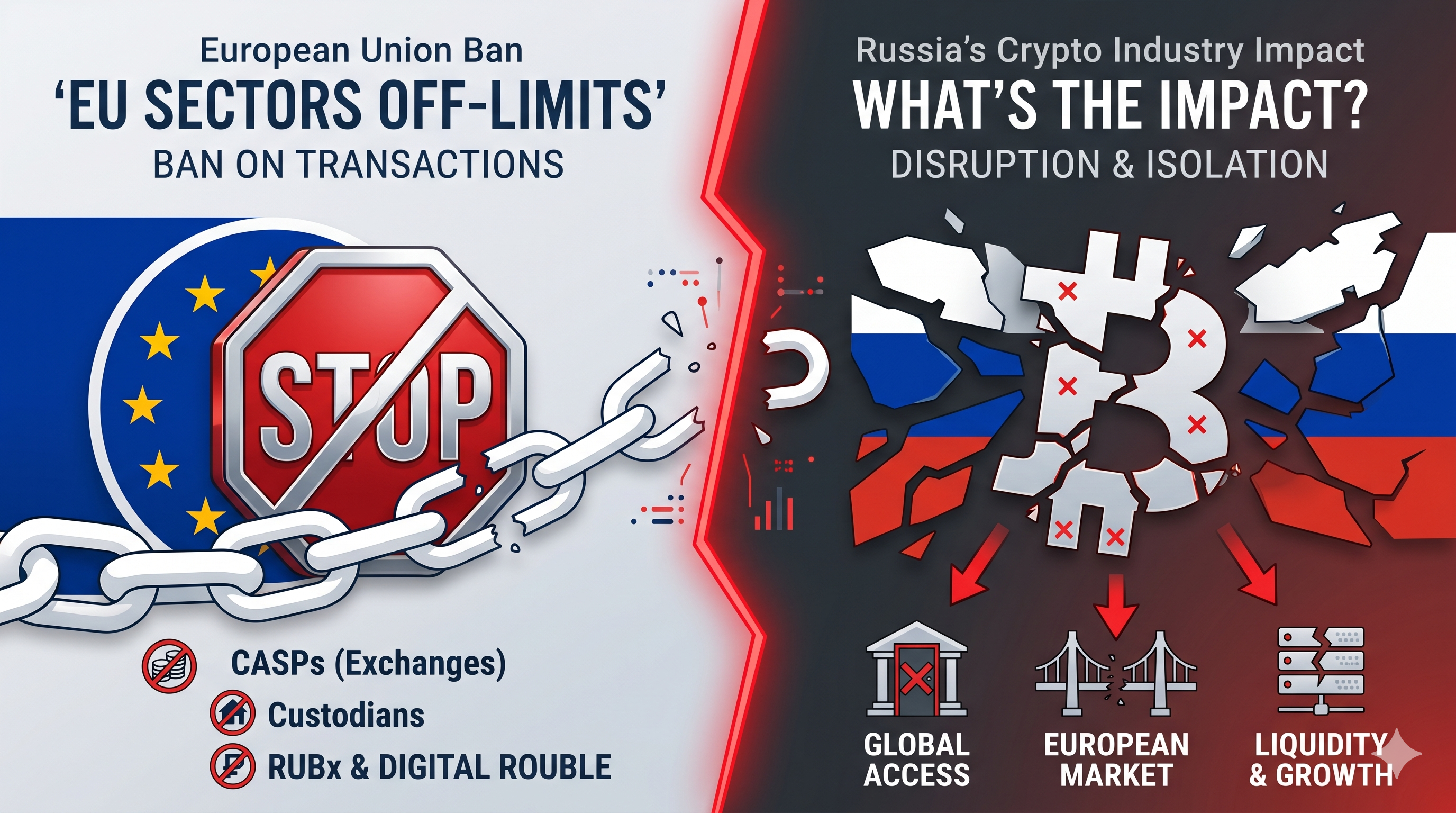
The European Union bans Russia’s crypto industry, targeting Russian crypto exchanges, stablecoins, and payment platforms to stop sanctions evasion and strengthen crypto compliance.
The European Union ban on Russia’s crypto industry marks a major escalation in the global crackdown on sanctions evasion, illicit crypto transactions, and alternative payment networks linked to Russia. As part of its 20th sanctions against Russia, adopted on April 23, 2026, the EU introduced wide-ranging restrictions on Russian crypto services, financial institutions, energy revenues, trade, and military-linked supply chains. The Council of the EU said the package targets key sectors that continue to support Russia’s war against Ukraine, including financial services and crypto.
The measure does not mean the EU has banned cryptocurrency entirely. Bitcoin, Ethereum, stablecoins, and regulated crypto exchanges remain legal in Europe. Instead, the new restrictions are aimed at Russia-based crypto-asset service providers, Russian crypto exchanges, ruble-linked digital assets, and crypto payment platforms that may be used to bypass international sanctions.
According to the European Commission, the package includes a total sectorial ban on carrying out exchanges with Russian crypto-asset service providers, as well as certain decentralized platforms enabling crypto trading, because of their role in sanctions circumvention.
Why the European Union Is Targeting Russia’s Crypto Industry
The EU’s latest move shows that digital assets are now a central part of global sanctions enforcement. Since many Russian banks, companies, and financial institutions have been restricted from Western financial systems, crypto has become an attractive alternative for cross-border payments, offshore transactions, and international value transfers.
Regulators are concerned that Russia-linked individuals and entities may use cryptocurrency exchanges, stablecoins, blockchain wallets, and digital payment networks to move funds outside the traditional banking system. These channels can make it harder for authorities to detect, freeze, or block financial activity connected to sanctioned actors.
Blockchain analytics firm Chainalysis described the EU’s 20th sanctions package as a significant shift because crypto assets are no longer a secondary issue in sanctions policy. Instead, they are now being treated as a primary target in the effort to stop Russia from using alternative financial infrastructure.
This is why the EU is not only targeting individual wallets or specific companies. It is also going after the broader infrastructure that supports Russia-linked crypto activity, including exchanges, service providers, payment platforms, stablecoins, and digital assets connected to sanctions-evasion networks.
European Union Bans Russia’s Crypto Industry: What It Means for Crypto Markets and Sanctions Compliance
The European Union ban on Russia’s crypto industry represents a major escalation in the global effort to stop Russia from using digital assets to bypass financial sanctions. As part of its latest sanctions strategy, the EU is targeting Russia-linked crypto exchanges, crypto-asset service providers, ruble-backed stablecoins, and digital payment networks that may be used to move money outside the traditional banking system.
This decision does not mean that the European Union has banned Bitcoin, Ethereum, or cryptocurrency in general. Instead, the measure is focused on blocking EU-based companies, financial institutions, and individuals from doing business with Russian crypto platforms. The goal is to reduce Russia’s ability to use cryptocurrency transactions, stablecoins, and blockchain-based payment systems as alternative financial channels.
For Russia, the impact could be significant. Since many Russian banks and companies already face restrictions from Western financial systems, crypto has become an attractive tool for cross-border payments and value transfers. By banning connections with Russia-based crypto service providers, the EU is trying to cut off another route for sanctions evasion, offshore payments, and international fund transfers.
The ban may also affect Russian crypto exchanges and platforms that depend on global liquidity. If European exchanges, wallet providers, custodians, and payment companies refuse to process Russia-linked transactions, Russian crypto users may find it harder to convert digital assets into euros, dollars, or other major currencies. This could push more activity toward offshore exchanges, peer-to-peer trading platforms, and less regulated crypto markets.
For the wider cryptocurrency market, the immediate price impact may be limited. Major digital assets such as Bitcoin and Ethereum are traded globally and are not directly targeted by the EU’s action. However, the regulatory impact could be much larger. Crypto exchanges operating in Europe will likely strengthen their KYC procedures, AML checks, wallet screening, blockchain analytics, and sanctions compliance systems to avoid exposure to Russia-linked entities.
Stablecoins are another important part of the story. Because stablecoins are often used for fast and low-cost international transfers, regulators are increasingly concerned that they can be used to avoid banking restrictions. The EU’s action shows that stablecoins, especially those connected to the Russian ruble or Russia-linked payment networks, will face closer scrutiny in the future.
This ban also sends a clear message to the global crypto industry: digital assets are now part of international financial policy. Governments are no longer treating crypto only as an investment product or technology trend. They are treating it as part of the global payments system, which means crypto companies must follow the same rules around financial crime prevention, sanctions screening, anti-money laundering compliance, and cross-border transaction monitoring.
In the long term, the European Union’s ban on Russia’s crypto industry could reshape how crypto businesses manage risk. Exchanges may become more cautious about accepting funds from high-risk jurisdictions. Stablecoin issuers may face more pressure to block sanctioned wallets. Blockchain analytics firms may see rising demand as regulators and companies look for better ways to detect suspicious crypto flows.
Overall, the EU crypto ban on Russia is not just about one country. It is a sign of how global crypto regulation is changing. The measure could make it harder for Russia to use digital assets as a sanctions escape route, while also increasing compliance pressure across the entire cryptocurrency sector. For investors, exchanges, and policymakers, the message is clear: crypto is becoming more regulated, more closely monitored, and more deeply connected to global financial security.
What the EU Crypto Ban Covers
The EU’s sanctions focus on Russian crypto service providers and crypto-related infrastructure that may support sanctions evasion. The restrictions include a ban on exchanges with Russian crypto-asset service providers and platforms that enable crypto trading for circumvention purposes.
The package also targets specific Russia-linked digital assets and payment channels. TRM Labs reported that the sanctions ban Russia-based crypto providers, add RUBx and the digital ruble to the prohibited assets list, and attempt to close the so-called “Garantex successor loop,” where users of previously sanctioned platforms move to replacement services.
This matters because sanctions enforcement is no longer focused only on traditional banks. The EU is now watching crypto wallets, stablecoin transfers, decentralized platforms, digital ruble transactions, and blockchain payment rails that could help Russia access global liquidity.
For crypto businesses, this creates a larger compliance responsibility. It is no longer enough to check whether a user is directly named on a sanctions list. Exchanges may also need to monitor whether funds are connected to Russian platforms, ruble-backed digital assets, or high-risk blockchain networks.
Key Impacts Explained: How the EU Ban Affects Russia’s Crypto Industry
The European Union ban on Russia’s crypto industry could reshape how Russian users, crypto platforms, and global exchanges interact with digital assets. While the ban does not remove cryptocurrency from the global market, it creates serious barriers for Russia-linked crypto businesses that depend on access to international liquidity, regulated exchanges, and cross-border payment systems.
One of the biggest impacts is on Russian crypto exchanges and crypto-asset service providers. These platforms may find it harder to connect with European companies, payment processors, custodians, and financial institutions. As a result, Russia-linked exchanges could become more isolated from the global crypto economy. This may reduce their ability to process transactions, support fiat conversions, or provide reliable access to major digital assets.
Another major impact is on sanctions evasion and illicit crypto transactions. Western regulators have become increasingly concerned that crypto can be used to move funds outside the traditional banking system. By targeting Russian crypto platforms, the EU is trying to close loopholes that may allow sanctioned individuals, businesses, or institutions to transfer money through digital assets. This means crypto companies will likely face stricter AML compliance, KYC verification, wallet screening, and blockchain transaction monitoring requirements.
The ban could also affect ruble-backed stablecoins and digital payment networks connected to Russia. Stablecoins are widely used for fast, low-cost international payments, which makes them attractive for cross-border transfers. If regulators believe these assets are being used to bypass sanctions, they may face stronger restrictions, reduced exchange support, and lower trust from global investors.
For the broader cryptocurrency market, the direct price impact may be limited because Bitcoin, Ethereum, and major global assets are not the main targets of the ban. However, the regulatory impact is much more important. Exchanges operating in Europe may increase compliance checks on users, wallets, and transactions linked to high-risk jurisdictions. This could make the crypto industry more transparent but also more difficult for some users to access.
The ban may also push Russian crypto activity toward offshore exchanges, peer-to-peer crypto trading, decentralized finance platforms, and unregulated markets. While this could allow some users to continue moving funds, it also increases risk. Unregulated platforms often have weaker consumer protections, higher fraud risks, and greater exposure to illegal financial activity.
Overall, the EU sanctions on Russian crypto platforms show that digital assets are now a central part of global financial enforcement. Crypto is no longer viewed only as an investment market; it is also seen as a tool that can influence sanctions, international payments, and financial security. This makes the EU ban a major development for crypto regulation, blockchain compliance, and the future of cross-border digital finance.
Impact on Russian Crypto Exchanges and Service Providers
Russian crypto exchanges are among the biggest targets of the EU’s new restrictions. These platforms may lose access to European counterparties, payment processors, liquidity providers, custodians, and compliance-friendly trading routes.
This could make it harder for Russia-linked exchanges to offer reliable services to users who want to move between crypto and fiat currencies. It may also reduce their ability to interact with regulated global exchanges, especially those operating under strict EU crypto regulation and sanctions compliance rules.
Over time, Russia-based crypto platforms may become more dependent on non-Western markets, offshore payment networks, and high-risk liquidity providers. That could increase transaction costs and make Russian crypto activity more isolated from mainstream financial markets.
Impact on Stablecoins, Digital Ruble, and Ruble-Linked Crypto Assets
Stablecoins are one of the most important parts of the EU’s crypto sanctions strategy. Because stablecoins can be used for fast international payments, they are attractive to users who want to move value across borders without relying on banks.
The EU is especially concerned about ruble-linked or Russia-connected digital assets. TRM Labs reported that the EU’s sanctions package targets assets such as RUBx and the digital ruble, while broader reporting has also highlighted concerns around A7A5, a ruble-linked stablecoin used in Russia-related transactions.
The Guardian reported that A7A5 has enabled more than $100 billion in transactions and has been linked to concerns about sanctions evasion through Kyrgyz financial infrastructure.
This shows why stablecoin regulation is becoming a major issue for governments. If stablecoins are used to bypass restrictions, regulators may push exchanges and issuers to freeze wallets, block deposits, or refuse transactions involving high-risk assets.
Impact on the Global Cryptocurrency Market
The global crypto market may not experience a major price shock from the EU ban. Bitcoin, Ethereum, and other large cryptocurrencies are traded across many countries and platforms. The EU action is not aimed at banning those assets globally.
However, the compliance impact could be much larger than the price impact. Crypto exchanges may strengthen customer checks, block suspicious wallets, and increase monitoring of transactions linked to Russia, Belarus, offshore brokers, and sanctioned entities.
This could create a more divided crypto market. On one side, regulated exchanges will become more cautious and compliance-focused. On the other side, high-risk users may move toward offshore exchanges, peer-to-peer markets, decentralized finance platforms, or privacy-focused tools.
For legitimate users, stronger compliance may improve trust in the crypto industry. For high-risk actors, it will become harder to move funds through mainstream platforms without detection.
Impact on Crypto Compliance, AML, and KYC Rules
The EU crypto sanctions are likely to accelerate the growth of crypto compliance, AML monitoring, KYC verification, sanctions screening, and blockchain analytics. Exchanges and wallet providers will need stronger systems to identify risky transactions and prevent exposure to sanctioned platforms.
Crypto businesses may need to ask more questions about where funds came from, which wallets were involved, and whether a transaction touched Russia-linked infrastructure. This could make onboarding slower for some users, but it may also help the industry become more trusted by regulators and institutional investors.
The new sanctions also increase pressure on decentralized platforms. While DeFi protocols are harder to regulate than centralized exchanges, authorities are increasingly looking at platforms that enable trading, swaps, or liquidity movement for sanctioned actors.
Could Russia Still Use Crypto After the Ban?
Yes, Russia-linked users may still find ways to use crypto. The EU ban does not stop every crypto transaction in the world. It does, however, make it harder for Russian platforms and sanctioned actors to access regulated European markets.
Some activity may shift to offshore exchanges, peer-to-peer networks, unregulated brokers, and decentralized platforms. But these channels often come with higher risks, including fraud, poor liquidity, frozen funds, legal exposure, and weaker consumer protections.
The EU’s goal is not necessarily to eliminate every crypto transaction connected to Russia. The goal is to raise the cost, reduce the convenience, and increase the legal risk of using crypto to bypass sanctions.
Why This Ban Matters for the Future of Crypto Regulation
The European Union’s action is important because it sets a precedent. Crypto is now being treated as part of the global financial system, not as a separate or untouchable market.
This means future sanctions packages from the EU, United States, United Kingdom, or other major economies may include more direct restrictions on crypto exchanges, stablecoins, blockchain networks, and digital payment systems.
For the crypto industry, the message is clear: compliance is becoming a core requirement. Exchanges, custodians, stablecoin issuers, and wallet providers that want to operate in regulated markets will need to prove they can detect and block high-risk activity.
Conclusion: EU Crypto Sanctions Put Pressure on Russia’s Digital Asset Market
The European Union ban on Russia’s crypto industry marks a major turning point for global crypto regulation, sanctions enforcement, and cross-border digital payments. While the EU has not banned cryptocurrency itself, it has made it much harder for Russia-linked crypto exchanges, service providers, and payment networks to connect with regulated European markets.
The biggest impact will likely be on crypto compliance, AML rules, KYC checks, stablecoin monitoring, and sanctions screening. Russian crypto activity may continue through offshore exchanges or peer-to-peer platforms, but it will become more difficult, costly, and risky. For the wider crypto industry, the message is clear: digital assets are now part of global financial security, and exchanges must follow stricter rules to prevent sanctions evasion and illicit finance.
For more context on Russia’s changing crypto exchange landscape, these KuCoin links are useful:
FAQs
What does the EU ban on Russia’s crypto industry mean?
It means EU companies and individuals are restricted from dealing with Russia-linked crypto service providers, exchanges, and digital payment platforms.
Has the EU banned all crypto?
No. Bitcoin, Ethereum, and regulated crypto trading are not banned. The ban targets Russia-linked crypto services.
Why is the EU targeting Russian crypto?
The EU wants to stop crypto from being used for sanctions evasion, illicit finance, and cross-border payments outside the banking system.
How will this affect Russian crypto exchanges?
Russian crypto exchanges may lose access to European markets, liquidity providers, payment processors, and regulated financial services.
Will this affect Bitcoin and Ethereum prices?
The direct impact may be limited because the ban does not target major cryptocurrencies themselves. The bigger impact is on compliance and regulation.
Why are stablecoins important?
Stablecoins can be used for fast international transfers, so regulators are concerned they may help bypass financial sanctions.
Can Russia still use crypto?
Yes, but it may become harder, riskier, and more expensive, especially through regulated platforms.
What is the main impact on crypto companies?
Crypto companies may need stronger KYC, AML checks, wallet screening, sanctions monitoring, and blockchain analytics.
What is the main takeaway?
The EU crypto ban on Russia shows that digital assets are now a major part of global sanctions enforcement and crypto regulation.
Disclaimer: This article is for informational purposes only and is not financial advice. Always do your own research before buying or trading crypto.