

Top Crypto Hacks of 2026: Bridge Exploits and Sophisticated Operations Drive Over $750 Million in Losses
2026/05/23 11:10:49
Thesis Statement
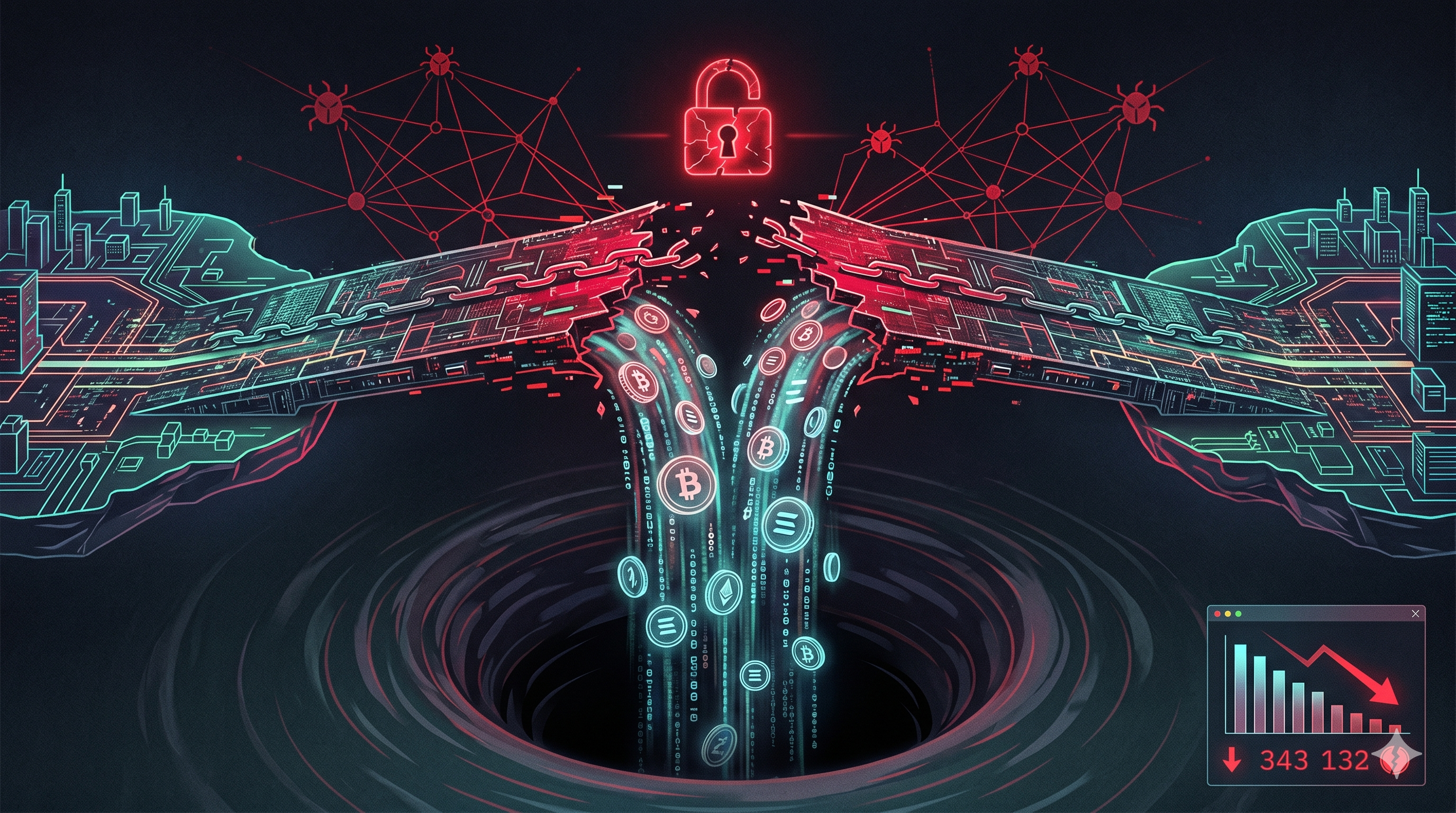
The top crypto hacks of 2026, encompassing over $750 million in total losses and a dedicated $329 million from eight bridge attacks, illustrate maturing threat tactics that target both technical infrastructure and human/operational elements, challenging assumptions about security in decentralized finance. The first four months of 2026 showed ongoing security challenges in cryptocurrency infrastructure. High-profile attacks, notably two in April, accounted for the majority of losses, with total DeFi-related incidents surpassing $750 million through mid-April. April stood out as particularly active, featuring both technical exploits on bridges and advanced operational attacks.
Data from PeckShield indicates that eight major cross-chain bridge attacks from February to mid-May resulted in approximately $328.6–329 million in losses, forming a significant subset of overall figures. These events occurred as total value locked grew across ecosystems, yet they exposed how interconnected components can turn isolated breaches into broader impacts on liquidity and confidence. Protocols and users responded with increased caution toward bridged assets and calls for stronger verification standards.
The combination of bridge-focused incidents and other sophisticated operations demonstrated evolving attacker capabilities, ranging from message forgery to long-term social engineering. Market reactions included temporary spikes in stablecoin demand and adjustments in lending rates as participants reassessed risk exposure. Security firms reported heightened demand for audits and monitoring services in the wake of these events. The incidents also spurred developer communities to discuss potential improvements in cross-chain architecture and governance processes to better protect user funds in an increasingly interconnected environment.
Drift Protocol's $285 Million Social Engineering Attack on Solana
On April 1, 2026, Solana-based perpetuals DEX Drift Protocol lost approximately $285 million in a meticulously planned operation attributed to North Korean actors. The attackers, linked to a subgroup such as UNC4736, conducted a months-long social engineering campaign, posing as a quantitative trading firm and building trust by depositing their own capital. They ultimately gained access to privileged administrative controls, whitelisted a low-value token as collateral, manipulated pricing mechanisms, and executed rapid withdrawals of USDC, SOL, and ETH. The drain occurred within minutes, using pre-signed transactions and bypassing standard approval flows. This incident did not rely on a traditional smart contract vulnerability despite prior audits, instead exploiting operational trust and internal processes. Funds were moved via Circle’s Cross-Chain Transfer Protocol and laundered efficiently.
The protocol’s token declined sharply, deposits were suspended, and the event wiped out over half of its TVL at the time. It demonstrated the effectiveness of persistent, hybrid attacks combining human targeting with on-chain execution. Industry analysis emphasized the difficulties in defending against state-linked actors with resources for extended preparation. The case prompted reviews of multisig governance, partner verification, and behavioral monitoring in DeFi teams. It also raised awareness of how legitimate protocol features, such as transaction nonces on Solana, can be repurposed when administrative access is compromised.
Kelp DAO's $292 Million LayerZero Bridge Exploit
On April 18-19, 2026, Kelp DAO suffered a $292 million loss when attackers forged a cross-chain message on its LayerZero-powered bridge, releasing around 116,500 rsETH. This represented roughly 18% of the token’s circulating supply and affected reserves supporting wrapped assets across more than 20 blockchains. Downstream lending platforms, including Aave, froze rsETH markets to mitigate bad debt risks, contributing to significant TVL reductions industry-wide. The bridge’s configuration became a focal point, with questions around verifier setups and message validation. Kelp’s team paused relevant contracts after detection, but the stolen assets moved quickly through other channels.
This exploit was the largest single incident in early 2026 and formed the bulk of bridge-related losses. It illustrated contagion potential in interconnected DeFi, where one bridge failure impacts collateral across ecosystems. Security researchers examined the spoofing technique in detail to improve future designs. The event accelerated discussions on omnichain standards and reduced reliance on specific bridging solutions. Users and protocols reassessed exposure to wrapped liquid restaking tokens, balancing yield opportunities against infrastructure risks. Post-incident actions included market freezes and coordination with exchanges to track flows. This case, alongside others, contributed to the PeckShield-tracked bridge total and reinforced the need for layered verification in cross-chain systems.
The $329 Million from Eight Major Cross-Chain Bridge Attacks
PeckShield data through mid-May 2026 documented eight significant cross-chain bridge-related incidents resulting in cumulative losses of approximately $328.6–329 million. These attacks primarily targeted interoperability layers handling asset transfers between blockchains. The Kelp DAO event dominated the tally, with the remaining seven involving smaller but meaningful drains through private key compromises, validation gaps, and access control issues. Examples included the IoTeX ioTube bridge and incidents on CrossCurve and Hyperbridge earlier in the year. Bridges attract attackers due to concentrated liquidity and the complexity of secure messaging across differing chain environments. The $329 million figure underscores persistent structural risks in designs that retain elements of centralized trust or limited verifiers.
These incidents added to the overall 2026 losses and prompted protocol teams to evaluate multi-bridge strategies or enhanced security parameters. Smaller cases provided incremental lessons on common failure modes, such as inadequate input sanitization. The pattern aligns with historical bridge exploit trends totaling billions previously. Industry responses involved expanded monitoring, bug bounties focused on interoperability, and exploration of zero-knowledge or more decentralized alternatives. This dedicated bridge subset highlights how infrastructure critical for multi-chain usability remains a high-priority target even as overall tactics diversify.
The distribution of attacks across different months and chains shows that the problem is systemic rather than limited to any single technology or ecosystem. Developers have since prioritized simulations of cross-chain scenarios under attack conditions, while users gained practical insights into evaluating bridge security before committing funds. The cumulative impact has influenced allocation decisions, with some liquidity providers shifting toward chains with stronger native capabilities to minimize bridging needs. Continued tracking by firms like PeckShield helps establish benchmarks for measuring security improvements over time.
Step Finance and Other Treasury Key Compromises on Solana
In late January 2026, Step Finance, a Solana portfolio manager, lost an estimated $27–40 million through a treasury access compromise, likely involving phishing or related credential issues. Attackers drained significant SOL and other holdings from the multisig, leading the protocol to wind down operations. This event exemplified ongoing difficulties with key management and device security even when using multisignature setups. It contributed to Q1 losses and broader caution within the Solana ecosystem regarding treasury handling. Reviews emphasized transaction simulation, hardware isolation for signers, and role-based controls. Similar patterns appeared in other incidents, showing that administrative access points remain attractive when technical barriers are high.
The case added context to the year’s mix of operational and technical attacks. Protocols examined decentralized treasury models to distribute risk. Users gained awareness of the supply chain and social vectors that enable such breaches. The incident reinforced that security extends beyond smart contracts to entire operational environments. It also influenced insurance considerations and recovery planning for affected teams. Additional analysis of similar treasury events revealed patterns in targeting executive communications and development tools.
Projects responded by increasing the frequency of security training and adopting more stringent access logging. The shutdown of operations at Step Finance served as a cautionary example for other mid-sized protocols managing substantial assets. It prompted discussions on whether smaller teams should rely more on established custody solutions or insurance products designed specifically for operational risks. Overall, these cases contributed to a more mature approach to treasury management across the Solana DeFi ecosystem.
Truebit Integer Overflow and Resolv Labs Access Control Issues
Early 2026 included technical exploits such as Truebit’s approximately $26.4 million loss on Ethereum from an integer overflow in contract logic. This allowed manipulation of calculations and unauthorized withdrawals. Around the same period, Resolv Labs faced a $23–25 million breach involving private key compromise combined with input validation and access control gaps. These cases stood alongside bridge and social attacks, reminding developers that classic vulnerabilities persist in complex financial logic. They prompted stronger emphasis on formal verification, edge-case testing, and continuous auditing.
Hybrid setups with off-chain elements faced particular scrutiny for introducing additional attack surfaces. Responses included timelocks, enhanced governance, and better key custody practices. These incidents contributed to cumulative early-year losses and highlighted the importance of maintaining rigorous code standards amid rapid feature development. Broader analysis showed how arithmetic and permission issues can combine with other vectors for greater impact. The events supported calls for improved tooling and developer education on secure patterns.
Many teams integrated automated scanners more deeply into their CI/CD pipelines and expanded the scope of third-party reviews to cover upgrades and parameter changes. The incidents also encouraged greater transparency in reporting known limitations of mathematical implementations in smart contracts. Users benefited from clearer documentation about potential risks in protocols handling large numerical operations. In the wider context, these technical breaches complemented the high-profile operational attacks, providing a full picture of the diverse threat space facing DeFi in 2026.
IoTeX ioTube, CrossCurve, Hyperbridge, and Additional Bridge Cases
February 2026 featured bridge incidents such as IoTeX ioTube’s $4.4 million private key compromise, CrossCurve’s roughly $3 million loss from validation gaps, and Hyperbridge’s $2.5 million exploit. These formed part of the eight major bridge attacks tracked to $329 million total. They demonstrated recurring challenges in signer security and message handling across chains. Each case led to operational pauses and investigations, with funds often moved rapidly post-drain. Collectively, they reinforced the high target value of bridges despite varying TVL sizes. Developers responded by enhancing decentralization efforts and monitoring. These smaller events complemented larger ones like Kelp DAO in building the year’s bridge loss profile.
They provided practical data points for refining interoperability security. Protocols are increasingly considered redundant, and cryptographic improvements are made. The incidents contributed to user education on bridge-specific risks when interacting with multi-chain assets. Security researchers used these cases to build more comprehensive threat models for cross-chain designs. Projects began publishing detailed bridge architecture diagrams and security parameters to foster informed decision-making. The variety of chains involved illustrated that the issue transcends any single blockchain and requires ecosystem-wide collaboration. Some teams piloted multi-verifier or ZK-based messaging as direct responses to observed weaknesses. These moderate-scale attacks, while less publicized individually, accumulated meaningful pressure on the industry to address interoperability risks systematically.
Grinex Exchange, Rhea Finance, and Other April Incidents
Mid-April saw additional events, including the Grinex exchange wallet drain of $13–19 million in USDT and Rhea Finance’s losses of around $7.6–18 million tied to fraudulent tokens and oracle issues. These occurred amid April’s elevated activity and added diversity to attack types beyond pure bridges. They highlighted risks in exchange custody and liquidity manipulation. Such cases compounded sector-wide caution and reputational effects. Responses focused on improved vetting, blacklisting, and custody transparency. They illustrated how multiple vectors operate simultaneously in active periods. The incidents fit within the broader $750 million+ loss context for early 2026. Analysis showed how liquidity pool manipulations can interact with oracle feeds to create profitable extraction paths.
Exchanges reviewed hot wallet policies and withdrawal limits in response. Protocols strengthened token validation processes and community reporting mechanisms for suspicious assets. The cluster of April events created a concentrated period of negative sentiment that affected overall DeFi participation rates temporarily. Teams used the opportunity to stress-test their monitoring systems and emergency protocols. Users were reminded of the importance of diversifying across platforms with proven security track records. These incidents, though smaller than the headline cases, added important layers to the year’s security narrative by showing the breadth of attack surfaces in the ecosystem.
CoW Swap Domain Hijacking and Front-End Vectors
On April 14, 2026, CoW Swap encountered a domain hijacking leading to roughly $1.2 million in losses through user redirection and phishing. This front-end attack targeted interactions rather than core contracts, emphasizing the need for URL vigilance and hardware wallet use. It added to April’s incident volume and reminded participants of off-chain entry points. Services implemented enhanced DNS protections. The case complements on-chain exploits by showing full-spectrum threat landscapes. Additional measures included better user interface warnings and integration with wallet verification tools.
The attack highlighted how social engineering extends to website infrastructure and DNS records. Teams collaborated with domain registrars to improve recovery times and monitoring. Users adopted habits like bookmarking official sites and double-checking transaction details before signing. The incident contributed to broader education campaigns on phishing awareness within the DeFi community. It demonstrated that even established protocols must maintain strong operational security across all user touchpoints. Post-event reviews led to updated security playbooks that incorporate front-end risks more explicitly. The relatively smaller loss still served as a valuable reminder of the human element in overall system security.
North Korea-Linked Operations and Attribution Trends
North Korean groups were linked to major 2026 incidents, including Drift and Kelp DAO, representing a substantial share of value stolen through patient, hybrid tactics. This concentration in high-impact operations highlighted strategic targeting. Laundering paths involved bridges and mixers. The trend has increased focus on intelligence sharing and defensive measures. Reports indicated these groups accounted for around 76% of early losses through fewer but larger operations. Industry organizations began enhancing collaboration on attribution and sanctions-related tools.
Projects invested in better threat intelligence feeds to identify potential targeting early. The geopolitical dimension added complexity to security planning for DeFi teams. Discussions emerged around balancing privacy features with the need for effective tracing in major incidents. Security firms developed specialized training modules on recognizing advanced persistent threats. The pattern suggested a move toward quality over quantity in state-linked hacking activities. This development prompted calls for greater public-private information exchange to strengthen ecosystem resilience without compromising core decentralization principles.
Market and TVL Impacts from 2026 Hacks
Major exploits triggered billions in TVL outflows, market freezes on platforms like Aave, and token price declines. Insurance costs rose, and risk disclosures gained attention. Conversations intensified around native versus bridged assets. Liquidity providers became more selective, favoring protocols with demonstrated security track records. Short-term volatility increased in affected tokens and related ecosystems. Stablecoin usage saw temporary spikes as participants sought safety. The events tested existing insurance funds and compensation mechanisms, with mixed outcomes.
Broader market sentiment reflected caution but also recognition of the learning opportunities presented by these incidents. Data aggregators improved incident tracking visibility to help users make informed decisions. Protocols enhanced communication during crises to maintain as much trust as possible. The cumulative impact influenced fundraising and development priorities, with security budgets receiving greater allocation. Long-term effects may include consolidation around more robust infrastructure providers.
Industry Security Responses in Mid-2026
Projects enhanced monitoring, timelocks, bug bounties, and verification tools. Data trackers improved incident reporting. Layered defenses combining technical and operational elements gained traction. Many teams adopted continuous auditing practices rather than one-time reviews. Developer communities shared post-mortem analyses openly to accelerate collective learning. Bug bounty programs expanded in scope and reward levels, particularly for bridge and governance components. Formal verification tools saw increased adoption among mid-to-large protocols.
Discussions around standardized security frameworks for interoperability gained momentum. Insurance providers refined coverage terms based on the year’s loss patterns. User education initiatives focused on practical risk management steps. The response phase demonstrated the industry’s capacity for adaptation despite repeated setbacks. Security firms reported record demand for red teaming and threat modeling services. These collective efforts aim to raise the baseline security level across DeFi as the ecosystem continues to mature.
Mitigation Strategies for Users and Protocols
Users limit bridged exposure, use hardware wallets, and verify interactions. Protocols implement diverse multisigs, simulations, and anomaly detection. Education and insurance support resilience. Standards for bridges could reduce future risks. Practical steps include regular key rotation, transaction preview tools, and a preference for native assets in core positions. Protocols benefit from geographically distributed signers and clear governance delay periods. Community-driven monitoring tools add decentralized oversight. Insurance products with transparent claims processes help manage residual risks.
Broader adoption of emerging cryptographic standards for cross-chain messaging shows promise. Users should stay informed through official channels and avoid unverified links or offers. The 2026 incidents provide concrete case studies for refining personal and protocol-level security postures. Ongoing vigilance combined with technological improvements offers the most realistic path toward reduced incident frequency and severity over time.
FAQs
What was the total from the eight major cross-chain bridge attacks in 2026?
PeckShield data shows approximately $328.6–329 million lost through mid-May across these incidents, with Kelp DAO accounting for the largest share.
How did the Drift Protocol attack differ from typical bridge exploits?
It relied primarily on extended social engineering and administrative compromise rather than direct message forgery or key theft alone, succeeding despite audits.
Why do bridges continue to face significant attacks?
They custody liquidity for cross-chain assets and often involve complex verification that can contain single points of failure or limited trust assumptions.
What role have North Korean actors played in the 2026 hacks?
They have been attributed to the two largest incidents, combining social engineering with technical execution for the majority of early-year high-value losses.
How have the hacks affected DeFi participation?
Billions in TVL outflows occurred alongside greater caution toward bridged assets and increased security investments.
What practical steps reduce individual risk from these incidents?
Prefer native assets, verify contracts and URLs, use hardware security, and monitor official protocol communications for incidents.
Disclaimer: This content is for informational purposes only and does not constitute investment advice. Cryptocurrency investments carry risk. Please do your own research (DYOR).