

SEC Chairman Paul Atkins Launches 'Project Crypto': Modernizing Rules to Move US Financial Markets On-Chain
2026/07/06 15:59:00
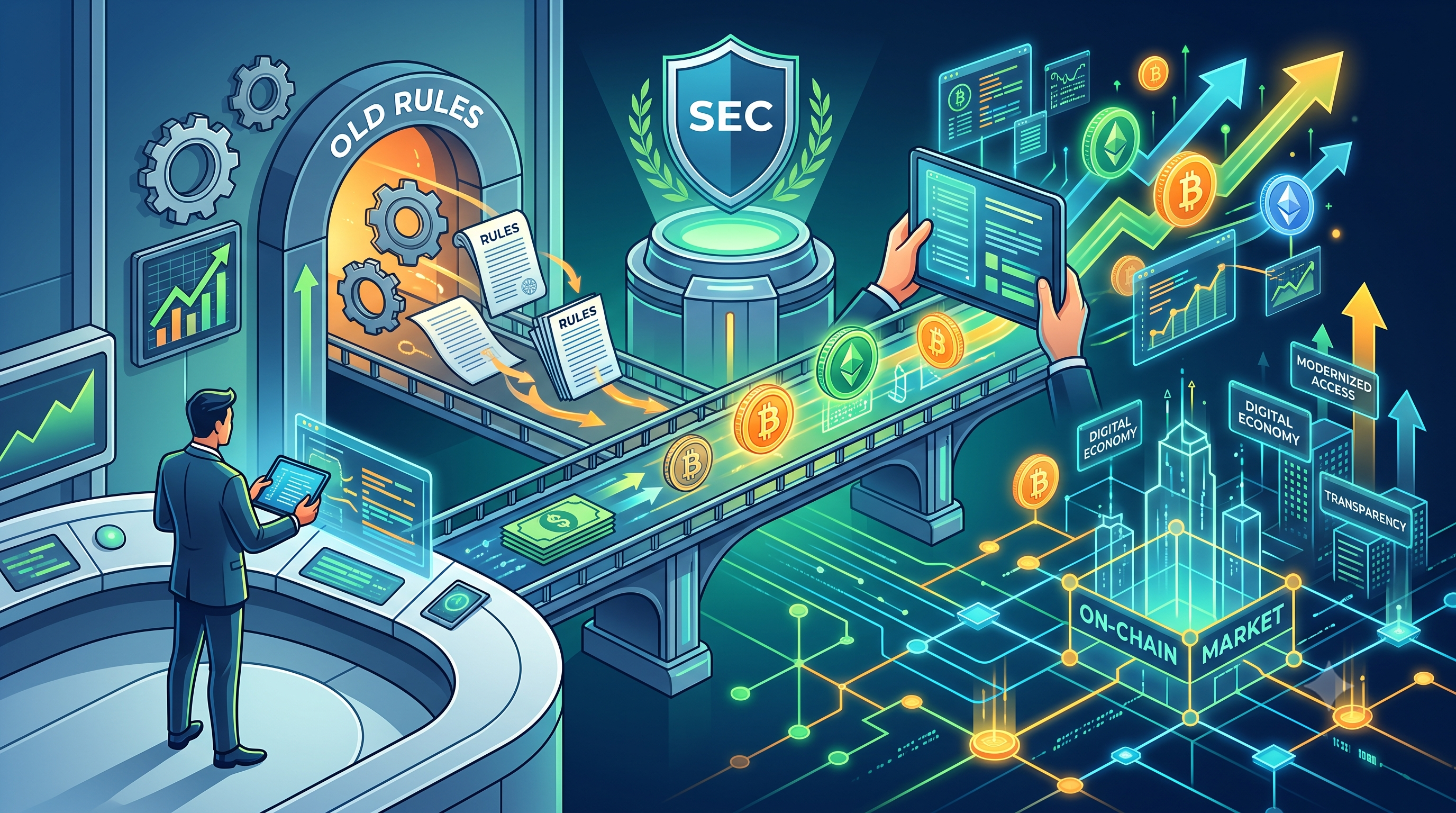
For years, retail crypto traders lived under the constant shadow of "regulation by enforcement." Waking up to news of another Wells Notice, a sudden exchange delisting, or a crack-down on a favorite DeFi protocol was just part of surviving the bear market. The psychological toll on the community—and the massive financial losses triggered by regulatory FUD (Fear, Uncertainty, and Doubt)—made it feel like the United States was actively trying to kill the future of finance.
But the script has officially flipped. Under the leadership of SEC Chairman Paul Atkins, the U.S. Securities and Exchange Commission has launched "Project Crypto"—a sweeping regulatory overhaul designed to modernize antiquated financial rules and seamlessly move US markets on-chain.
This isn't just a minor policy tweak; it is a historic pivot. Project Crypto signals the absolute end of the SEC's war on digital assets. By establishing a clear, common-sense token taxonomy, greenlighting Real-World Asset (RWA) tokenization, and finally embracing Decentralized Finance (DeFi) infrastructure, Atkins is laying the regulatory groundwork for the next massive crypto bull run.
For the everyday trader, this means less fear, more clarity, and a massive influx of institutional capital. Wall Street is finally moving to the blockchain, and the days of treating every altcoin like an unregistered stock are over. Here is exactly what Project Crypto means for your portfolio, your airdrops, and the future of DeFi.
The Dawn of a New Era: Goodbye "Regulation by Enforcement"
To truly appreciate the magnitude of Project Crypto, we have to look back at the dark ages of U.S. crypto regulation. Prior to Atkins taking the helm, the SEC’s approach was universally criticized by founders, venture capitalists, and retail traders alike as "regulation by enforcement."
Instead of writing clear rules for a new technology, the previous administration relied on lawsuits, massive fines, and intimidation tactics to police the market. We saw top-tier exchanges sued, decentralized exchanges (DEXs) threatened, and developers fleeing to Dubai, Singapore, and Europe to build in peace. This phenomenon, known as "innovation flight," threatened to leave the United States permanently behind in the Web3 race.
Chairman Paul Atkins has fundamentally reversed this destructive trend. Upon launching Project Crypto, his core philosophy was made crystal clear: "Most crypto tokens trading today are not securities themselves." This statement alone was a monumental paradigm shift. Atkins has emphasized looking at the economic substance of a digital asset rather than relying on outdated labels. Rather than using the 1930s-era securities laws as a blunt weapon against 21st-century software, the SEC is now actively working to integrate blockchain technology into the traditional financial stack. According to recent mandates outlined by official statements from the U.S. Securities and Exchange Commission (SEC), the goal is now to foster capital formation while maintaining fair, orderly, and efficient markets, acknowledging that blockchain is a legitimate mechanism for financial innovation.
For the retail trader, this means you can finally trade altcoins, interact with smart contracts, and explore the frontier of Web3 without the looming anxiety that your chosen ecosystem will be regulated out of existence tomorrow.
Decoding the SEC's New Token Taxonomy: Is Your Crypto a Security?
For the average retail crypto trader, the previous regulatory era was a nightmare of uncertainty. Waking up to a random enforcement action causing your favorite altcoin to dump 30% overnight was a common, painful reality. The fear of top exchanges being forced to mass-delist tokens paralyzed market momentum.
But under Project Crypto, the SEC is officially replacing the outdated, one-size-fits-all Howey Test approach with a clear, pragmatic Token Taxonomy. So, what exactly is sitting in your portfolio right now? Are you holding an unregistered security, or a perfectly legal digital asset? Let’s break down the SEC's four new categories so you know exactly where your bags stand.
Digital Commodities: The Safe Havens
A token is classified as a "Digital Commodity" if it relies on a truly decentralized network and its value isn't driven by a centralized management team promising profits.
-
What it includes: Bitcoin (BTC), Ethereum (ETH), and likely other highly decentralized Layer-1 networks.
-
The Trader's TL;DR: These assets fall outside the SEC's strict security regulations. This means zero delisting risks on major US exchanges, paving the way for spot ETFs, options trading, and massive institutional capital to flow in without friction.
Digital Tools: The DeFi & Airdrop Holy Grail
This is arguably the most bullish category for retail crypto traders. Historically, the SEC heavily scrutinized governance and utility tokens. Under Project Crypto, tokens used for voting, protocol access, or paying gas fees are classified as "Digital Tools"—essentially software licenses or digital memberships, not securities.
-
What it includes: Most DeFi governance tokens (e.g., UNI, ARB, LDO) and utility-driven ecosystem tokens.
-
The Trader's TL;DR: Airdrops are officially back on the menu without the legal overhang. You can yield farm, stake, and vote in DAOs without fearing a sudden SEC crackdown on the protocol's founders.
Digital Collectibles: The Degens' Playground
The SEC has finally recognized that buying digital art is not the same as buying a stock. If an asset is unique and primarily consumed for entertainment, art, or gaming, it escapes the security label.
-
What it includes: NFTs, profile pictures (PFPs), metaverse land, and in-game assets.
-
The Trader's TL;DR: Keep flipping on OpenSea or Magic Eden. The SEC has formally stepped away from policing your digital JPEG collection or your Web3 gaming loot.
Tokenized Securities: Wall Street on the Blockchain
Make no mistake—if a token represents a share in a real-world company, a bond, or pays a traditional dividend, the SEC still considers it a security. However, the paradigm shift here is that the SEC is no longer trying to ban them. Instead, Project Crypto creates a legal pathway for these Real-World Assets (RWAs) to trade natively on blockchain infrastructure.
-
What it includes: Tokenized US Treasuries (T-Bills), tokenized stocks, and private credit tokens.
-
The Trader's TL;DR: In the near future, you might be able to trade fractional Apple stock or high-yield bonds directly from your non-custodial wallet, 24/7, right alongside your crypto holdings.
| Asset Category | Examples | Is it a Security? | Primary Regulator | What it means for Retail Traders |
| Digital Commodities | BTC, ETH | ❌ No | CFTC | Safe to hold/trade; ETF eligible. |
| Digital Tools | UNI, ARB, LINK | ❌ No | Consumer Protection | Airdrops and DeFi farming are safe. |
| Digital Collectibles | NFTs, GameFi items | ❌ No | FTC / General Law | Zero restrictions on NFT trading. |
| Tokenized Securities | Tokenized T-Bills, Stocks | ✅ Yes | SEC | Can be traded on-chain with KYC/AML. |
Embracing DeFi and RWA: How Wall Street Meets the Blockchain
One of the most ambitious and economically significant pillars of Project Crypto is the SEC's formal embrace of Decentralized Finance (DeFi) and the tokenization of Real-World Assets (RWAs).
For years, traditional finance (TradFi) giants have recognized that blockchain technology—with its instant settlement, transparency, and 24/7 global access—is vastly superior to the legacy plumbing of Wall Street. However, existing regulations, particularly Regulation NMS (National Market System), were written for physical trading floors and centralized clearinghouses, not Automated Market Makers (AMMs) and liquidity pools.
Project Crypto aims to bridge this massive gap. By modernizing these rules, the SEC is actively creating a compliant environment where traditional assets can exist natively on-chain.
-
The RWA Boom: With regulatory clarity, the multi-trillion-dollar markets for U.S. Treasuries, corporate bonds, real estate, and equities can finally be tokenized at scale. We are moving from experimental sandboxes to institutional-grade, on-chain capital markets.
-
DeFi Integration: Crucially, the SEC is softening its stance on decentralized trading infrastructure. Under the new framework, there will be viable pathways for compliant DeFi protocols to facilitate the trading of tokenized securities, provided certain investor protection mechanisms are met.
This means that the liquidity of Wall Street and the innovation of DeFi are finally on a collision course, poised to unlock unprecedented value for the entire crypto ecosystem.
The "Innovation Exemption": A Lifeline for Crypto Startups and Airdrops
If there was one thing that terrified Web3 founders, it was the "catch-22" of launching a token. To decentralize a network, you need to distribute tokens to a wide user base. But the act of distributing those tokens (via ICOs, public sales, or even airdrops) was frequently deemed an illegal, unregistered securities offering by regulators.
Enter the "Innovation Exemption"—a concept heavily inspired by pro-crypto voices within the agency and formally integrated into Project Crypto.
This exemption creates a tailored "Safe Harbor" for early-stage crypto startups. Here is how it fundamentally changes the game for builders and retail participants:
-
Time-Limited Protection: Startups are granted a grace period (often proposed as three years) to build out their network and achieve true decentralization without the immediate burden of full SEC reporting requirements.
-
Legalizing Airdrops: Airdrops and network participation rewards are no longer treated with extreme suspicion. As long as they are designed to bootstrap utility and network effects—rather than raising capital from passive investors—they are shielded from securities enforcement.
-
Lowering the Barrier to Entry: By drastically reducing the legal and compliance costs for early-stage projects, innovation can return to American soil. Retail users (often affectionately known as airdrop farmers and early adopters) can safely interact with testnets and mainnets, knowing the teams behind these protocols won't be sued into bankruptcy.
The Ultimate Plot Twist: SEC and CFTC Join Forces
Perhaps the most surprising and welcome development of this entire saga unfolded in early 2026. For nearly a decade, the SEC and the Commodity Futures Trading Commission (CFTC) were locked in a bitter turf war over who had the right to regulate the digital asset space. This jurisdictional battle left exchanges and users caught in the crossfire. Under Project Crypto, that civil war is over. SEC Chairman Paul Atkins and CFTC Chairman Michael Selig have officially announced a joint task force to create a unified federal response to digital assets.
As detailed in cooperative frameworks released by the Commodity Futures Trading Commission (CFTC), this alliance is designed to eliminate duplicative compliance requirements. For centralized exchanges (like Coinbase and KuCoin), this means they can finally register under a single, cohesive federal framework that clearly delineates how to handle both digital commodities (spot trading, derivatives) and tokenized securities. For the retail trader, this collaboration guarantees deeper liquidity, safer platforms, and the complete elimination of the confusing, contradictory rules that previously plagued the U.S. market.
With the CFTC and SEC finally providing a unified framework, the derivatives market is entering a golden age of clarity. For retail traders, this means advanced financial instruments are no longer shrouded in regulatory uncertainty.
Centralized exchanges that align with these evolving compliance standards, such as KuCoin, offer a practical glimpse into how modern crypto derivatives work. If you are looking to hedge your portfolio or capitalize on the institutional capital inflows, understanding the mechanics of futures trading is becoming a fundamental Web3 skill. Here is how this process typically unfolds in today's structured environment:
-
Step 1: Navigating Modern Compliance (KYC): Gone are the wild west days. Trading futures now begins with standard Identity Verification (KYC), ensuring the platform remains compliant with the federal anti-money laundering (AML) standards discussed in Project Crypto.
-
Step 2: Structuring Your Margin: Unlike spot trading where you simply swap tokens, futures require you to transfer stable assets (usually USDT or USDC) into a dedicated Futures Account. This acts as your collateral, or "margin."
-
Step 3: Choosing the Right Instrument: Most retail traders focus on Perpetual Contracts (e.g., BTC/USDT), which do not have an expiration date. This allows you to go "Long" (betting the asset will rise alongside ETF inflows) or "Short" (hedging your spot portfolio against market corrections).
-
Step 4: Executing with Risk Management: This is where the new era of educated trading shines. While exchanges offer leverage, sustainable trading relies on utilizing strict Stop-Loss orders and conservative margin ratios to protect capital from unexpected market wicks.
By mastering these mechanics on established platforms, everyday traders can safely position themselves to utilize the same hedging tools that Wall Street institutions are bringing on-chain.
What "Project Crypto" Means for the Next Bull Run
If you are reading the tea leaves of market cycles, Project Crypto is the ultimate macro catalyst.
Historically, crypto bull runs have been driven by structural milestones: the ICO boom of 2017, the DeFi summer and institutional entry of 2020-2021, and the Spot ETF approvals of early 2024. Project Crypto represents the next massive structural unlock: The integration of the United States regulatory apparatus with on-chain finance.
-
Institutional Capital Inflow: Pension funds, sovereign wealth funds, and major asset managers have largely stayed on the sidelines due to regulatory ambiguity. With Project Crypto providing a legally sound taxonomy and safe harbors, the floodgates for institutional capital are wide open.
-
The U.S. Regains Dominance: With the European Union pushing forward with its MiCA (Markets in Crypto-Assets) regulation and Asian hubs like Singapore and Hong Kong aggressively courting crypto businesses, the U.S. was at risk of being left behind. Paul Atkins' initiatives ensure that the U.S. remains the undisputed capital of global financial innovation.
Ultimately, Project Crypto is not just about making rules; it is about legitimizing an entirely new asset class. The era of building in the shadows is over. Wall Street is coming on-chain, and for the crypto natives who survived the bear markets, the structural foundations for a legendary bull run are finally in place.
Frequently Asked Questions (FAQs)
What exactly is SEC's 'Project Crypto'?
Project Crypto is a comprehensive regulatory reform initiative launched by SEC Chairman Paul Atkins. Its goal is to modernize U.S. financial regulations, end "regulation by enforcement," and create a clear, compliant framework for digital assets, DeFi, and tokenized traditional securities to operate natively on the blockchain.
Will Paul Atkins classify Ethereum (ETH) as a security?
No. Under the new Token Taxonomy introduced by Project Crypto, highly decentralized networks like Bitcoin and Ethereum are classified as "Digital Commodities." This places them primarily under the jurisdiction of the CFTC, removing the threat of them being regulated as securities.
How does Project Crypto affect DeFi protocols?
It is incredibly bullish for DeFi. Project Crypto aims to modernize existing market rules (like Regulation NMS) to allow decentralized exchanges and AMMs to operate compliantly. Furthermore, governance and utility tokens used in DeFi are now largely classified as "Digital Tools" rather than securities.
Can startups safely launch ICOs or airdrops now?
Yes, under the newly proposed "Innovation Exemption." This acts as a safe harbor, allowing startups a grace period to distribute tokens via airdrops or network rewards to bootstrap decentralization without facing immediate SEC registration requirements and massive legal threats.
What is the difference between SEC and CFTC in crypto regulation now?
Thanks to a historic joint initiative in 2026, the two agencies are no longer fighting for turf. The CFTC will oversee "Digital Commodities" (like BTC and ETH spot and derivatives markets), while the SEC will strictly oversee "Tokenized Securities" (like on-chain bonds or stocks), providing a unified and clear rulebook for crypto exchanges.
Disclaimer: This content is for informational purposes only and does not constitute investment advice. Cryptocurrency investments carry risk. Please do your own research (DYOR).