

Nansen Integrates Hyperliquid Perpetual Trading: Real-Time Smart Money Tracking and Advanced On-Chain Analytics
2026/07/09 10:00:00
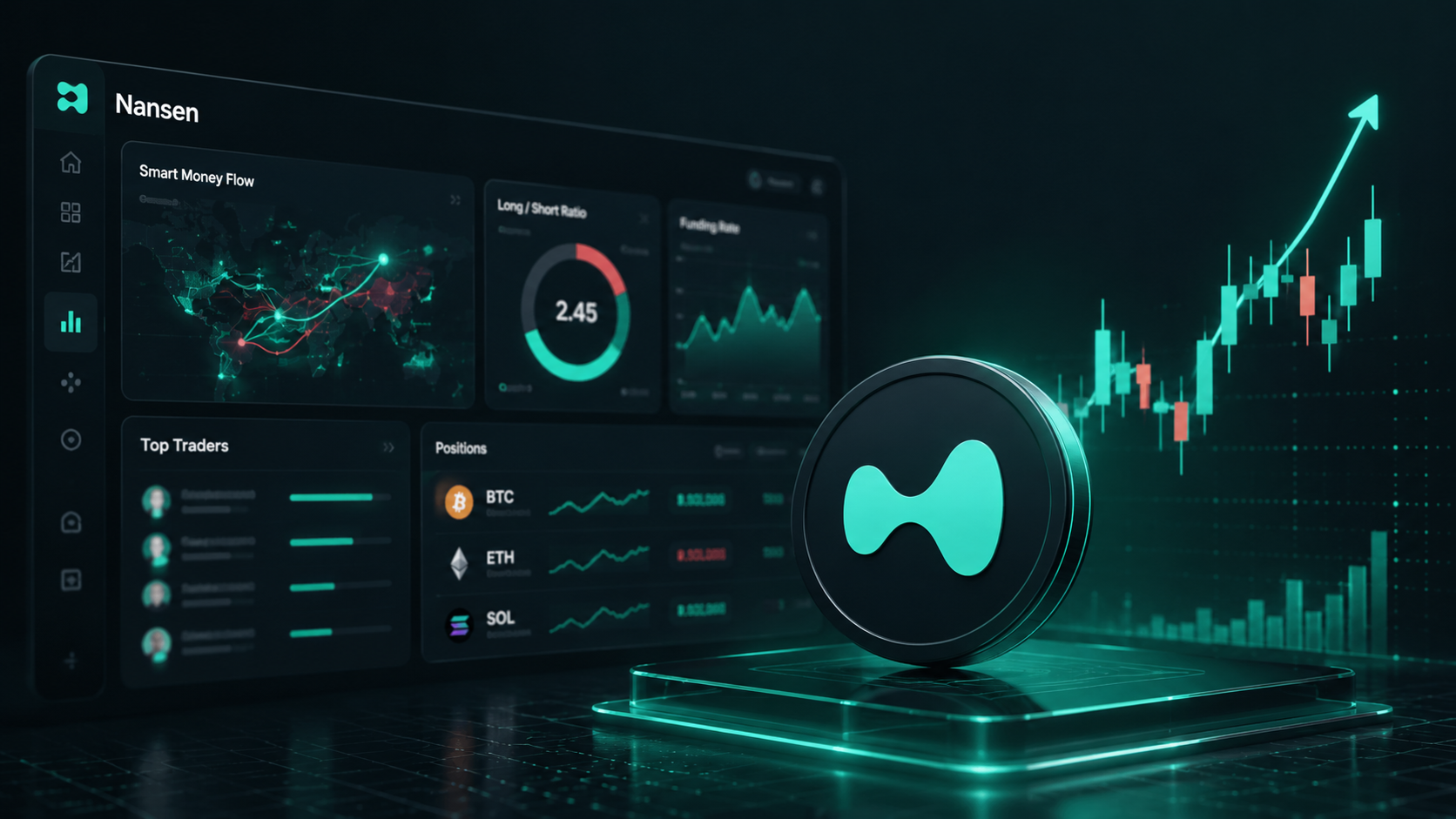
The integration of Hyperliquid perpetual contract trading directly into the Nansen dashboard solves a major fragmentation problem by combining institutional-grade market intelligence and immediate trade execution. According to official reports from Nansen, this implementation allows traders to view key metrics—such as long/short positioning ratios, funding rates, and wallet distributions—while executing leveraged positions on the fly.
Key Takeaways
-
All-in-One Dashboard: Nansen bridges the gap between analytics and action by adding Hyperliquid execution directly inside its core interface, eliminating execution latency.
-
Smart Money Transparency: Real-time visibility into top profitable wallets, leverage settings, and open positions helps traders track institutional derivative flows.
-
No Separate Onboarding: Users can trade directly via their existing wallets through multi-chain bridges without creating standalone Hyperliquid accounts.
-
Sub-Second Finality: Powered by Hyperliquid's Layer-1 infrastructure, data displays live market shifts and liquidation thresholds directly to the user.
-
Risk Management is Crucial: Leverage and volatile funding rates are amplified in perpetual setups; following whales requires understanding hidden portfolio hedges.
Unifying Real-Time Blockchain Analytics and Order Execution
Traders can execute trades immediately upon discovering on-chain movements because the execution layer is now embedded into Nansen's core interface. Based on recent statements from Nansen's product team, a significant portion of active crypto derivative participants consistently look for cross-asset trading infrastructure that mirrors traditional finance structures. Rather than identifying a whale's trade on Nansen and then manually logging into an external decentralized exchange (DEX), users can authorize transactions instantly. This structural evolution drastically reduces slippage and decreases the time required to react to volatile macro shifts. The elimination of execution latency ensures that the data advantage provided by on-chain tracking translates into measurable trading performance.
Capital Efficiency and Friction Elimination for On-Chain Traders
The elimination of standalone accounts and individual onboarding procedures simplifies the onboarding architecture for retail and institutional traders alike. Based on Nansen Academy documentation, users do not need to create or maintain a separate account on Hyperliquid to interact with its deep perpetual order books. Transactions route directly through integrated user wallets, maintaining a high level of security while preserving decentralized custody. Capital can move fluidly between analysis modules and position sizing fields without extra conversion fees or intermediate token wraps. This level of optimization changes how users maintain capital efficiency across multiple derivative contract markets.
How Does Hyperliquid Enhance On-Chain Derivatives Volatility Tracking?
Hyperliquid improves on-chain derivatives tracking by providing a highly optimized L1 execution environment that records historical trade data with sub-second finality. According to ecosystem tracking reports, Hyperliquid represents a dominant force in the decentralized perpetual ecosystem, processing hundreds of millions in daily volume.
The Power of HyperEVM and High-Throughput Layer-1 Infrastructure
The underlying HyperEVM infrastructure provides the required speed to process real-time market updates without experiencing the congestion native to legacy networks. Based on technical documentation from Hyperliquid, the custom layer-1 network is engineered explicitly to process high-throughput derivative actions, order matching, and liquidations. This provides Nansen users with real-time streaming data that reflects true market depth rather than delayed block-by-block snapshots. When large-scale liquidations occur, the system updates instantly, allowing observant market participants to identify immediate support and resistance zones.
Real-Time Order Book Transparency Versus Traditional DEX Bottlenecks
The open visibility of Hyperliquid’s order book eliminates the opaque execution risks typically found in centralized or fragmented automated market makers (AMMs). According to an analysis by industry research groups, combining Nansen’s token flow charts with Hyperliquid’s open order books allows traders to spot liquidity shifts and sudden changes in trader sentiment before they manifest in broader spot market prices. This clear visualization serves as an early warning system against market manipulation and sudden cascading long or short squeezes.
How Can Traders Track Smart Money Using Nansen's Hyperliquid Integration?
Traders track Smart Money by utilizing Nansen's specialized algorithmic labels, which isolate institutional funds, high-conviction whales, and historically profitable addresses in real time. Based on Nansen's API documentation, the updated system provides precise transaction-level transparency, revealing exactly when these sophisticated entities open, alter, or close leveraged positions.
Monitoring Institutional Fund Flows and Whale Wallet Adjustments
The ability to view granular transaction entries allows retail users to dissect the exact risk profiles and position sizing choices of top-tier market participants. According to data provided by Nansen's Smart Money Perp Trades endpoint, users can apply customizable filters to sort incoming market signals by absolute USD value, specific token symbols, or entry types. If a prominent crypto fund suddenly scales up an aggressive long position on a specific token, the integrated feed highlights the activity immediately. This immediate disclosure prevents retail traders from inadvertently trading against dominant institutional trends.
Utilizing the Hyperliquid Leaderboard to Filter High-Performance Addresses
The newly introduced Hyperliquid Perps Leaderboard provides a definitive roadmap for identification and strategy replication by ranking wallets based on cumulative historical performance. According to official platform updates, the leaderboard allows users to filter addresses by specific time frames, including 7-day, 30-day, and all-time profit-and-loss (PnL) metrics. This categorization separates temporary, luck-driven gains from consistent trading proficiency. Users can click on any top-performing address to immediately inspect its open positions, historical win rates, and leverage preferences, turning blockchain analytics into actionable blueprints.
What Core Features and On-Chain Data Tools Are Now Available to Users?
The core features introduced in this integration include multi-chain bridging pathways, wallet-level position dashboards, real-time developer APIs, and dedicated HyperFND ecosystem tracking modules. Based on official release details, these tools are available across both web and mobile formats, ensuring comprehensive coverage for all user categories.
Multi-Chain Depositing, Bridging, and Wallet-Level Position Tracking
The platform features an optimized asset ingestion engine that supports direct deposits from standard external wallets and cross-chain bridging from networks like Solana and Base. According to Nansen Academy guides, users can fund their interactive trading wallets via an in-app bridge interface or by receiving native transfers directly from another Hyperliquid address (HyperCore). Once funded, the comprehensive dashboard displays real-time statistics regarding active positions, precise liquidation thresholds, margin status, and unrealized profit-and-loss statements. This consolidation keeps traders informed of their portfolio health without requiring third-party tracking applications.
HyperFND Activity Monitoring and Developer-Focused Data APIs
Developer teams and quantitative research squads can leverage the new Hyperliquid Data API to construct automated execution algorithms and custom trading bots. Based on Nansen’s official developer specifications, the API offers comprehensive endpoints covering real-time token positions, full historical logs, and ecosystem growth metrics like HyperEVM active address counts and contract deployments. This allows algorithmic traders to combine proprietary code with Nansen's verified data fields, bridging the gap between raw blockchain statistics and quantitative strategy execution.
What Are the Inherent Market Risks of Automated Copy Trading via Integrated Perps?
The primary market risks of utilizing integrated perpetual trading systems stem from the double-edged nature of leverage, execution slippage during high volatility, and recurring funding rate liabilities. According to warning disclosures provided by Nansen Academy, derivatives trading involves significant financial risk and can lead to immediate capital loss if market conditions shift rapidly against open positions.
Leverage Amplification and the Mechanics of Automatic Liquidation
High leverage significantly reduces the margin for error, meaning even minor counter-movements in asset prices can trigger immediate, irreversible liquidation events. Based on risk analyses of decentralized perpetual venues, copy trading a whale wallet based on historical success offers no guarantee of future profits, as institutional traders often maintain separate hedges that are invisible on a single dashboard. If a user replicates a highly leveraged long position without matching the whale's total capital cushion, the retail position may face liquidation long before the whale’s threshold is ever reached.
Funding Rate Fluctuations and Hidden Capital Costs
The periodic funding rates required to maintain open positions can accumulate rapidly, eroding a trader's capital baseline even during prolonged periods of sideways price action. According to Nansen's operational guidelines, funding fees are calculated based on the total notional size of the leveraged position rather than just the initial collateral margin deposited. During highly bullish periods, long position holders must pay significant fees to short position holders every few hours. Failure to account for these ongoing operational costs can inadvertently drain account balances, leading to premature position closures or unexpected maintenance margin shortfalls.
How to Trade Cryptocurrencies on KuCoin?
If you are looking to tap into the fast-moving trends identified by Nansen’s on-chain data analytics, trading directly on KuCoin offers an exceptional and highly liquid gateway. KuCoin provides a robust trading environment equipped with advanced order types, deep liquidity, and institutional-grade security for hundreds of spot and perpetual derivative pairs. To begin trading, users can easily create an account on the KuCoin platform, complete the verification process, and deposit funds using a wide variety of supported fiat or cryptocurrency options. Once your account is funded, you can leverage KuCoin’s advanced charting tools and high-speed execution engines to trade popular tokens and derivative products aligned with the latest smart money insights. Security and market diversity make KuCoin an essential hub for executing sophisticated trading strategies.
Conclusion
Nansen’s integration of Hyperliquid perpetual trading marks a definitive evolutionary milestone in on-chain financial infrastructure, successfully merging deep data analytics with instant execution capability. This system empowers both everyday retail participants and professional quantitative developers to spot, analyze, and replicate high-conviction market movements within a single interface. By eliminating the historical friction of managing standalone accounts across separate tracking protocols, the platform streamlines capital efficiency and allows for rapid responses to macro volatility. However, traders must remain fully cognizant of the significant risks inherent to leverage, volatile funding rates, and the structural nuances of decentralized copy trading. As on-chain derivative markets expand to encompass traditional asset classes, utilizing integrated execution platforms becomes essential for maintaining an edge. For those seeking optimal trading depth, security, and a wide array of digital assets, executing strategies on KuCoin remains a premier option for modern traders.
FAQs
What is the minimum balance required to trade Hyperliquid perpetuals on Nansen?
There is no specific minimum balance required by the protocol, but users must deposit sufficient collateral to cover network gas fees and the initial margin requirements of their chosen leverage size.
Are there any geographical restrictions enforced on Nansen's perpetual trading features?
Yes, perpetual trading is completely unavailable to users located in several jurisdictions, including the United States, the United Kingdom, Singapore, Bhutan, Cuba, Iran, North Korea, Syria, and specific regions of Ukraine.
How does leverage affect the accumulation of Nansen Points within the platform?
Leverage does not alter the points accumulation rate, as Nansen rewards are calculated purely based on the total nominal value of the trade executed rather than the specific margin deployed.
Do users need to configure a separate private key or account for Hyperliquid when using Nansen?
No, the system handles the infrastructure routing directly through your connected external wallet, removing the need to manage independent login credentials or separate Hyperliquid private keys.
Can quantitative developers access real-time Hyperliquid PnL data through Nansen?
Yes, developers can use the newly expanded Nansen Hyperliquid Data API endpoints to extract real-time account health scores, wallet-level unrealized PnL, and granular execution histories for programmatic trading strategies.