

How Beldex is Building the Privacy Layer for Web3: Innovations in Confidential Transactions & Beyond
2026/06/01 18:16:00
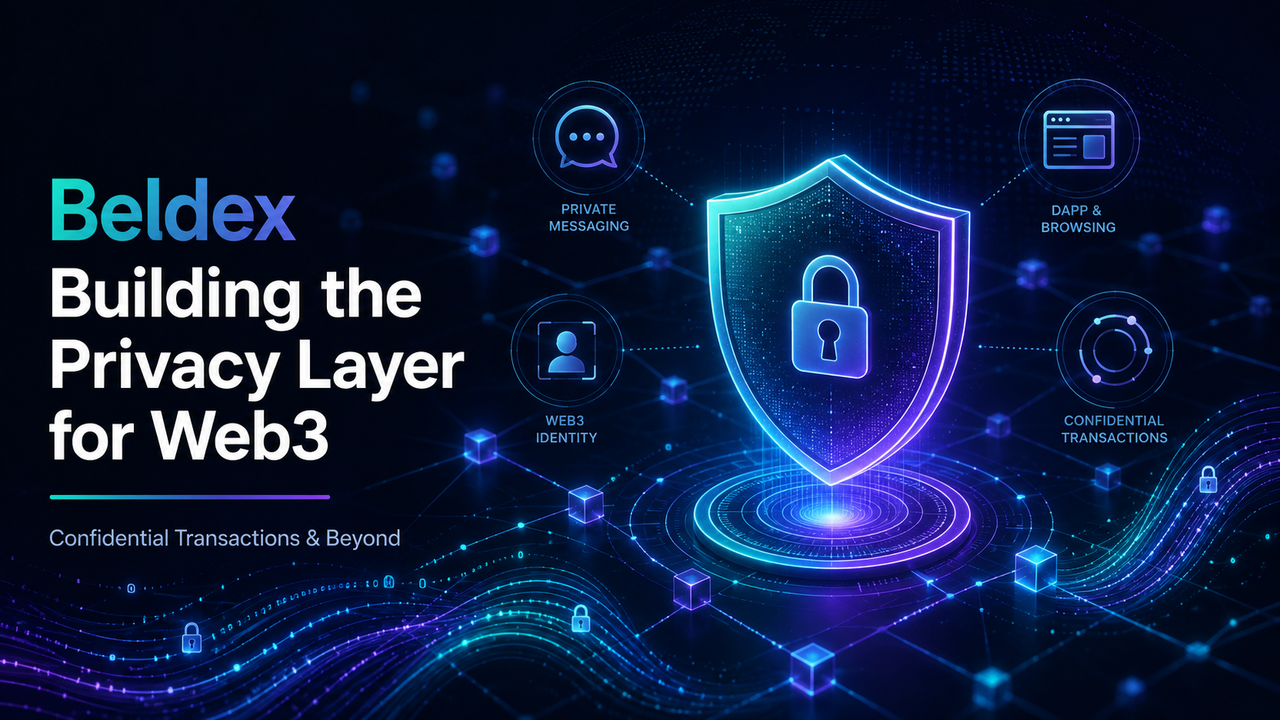
Beldex is building a privacy layer for Web3 through confidential transactions, RingCT, stealth addresses, private messaging, secure browsing, decentralized identity, and privacy-focused blockchain infrastructure.
Privacy is becoming one of the most important requirements for the future of Web3. Public blockchains were designed to be transparent, open, and verifiable. This transparency allows users to check transactions, confirm ownership, and trust network activity without relying on a central authority. However, the same transparency can also expose sensitive information.
On many blockchain networks, wallet addresses, transaction amounts, token transfers, and user behavior can be publicly viewed. Over time, this activity can be analyzed to identify patterns, track funds, and build profiles around users or businesses. For Web3 to support real-world payments, decentralized finance, private communication, identity, and digital ownership, users need stronger privacy protection.
Beldex is building toward this need by creating a privacy-focused Web3 ecosystem. Its approach goes beyond private payments. Beldex combines confidential transactions with privacy tools for messaging, browsing, internet access, wallets, and Web3 identity. Through technologies such as RingCT, stealth addresses, ring signatures, BChat, BelNet, Beldex Browser, and BNS, Beldex aims to support a more confidential and user-controlled decentralized internet. For readers who want a broader project overview, KuCoin’s guide on what is Beldex (BDX) provides additional background on the Beldex ecosystem.
Beldex at a Glance: A Privacy-Focused Web3 Ecosystem
Beldex is a privacy-focused Web3 ecosystem built around confidential transactions, private communication, secure browsing, and decentralized identity. Its native asset, BDX, supports network activity, while privacy tools such as RingCT, stealth addresses, and ring signatures help protect transaction details.
Beyond payments, Beldex also includes BChat, BelNet, Beldex Browser, Beldex Wallet, and BNS. Together, these tools help Beldex move beyond a private payment network and position it as a broader privacy layer for Web3.
Why Beldex is Building a Privacy Layer for Web3
Beldex is building a privacy layer for Web3 because blockchain transparency, while useful for verification, can expose too much user information. As decentralized applications expand into payments, communication, browsing, identity, and finance, users need stronger protection for their digital activity. Beldex aims to support this need by creating privacy-focused infrastructure that helps users interact across Web3 with more confidentiality, control, and security.
-
Web3 Transparency Creates a New Privacy Challenge
Web3 was built on the idea of open, verifiable networks. Public blockchains allow anyone to check transactions, confirm ownership, and verify activity without relying on a central authority. This transparency is one of blockchain’s strongest features, but it also creates a major privacy challenge.
On many public blockchains, wallet addresses, transaction amounts, token movements, and interaction history can be viewed by anyone. Even when users do not share their real names, their wallet activity can still be tracked over time. Blockchain analytics tools can connect patterns, identify relationships between wallets, and build profiles around user behavior.
This creates a problem for users who want the benefits of Web3 without exposing their full financial and digital activity. Beldex is building a privacy layer for Web3 to help reduce this exposure and make decentralized interaction more confidential.
-
Why Web3 Needs Privacy Infrastructure
As Web3 grows beyond trading and speculation, privacy becomes more important. Users are now interacting with decentralized finance, wallets, gaming platforms, identity tools, social applications, and payment networks. Each interaction can leave a visible data trail.
A privacy layer helps protect users from unnecessary tracking while still allowing blockchain networks to function securely. For Beldex, privacy is not only about hiding transactions. It is about creating a safer environment for digital payments, communication, browsing, and Web3 identity.
Privacy infrastructure matters because it can help protect:
-
Wallet activity from public tracking and profiling
-
Transaction history from unwanted exposure
-
User identity from being linked too easily to blockchain behavior
-
Business payments from revealing sensitive financial activity
-
Web3 communication from unnecessary metadata exposure
This makes privacy a practical requirement for broader Web3 adoption. KuCoin’s article on top privacy coins in 2026 also highlights how privacy-focused crypto projects are becoming part of a wider market discussion around user protection and institutional adoption.
-
Beldex’s Role in the Web3 Privacy Ecosystem
Beldex is building a privacy-focused ecosystem designed to support confidential digital interaction. Its goal is to make privacy available across multiple areas of Web3, not just token transfers.
The Beldex ecosystem includes privacy-focused tools for transactions, messaging, browsing, decentralized access, and Web3 identity. This wider approach helps position Beldex as more than a privacy coin. It is working toward becoming a privacy layer for decentralized applications and digital communication.
By combining confidential transactions with privacy-focused products, Beldex aims to give users stronger control over how their data, identity, and financial activity are exposed online.
-
Privacy as a Foundation for Real Web3 Adoption
For Web3 to reach mainstream use, users need confidence that their personal and financial activity is not fully visible to the public. Businesses, institutions, creators, and everyday users may all need privacy for different reasons.
A company may not want competitors to see supplier payments. A creator may not want income streams publicly tracked. A user may not want every wallet interaction connected to their identity. Developers may need privacy tools to build applications that protect user data from the start.
This is why Beldex is building privacy as a core layer rather than a secondary feature. Confidentiality can make Web3 more usable for real-world payments, private communication, decentralized identity, and future data-driven applications.
-
How Beldex Supports a More Private Web3 Future
Beldex’s privacy layer is designed around the idea that users should be able to interact online without exposing more information than necessary. Through confidential transactions and privacy-focused applications, Beldex is working to reduce the visibility of sensitive user activity.
This approach supports a broader Web3 future where privacy is built into the user experience. Instead of forcing users to choose between decentralization and confidentiality, Beldex aims to support both.
In this sense, Beldex is building a privacy layer for Web3 because the next phase of decentralized adoption will require more than open networks. It will require secure, confidential, and user-controlled digital infrastructure.
What Challenges Does Transparency Present?
Blockchain transparency helps users verify transactions and network activity, but it can also create privacy concerns when too much information is publicly visible. In Web3, every visible transaction can become part of a larger data trail. This means wallet activity, payment history, user behavior, and financial movements may be analyzed by anyone, including blockchain analytics platforms, competitors, or malicious actors.
-
Public Wallet Tracking: On transparent blockchains, wallet addresses can often be monitored over time. Even if a wallet does not show a real name, repeated activity may reveal patterns that connect the wallet to a person, business, or organization.
-
Visible Transaction History: Every transaction can create a permanent record. This may expose how often a user sends funds, which platforms they use, and how they interact with DeFi, exchanges, wallets, or Web3 applications.
-
Financial Privacy Risks: Public transaction amounts can reveal balances, payment sizes, income patterns, treasury movements, or trading activity. This can be a concern for individuals, creators, companies, and investors who do not want their financial behavior fully visible.
-
Business Data Exposure: For businesses using blockchain payments, transparency can reveal supplier payments, customer activity, operational expenses, or treasury strategies. Competitors may use this information to understand business relationships or financial behavior.
-
User Profiling Through Blockchain Analytics: Blockchain analytics tools can connect wallet addresses, transaction flows, token movements, and platform interactions. Over time, this can create detailed user profiles, even when users are not directly identified.
-
Security and Targeting Concerns: If a wallet is known to hold large amounts of digital assets, it may become a target for scams, phishing, hacking attempts, or social engineering. Transparency can increase risk when sensitive financial information is easy to observe.
-
Reduced Confidence in Web3 Adoption: Many users and institutions may hesitate to use Web3 if every transaction is publicly visible. For broader adoption, users need stronger privacy options that protect sensitive activity while keeping blockchain networks verifiable.
-
Need for Privacy-Focused Infrastructure: These challenges show why projects like Beldex focus on privacy layers for Web3. Confidential transactions, stealth addresses, RingCT, private messaging, and privacy-focused browsing can help reduce unnecessary exposure while supporting decentralized interaction. This aligns with the broader privacy transactions trend, where privacy is increasingly discussed as part of scalable and responsible blockchain adoption.
How Beldex Uses Confidential Transactions, RingCT, and Stealth Addresses
Beldex uses confidential transaction technology to make Web3 payments more private and harder to trace. While many public blockchains expose wallet addresses, transaction values, and transfer history, Beldex focuses on protecting the sender, receiver, and amount involved in a transaction. This privacy-first design helps support confidential digital payments while keeping the blockchain network functional and verifiable.
-
What Confidential Transactions Mean in Beldex
Confidential transactions are designed to hide sensitive transaction details from public view. In a normal blockchain transaction, users may be able to see which wallet sent funds, which wallet received them, and how much was transferred. This level of visibility can create privacy risks for individuals, businesses, and Web3 users.
Beldex uses confidential transaction features to reduce this exposure. Instead of making every transaction detail easily visible, the network applies cryptographic privacy tools that help protect user activity.
-
RingCT Helps Hide Transaction Amounts
RingCT, or Ring Confidential Transactions, is one of the main privacy features used by Beldex. Its purpose is to hide the amount transferred in a transaction while still allowing the network to verify that the transaction is valid.
This is important because transaction amount privacy is a major part of financial confidentiality. Even when wallet addresses are difficult to identify, visible amounts can still reveal payment patterns, business activity, income flows, or trading behavior.
RingCT helps protect:
-
Transaction amounts from public visibility
-
Financial activity from easy tracking
-
Payment patterns from blockchain analysis
-
User privacy during Web3 transfers
By using RingCT, Beldex strengthens its role as a privacy-focused blockchain designed for confidential digital payments.
-
Stealth Addresses Help Protect the Receiver
Stealth addresses are used to protect the receiver’s identity in a transaction. Instead of sending funds directly to a public address that can be repeatedly tracked, stealth addresses create a unique, one-time address for each transfer.
This makes it harder for outside observers to connect incoming payments to the same receiver. For users who receive multiple payments, this feature can help prevent others from building a visible transaction profile.
Stealth addresses are especially useful for:
-
Users receiving private crypto payments
-
Businesses that do not want payment flows exposed
-
Creators and freelancers receiving digital assets
-
Web3 users who want stronger wallet privacy
In Beldex’s privacy model, stealth addresses help make receiving funds more confidential and less traceable.
-
Ring Signatures Help Protect the Sender
Alongside RingCT and stealth addresses, Beldex also uses ring signatures to help protect the sender. A ring signature mixes the real sender with other possible signers, making it harder to identify which wallet actually authorized the transaction.
This creates uncertainty for anyone trying to trace the origin of a payment. Instead of one wallet being clearly linked to a transaction, the transaction appears to come from a group of possible participants.
This sender privacy is important because public wallet activity can often be analyzed over time. Ring signatures help reduce the risk of exposing a user’s transaction history or financial behavior.
-
How These Privacy Tools Work Together
Beldex’s privacy model is strongest because these technologies work together. Each tool protects a different part of the transaction.
-
Ring signatures help hide the sender
-
Stealth addresses help hide the receiver
-
RingCT helps hide the transaction amount
Together, these features create a more complete confidential transaction system. Instead of protecting only one part of a payment, Beldex aims to protect the full transaction flow.
This makes Beldex different from many transparent blockchain networks, where transaction activity can often be viewed, tracked, and analyzed by the public.
-
Why These Features Matter for Web3 Privacy
Confidential transactions, RingCT, and stealth addresses matter because Web3 users need privacy for real-world adoption. Public transparency may be useful for verification, but too much visibility can expose sensitive financial and personal information.
Beldex’s approach helps support a more private Web3 environment where users can send and receive digital assets without making every detail publicly visible. This can be useful for individuals, businesses, developers, and communities that need stronger confidentiality.
As blockchain adoption grows, privacy-focused infrastructure may become more important for payments, decentralized finance, digital identity, and Web3 applications. Beldex’s use of confidential transactions, RingCT, and stealth addresses positions it as part of this wider move toward privacy-first Web3 infrastructure.
Beyond Transactions: Beldex’s Privacy Ecosystem for Messaging, Browsing, and Web3 Identity
Beldex is building privacy beyond blockchain transactions by developing an ecosystem that supports private communication, decentralized browsing, network-level privacy, and Web3 identity. While confidential transactions help protect payments, users also need privacy when they send messages, access the internet, manage wallets, and interact with decentralized applications. This wider approach helps position Beldex as a privacy-focused Web3 ecosystem rather than only a private payment network.
-
BChat Supports Private Web3 Communication
BChat is one of the key privacy-focused applications in the Beldex ecosystem. It is designed to support secure and private communication for users who want more control over their conversations and metadata.
In Web3, communication privacy is important because users often discuss wallet activity, payments, business deals, community updates, and identity-related information through messaging apps. If communication is not private, users may still expose sensitive information even when their transactions are protected.
BChat supports Beldex’s wider privacy mission by giving users a communication layer that aligns with the values of decentralized privacy.
-
BelNet Adds Network-Level Privacy
BelNet is another important part of Beldex’s privacy ecosystem. It is designed to help users access the internet with stronger privacy protection by reducing exposure to tracking, location signals, and network metadata.
This matters because blockchain privacy alone is not enough. A user may send private transactions, but their internet activity, IP address, browsing behavior, and app usage can still reveal important information. BelNet helps address this gap by supporting a more private access layer for Web3 users.
-
Beldex Browser Helps Protect Everyday Web Activity
Beldex Browser expands the ecosystem into private browsing. Browsers are one of the most common places where users expose personal data. Website trackers, cookies, search behavior, fingerprinting tools, and browsing history can create detailed user profiles.
For Web3 users, browser privacy is especially important because many blockchain activities happen through web-based wallets, dApps, exchanges, and decentralized platforms. If browsing activity is tracked, users may still lose privacy even when using private transaction tools.
Beldex Browser supports a more private online experience by helping users reduce unnecessary exposure during everyday internet use.
-
Beldex Wallet Connects Users to Private Transactions
The Beldex Wallet plays an important role in connecting users to the network’s privacy features. A wallet is more than a place to store tokens; it is the main entry point for sending, receiving, and managing digital assets.
In a privacy-focused ecosystem, the wallet experience is important because users need a simple way to access confidential transactions. If privacy tools are difficult to use, adoption becomes harder.
Beldex Wallet supports the ecosystem by helping users manage BDX and interact with the network’s privacy features more easily. For general wallet education, KuCoin’s guide on what is a Web3 wallet explains how Web3 wallets work as user entry points for decentralized applications and digital assets.
-
BNS Brings Privacy-Focused Web3 Identity
BNS, or Beldex Name Service, adds a Web3 identity layer to the Beldex ecosystem. Human-readable names can make blockchain interactions easier because users do not have to rely only on long wallet addresses.
However, identity tools can also create privacy risks if they expose too much user information. Beldex’s focus on privacy-focused identity helps support a more balanced Web3 experience where users can interact more easily while maintaining stronger control over their digital presence.
BNS can be useful for:
-
Web3 identity management
-
Readable wallet names
-
Decentralized user profiles
-
Private ecosystem interactions
-
Simpler blockchain usability
This makes BNS an important part of Beldex’s goal to build privacy across communication, payments, and identity.
-
Why Beldex’s Ecosystem Approach Matters
Beldex’s privacy ecosystem matters because Web3 privacy cannot depend on transactions alone. A user’s digital footprint includes messages, browsing activity, wallet behavior, identity signals, and network metadata.
By developing tools for multiple layers of digital interaction, Beldex aims to create a more complete privacy experience. This makes the ecosystem more useful for users who want confidentiality across different parts of Web3.
Beldex’s ecosystem approach supports privacy in several areas:
-
Payments through confidential transactions
-
Messaging through BChat
-
Internet access through BelNet
-
Browsing through Beldex Browser
-
Wallet activity through Beldex Wallet
-
Web3 identity through BNS
Together, these tools show how Beldex is working to build a broader privacy layer for Web3.
-
Building Toward a More Private Web3 Future
As Web3 adoption expands, users will need privacy tools that are simple, practical, and connected across different use cases. Beldex’s ecosystem is designed around this idea by combining private transactions with applications for communication, browsing, and identity.
This broader privacy stack may become more relevant as users demand stronger control over their data, financial activity, and online behavior. Instead of focusing only on anonymous payments, Beldex is building toward a Web3 environment where privacy can support everyday digital interaction.
In this way, Beldex’s privacy ecosystem shows how confidential transactions can become part of a larger privacy layer for the decentralized internet.
Conclusion
Beldex is building a privacy-focused Web3 ecosystem that goes beyond confidential transactions. By combining RingCT, stealth addresses, ring signatures, BChat, BelNet, Beldex Browser, Wallet, and BNS, Beldex aims to protect payments, communication, browsing, and identity. As Web3 adoption grows, privacy layers like Beldex may become increasingly important for users who want more control over their digital activity.
FAQs
What is Beldex?
Beldex is a privacy-focused Web3 ecosystem built around confidential transactions, private messaging, secure browsing, and Web3 identity.
How does Beldex protect transactions?
Beldex uses RingCT, stealth addresses, and ring signatures to help protect the sender, receiver, and transaction amount.
What is RingCT?
RingCT helps hide the transaction amount while still allowing the network to verify that the transaction is valid.
What are stealth addresses?
Stealth addresses create one-time receiving addresses, making it harder to link payments to the same user.
Why does Web3 need privacy?
Web3 needs privacy because public blockchains can expose wallet activity, transaction history, and user behavior.
Is Beldex only for private payments?
No. Beldex also includes BChat, BelNet, Beldex Browser, Beldex Wallet, and BNS.
How does Beldex support Web3 privacy?
Beldex supports Web3 privacy by combining private transactions with tools for messaging, browsing, internet access, and identity.
Disclaimer
The information provided on this page may originate from third-party sources and does not necessarily represent the views or opinions of KuCoin. This content is intended solely for general informational purposes and should not be considered financial, investment, or professional advice. KuCoin does not guarantee the accuracy, completeness, or reliability of the information, and is not responsible for any errors, omissions, or outcomes resulting from its use. Investing in digital assets carries inherent risks. Please carefully evaluate your risk tolerance and financial situation before making any investment decisions. For further details, please consult KuCoin’s Terms of Use and Risk Disclosure.