

From Tether Controversies to MSNXX: The Rise of Regulated Stablecoin Reserve Portfolios
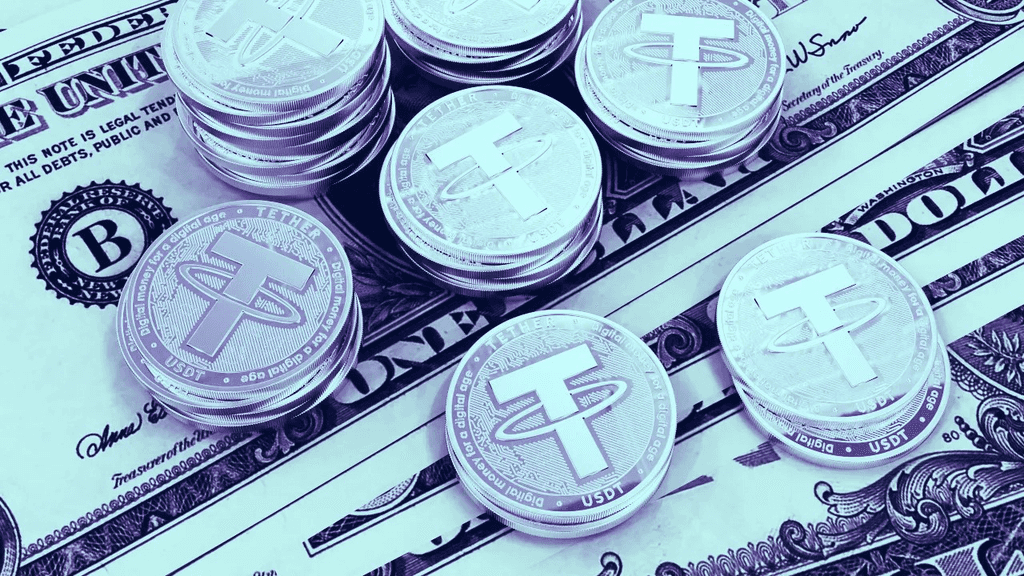
The transition of stablecoin backing from controversial offshore accounts to highly regulated treasury instruments like the MSNXX fund represents a fundamental institutionalization of digital liquidity. This change provides a level of transparency and security previously unseen in the crypto ecosystem while creating a new technical bridge between legacy finance and the blockchain.
The Evolving Anatomy of Digital Cash Reserves
The world of digital finance has moved far beyond the days of simple trust and unverified claims. In the early years of the industry, the mechanisms that kept a digital dollar worth exactly one dollar were often hidden from public view. This lack of clarity created significant skepticism among traditional investors who were used to the rigorous auditing standards of Wall Street. Today, the landscape has changed dramatically as the largest players in the space embrace a model centered on high grade government debt. This evolution is not just about moving money but about redefining the very nature of trust in a decentralized economy where every cent must be accounted for in real time.
Recent data from April 2026 shows that the total market capitalization for stablecoins has stabilized around $315 billion. A significant portion of this capital is no longer sitting in mysterious bank accounts in remote jurisdictions. Instead, it is being funneled into sophisticated financial products that offer daily reporting and high levels of liquidity. This professionalization of reserves has allowed digital assets to remain resilient even when the broader crypto markets experience volatility. The shift reflects a maturing industry that understands that long term survival depends on being able to prove that every digital token is backed by a tangible, low risk asset held in a secure environment.
Peeking Behind the Curtain of Massive Dollar Stockpiles
Tether has long been a focal point for discussions regarding reserve transparency and the quality of backing assets. As of early 2026, the company reported a record breaking $193 billion in total assets, a figure that highlights its continued dominance despite the emergence of many competitors. The composition of these reserves has shifted toward a heavy reliance on United States Treasuries, which now account for over $122 billion of the total portfolio. This move toward government backed debt is a direct response to historical criticisms and a strategic effort to align with the safety expectations of global financial markets. By holding such a massive amount of short term debt, the issuer ensures it can meet redemption demands almost instantly.
The financial performance of these reserve managers is also a point of intense interest for market observers. Reports from January 2026 indicate that while profits have slightly dipped from previous record highs, they remain substantial at roughly $10 billion for the 2025 fiscal year. This decrease in profit was largely driven by a conscious decision to shift away from higher yield but riskier investments toward highly liquid cash equivalents. This strategy prioritizes the stability of the peg over the maximization of returns, a choice that has helped maintain user confidence during periods of global economic uncertainty. The story of these reserves is one of balancing the need for massive liquidity with the desire to generate sustainable income for the operating entities.
How Treasury Bonds Became the Heartbeat of Crypto
The integration of government bonds into the digital asset space has turned the U.S. Treasury market into the primary engine of crypto liquidity. By the spring of 2026, the total value of tokenized real world assets reached approximately $27.5 billion, with the vast majority of that value coming from short term government debt. This development has effectively turned the blockchain into a secondary market for the most liquid assets in the world. This symbiotic relationship provides the digital asset world with a stable foundation while offering the treasury market a new, highly efficient distribution channel. It is a fundamental merging of two worlds that were once considered entirely separate and even antagonistic toward each other.
The technical implementation of this bond backed model is surprisingly elegant. When a fund like the BlackRock USD Institutional Digital Liquidity Fund operates, it holds a basket of Treasury bills and repurchase agreements. Each share of the fund is then represented by a token on the blockchain, which can be traded, used as collateral, or held for yield. This allows even smaller institutional players to access the safety of the Treasury market without needing the massive infrastructure typically required for institutional bond trading. The treasury bond has effectively become a primitive for the digital finance world, a basic building block upon which more complex financial services are being constructed.
The Surge of Institutional Interest in Tokenized Funds
Major financial institutions are no longer watching the digital asset space from the sidelines, they are now actively building its infrastructure. The growth of tokenized funds in 2026 has been driven by a desire for the efficiency gains that blockchain technology offers over legacy settlement systems. Total tokenized Treasury value grew to $13.4 billion by early April, marking a record quarter for the sector. This influx of capital is coming from insurance companies, pension funds, and corporate treasuries that recognize the advantages of 24/7 trading and near instant settlement. These organizations are drawn to the combination of institutional grade management and the agility of the blockchain.
In the past, he noted that most digital liquidity was driven by speculation, but the current wave is driven by the search for utility and yield. He points out that the ability to earn 3% to 5% on a liquid treasury backed token is far more attractive than keeping cash in a non-interest bearing stablecoin. This migration of smart money is a clear signal that the infrastructure is ready for large scale adoption. The institutionalization of these funds has brought a level of sophistication to the market that was missing during the earlier, more chaotic cycles of the crypto industry's growth.
Understanding the Role of BlackRock in Digital Liquidity
BlackRock's entry into the tokenized fund space has been a transformative moment for the entire ecosystem. Its flagship product, the BUIDL fund, had reached a market cap of over $2.26 billion by late April 2026. This fund is not just a digital asset, it is a direct pipeline to the BlackRock Treasury Strategies Institutional Fund, often identified by the ticker MSNXX. By connecting a massive, regulated money market fund to a blockchain, BlackRock has provided a level of legitimacy that few other entities could offer. This connection allows for the seamless movement of value between the traditional financial system and decentralized networks, effectively bridging the gap between Wall Street and the blockchain.
The impact of this development can be seen in how other financial products are now structured. Many new projects are choosing to use BUIDL or similar treasury backed tokens as their primary reserve asset instead of traditional stablecoins. This is because these funds offer a unique combination of regulatory oversight, professional management, and on chain liquidity. The presence of the world’s largest asset manager in this space has also encouraged other institutional players to explore tokenization. It has shifted the conversation from whether these assets are safe to how they can be most effectively integrated into modern investment portfolios. The success of the MSNXX fund in this context proves that there is deep demand for high quality, transparent digital dollar equivalents.
Why Gold Is Making a Comeback in Reserve Strategies
While government debt is the primary backing for most modern reserves, precious metals are beginning to play an increasingly important role once again. Tether, for instance, has significantly increased its exposure to gold, adding approximately 27 metric tons to its reserves in the final quarter of 2025. By early 2026, the company’s gold holdings were valued at several billion dollars, providing a different kind of stability compared to currency based assets. Gold acts as a hedge against the devaluation of the dollar and provides a physical anchor for a purely digital currency. This multi asset approach to reserves is becoming a hallmark of the most resilient issuers in the market.
This return to gold is driven by a desire for diversification in an environment of shifting global trade policies and fluctuating interest rates. While treasury bills provide liquidity and yield, gold provides a store of value that is independent of any single government’s monetary policy. For many investors, seeing a portion of a stablecoin’s reserves backed by physical gold bars held in secure vaults adds an extra layer of confidence. It harkens back to the historical gold standard while utilizing modern blockchain technology for tracking and verification. This blend of ancient value and futuristic tech is a defining characteristic of the 2026 reserve landscape, offering a unique value proposition to those wary of purely fiat based systems.
How Small Investors Benefit From High Level Treasury Access
One of the most profound effects of the tokenization of funds like MSNXX is the democratization of access to institutional grade financial instruments. In the traditional world, participating in a high yield treasury fund often required a minimum investment of millions of dollars, effectively locking out smaller players. Today, those same funds can be tokenized and broken down into smaller pieces, allowing a retail investor to hold the equivalent of a single share. This provides everyone with access to the same safety and yield that was previously reserved for the ultra wealthy and large corporations. It is a powerful example of how blockchain technology can level the playing field in global finance.
For a small business owner in a developing economy, this access can be life changing. Instead of holding their savings in a local currency that may be subject to high inflation, they can hold a digital token backed by U.S. Treasuries. They can earn a competitive global yield and have the peace of mind that their money is backed by the same assets held by the world's largest banks. This use case is driving adoption in regions like Latin America and Southeast Asia, where stablecoins are increasingly used for both savings and commerce. The story of regulated reserves is not just a story of big banks and massive funds, it is a story of providing financial security to individuals across the globe.
FAQs
What exactly is the MSNXX fund and how does it connect to the blockchain?
The MSNXX ticker represents the BlackRock Treasury Strategies Institutional Fund, which is a highly regulated money market fund investing in U.S. government debt. In the context of digital assets, this fund serves as the primary backing for tokenized products like BlackRock's BUIDL. By holding shares of this fund, the digital tokens gain the stability and yield of the underlying Treasury bills.
Why are digital asset managers moving away from old stablecoin models?
The move is driven by a demand for greater transparency and more consistent safety. Traditional stablecoin models often relied on opaque bank deposits or a mix of various assets that were not always easy to verify in real time. In contrast, treasury backed models like those used by BUIDL offer daily reporting and are managed by world class asset managers.
How does the current yield on these treasury backed tokens compare to traditional savings?
As of late April 2026, many of these tokenized treasury funds offer yields that are closely aligned with the current U.S. Treasury rates, often ranging between 3.25% and 5%. This is typically much higher than what is offered by standard business or personal checking accounts at traditional banks.
Is it possible for a retail investor to access funds like BlackRock's BUIDL directly?
While some tokenized institutional funds are currently restricted to qualified or institutional investors due to existing standards, the technology allows for a much broader range of access than traditional bond markets. Many platforms are now offering wrapped or secondary versions of these tokens that are accessible to a wider audience.
What role does gold play in the current digital reserve ecosystem?
Gold is used as a diversification tool to provide a hedge against the devaluation of fiat currencies and to add a layer of physical security to digital reserves. While treasury bills provide excellent liquidity and yield, gold is a timeless store of value that is not tied to the performance of any single government. Leading issuers like Tether have significantly increased their gold holdings to ensure their portfolios are resilient across various economic cycles.
What does the record breaking profit for stablecoin issuers mean for the average user?
Large profits for issuers are generally a sign of a healthy and sustainable business model, which is crucial for maintaining the long term stability of the peg. When an issuer is profitable, they can afford to invest in better security, more frequent audits, and more robust technical infrastructure. It also allows them to maintain a surplus or buffer of assets, which provides extra protection for token holders during times of market stress.
Disclaimer
This content is for informational purposes only and does not constitute investment advice. Cryptocurrency investments carry risk. Please do your own research (DYOR).