

ARB Token Unlock Hits Today: Can Arbitrum's Growth Absorb 92 Million New Tokens?
Thesis Statement
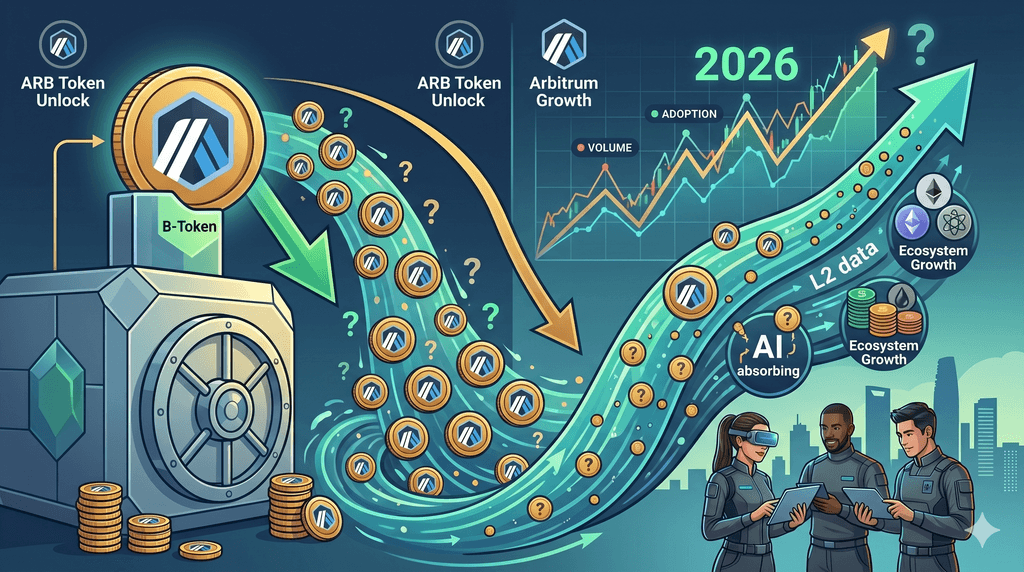
Arbitrum stands as one of Ethereum's top Layer 2 networks, yet its native ARB token faces regular supply increases through scheduled unlocks. Today's event adds roughly 92.65 million tokens to circulation, representing about 1.75% of the current released supply and valued at $10.28 million at recent prices. This monthly pattern has become routine, but the question lingers among traders and long-term participants: will network activity and adoption outpace the added tokens, or will selling pressure push prices lower once again? Fresh data from on-chain metrics, recent partnerships, and community activity paint a picture of steady expansion amid predictable supply events.
How the April 16, 2026, ARB Unlock Breaks Down in Numbers
The unlock scheduled for April 16, 2026, involves 92.65 million ARB tokens entering circulation from allocations tied to the team, future team members, advisors, and investors. This release forms part of the linear vesting schedule that has run consistently since the token's early days. At current market levels, ARB is around $0.11 to 0.12 on KuCoin; the batch carries a value of approximately $10.28 million, adding roughly 1.53% to the float. The circulating supply sits near 6.04 billion out of a 10 billion total cap, meaning about 60% of all tokens have already become tradable. Past monthly unlocks in February, March, and earlier this year followed similar sizes between 92 million and 96 million tokens, often coinciding with modest price adjustments rather than sharp crashes.
Data platforms tracking these events show the April release splits primarily toward team and investor portions, with smaller amounts directed to the DAO treasury in some linear components. Recipients may choose to hold for governance participation or sell to cover expenses, creating variable short-term effects depending on broader market sentiment and liquidity conditions.
Traders monitoring real-time dashboards note that unlock sizes have stabilized in recent months, avoiding the larger one-time cliffs seen in prior cycles. This predictability allows participants to prepare, though actual market reaction often hinges on concurrent news around network upgrades or user growth figures. The event adds measurable supply without overwhelming the existing float in a single blow, setting the stage for observers to watch absorption rates in the days ahead.
Who Receives Tokens from Today's ARB Release and What They Might Do
Team members, advisors, and early investors make up the bulk of recipients in this April unlock, following the structured vesting that began after the initial distribution. Allocations for these groups total significant portions of the original supply, with linear releases occurring monthly to align incentives over years rather than immediate dumps. Some tokens also flow toward the Arbitrum DAO treasury, supporting future grants, ecosystem initiatives, or operational needs decided through community votes.
Historical patterns indicate many recipients stagger sales or hold positions to maintain influence in governance proposals that shape protocol direction. In practice, not every unlocked token hits exchanges instantly; internal strategies, tax considerations, and belief in long-term value play roles in timing. Community discussions highlight cases where early contributors reinvest proceeds into building dApps or liquidity pools on the network itself.
The DAO treasury component often funds developer incentives or marketing pushes that indirectly boost token utility. While selling pressure remains a factor, the distributed nature across multiple parties reduces the chance of coordinated large-scale exits. Observers point out that governance participation rates have stayed healthy, with ARB holders voting on key upgrades that enhance scalability and attract more activity. This alignment between token holders and network success creates a feedback loop where some unlocked supply gets recycled back into ecosystem growth rather than pure market sales.
Arbitrum's TVL Leadership and What the Numbers Reveal
Arbitrum continues to top Ethereum Layer 2 charts by total value locked, with figures hovering between $16.6 billion and $20 billion in recent reports from 2025 into early 2026. This dominance reflects deep liquidity in DeFi protocols, perpetual trading platforms, and gaming applications that users trust with substantial capital. Stablecoin supply on the network grew 80% year-over-year in 2025, peaking near $10 billion and signaling strong demand for efficient, low-cost transfers. Cumulative transactions surpassed 2.1 billion by the end of last year, with the second billion processed in under 12 months, demonstrating accelerating on-chain usage.
These metrics stand out against competitors, as Arbitrum maintains a leading share of Layer 2 activity despite periodic market dips. Protocols like GMX for derivatives and Uniswap deployments contribute meaningful volume, while NFT and gaming projects add diversity to user engagement. The network's Nitro upgrade delivered faster finality and reduced fees, encouraging migration from mainnet Ethereum and other chains.
Recent transparency reports emphasize over 1,000 projects built on or connected to Arbitrum, including chains launched via its Orbit technology that extend the ecosystem outward. Such expansion turns TVL into more than a headline number; it represents real capital at work, generating fees and activity that could support token value over time. Even as unlocks add supply, these fundamentals provide a buffer by drawing fresh users and liquidity that absorb portions of new tokens through trading, staking, or governance involvement.
Recent User Growth Surges and Partnership Stories
Partnerships have driven noticeable user influxes, with one collaboration adding over 1 million new participants in recent months through targeted campaigns and rewards. Initiatives like the Eldorado integration and Praxis Society tie-ins brought fresh audiences into Arbitrum-based applications, boosting daily active addresses and transaction counts. Developers received grants via the Stylus Sprint program, offering millions in ARB incentives for building in languages like Rust and C++ that open doors to higher-performance smart contracts. These efforts target both retail users seeking cheap DeFi access and builders looking for scalable infrastructure.
On-chain data shows spikes in wallet creations and bridge volumes following such announcements, turning marketing into measurable activity. Individual stories emerge of users who discovered Arbitrum through gaming titles or yield opportunities and stayed for the low costs compared to the Ethereum mainnet. One developer shared how a small grant allowed rapid prototyping of a privacy-focused tool that now sees steady usage from early adopters.
Community channels buzz with reports of smoother experiences in perpetuals trading and NFT minting, where gas fees stay minimal even during peak times. This organic growth is unlocked by increasing demand-side pressure that can offset new supply. As more chains integrate via Orbit, the network effect widens, potentially creating stickier user bases less sensitive to short-term token events. The human side reveals traders who bridged assets during dips and found reliable yields, reinforcing loyalty even when prices consolidate.
Price Action Patterns Around Past Monthly Unlocks
Market reactions to recent unlocks have shown varied but often contained moves, with prices adjusting modestly in the days surrounding events rather than plunging dramatically. February and March 2026 releases of similar scale coincided with periods where ARB traded in tight ranges, sometimes dipping 3-5% before recovering on positive ecosystem news. Volatility metrics indicate lower swings in the week after unlocks compared to broader crypto market moves, suggesting the events have become somewhat priced in over repeated cycles. Trading volumes tend to rise ahead of dates as participants position for potential dips or bounces, then normalize once tokens are distributed.
In one instance, a concurrent upgrade announcement helped stabilize sentiment and limit downside. Charts reveal support levels holding during several past releases, with rebounds tied to overall Ethereum strength or Layer 2 narrative momentum. Short-term traders sometimes front-run the calendar, creating temporary oversold conditions that attract buyers focused on fundamentals. Longer-term holders point to the vesting design that spreads supply gradually, avoiding sudden floods that plagued some other projects. While no unlock guarantees price direction, the pattern shows absorption improves when network metrics like transaction growth or TVL expand in tandem. Current levels near recent lows test resilience, yet sustained activity provides context beyond pure supply mechanics.
Developer Activity and Stylus Upgrade Momentum
The Stylus upgrade enables developers to write smart contracts in familiar languages beyond Solidity, lowering barriers for teams experienced in traditional programming. Grants totaling millions in ARB have seeded projects exploring everything from advanced DeFi primitives to on-chain games with better performance. Activity dashboards show rising deployments and code contributions, with Arbitrum ranking high in developer mindshare among Layer 2 options. Builders cite faster iteration cycles and cost efficiency as reasons for choosing the network over alternatives.
One team recounted migrating a complex derivatives protocol after testing showed significant gas savings and throughput gains. Community forums feature discussions on new tools that integrate Rust-based components for enhanced security or speed. This technical evolution keeps Arbitrum competitive as other chains push their own innovations. Increased developer inflow translates to more dApps, which in turn attract users and liquidity that interact with the ARB token through governance or incentives.
The upgrade cycle aligns with broader Ethereum improvements, positioning Arbitrum to capture flows from institutions exploring scalable blockchain solutions. Stories of solo developers launching prototypes that gain quick traction highlight the accessible environment fostering innovation. Such momentum adds layers of utility that extend beyond speculation, potentially creating durable demand even as supply grows predictably each month.
Governance Participation and DAO Treasury Role
ARB token holders actively shape protocol decisions through the decentralized autonomous organization, voting on fund allocations, upgrades, and incentive programs. Turnout remains consistent, with proposals covering everything from grant distributions to security enhancements drawing engaged debate. The DAO treasury receives portions of certain unlocks, providing resources to support ecosystem projects without relying solely on external funding. Votes have approved initiatives that expanded Orbit chain deployments and rewarded user growth campaigns. Participants describe the process as transparent, with detailed discussions preceding decisions that impact network direction. This governance layer gives ARB real utility as a voting instrument rather than just a tradable asset.
Treasury usage often cycles back into the community via developer bounties or liquidity mining extensions that encourage holding or staking. Fresh angles emerge when proposals tie directly to absorbing supply pressure, such as buyback mechanisms or yield programs discussed in forums. Human stories include holders who joined early airdrop waves and now vote regularly, feeling ownership in the project's trajectory. Strong participation signals alignment that can mitigate sell-offs by focusing attention on long-term value creation. As unlocks continue, the DAO's ability to direct resources effectively becomes a key factor in maintaining confidence among token holders.
Institutional Interest and Real-World Asset Trends
Institutional players have shown growing engagement with Arbitrum through real-world asset tokenization and stablecoin integrations that bring traditional finance elements on-chain. Reports note rising activity in payments, on-chain finance, and derivatives sectors as 2026 progresses. Stablecoin volumes reflect practical usage for transfers and settlements at lower costs than mainnet options. Some institutions explore Arbitrum for efficient ETF-related flows or private chains via Orbit technology.
This shift brings larger capital pools that interact with the ecosystem, potentially increasing baseline demand for network resources and governance tokens. Data from transparency updates highlight billions in stablecoin supply and RWA TVL contributions that add credibility and depth. Traders observe how these inflows create natural buyers during periods of supply release, as institutions focus on utility over short-term price swings.
One perspective from ecosystem participants involves allocating funds to yield strategies on Arbitrum protocols, locking capital in ways that support overall liquidity. The narrative around institutional adoption provides a counterbalance to unlock headlines, emphasizing practical blockchain applications that drive sustained activity. As more entities test the waters, the network's metrics could reflect broader acceptance that bolsters resilience against periodic token increases.
Competitive Space Among Ethereum Layer 2 Networks
Arbitrum maintains its edge in TVL and transaction volume while facing ongoing competition from networks like Optimism, Base, and others, pushing unique features or lower fees. Each chain vies for developer attention and user migration, yet Arbitrum's established liquidity pools and broad dApp support create stickiness. Metrics show it consistently capturing a large share of Layer 2 activity, with daily transactions often leading peers during active periods.
Upgrades and grant programs help defend market position by enabling faster innovation. Users compare experiences across chains, frequently citing Arbitrum's reliability for high-volume trading or complex interactions. The Orbit framework allows custom chain launches that extend Arbitrum's technology without fragmenting the core network excessively. This approach fosters an "Arbitrum Everywhere" presence that differentiates it from single-chain competitors.
Market observers note how leadership in key indicators provides a foundation that absorbs supply events better than smaller ecosystems. Cross-chain bridges and integrations keep flows connected, allowing Arbitrum to benefit from overall Ethereum growth. The dynamic environment pushes continuous improvement, with teams monitoring rival developments to refine offerings. Despite competition, Arbitrum's scale offers advantages in network effects that new entrants struggle to match quickly.
Broader Market Context Influencing ARB Movement
Ethereum's overall performance and Layer 2 narratives play significant roles in how ARB trades around unlock events. When ETH shows strength, capital often flows into scaling solutions, providing tailwinds that help counter supply additions. Macro conditions, including liquidity trends and risk appetite, set the backdrop for individual token reactions. Recent periods of consolidation across crypto have tested many assets, yet Arbitrum's on-chain resilience stands out in comparisons. Volume spikes on major exchanges around news events demonstrate how external factors amplify or dampen unlock impacts.
Analysts track correlations with ETH and other L2 tokens to gauge relative performance. Positive developments in the wider ecosystem, such as Ethereum upgrades improving data availability, indirectly benefit Arbitrum by enhancing the entire stack. Market participants adjust strategies based on these interconnections, positioning portfolios with awareness of both token-specific and sector-wide drivers. The interplay creates opportunities for those focusing on fundamentals amid short-term volatility tied to calendars. As 2026 unfolds, alignment with larger trends could determine how effectively growth narratives prevail over supply mechanics.
Future Unlocks and Ecosystem Roadmap
The vesting schedule continues with similar monthly releases in May, June, and beyond, gradually distributing remaining locked tokens through March 2027. This extended timeline allows the network to mature and potentially scale activity to match increasing circulation. Roadmap elements emphasize institutional infrastructure, multi-chain expansion via Orbit, and further technical enhancements that could drive adoption. Observers anticipate milestones like deeper integrations or new use cases that keep momentum building.
The full unlock completion by early 2027 marks a transition point where supply pressure eases, shifting focus more squarely to utility and revenue mechanisms. Teams and the DAO prepare through targeted initiatives that aim to capture value from heightened activity. Projections vary based on adoption curves, with some models factoring in TVL growth and transaction acceleration to offset dilution effects. Community input shapes priorities, ensuring developments address real user needs. The path forward blends predictable supply dynamics with evolving product delivery that has historically supported interest. Participants watch for signs of accelerating usage that could redefine the token's role in a more mature Layer 2 space.
How Network Fees and Activity Could Offset Supply Pressure
Transaction fees and protocol revenue on Arbitrum generate value that circulates within the ecosystem, potentially supporting token demand through various mechanisms. High activity levels from DeFi, gaming, and trading contribute to baseline usage that requires ARB for governance or incentives. As volumes grow, the economic activity creates natural sinks or reinvestment loops that interact with new supply. Data from peak periods show meaningful throughput that sustains liquidity providers and developers.
Future iterations may explore ways to direct portions of value back to token holders or stakers, though current focus remains on expansion. The combination of rising users and efficient infrastructure positions the network to handle larger scales without proportional cost increases. This efficiency attracts participants who value practicality, building a foundation less swayed by monthly events. Real numbers from transparency reports underscore the scale already achieved, with billions in value secured and transactions processed rapidly. Expanding these figures could create compounding effects where growth outstrips incremental supply additions over time.
Trader Strategies and Risk Management Around Unlock Dates
Market participants often adjust exposure in the lead-up to unlocks, using tools like options or hedging to navigate potential volatility. Some focus on dollar-cost averaging during consolidation phases, viewing predictable events as entry opportunities when sentiment dips. Technical levels around recent ranges provide reference points for short-term decisions, while fundamental watchers prioritize TVL and user metrics. Diversification across Layer 2 assets or pairing with ETH exposure helps balance token-specific risks.
Community-shared approaches emphasize patience, with many holding through cycles based on conviction in long-term scaling advantages. Education around vesting details empowers informed choices rather than reactive moves. As events repeat, experience builds strategies that account for both supply realities and adoption potential. The human element shows in stories of adjusted portfolios that aligned with personal risk tolerance and research into network health.
FAQs
What exactly happens during an ARB token unlock like the one on April 16, 2026?
The process releases previously locked tokens into circulation according to the vesting schedule, primarily benefiting team, advisor, investor, and treasury allocations. This adds about 92.65 million tokens this time, increasing the tradable supply gradually without a massive one-time flood. Recipients gain access to sell, hold, or use the tokens for governance, while the market absorbs the change based on current demand and liquidity.
Has the ARB price always dropped after past unlocks?
Price movements vary, with some events leading to modest dips or consolidation while others see quick stabilization or recovery when positive news coincides. Historical data shows contained volatility in many cases, influenced more by overall market conditions and network growth than the unlock size alone. Absorption improves as activity metrics rise alongside the schedule.
How large is Arbitrum's current circulating supply compared to total supply?
Circulating supply stands near 6.04 billion ARB out of 10 billion total, meaning roughly 60% is unlocked and tradable. The remaining locked portion vests over time through 2027, with monthly releases forming a predictable pattern rather than sudden changes.
What keeps users and developers active on Arbitrum despite token unlocks?
Low fees, high TVL, fast transactions, and tools like Stylus attract builders and traders seeking efficient Ethereum scaling. Partnerships, grants, and governance participation create engagement, while real use cases in DeFi, gaming, and stablecoins drive practical value that extends beyond price action.
Can ecosystem growth fully offset the impact of ongoing ARB unlocks?
Growth in users, TVL reaching $16-20 billion, and transaction volumes in the billions provide demand-side support that can absorb new supply. Sustained adoption, institutional interest, and technical upgrades strengthen fundamentals, though short-term effects depend on market sentiment and liquidity at the time of release.
Where can I track future ARB unlock dates and amounts accurately?
Reliable sources include the DefiLlama unlocks page, Tokenomist, and CoinGlass vesting schedules, which detail dates, quantities, and allocations. These platforms update with real-time estimates and historical context for planning around events.
Disclaimer: This content is for informational purposes only and does not constitute investment advice. Cryptocurrency investments carry risk. Please do your own research (DYOR).