

USDF (Falcon USD): The Yield-Bearing Stablecoin That’s Changing DeFi in 2026
2026/05/21 15:42:02
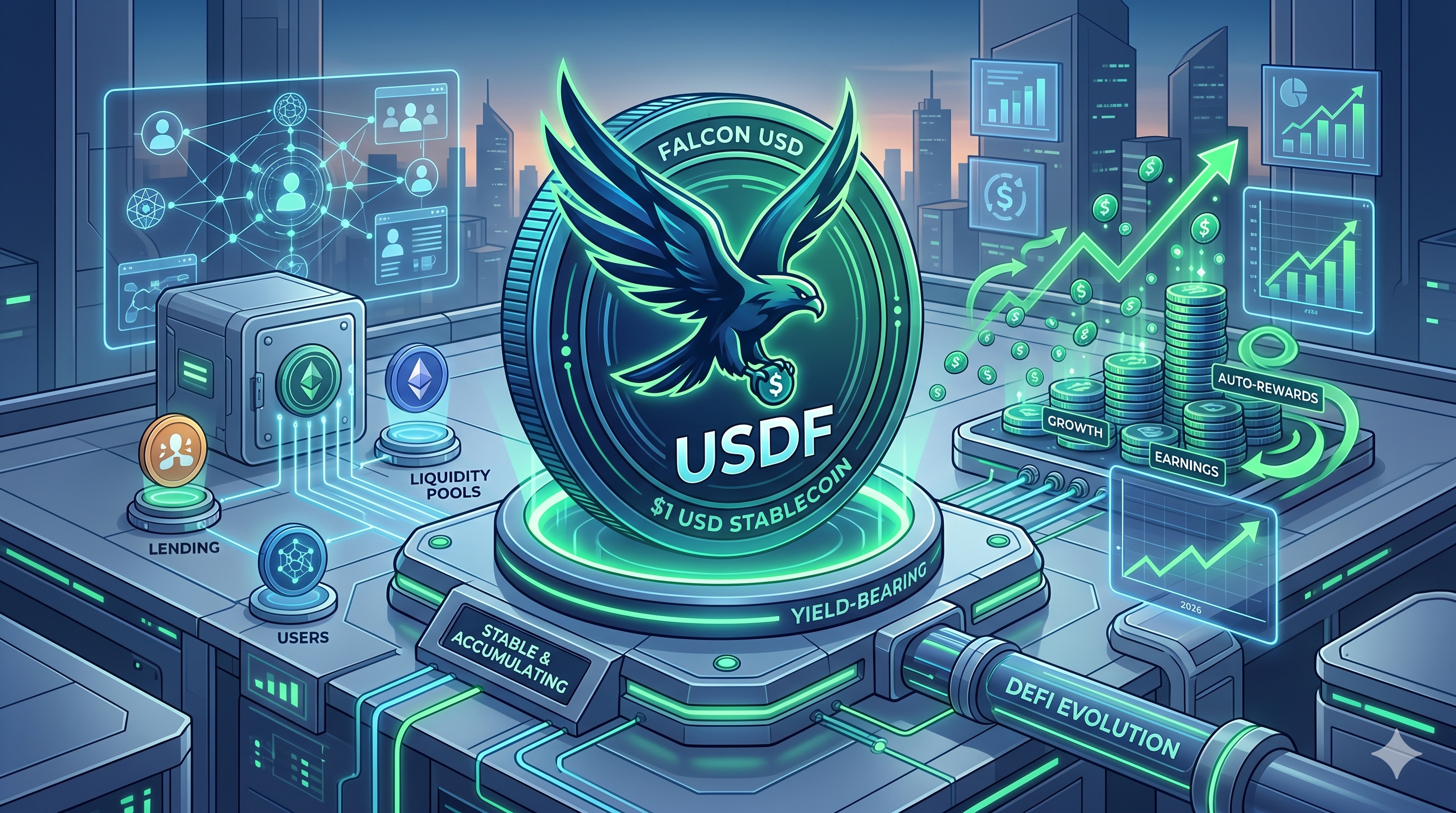
The era of idle stablecoins is ending. In 2026, the cryptocurrency market has witnessed a massive shift away from zero-yield, fiat-backed digital dollars toward programmable, yield-bearing alternatives. With the broader stablecoin market cap crossing $310 billion, a new class of synthetic dollars has emerged to capture the billions in yield historically left on the table by retail investors. Leading this charge is USDF (Falcon USD).
By combining the battle-tested security of overcollateralization with institutional-grade delta-neutral trading strategies, USDF allows users to unlock liquidity from their crypto assets while generating sustainable returns. Rather than letting capital sit dormant in traditional stablecoins, decentralized finance (DeFi) participants are rapidly migrating to protocols that put their money to work. This article breaks down exactly how USDF operates, why it has captured significant market share this year, and whether it deserves a place in your 2026 crypto portfolio.
💡 Tips: New to crypto? KuCoin's Knowledge Base has everything you need to get started.
Key Takeaways
-
A New Breed of Stablecoin: USDF (Falcon USD) is an overcollateralized synthetic dollar that maintains a 1:1 peg to the US Dollar using a diverse basket of digital assets, rather than centralized fiat reserves.
-
Dual-Token Architecture: The base USDF token provides pure price stability, while staking it for sUSDf unlocks sustainable yield generated by institutional trading strategies.
-
Explosive 2026 Growth: USDF has surged to a $1.78 billion market capitalization by May 2026, driven by retail and institutional demand for capital efficiency.
-
Risk vs. Reward: While USDF offers superior yields compared to traditional stablecoins, users must understand the inherent risks of smart contracts, collateral volatility, and counterparty exposure.
What Is USDF? The Overcollateralized Stablecoin Built for Yield
USDF, officially known as Falcon USD, is a synthetic, overcollateralized digital dollar designed to bridge decentralized finance efficiency with traditional price stability. Unlike legacy stablecoins that rely on a centralized entity holding dollars in a bank account, USDF is minted entirely on-chain against a diversified basket of eligible digital collateral. This basket includes established stablecoins alongside blue-chip cryptocurrencies like Bitcoin (BTC) and Ethereum (ETH). By completely eliminating the reliance on traditional banking rails, USDF provides a purely crypto-native solution that remains resistant to the censorship and banking bottlenecks that have historically plagued fiat-backed alternatives.
Why Everyone Is Talking About USDF Right Now
USDF is capturing unprecedented market attention in 2026 because it decisively solves the multi-billion dollar problem of idle stablecoin capital. For years, crypto users parked their wealth in traditional stablecoins like USDT and USDC to escape market volatility. While these fiat-backed assets provided a safe haven, they generated absolutely zero passive income for the end user. The centralized issuers of these tokens earned staggering profits by investing the underlying fiat reserves into high-yielding Treasury bills, keeping the returns for themselves. USDF flips this model on its head by democratizing access to yield and returning value directly to the token holders.
The urgency surrounding USDF is also tied to the broader macroeconomic landscape of 2026. With institutional adoption of crypto reaching all-time highs and the total stablecoin market expanding rapidly, sophisticated investors are demanding greater capital efficiency. Leaving funds in a static, non-yielding asset is now viewed as a significant opportunity cost. USDF has emerged as the premier solution, offering a decentralized, transparent infrastructure that transforms idle dollars into productive, interest-bearing assets without forcing users to sacrifice liquidity or take on excessive directional market risk.
Furthermore, the integration of USDF into the wider DeFi ecosystem has been a major catalyst for its popularity. In just the past two months, major decentralized exchanges, lending protocols, and yield aggregators have integrated USDF and its yield-bearing counterpart, sUSDf. This widespread composability means users can leverage their stablecoin holdings across multiple platforms, compounding their returns and maximizing their decentralized finance strategies. The conversation in 2026 is no longer about simply preserving capital; it is about optimizing it, and USDF is at the forefront of that movement.
How USDF Works: Turning Collateral into Sustainable Yield
USDF maintains its peg and generates yield through a sophisticated combination of heavy overcollateralization (historically maintained above 116%) and market-neutral trading strategies. The protocol does not rely on inflationary tokenomics or temporary subsidy programs to pay its users. Instead, it engineers actual, mathematically sound yield from the existing mechanics of the cryptocurrency derivatives markets.
The Universal Collateral Engine
The minting process begins at the protocol's Universal Collateral Engine. Users deposit eligible assets—ranging from USDC and USDT to volatile assets like BTC and ETH—into the Falcon protocol smart contracts. Because the underlying collateral can fluctuate in value, the protocol requires overcollateralization to protect the peg. For instance, a user might need to deposit $150 worth of Ethereum to mint $100 worth of USDF. This robust buffer ensures that even during severe market downturns, there is always more than enough value locked in the protocol to back every single USDF token in circulation.
Generating Yield via Delta-Neutral Hedging
The yield paid to sUSDf holders is generated through delta-neutral hedging and funding rate arbitrage, a strategy traditionally reserved for Wall Street hedge funds. When users deposit collateral, the protocol deploys a portion of these assets to open matching short perpetual-futures positions on centralized and decentralized exchanges.
If the price of the collateral (e.g., ETH) goes up, the value of the spot asset increases, but the short position loses an equal amount of value. If the price goes down, the short position profits, offsetting the loss in the spot asset's value. This "delta-neutral" stance perfectly hedges the dollar value of the collateral. The actual profit comes from the "funding rate"—a fee paid by traders who are long on leverage to traders who are short. Because the crypto market historically leans heavily toward long positions, short sellers consistently earn this funding rate. Falcon Finance captures this institutional-grade yield and distributes it to sUSDf holders, turning market mechanics into a sustainable passive income stream.
Why Smart Money Is Choosing USDF: 5 Game-Changing Advantages
Institutional and retail investors are aggressively adopting USDF for its superior capital efficiency, transparent backing, and sustainable yield mechanisms. The transition of "smart money" from traditional stables to synthetic dollars is driven by five distinct advantages that legacy systems simply cannot match.
-
Unmatched Capital Efficiency
USDF allows investors to unlock the value of their long-term crypto holdings without having to sell them. A user bullish on Bitcoin can deposit their BTC into the protocol, mint USDF, and deploy those digital dollars elsewhere in DeFi. They maintain their exposure to Bitcoin's potential upside while simultaneously gaining access to highly liquid, stable capital.
-
Institutional-Grade Transparency
Trust is paramount in 2026, and USDF delivers with unparalleled transparency. The protocol features a live, on-chain dashboard that provides real-time proof-of-reserves, detailing the exact composition of the collateral basket and the current system-wide collateralization ratio. This is backed by independent, quarterly audits from reputable accounting firms, ensuring that the smart contracts and off-chain hedging positions are fully solvent at all times.
-
Dynamic Risk Management
The protocol utilizes a dynamic Overcollateralization Ratio (OCR) that automatically adjusts according to the volatility profile of the underlying assets. If a user deposits highly volatile collateral like Bitcoin or Ethereum, the smart contract mandates a higher OCR to cushion against sudden price drops. In contrast, depositing established stablecoins requires a lower OCR. This algorithmic approach ensures that the protocol remains completely solvent and the peg remains strictly enforced, even during flash crashes and extreme market turbulence.
-
Seamless DeFi Composability
In 2026, isolated tokens are obsolete. USDF is designed with interoperability at its core, enabling seamless integration across decentralized exchanges, lending markets, and yield aggregators on Ethereum, Base, and other layer-2 networks. Users can deposit their yield-bearing sUSDf as collateral in other protocols, compounding their returns and executing highly complex, multi-layered financial strategies without ever sacrificing their baseline yield.
-
True Financial Sovereignty
Traditional stablecoins are vulnerable to freezing by centralized entities or intervention by legacy banking partners. Because USDF is minted entirely on-chain against crypto-native and diversified digital assets, it is heavily insulated from the bottlenecks and regulatory choke points of the traditional banking system. This provides users with a decentralized alternative, allowing capital to flow freely without the risk of arbitrary asset seizure or reliance on centralized custodial banks.
USDF Tokenomics: How It Creates Real, Sustainable Yield
The defining feature of USDF's tokenomics is its absolute refusal to rely on inflationary token printing. Historically, many DeFi protocols lured liquidity with unsustainable emissions, paying users in highly inflationary governance tokens that inevitably crashed in value. USDF takes a strictly mathematical approach to yield.
When collateral is deposited, the Falcon Finance engine deploys it to capture the basis spread—the difference between spot and perpetual futures markets. The yield paid to sUSDf stakers is derived directly from:
-
Funding Rates: Payouts from traders holding leveraged long positions in the perpetual swap markets.
-
Native Staking Rewards: If Ethereum is used as collateral, the protocol stakes a portion of it to capture base-layer validator rewards, creating a secondary, virtually risk-free yield stream.
Because the protocol captures external yield and channels it back to sUSDf holders, the system is fundamentally non-inflationary. The yield is entirely real, generated by the market dynamics of the broader crypto ecosystem.
USDF Performance in 2026: Numbers, Growth & Adoption
By May 2026, USDF has transitioned from an ambitious DeFi experiment into a cornerstone of the stablecoin market. The numbers paint a picture of rapid, sustained adoption:
-
Market Capitalization: Surged from $150 million in January to over $1.78 billion by mid-May.
-
Average APY: Historically maintained an impressive 12% to 18% annual percentage yield for sUSDf holders, significantly outperforming traditional decentralized finance lending rates.
-
Total Value Locked (TVL): The Falcon Finance smart contracts now hold over $2.1 billion in overcollateralized assets backing the USDF in circulation.
-
Protocol Integrations: Fully integrated into top-tier liquidity markets, including Aave V4, Uniswap V4, and major layer-2 perpetual DEXs, generating over $500 million in daily transaction volume.
Important Risks You Should Know Before Using USDF
While the promise of double-digit, sustainable yield on a stable asset is highly attractive, USDF is not without risk. Investors must evaluate the following vulnerabilities before participating:
-
Smart Contract Risk: Like any DeFi protocol, Falcon Finance relies on complex code. Despite rigorous audits from top-tier security firms, the risk of undiscovered vulnerabilities or exploits is a constant reality.
-
Funding Rate Inversion: The yield paid to sUSDf holders depends heavily on a positive funding rate. In a brutal, prolonged bear market where short-sellers dominate, this yield could compress to zero. (Note: The base USDF token would remain stable, but the sUSDf yield would dry up).
-
Counterparty Risk: To execute its delta-neutral strategies, the protocol interacts with perpetual exchanges. If a partnered exchange faces insolvency or a critical failure, a portion of the hedging positions could be compromised.
-
Liquidation Risk: If you mint USDF using volatile collateral like ETH and the market experiences a flash crash, your position could be liquidated if it falls below the required Overcollateralization Ratio (OCR).
USDF vs USDT, USDC, DAI & USDe – Honest Comparison
To understand where USDF fits in the 2026 market, here is a direct comparison with its biggest competitors:
| Feature | USDF (Falcon) | USDT / USDC | DAI | USDe (Ethena) |
| Backing Model | Overcollateralized | Fiat 1:1 in Bank | Overcollateralized | Fully Collateralized |
| Asset Type | Crypto-Native | Traditional Fiat | Crypto-Native | Crypto-Native |
| Native Yield | Yes (via sUSDf) | No (Issuer keeps it) | Low (via DSR) | Yes (via sUSDe) |
| Yield Source | Delta-Neutral & Staking | N/A | Protocol Revenues | Delta-Neutral Arbitrage |
| Censorship Resistance | High | Low (Can be frozen) | Medium/High | Medium |
| Capital Efficiency | High | Low | Low | High |
Final Verdict: Is USDF Worth Your Attention in 2026?
The evolution of the stablecoin market in 2026 has made one thing abundantly clear: holding zero-yield, fiat-backed dollars is a massive opportunity cost. USDF (Falcon USD) represents the bleeding edge of decentralized finance, successfully merging the transactional stability of a dollar peg with the wealth-generating power of institutional derivatives trading.
By prioritizing robust overcollateralization, unmatched transparency, and mathematically sound yield generation, Falcon Finance has built a compelling alternative to legacy stablecoins. For the sophisticated investor willing to navigate the inherent risks of smart contracts and counterparty exposure, swapping idle dollars for USDF—and staking them for sUSDf—is arguably one of the most asymmetric risk-to-reward opportunities in the current market.
The era of idle capital is over. The conversation is no longer about whether you should be earning yield on your stablecoins, but rather how much yield you are leaving behind by refusing to adapt.
FAQs
How exactly do I earn yield with USDF?
To earn yield, holding the base USDF token is not enough. You must deposit (stake) your USDF into the Falcon Finance protocol's savings module. In return, you receive sUSDf, a yield-bearing wrapper token. As the protocol generates returns from funding rate arbitrage and collateral staking, the value of sUSDf automatically increases relative to USDF. When you unstake, you receive your original USDF plus the accumulated yield.
What happens to USDF if the cryptocurrency market crashes?
Unlike algorithmic stablecoins that rely on token mint/burn mechanics, USDF is strictly overcollateralized. This means every $1 of USDF is backed by more than $1 of digital assets (historically around $1.16 or higher). Furthermore, the protocol’s delta-neutral strategy specifically hedges against spot price drops by opening matching short positions. If Ethereum crashes, the short position profits, keeping the underlying dollar value of the collateral stable and protecting the $1 peg.
Is the APY on sUSDf guaranteed?
No, the yield is completely variable. Because Falcon Finance derives its yield from real market mechanics—specifically the funding rates paid by leveraged long traders in the perpetual futures market—the APY fluctuates based on market conditions. During massive bull runs where leverage is high, yields can spike. During flat or bearish markets, the yield will naturally decrease.
How is USDF different from the Terra (UST) collapse of 2022?
Terra’s UST was an algorithmic stablecoin backed only by a volatile sister token (LUNA) without sufficient external collateral, leading to a catastrophic "death spiral." USDF is fundamentally different; it is an overcollateralized synthetic dollar backed by hard assets like ETH, BTC, and fiat-backed stablecoins. The delta-neutral hedging mechanism ensures that the backing retains its US Dollar value regardless of market volatility, completely avoiding the algorithmic mint/burn vulnerability.
Can I use USDF for everyday payments, or is it just an investment?
You can absolutely use the base USDF token for payments. The dual-token architecture was designed specifically for this purpose. The base USDF token does not accrue yield and remains rigidly pegged to $1.00, making it perfect for peer-to-peer transfers, merchant payments, and daily DeFi transactions. You only interact with the yield-generating mechanics when you actively choose to lock up your funds for sUSDf.
Disclaimer: This article is for informational purposes only and does not constitute financial or investment advice. Cryptocurrency investments carry significant risk. Always conduct your own research before trading.