

Security 101: The Three Most Common Crypto Attacks Every Investor Should Know in 2026
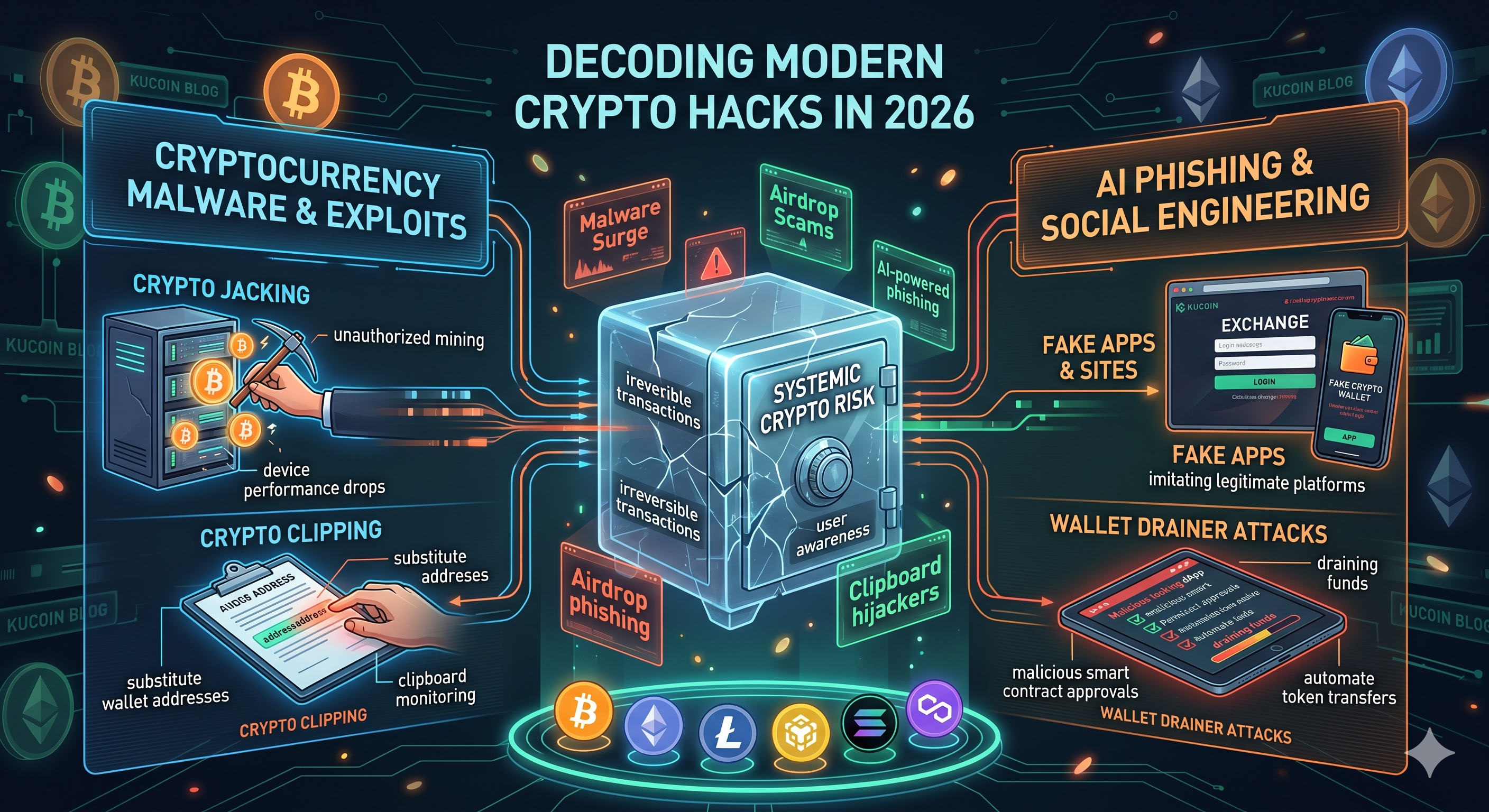
Introduction
The cryptocurrency industry has evolved rapidly over the past few years, transforming from a niche technological movement into a global financial ecosystem attracting retail traders, institutions, governments, and Fortune 500 companies. As Bitcoin, Ethereum, and other digital assets continue to gain mainstream attention, millions of new users are entering the crypto market through exchanges, DeFi protocols, NFT platforms, and Web3 applications.
However, alongside this rapid adoption comes a growing wave of cybersecurity threats targeting crypto investors. Unlike traditional banking systems, blockchain transactions are irreversible, meaning a single mistake or successful attack can permanently result in lost funds. Cybercriminals are becoming increasingly sophisticated, using malware, phishing campaigns, fake applications, wallet exploits, clipboard hijackers, and social engineering tactics to steal digital assets from unsuspecting users.
In recent years, the crypto industry has witnessed a significant rise in malware-driven attacks, fake airdrop scams, AI-powered phishing attempts, and wallet-draining exploits targeting both beginners and experienced traders. As the digital asset ecosystem continues to expand in 2026, understanding how these attacks work has become an essential part of crypto risk management.
In this guide, we explore some of the most common crypto hacks in 2026, how they operate, and the practical steps you can take to protect your digital assets and trade more securely in the modern crypto landscape.
What are the most common types of crypto attacks?
In 2025 and 2026, cybersecurity firms reported a sharp increase in AI-enhanced phishing scams and fake crypto applications targeting users across centralized exchanges, DeFi wallets, and social media platforms. Many attackers now impersonate customer support agents, project teams, or influencers on platforms such as X, Telegram, Discord, and Reddit to trick users into revealing seed phrases or signing malicious wallet approvals. This new generation of crypto attacks is increasingly driven by social engineering rather than purely technical exploits, making user awareness more important than ever.
Crypto Jacking
Crypto Jacking is something you’ve probably come across one way or the other, and it’s one of the most common crypto attacks in the crypto space. Crypto Jacking is when cyber criminals gain unauthorized access to your devices to mine cryptocurrencies. Since mining cryptocurrencies can take a lot of computational resources, crypto jackers leverage crypto mining on your computers without incurring huge costs.
By not paying for expensive mining hardware or electricity bills, Crypto Jacking allows malicious users to mine for cryptocurrencies without any resources. The most common cryptocurrency to be mined on personal computers is Monero, which attracts cyber criminals thanks to its anonymity and lack of traceability.
Crypto Jacking involves hackers hacking into your devices and installing crypto jacking software. This software then uses your computational resources in the background to mine cryptocurrencies or steal cryptocurrencies from your crypto wallets. The first sign of a crypto jacking software hijacking your device is slower performance and lags in your system.
Hackers often get into your devices by getting you to click on malicious links through emails. Another way these hackers get into your devices is by infecting websites and downloads with scripts that auto-execute once downloaded or clicked on.
In both cases, the script runs in the background as your work. The script uses all of your computational resources to solve mathematically complex algorithms and puzzles, and sends the result back to the hacker.
Although Crypto Jacking software operates like malware, they do not damage your computer or data. All they do is use your computational processing resources to mine cryptocurrencies. The best way to tell if you’re a victim of a crypto jacking attack is by noticing sudden drops in performance, overheating, and high CPU usage.
Crypto Dusting
The Crypto Dusting attack is a reasonably new attack that has been circulating the crypto space. Dusting attacks are easily the most sophisticated attacks on our list. A crypto dusting attack is when hackers and scammers send nominal amounts of crypto assets to hundreds of thousands of wallets to try and break their privacy. They send unnoticeable fractional amounts of cryptocurrencies to a large number of addresses to identify similar crypto wallets.
Hackers then link these addresses and wallets to their respective companies and individuals and leverage this knowledge against their victims through sophisticated phishing attacks or cyber-extortion threats.
Crypto Dusting attacks often occur on the Bitcoin network; however, they have been emerging on Litecoin, BNB, and other cryptocurrencies networks.
You can easily avoid crypto dusting attacks by using hierarchical-deterministic wallets that create new addresses each time you make a transaction, making it almost impossible to trace you.
Crypto Clipping
Crypto Clipping is very similar to Crypto Jacking; however, unlike using your computational resources, Crypto Clipping involves stealing your assets in the process of a transaction through the use of malware that automatically substitutes the intended wallet address with the hacker’s address.
Crypto Clipping works very much like URL redirection, where you click one website and then are redirected to a completely different website. Crypto Clipping malware often resides in commonly downloaded third-party apps disguised as PDF readers, games, or even COVID-19 tracers. Crypto Clipping often works on people that are unaware of how cryptocurrency transactions and technology works.
Crypto Clipping softwares are very sophisticated such that it secretly replaces the wallet address of the intended recipient with the hacker’s address when you’re making a transaction. The Crypto clipping software monitors the victim’s clipboard, where wallet addresses are copied, and then replaces the intended address with the hacker’s address when the user tries to paste the address.
An easy way to avoid this is to make sure you’re sending your assets to the right address and refrain from downloading sketchy apps from the internet.
Phishing and Wallet Drainer Attacks
Phishing attacks remain one of the most dangerous threats in the crypto industry. Unlike traditional hacks that target software vulnerabilities, phishing scams target human psychology. Attackers create fake exchange websites, fraudulent wallet applications, fake token airdrops, or impersonated social media accounts designed to trick users into revealing sensitive information.
One of the fastest-growing threats in 2026 is the rise of wallet drainer attacks. These attacks typically occur when users connect their wallets to malicious decentralized applications (dApps) or unknowingly approve harmful smart contract permissions. Once approval is granted, attackers can automatically transfer tokens, NFTs, or stablecoins out of the victim’s wallet without needing direct access to their seed phrase.
Many phishing attacks now use AI-generated websites, fake customer support chats, and realistic social engineering techniques that closely imitate legitimate crypto platforms. Scammers often create urgency by claiming there is an account issue, limited-time airdrop, or wallet security alert.
To avoid phishing and wallet drainer attacks, users should always verify URLs carefully, enable two-factor authentication (2FA), avoid clicking suspicious links, and regularly revoke unused wallet permissions using trusted blockchain security tools. Hardware wallets can also provide an additional layer of protection for long-term crypto holders.
How to Stay Safe in Crypto
As the cryptocurrency industry matures, security awareness has become just as important as trading knowledge. Investors should treat crypto wallets and exchange accounts with the same level of caution as online banking systems.
Using strong and unique passwords, enabling two-factor authentication, and storing recovery phrases offline are essential security practices for every crypto user. Investors should also avoid sharing wallet screenshots, portfolio sizes, or personal financial information publicly on social media platforms.
When interacting with decentralized applications, users should carefully review wallet permissions before approving transactions. It is also recommended to use separate wallets for long-term holdings and daily trading activities to minimize exposure to malicious smart contracts.
Crypto investors should remain cautious of unrealistic promises, guaranteed profits, or urgent requests for private keys and seed phrases. Legitimate exchanges, including KuCoin, will never ask users to reveal their recovery phrases or transfer funds for “account verification.”
Conclusion
The crypto industry continues to innovate at a rapid pace, but cybersecurity risks are evolving just as quickly. As blockchain adoption expands globally, hackers and scammers are becoming more sophisticated in targeting both new and experienced investors through malware, phishing campaigns, fake applications, wallet drainers, and social engineering tactics.
Understanding how these attacks work is one of the most effective ways to reduce risk and protect your digital assets. Whether you are trading Bitcoin, exploring DeFi, collecting NFTs, or investing in emerging Web3 projects, maintaining strong security habits should always remain a top priority.
As the digital economy grows in 2026 and beyond, crypto education and cybersecurity awareness will play a critical role in helping investors navigate the market safely and confidently.