

Aave Could Surge 50x to $3,500 by 2030, Says Standard Chartered
2026/06/26 16:52:00
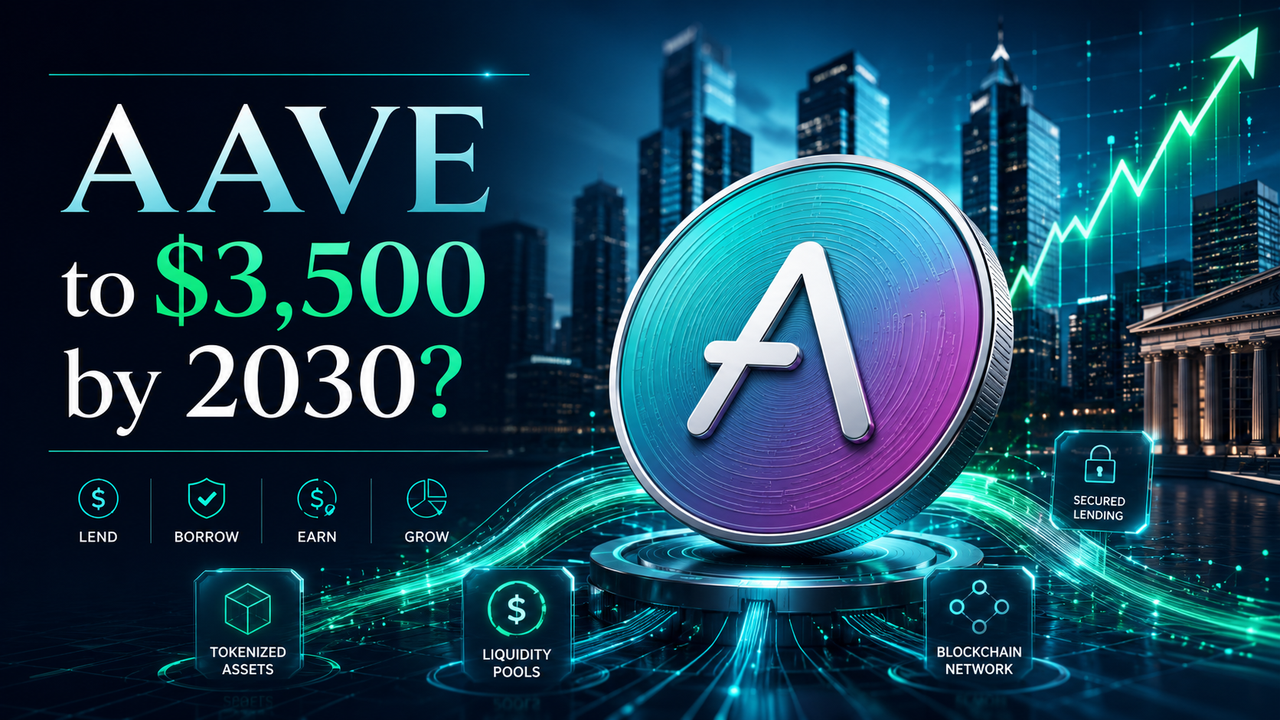
Aave has become one of the most important DeFi stories of 2026 after Standard Chartered forecast that AAVE could reach $3,500 by the end of 2030. The prediction has attracted strong market attention because it connects Aave’s long-term price potential with several major crypto trends, including decentralized lending, stablecoin liquidity, institutional DeFi adoption, and real-world asset tokenization. With AAVE recently trading around $83.11, the $3,500 target would require a move of about 42.1 times from current levels, making it one of the most aggressive long-term forecasts for a major DeFi token. Current AAVE price and market data also shows why the forecast depends on a multi-year expansion in protocol usage rather than a simple short-term price move.
The forecast is not only about short-term AAVE price movement. It is also about whether Aave can become a core lending layer for the next stage of on-chain finance. Aave already plays a major role in decentralized lending by allowing users to supply assets, borrow against collateral, and access liquidity through smart contracts. If DeFi becomes larger, safer, and more useful for institutions by 2030, Aave could be one of the protocols that benefits most from that shift. However, reaching $3,500 would require years of strong execution, deeper liquidity, consistent protocol revenue, and broader confidence in DeFi lending markets. It would also require Aave to prove that decentralized credit can move beyond crypto-native users and become relevant to stablecoin markets, tokenized assets, institutional borrowers, and long-term capital providers.
Why Standard Chartered’s Aave Price Prediction Matters for DeFi
Standard Chartered’s AAVE price prediction matters because it gives DeFi a stronger institutional narrative at a time when investors are again looking for crypto sectors with real usage. In previous market cycles, DeFi was often driven by high-yield speculation, short-term token incentives, and rapid liquidity rotation. The current Aave story is different because it is tied to lending infrastructure, recurring protocol activity, stablecoin demand, and the possibility that tokenized traditional assets could become usable collateral in on-chain markets. This makes the AAVE forecast more than a simple price prediction. It is also a signal that some institutional analysts are beginning to view leading DeFi protocols as financial infrastructure businesses that could benefit from a larger migration of assets and liquidity onto blockchain rails.
1. Standard Chartered’s $3,500 AAVE Target Signals Renewed Interest in DeFi Lending
Standard Chartered’s forecast places Aave among the DeFi protocols that could benefit from a larger recovery in decentralized finance. Aave is not just a speculative token with a popular name. It is a working lending protocol that allows users to deposit crypto assets, borrow liquidity, and manage collateral without depending on a traditional financial intermediary. This gives Aave a clear role inside the crypto economy because lending is one of the most important functions in any financial system. Whether in traditional banking, capital markets, or decentralized finance, credit is what allows assets to become productive rather than simply sitting idle.
The reason this matters for AAVE is that lending activity can create measurable protocol demand. When users supply assets, borrow stablecoins, repay loans, or manage collateral positions, they are interacting with Aave’s core markets. If this activity grows over time, the protocol could strengthen its position as one of DeFi’s main liquidity hubs. Standard Chartered’s forecast appears to be based on this broader infrastructure thesis rather than only short-term price momentum. In other words, the bullish case depends on whether Aave can keep expanding as a real lending platform while the wider crypto market becomes more mature, more liquid, and more trusted by both retail and institutional users.
Aave also has an advantage because DeFi lending is easier for many investors to understand compared with more abstract crypto sectors. The protocol connects lenders and borrowers, sets collateral requirements, manages liquidation systems, and supports interest-rate markets. These are familiar financial concepts, even if the technology behind them is different. This makes Aave one of the clearer examples of how blockchain-based finance can offer a working alternative to parts of traditional financial infrastructure.
2. AAVE’s Current Price Makes the 2030 Target Highly Ambitious
AAVE recently traded around $83.11, while Standard Chartered’s reported target is $3,500 by the end of 2030. That means the token would need to rise about 42.1 times from recent levels to reach the forecast. This is a very large move, even for crypto, and it would likely require a strong multi-year DeFi cycle rather than one short market rally. AAVE has moved through major price cycles before, but a move of this size would need stronger fundamentals, deeper market participation, and sustained demand across several years.
For AAVE to move toward that level, several conditions would need to develop together. DeFi total value locked would need to grow significantly, stablecoin lending demand would need to increase, tokenized real-world assets would need to become more active in collateral markets, and Aave would need to keep its leadership position despite competition. The target is therefore better understood as a long-term adoption scenario based on DeFi expansion through 2030. It is not enough for AAVE to rise because of market excitement. The protocol would need real growth in deposits, loans, institutional usage, revenue, and token value capture.
For the $3,500 target to become more realistic over time, the market would need to see progress in several areas:
-
Aave would need continued growth in deposits and active borrowing demand.
-
Stablecoin liquidity would need to keep expanding across DeFi markets.
-
Aave Horizon would need to prove that institutional RWA lending can scale.
-
Protocol revenue would need to remain strong across different market cycles.
-
AAVE token demand would need to strengthen as protocol usage grows.
This also means the path matters as much as the final number. If AAVE is going to approach a much higher valuation by 2030, early signs should appear through rising active loans, larger stablecoin markets, stronger protocol revenue, deeper institutional integration, and more use of Aave Horizon. Without those supporting metrics, the forecast would remain only a bullish target rather than a developing market trend.
3. Aave’s Established Market Position Gives It a Strong Base
Aave has a strong base because it is one of the most established names in decentralized lending and has survived multiple crypto market cycles. This history matters because lending markets depend heavily on trust, liquidity, and risk management. Aave has built deep liquidity, active governance, strong integrations, and a long record of operating through volatile conditions, which gives it an advantage over many newer DeFi protocols. Its network effects also make the platform more useful as more assets, borrowers, and liquidity providers join the ecosystem. While this does not remove risks such as liquidations, smart contract issues, or market stress, Aave’s experience through different market environments gives it a stronger foundation for long-term growth if DeFi lending continues expanding toward 2030.
4. Latest Data Points Behind the AAVE Forecast
The current AAVE forecast is supported by several market data points that show why analysts are paying attention to Aave again. These numbers do not guarantee that AAVE will reach $3,500, but they help explain why the long-term thesis has become more serious. Aave is no longer being discussed only as an old DeFi name from a previous cycle. It is being discussed as a protocol with active lending markets, real revenue, stablecoin exposure, and a possible role in the tokenized asset economy.
-
AAVE recently traded around $83.11, with an intraday range near $78.18 to $84.75.
-
Standard Chartered reportedly set a $3,500 AAVE target by the end of 2030.
-
At the latest price near $83.11, the $3,500 target equals about 42.1x, or roughly 4,111% upside.
-
Aave Horizon has grown to more than $440 million in deposits since launching in August 2025.
-
DefiLlama shows total DeFi TVL around $73.19 billion and stablecoin market cap around $315.4 billion.
-
RWA.xyz shows about $27.65 billion in distributed tokenized real-world asset value and more than 710,000 total asset holders.
-
DefiLlama’s Aave V3 data shows strong 2026 revenue activity, with Q1 2026 gross protocol revenue near $197.1 million and Q2 2026 partial gross protocol revenue above $140 million.
These data points show that the AAVE price prediction is closely connected to larger market themes. The strongest case for Aave depends on whether DeFi lending becomes more useful to institutions, whether stablecoins keep expanding, and whether tokenized assets become active collateral instead of only passive on-chain products. If these markets continue growing together, Aave could have a stronger path toward long-term adoption. If growth slows, the $3,500 target would become harder to support.
How Stablecoins and Real-World Asset Tokenization Could Support Aave Growth
Aave’s long-term growth story depends heavily on whether stablecoins and tokenized real-world assets become deeper parts of on-chain finance. Stablecoins provide the dollar-linked liquidity that many borrowers want, while tokenized real-world assets could give institutions new collateral options. If these two markets continue growing, Aave may become a stronger bridge between crypto-native liquidity and traditional financial assets. This is why Aave is often discussed not only as a DeFi lending protocol but also as a possible infrastructure layer for tokenized credit markets.
1. Stablecoin Liquidity Is Central to Aave’s Lending Markets
Stablecoins are one of the most important parts of Aave’s lending ecosystem because they allow users to borrow dollar-linked assets without selling their crypto collateral. This makes Aave useful for users who need liquidity, long-term holders who want to keep asset exposure, market makers that require working capital, and institutions that need faster access to on-chain dollar liquidity. Aave can benefit if stablecoin liquidity continues to grow beyond trading and becomes more important for settlement, cross-border payments, tokenized asset markets, and institutional treasury operations. Stablecoin demand could support Aave in several ways:
-
Borrowers can access dollar-linked liquidity without selling crypto collateral.
-
Liquidity providers can supply stablecoins to lending markets and earn variable yields.
-
Institutions can use stablecoins for faster settlement and on-chain liquidity management.
-
DeFi protocols can use stablecoins as a base asset for borrowing, collateral strategies, and liquidity routing.
-
Tokenized asset markets can use stablecoins as the main settlement asset for on-chain credit activity.
If stablecoins become a larger part of global crypto finance, Aave’s role as a stablecoin lending and borrowing venue could become more valuable, but this growth must be supported by strong collateral rules, liquid markets, reliable stablecoin issuers, and careful liquidation design during periods of market stress.
2. Aave Horizon Connects the Protocol With Institutional RWA Lending
Aave Horizon is important for the long-term AAVE forecast because it connects Aave with institutional real-world asset lending. It allows qualified users to borrow stablecoins against tokenized real-world assets, giving tokenized assets a practical DeFi use case. With more than $440 million in deposits since launching in August 2025, Horizon shows growing demand for compliant RWA lending. If it continues to scale, it could expand Aave beyond crypto-native borrowers and strengthen its role in institutional DeFi.
3. RWA Tokenization Could Expand Aave’s Future Collateral Market
RWA tokenization in crypto is becoming one of the biggest long-term themes in the digital asset market. The sector has already moved beyond simple experiments and now includes tokenized Treasuries, private credit, commodities, funds, and other asset-backed structures. This market is still small compared with traditional finance, but it is large enough to show that institutions and asset issuers are experimenting seriously with blockchain-based financial products. For Aave, this matters because tokenized assets could eventually become a new collateral category for lending markets.
Aave could benefit if tokenized real-world assets become more liquid and more accepted as collateral. A larger RWA market could give Aave new types of assets to support, helping the protocol move beyond only crypto-native collateral such as ETH, wrapped BTC, and stablecoins. This would make Aave more relevant to institutions that want access to stablecoin liquidity while holding tokenized financial assets. The long-term opportunity is significant, but adoption will likely be gradual because many RWA products still involve compliance rules, transfer restrictions, custody requirements, and limited secondary-market trading.
The key issue is that tokenization and liquidity are not the same thing. An asset can exist on-chain but still be difficult to trade, hard to value, or limited to approved participants. This means Aave’s RWA opportunity depends on asset quality, issuer reliability, legal enforceability, pricing accuracy, and secondary-market depth. If the RWA market matures in these areas, Aave could benefit from a much larger collateral base. If the market remains fragmented and illiquid, the impact on Aave may be slower than optimistic forecasts suggest.
4. DeFi Lending Could Become More Institution-Friendly by 2030
One reason Aave is receiving more attention is that DeFi lending is slowly becoming more professional. Earlier DeFi markets were mainly built for crypto-native users, but newer products are increasingly designed for institutions, tokenized asset issuers, and more regulated liquidity providers. This does not mean DeFi will become identical to traditional finance, but it does suggest that the market is moving toward stronger risk controls and more structured products. Aave could benefit from this transition because it already has a strong lending brand and active liquidity markets.
Aave’s future growth may depend on how well it balances decentralization with institutional requirements. Institutions often need compliance, transparency, asset verification, and risk reporting before they use on-chain lending markets. At the same time, crypto users value open access, composability, and transparent smart contracts. Aave’s long-term success could depend on serving both sides without weakening the qualities that made DeFi useful in the first place. If it can do this successfully, Aave may become more than a crypto lending protocol; it could become part of the financial infrastructure that supports tokenized assets and stablecoin liquidity.
This institutional shift could also change how investors value AAVE. If the market begins to see Aave as a protocol with recurring usage, lending revenue, institutional integrations, and tokenized asset exposure, AAVE may be analyzed differently from more speculative tokens. That does not guarantee a higher price, but it could give the token a stronger fundamental narrative. By 2030, the biggest question may not be whether DeFi exists, but which protocols have the trust, liquidity, and risk systems needed to handle serious capital.
What Could Stop AAVE From Reaching $3,500 by 2030?
The $3,500 AAVE target is a bold long-term forecast, but it would require several major conditions to work together over the next few years. Aave would need strong DeFi adoption, steady protocol revenue, deeper stablecoin liquidity, successful real-world asset lending growth, and a favorable crypto market cycle to move toward Standard Chartered’s 2030 target. Even though Aave is one of the strongest names in DeFi lending, the path is not risk-free. Regulation, smart contract security, collateral quality, competition, market liquidity, and token value capture could all affect whether AAVE can sustain enough demand to reach a much higher valuation.
1. DeFi Adoption May Grow More Slowly Than Expected
Aave’s long-term growth depends on whether DeFi lending becomes more widely used by institutions, stablecoin users, tokenized asset holders, and long-term liquidity providers. If the overall DeFi market remains small or grows more slowly than expected, AAVE may struggle to justify a much higher valuation even if the protocol itself remains strong. DeFi still needs better user experience, clearer regulation, stronger security standards, deeper liquidity, and more trust from larger capital providers. Aave can continue building better lending products, but broader market adoption depends on the maturity of the whole DeFi industry, not only one protocol.
2. Aave Must Turn Protocol Growth Into AAVE Token Value
Aave can grow deposits, loans, and revenue, but AAVE’s price also depends on how much value the token captures from that growth. Strong protocol usage does not always lead to strong token performance if governance, staking, incentives, or revenue links are not clear enough. For AAVE to move much higher, the market would need to see the token as an important part of Aave’s long-term ecosystem, not only as a governance asset connected to a successful lending protocol. This means Aave’s token design, governance decisions, treasury strategy, and security mechanisms will remain important as the protocol matures.
3. Smart Contract, Oracle, and Collateral Risks Remain Real
Aave is a mature DeFi protocol, but lending markets still carry technical and financial risks. Smart contract bugs, oracle failures, sharp collateral price drops, liquidity shortages, and liquidation stress can all affect confidence during volatile market conditions. These risks become more important as Aave supports more assets and expands into institutional real-world asset lending. RWA markets can reduce some crypto volatility, but they also introduce legal, custody, compliance, pricing, whitelist, and secondary-market liquidity risks that must be managed carefully.
The main risks include:
-
Smart contract vulnerabilities affecting deposits or borrowing markets.
-
Oracle errors that could misprice collateral and trigger poor liquidation outcomes.
-
Sharp crypto price declines causing liquidation pressure across lending markets.
-
Liquidity shortages if borrowers and lenders rush to exit during market stress.
-
RWA risks such as custody, legal claims, whitelists, and limited secondary trading.
-
Regulation affecting stablecoins, tokenized assets, institutional access, or DeFi activity.
4. Competition in DeFi Lending Could Increase
Aave leads the DeFi lending market, but its position is not guaranteed forever. More protocols may compete for stablecoin liquidity, institutional borrowers, RWA collateral, and cross-chain lending demand. New platforms may offer lower costs, different risk models, stronger liquidity incentives, or specialized products for institutions. Traditional finance could also become a competitor if banks, asset managers, or regulated fintech firms build their own tokenized lending platforms. Aave’s brand, liquidity, governance history, and risk systems give it an advantage, but it must keep improving security, integrations, user experience, and institutional products to protect its leadership.
5. Key AAVE Metrics to Watch Next
AAVE’s long-term outlook should be judged by protocol activity, not only price movement. Price can react quickly to market sentiment, but deeper signals come from deposits, active loans, stablecoin borrowing, Aave Horizon growth, protocol revenue, and broader DeFi liquidity. If these metrics continue improving, the long-term case for Aave becomes stronger. If deposits, borrowing demand, or revenue weaken, the $3,500 target may remain an optimistic scenario rather than a likely outcome.
Key metrics include:
-
Aave total deposits and active loans.
-
Stablecoin borrowing and lending activity.
-
Aave Horizon deposits, loans, and institutional integrations.
-
Protocol revenue and fee generation across lending markets.
-
Broader DeFi TVL and RWA tokenization growth.
-
AAVE liquidity, market structure, and long-term holder activity.
How to Buy AAVE on KuCoin
AAVE can be bought on KuCoin through the spot market, usually with USDT. The basic process is simple:
-
Create or log in to a KuCoin account.
-
Deposit funds or buy USDT through Fast Trade, P2P, or third-party payment options.
-
Search for the AAVE/USDT trading pair.
-
Choose a market order for instant buying or a limit order to set a preferred price.
-
Enter the amount of AAVE to buy and confirm the trade.
-
After buying, AAVE can be held on KuCoin or transferred to a supported wallet.
Before buying, it is useful to check the latest AAVE price and market data, because AAVE remains a volatile crypto asset and prices can change quickly.
Conclusion
Standard Chartered’s $3,500 AAVE forecast has put Aave back at the center of the DeFi market conversation because it suggests the protocol could become one of the biggest winners if decentralized lending, stablecoin liquidity, and tokenized real-world assets expand significantly by 2030. With AAVE recently trading near $83.11, reaching that target would require a massive long-term move supported by years of stronger adoption, deeper liquidity, higher protocol revenue, and wider confidence in DeFi lending. Aave has several advantages that make the forecast worth watching, including its position as one of the most established DeFi lending protocols, its deep liquidity, its role in stablecoin borrowing markets, and Aave Horizon’s exposure to institutional real-world asset lending. These strengths could help Aave benefit if tokenized finance becomes a larger part of global crypto markets, but the path to $3,500 remains demanding. Aave must maintain its lending leadership, manage smart contract and collateral risks, compete with other lending platforms, and prove that institutional RWA demand can scale over time.
FAQs
What makes Aave different from a normal crypto exchange?
Aave is not a crypto exchange where assets are mainly bought and sold between users. It is a decentralized lending protocol where assets can be supplied into liquidity markets and borrowed against collateral. This makes Aave closer to an on-chain money market than a trading venue. Its importance comes from the way it supports lending, borrowing, collateral management, and liquidity access without relying on a traditional bank.
Does AAVE have a real use inside the Aave protocol?
Yes. AAVE is connected to Aave’s governance and security structure. Token holders can participate in governance decisions that affect the protocol, including risk parameters, upgrades, and market changes. AAVE has also been linked to protocol protection systems, where staking mechanisms can help support the safety of the ecosystem. This gives AAVE a clearer role than tokens that only depend on speculative demand.
What is Aave Horizon in simple words?
Aave Horizon is an institution-focused lending market that connects tokenized real-world assets with stablecoin borrowing. In simple terms, it allows qualified users to use tokenized assets as collateral and borrow stablecoins against them. This matters because it gives real-world asset tokenization a practical lending use case, rather than leaving tokenized assets as passive on-chain representations.
Why does Aave need strong risk management?
Aave handles lending and borrowing, so risk management is central to how the protocol works. If collateral prices fall quickly, if liquidity becomes thin, or if asset prices are reported incorrectly, lending markets can come under pressure. Strong risk controls help protect suppliers, borrowers, and the wider protocol by setting collateral rules, liquidation thresholds, and market limits. Without careful risk management, growth could create weakness instead of long-term strength.
What is the role of liquidations in Aave?
Liquidations help keep Aave’s lending markets solvent when a borrower’s collateral value falls too low compared with their debt. If a position becomes undercollateralized, part of the collateral can be sold or claimed by liquidators to reduce risk for the protocol. Liquidations can be painful for borrowers, but they are an important mechanism for protecting lending markets during volatile conditions.
Can Aave benefit from tokenized Treasuries and private credit?
Aave could benefit if tokenized Treasuries, private credit, funds, and other real-world assets become more useful as collateral in on-chain lending. These assets may create new borrowing demand from institutions that want stablecoin liquidity without selling their tokenized holdings. However, the impact depends on liquidity, compliance rules, issuer quality, custody arrangements, and whether these assets can be safely used inside DeFi markets.
What is Umbrella in the Aave ecosystem?
Umbrella is Aave’s upgraded protocol protection system. It is designed to improve how the protocol manages shortfall risk by using staked assets to support market safety. This matters because lending protocols need protection mechanisms for extreme situations where bad debt or market stress could affect the system. Umbrella is part of Aave’s broader effort to make decentralized lending more resilient.
What could make Aave more attractive to institutions?
Institutions usually look for liquidity, transparency, risk controls, compliance compatibility, and reliable market infrastructure. Aave may become more attractive if products like Horizon continue growing, if tokenized assets become more accepted, and if stablecoin borrowing remains strong. Institutional adoption will likely depend less on hype and more on whether Aave can provide safe, useful, and scalable on-chain credit markets.
Disclaimer
The information provided on this page may originate from third-party sources and does not necessarily represent the views or opinions of KuCoin. This content is intended solely for general informational purposes and should not be considered financial, investment, or professional advice. KuCoin does not guarantee the accuracy, completeness, or reliability of the information, and is not responsible for any errors, omissions, or outcomes resulting from its use. Investing in digital assets carries inherent risks. Please carefully evaluate your risk tolerance and financial situation before making any investment decisions. For further details, please consult KuCoin’s Terms of Use and Risk Disclosure.