
Cryptocurrency Transfer Security Guide: How to Prevent Withdrawal Address Tampering
Beginner
In cryptocurrency transactions, "withdrawal address tampering" is a highly destructive attack method. Attackers use trojans, phishing, or device intrusion to silently replace the recipient address you copied or entered with one they control when you initiate a transfer. Since blockchain transactions are irreversible, once funds are sent, they are almost impossible to recover. This article will analyze common tactics of such attacks and provide a comprehensive prevention strategy covering both technical measures and safe habits.
🔍 Common Methods of Address Tampering
Understanding how attacks occur is the first step to effective prevention. Attackers typically implement tampering through the following methods:
| Attack Type | Attack Principle & Scenario | Consequence |
| 1. Clipboard Hijacking Trojan | This is the most common method. Malware lurking on your device continuously monitors the clipboard. When it detects text matching a cryptocurrency address format (e.g., a Bitcoin address starting with "1", "3", or "bc1"), it automatically replaces it with the attacker's address. | You carefully verify and copy the correct address, but the moment you paste it into the send field, it is replaced without you easily noticing. |
| 2. Phishing Sites or Malicious Browser Extensions | You visit a fake exchange or wallet website (phishing site) or install a tampered wallet plugin. These malicious programs dynamically replace the recipient address displayed on the transaction confirmation page, even if you copied the correct address. | You believe you are interacting with a legitimate platform, but all transactions initiated through that page are redirected to a scam address. |
| 3. Compromised Communication Software & Impersonated Support | Attackers compromise social media, email, or instant messaging apps (e.g., Telegram, Discord), impersonating project teams, exchange support, or your friends, and directly send you a fake address that closely resembles the correct one (by changing a few characters). | Trusting the familiar or official identity, you fail to carefully verify all characters, resulting in funds being sent to the wrong address. |
🛡️ Core Defense Strategy: Multi-Layer Verification & Good Habits
The key to preventing address tampering is establishing a verification process that does not rely on a single step. Here are the essential security practices to follow:
Step 1: The Ultimate Pre-Send Check – First/Last Character Verification
At the very last moment before clicking "Send" or "Confirm":
-
Carefully compare the first 5 characters and the last 5 characters of the recipient address.
-
Ensure they exactly match the address you obtained from an official or trusted source.
-
Never only check the middle part, as trojans often replace only the middle segment to fool users.
Step 2: Enable and Utilize Wallet Security Features
- Use an Address Book: For addresses you frequently send to (e.g., your other wallet, trusted exchange deposit address), save them as contacts in your wallet's address book. Always select from this book afterward to avoid manual copy-pasting.
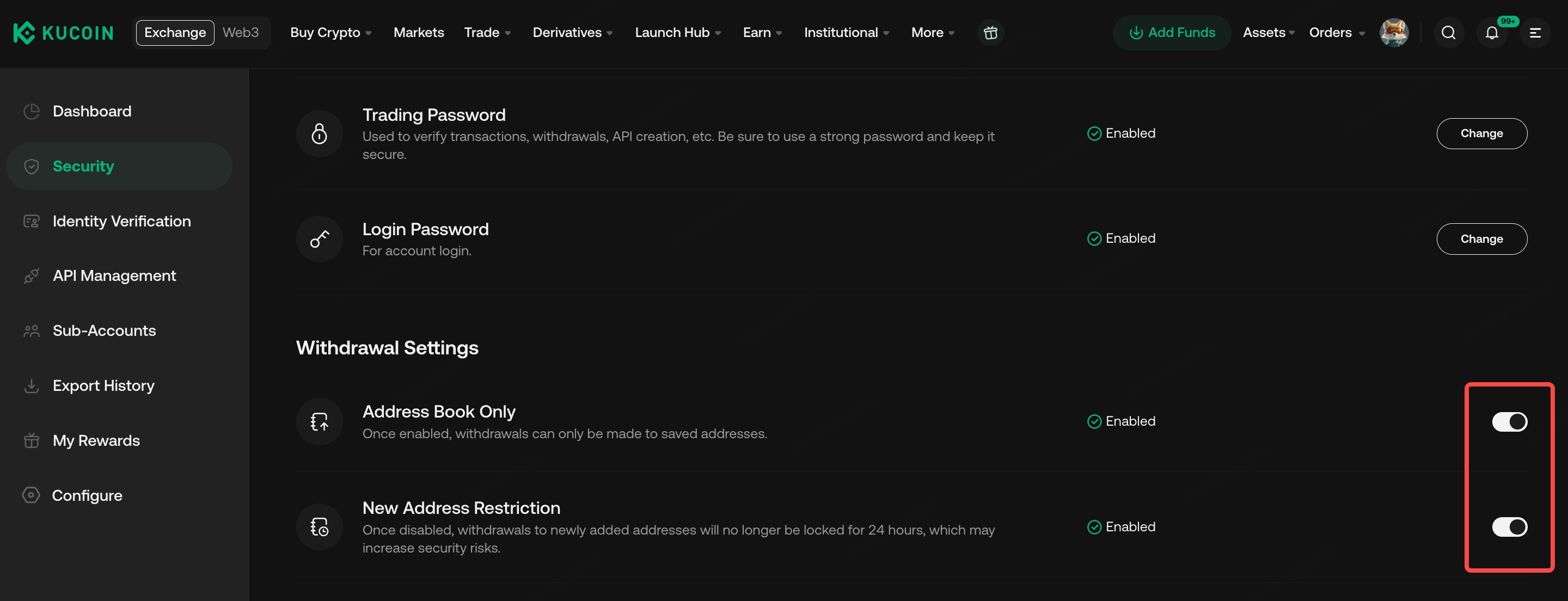
enable Address Book Only setting in Kucoin
 select from your saved addresses during withdrawal
- Enable Whitelist Feature: Some exchanges and advanced wallets offer a "withdrawal address whitelist" feature. The first withdrawal to a new address requires multi-factor verification. Subsequently, you can only send to addresses on the whitelist, fundamentally preventing transfers to new, unauthorized addresses.
- Conduct a Small Test Transaction: Before sending a large amount to a brand new address, always send a small test amount first (e.g., $5 worth). After confirming that this small transaction successfully arrives at the target wallet, then send the remaining funds.
Step 3: Maintain Device & Environment Security
-
Install & Update Antivirus Software: Regularly perform security scans on your computer and phone to guard against clipboard hijacking trojans.
-
Be Wary of Browser Extensions: Only install reputable extensions from official stores and periodically review their permissions.
-
Use a Dedicated Device: If possible, using a dedicated device that is not used for general web browsing or software downloads for handling cryptocurrency transactions can significantly reduce the risk of malware infection.
🚨 If You Fall Victim: Emergency Response Steps
If you discover that the transfer address may have been tampered with and funds have already been sent, immediately follow these steps in order:
-
Disconnect from the Internet Immediately: If you suspect your device is infected with a trojan, immediately disconnect it from the network (turn off Wi-Fi and mobile data) to prevent the malware from sending more information or performing further actions.
-
Check Using a Secure Device: Switch to another device you are confident is secure (or reboot into safe mode), log into your wallet or exchange account, and check the transaction status.
-
Confirm the Transaction & Obtain the Transaction Hash (TxID): Enter the transaction hash into a blockchain explorer (e.g., Etherscan, Blockchain.com) to confirm if the funds have arrived at an address you don't recognize.
-
Report & File a Complaint:
- Report to the Relevant Platform: Immediately report this unauthorized transfer to the exchange or wallet service provider you used.
- File a Report with Law Enforcement: Go to the police with all evidence (TxID, scam address, relevant records).
- Flag the Scam Address: Report the scam address on blockchain explorers to help warn other users.
💎 Conclusion: Security is Discipline, Not Luck
Preventing address tampering is essentially a battle against carelessness and malice. Internalize the following principles as habits:
-
Always Assume the Clipboard is Untrusted: Manually verifying the first and last characters is a golden rule.
-
Always Be Skeptical of New Addresses: A small test transaction is the necessary "insurance premium" you must pay.
-
Always Prioritize Using Security Features: The address book and whitelist are your first line of defense.
Remember, in the blockchain world, security lies in your own hands. One careful verification is worth infinitely more than regret after the fact.
Disclaimer: The information on this page may come from third parties and does not necessarily reflect KuCoin’s views. It is provided for general reference only and should not be interpreted as financial or investment advice.
Virtual asset investments may involve risk. Please carefully assess the product risks and your own risk tolerance. For more information, please refer to our Terms of Use and Risk Disclosure.