
Liquidation Is Not Bad Luck. It's Math.
Beginner
Leverage feels like a superpower. Until it doesn't.
Futures and margin trading pull people in with the promise of 10x, 20x, even higher returns. The catch — which doesn't always get enough airtime — is that leverage cuts both ways. Your liquidation price isn't some distant worst-case scenario. At high leverage, it's a few percentage points from where you entered.

Image source: Kucoin official website
Here's what's actually going on.
1. The Math That Gets People Liquidated
At 10x leverage, a 10% move against you wipes out your margin. At 20x, you're looking at around 5%. At 50x, a 2% move can end trade.
In crypto, 2–5% swings happen on a normal day. That's not extreme volatility — that's just the market doing its thing. And when that normal move lines up with your liquidation price, the exchange force closes your position to cover losses. By then, the margin you put in is gone.
2. Why It Always Feels Sudden
Most liquidation doesn't come from crashes. They come from ordinary price moves hitting a fragile setup.
A few things that catch traders off guard:
-
The "it won't move that much" assumption.
If BTC has been sitting around $80,000, a dip to $78,400 feels unlikely. But at high leverage, that small move can be all it takes to liquidate a long.
-
Funding fees eating your buffer.
Perpetual futures charge funding fees periodically. Hold a position for hours or days, and those fees quietly chip away at your margin. Even in a sideways market, your liquidation level is slowly getting closer.
-
Partial liquidation isn't a safety net.
Some platforms scale you out in stages, which sounds safer but isn't really. Each partial liquidation locks in a loss and leaves your remaining position thinner — more exposed if volatility keeps going.
3. Liquidation Cascades: When One Triggers Many
Sharp moves — driven by news, sudden order flow, or large players unwinding — tend to cluster liquidations together. Forced sells push prices further, which triggers more liquidations, which pushes prices further.
Your position doesn't need to be in the epicenter. If it's anywhere near that zone, the cascade can take you out even if your original read on the market was correct.
The market doesn't need to crash. It just needs to move fast.
4. How to Use Leverage Without Shooting Yourself in the Foot
-
Default to lower leverage.
Give your position enough room to breathe through normal intraday noise. If a routine price move can liquidate you, you're using too much.

Interface for setting leverage
-
Know your exit before you enter.
Set your stop-loss when you open the trade, not after things start moving. In fast markets, manual exits don't work — by the time you react, it's too late.
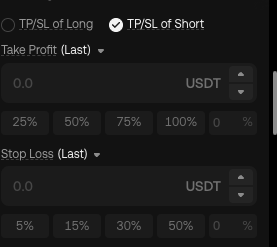
Interface for setting stop-loss points
-
Size based on risk, not on what leverage allows.
The question isn't "what's the max leverage I can use?" It's "how much am I okay losing if this trade goes wrong?" Start from that number and work backwards to position size and leverage.
Watch margin health, not just PnL.
- Watch the Margin, Not Just the profit/loss
Your profit/loss can look fine while your margin buffer is getting squeezed. Keep an eye on your margin ratio and liquidation distance, especially if you're holding through volatile stretches or for longer than planned.
5. A Quick Pre-Trade Checklist
Before opening a leveraged position, ask yourself:
-
How far is my liquidation price from the current price?
-
Is my stop-loss set?
-
Can I lose this entire margin without it affecting me financially or emotionally?
-
If I hold longer than expected, can I cover the funding costs?
If any of those don't have a clear answer, the position is probably too aggressive.
6. Bottom Line
Leverage doesn't give you an edge — it amplifies whatever edge (or lack of edge) you already have, and it compresses the timeline. A trade that might take days to play out on the spot can be over in minutes.
Most traders don't blow up because their idea was wrong. They blow up because their setup left no room for the market to move normally.
Liquidation isn't bad luck. It's math.
Disclaimer: The information on this page may come from third parties and does not necessarily reflect KuCoin’s views. It is provided for general reference only and should not be interpreted as financial or investment advice.
Virtual asset investments may involve risk. Please carefully assess the product risks and your own risk tolerance. For more information, please refer to our Terms of Use and Risk Disclosure.