


Learn & Earn with ShareX ($SHARE): Connecting Shared Devices, RWA, and Consumer Web3
Introduction: ShareX is building the Web3 consumer and financial layer for the global sharing economy. By connecting real-world shared devices such as power banks, vending machines, kiosks, charging stations, smart lockers, and other IoT service terminals to blockchain infrastructure, ShareX aims to turn everyday consumer actions into verifiable onchain value. Through Deshare, ShareFi, consumer-grade RWA solutions, and the $SHARE token, ShareX connects Web2 consumer scenarios with Web3 incentives, payments, and real-world asset participation.
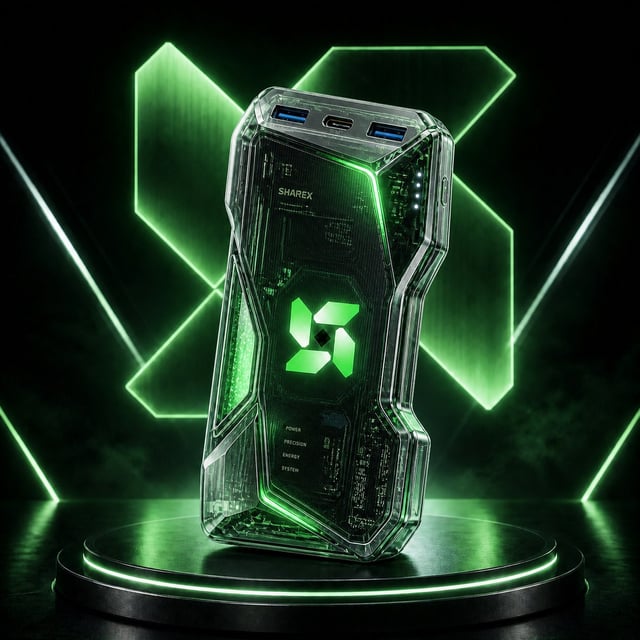
The Sharing Economy Is Bigger Than People Think
The sharing economy is built around a simple idea: access can be more efficient than ownership. Instead of every person buying and owning every product they need, shared infrastructure allows people to temporarily access goods and services when they need them.
This model already exists in many parts of daily life. Shared bicycles, scooters, power banks, umbrellas, WiFi hotspots, vending machines, lockers, car wash stations, charging piles, claw machines, karaoke booths, and fitness equipment are all examples of sharing economy scenarios. These are not abstract digital products. They are physical devices that people use every day in public spaces.
The global sharing economy is growing quickly because it solves a real resource distribution problem. The issue is no longer only about producing more goods, but about using existing resources more efficiently. Shared devices create convenient services for consumers while generating measurable and recurring cash flows for operators.
ShareX believes this makes the sharing economy one of the most practical entry points for Web3 adoption. Instead of asking users to understand complex crypto concepts first, ShareX connects blockchain to familiar real-world actions: scanning, renting, paying, redeeming, and using services.
The Problems Holding the Sharing Economy Back
Although the sharing economy has strong growth potential, global expansion is still difficult. ShareX identifies several key challenges based on years of industry experience.
The first challenge is liquidity. Shared device networks often require large upfront investment. Brands must deploy enough devices in enough locations before users form habits. This means early expansion can consume significant capital, while returns arrive slowly over time. Without better asset liquidity, brands may struggle to recover funds and reinvest into growth.
The second challenge is deployment. Sharing economy businesses depend not only on devices, but also on offline spaces with user traffic. Brands must place devices in the right locations, negotiate with merchants, manage local operations, and handle compliance. These barriers make localization slow and expensive.
The third challenge is trust. Shared devices generate operational data and revenue records, but in many cases this data is controlled by centralized platforms. If data can be hidden, manipulated, or misreported, partners, investors, merchants, and users may struggle to trust the system.
The fourth challenge is payments. In some regions, mobile payments and micro-payment systems are mature. In others, payment infrastructure is expensive, slow, or inconvenient. For small-value services such as power bank rentals or vending machine purchases, high fixed fees and poor refund support can limit adoption.
These pain points show why the sharing economy needs better financial, data, and payment infrastructure.
ShareX’s Solution: Bringing Shared Devices Onchain
ShareX uses Web3 technology to upgrade the sharing economy across liquidity, trust, incentives, and payments.
Through RWA solutions, ShareX can help turn shared devices and their cash flows into onchain assets. A shared device is not just hardware; it can be a revenue-generating asset with measurable usage and payment data. By tokenizing device assets or revenue rights, ShareX can help brands unlock liquidity and create new financing channels.
Through Web3 incentives, ShareX can support local ecosystem growth. Agents, merchants, users, and community members can be rewarded for helping deploy devices, drive usage, and support localization. DAO-style participation can also allow communities to take part in decisions around placement, operations, and ecosystem development.
Through blockchain transparency, ShareX helps brands prove the integrity of their operational data. When key device data and business records are uploaded onchain, partners and financial institutions can verify activity more easily. This reduces reliance on opaque centralized systems and strengthens trust across the value chain.
Through crypto payments and PayFi, ShareX can support more flexible payment experiences for global users. In regions where traditional payment systems are less efficient, crypto payments may offer faster settlement, lower costs, and more suitable tools for micro-payment scenarios.
Together, these elements make ShareX a Web3 layer for real-world consumer infrastructure.
Deshare and ShareFi: The Two Core Layers
ShareX’s ecosystem can be understood through two major directions: Deshare and ShareFi.
Deshare is the global consumer network layer. ShareX is building the Deshare Alliance to onboard leading sharing economy brands worldwide and integrate their IoT devices with the Deshare Protocol. The goal is to connect real consumer scenarios to blockchain, helping Web2 brands bring users, devices, and activity into the Web3 ecosystem.
ShareFi is the financial layer of the sharing economy. Since shared devices can generate stable cash flows, they can become consumer-grade RWA assets. ShareX uses RWA and PayFi solutions to help users save money, enjoy convenience, and access new participation opportunities, while enabling brands to access more stable cash flow and explore new business models.
This dual structure is important. Deshare focuses on consumer adoption and device connectivity, while ShareFi focuses on financialization, asset circulation, and value creation. Together, they turn shared devices from offline service terminals into onchain economic infrastructure.
The $SHARE Token: Coordinating the Decentralized Sharing Economy
The launch of $SHARE marks an important milestone for ShareX. It is designed as the core utility token of the ShareX ecosystem and a coordination asset connecting offline infrastructure, user participation, real-world revenue flows, and onchain incentive systems.
As ShareX expands across more devices, brands, regions, and infrastructure scenarios, $SHARE is expected to support participation, access, incentives, payment, and future governance across the decentralized sharing economy.
In shared consumption scenarios, $SHARE can be used as a tool for service payment and user participation. Users may use $SHARE to pay service fees in ShareX partner applications, while partners can use $SHARE to access ecosystem services such as subscriptions, staking access, operational tools, or advanced feature support.
In RWA and infrastructure projects, $SHARE can help connect onchain users with offline assets and device-based value flows. It may be used for service fees, participation in RWA projects, ecosystem activities, and qualification confirmation in infrastructure-support programs.
$$SHARE also supports ecosystem governance. Token holders will be able to participate in platform upgrades, ecosystem development discussions, key proposals, and mechanism adjustments. This makes$$SHARE not only a utility token, but also an entry point for community participation in ShareX’s long-term development.
Token Distribution, Vesting, and Airdrop
The $SHARE allocation model is designed around long-term ecosystem growth, sustainable incentives, and infrastructure expansion. A majority of the supply is allocated toward ecosystem development, network incentives, community growth, and future expansion initiatives.
To support long-term alignment, ShareX applies vesting and lockup mechanisms across major allocation categories. Long-term user incentives, including mining, ecosystem, and reserve allocations, follow a 6-month cliff and a long 96-month linear vesting period. This reflects ShareX’s goal of continuously incentivizing physical device onboarding and ecosystem expansion over the long term.
Core team, advisors, and investors have zero unlock at TGE, followed by a 12-month cliff and 24 months of linear vesting. This structure is designed to reduce short-term pressure and align core contributors with the long-term growth of the ecosystem.
For market launch support, Early Liquidity is fully unlocked at TGE to support trading liquidity. The Community & Marketing allocation has a larger initial unlock to help establish brand presence, with the remaining portion vesting over the following months.
ShareX also includes an airdrop program for eligible early users, ecosystem participants, and community contributors. Eligible addresses may include participants in ShareX partner ecosystem activities, holders of rare ShareX Keys, PowerPass holders, early community contributors, and other wallets that meet official rules. Airdrop rewards are unlocked in a single tranche, but users must claim within the designated claiming period.
ShareX Keys Series NFT: The Gateway to Consumer-Grade RWA
To begin its RWA journey, ShareX introduced the ShareX Keys Series NFT, an official credential series for early supporters and ecosystem users.
The Keys Series has three tiers: Essentia, Magna, and Nova. These NFTs are not only collectibles; they are designed as access credentials and value accumulators within the ShareX ecosystem.
Key utilities include:
-
whitelist access for upcoming RWA offerings
-
discounts and free redemptions in consumer-grade RWA products
-
exclusive airdrops of tokens, NFTs, and potential RWA-linked yield rights
-
community privileges and evolving ecosystem benefits
Users can earn ShareX Keys through campaigns such as TreasureX and other limited-time events. New users may receive an Essentia NFT as a welcome gift, while additional tasks and mystery boxes can unlock higher-tier Keys such as Magna or Nova.
After receiving Keys, users can claim them through the ShareX RWA Dapp. In many cases, staking the NFT is required to unlock deeper rewards such as whitelist slots, airdrops, real-yield access, and ecosystem privileges.
In short, ShareX Keys are designed to turn early participation into long-term ecosystem access.
Why ShareX Matters
ShareX matters because it expands the meaning of RWA. In traditional finance, RWA usually refers to tokenizing assets such as bonds, real estate, or equities. ShareX takes a more consumer-focused view: real-world assets should also include shared devices, consumer actions, usage records, and device-generated cash flows.
This makes ShareX different from purely financial RWA platforms. Its goal is not only to bring assets onchain, but to bring daily life onchain.
Every scan, rental, payment, and device interaction can become a verifiable value event. This creates a path for Web3 to reach real users through services they already understand and use. For brands, it can unlock new liquidity and growth models. For users, it can create new access, rewards, and financial participation. For Web3, it creates a practical route into mainstream consumer scenarios.
Through $SHARE, ShareX aims to ensure that every device usage, every ecosystem participation, and every real-world value contribution can be more clearly recorded, connected, and transformed into sustainable ecosystem value.
Referral Rewards:
Invite new users to join the Learn & Earn campaign and unlock extra rewards. For each successfully invited friend who registers and completes the required trades, you will receive a 25% fee rebate. The more qualified users you invite, the more rewards you can earn. For details, please refer to: https://www.kucoin.com/referral
How to Invite

Disclaimer: The information on this page may come from third parties and does not necessarily reflect the views or opinions of KuCoin. This content is for reference only and does not constitute any form of representation or warranty, nor should it be construed as financial or investment advice. KuCoin is not responsible for any errors or omissions, or for any outcomes resulting from the use of this information. Investing in virtual assets may involve risks. Please carefully assess the product risks and your risk tolerance based on your financial situation. For more information, please refer to our Terms of Use and Risk Disclosure.