


Openverse Network ($BTG): Pioneering the Infrastructure for the Global Value Internet
Vision: To establish the foundational, root-layer protocol for a seamlessly interconnected Value Internet, where any form of asset—digital or tokenized real-world—can be transferred, managed, and leveraged as effortlessly as information flows on today's web.
Mission: To construct a universally open, secure, and scalable Layer 0 network that solves blockchain fragmentation, enabling trustless cross-chain communication and serving as the core settlement layer for the next generation of digital economies, AI collaboration, and Real-World Asset (RWA) integration.
What Is Openverse Network?
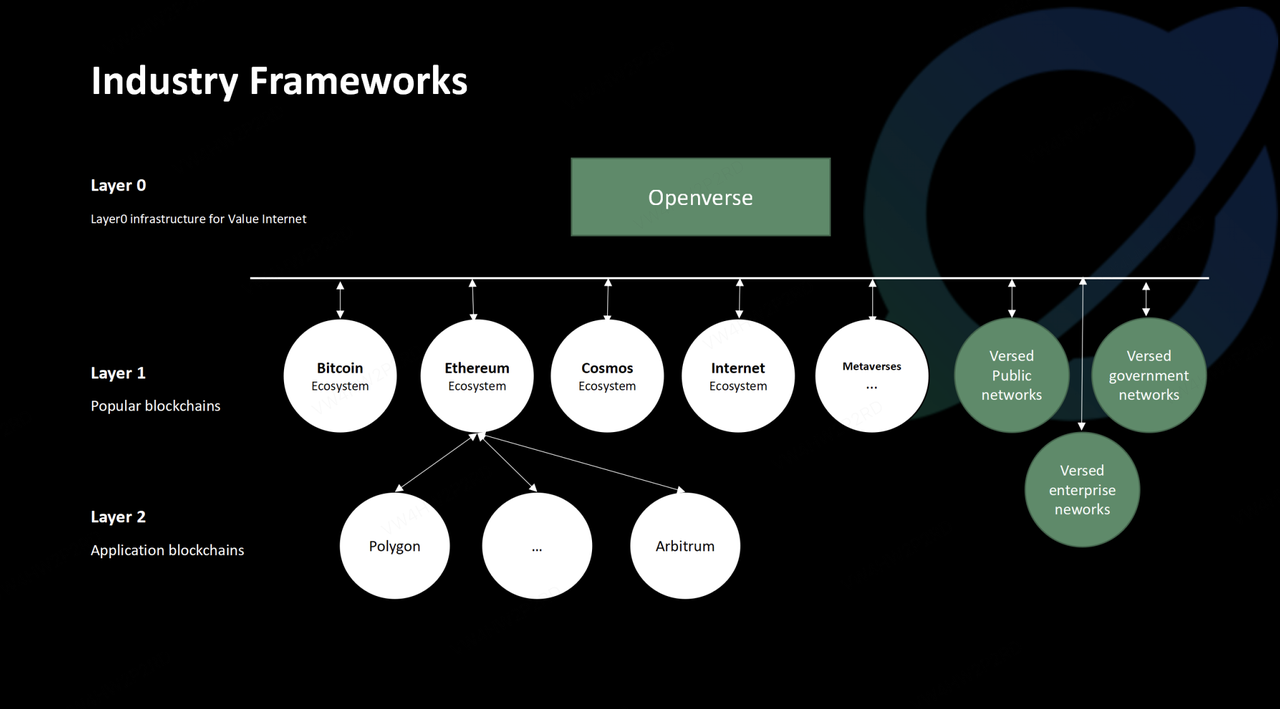
Openverse Network represents a fundamental evolution in blockchain architecture, conceived not as another application-specific chain, but as the essential connective tissue for the entire decentralized ecosystem and beyond. It is a purpose-built Layer 0 hub network, a foundational protocol layer designed to interconnect disparate blockchain networks and bridge them with the traditional internet.
The project's core ambition is to realize the concept of a "fully open protocol-based cross-chain" system. In practical terms, this means enabling the transfer of value—be it fungible tokens (like BTC or USDC), unique NFTs, or arbitrary data messages—between any two systems with the same simplicity and reliability as sending an email. This vision addresses the critical "island" problem plaguing Web3, where hundreds of blockchains operate in silos with complex, often insecure bridging solutions.
Rooted in academic research dating back to 2014, Openverse is built upon pioneering concepts like the Public Currency Issuance Mechanism (PCIM). It leverages and extends existing EVM-compatible frameworks by introducing standardized protocols for the issuance, trading, and payment of digital assets. By adopting an energy-efficient Delegated Proof of Stake (DPoS) consensus mechanism, it can support a globally distributed network of thousands of validator nodes, forming a resilient and decentralized backbone akin to the internet's own root domain name server system, but for value.
Core Architecture & Technological Innovation
-
The Layer 0 Cross-Chain Hub: Ending Blockchain Isolation
At its heart, Openverse functions as a universal interoperability layer. While most projects build bridges as an afterthought, Openverse is architected from the ground up with cross-chain communication protocols as its primary function.
-
Universal Connectivity: It allows sovereign blockchains (e.g., Ethereum, BNB Chain, Solana) to securely communicate and transfer assets without relying on centralized custodians.
-
Simplified Developer Experience: By providing a standardized set of protocols, it drastically reduces the complexity for developers needing multi-chain functionality, allowing them to build applications that operate seamlessly across the entire crypto landscape.
-
A Structured, Multi-Tiered Digital Asset Ecosystem
Openverse’s most distinctive innovation is its formalized, multi-layered framework for digital value, mirroring the sophistication of traditional finance but on a decentralized, global scale. This "Value Internet" is built on the following asset hierarchy, all interconnected and secured by the network:
-
🏔️ Bitgold ($BTG) — The "Digital Land & Reserve Asset":
-
Role: The cornerstone and governance token of the entire Openverse ecosystem. It is the ultimate base collateral asset.
-
Analogy: Think of BTG as "digital land" or the "gold reserve" of the network. Just as real estate can be used as collateral for loans, or gold backed classic currencies, BTG is staked to generate and back all other asset tiers.
-
Supply: A fixed, immutable cap of 200,000,000 (200 million) BTG. 10 million were in initial allocation; the remaining 10 million are exclusively minted as staking rewards over ~30 years via a decaying emission schedule, incentivizing long-term network security.
-
-
💰 Bitcurrency — The "Stable Medium of Exchange":
-
Role: A category of stable-value digital currencies (e.g., BitUSD, BitEUR) designed for daily transactions and payments.
-
Mechanism: Each unit of Bitcurrency is minted through the collateralization of staked BTG, ensuring it is fully asset-backed and maintains value stability, similar to an idealized, decentralized version of a stablecoin.
-
-
🏢 Privcurrency & Bitsecurity — The "Corporate & Institutional Layer":
-
Privcurrency: Allows enterprises to issue their own branded, stable-value tokens for internal use (payroll, B2B transactions) or customer rewards, backed at a defined ratio by BTG.
-
Bitsecurity: Enables traditional financial institutions like banks and brokerages to issue tokenized versions of real-world securities (stocks, bonds) on-chain, using BTG as the underlying trust and collateral layer, representing a massive gateway for RWA.
-
-
🎫 Universal Tokens & NFTs — The "Application & Proof Layer":
-
This tier encompasses the familiar world of VRC20/ERC20 tokens (for loyalty points, community tokens) and NFTs (for digital art, certificates, property deeds), which can now be issued and flow seamlessly across chains via Openverse’s infrastructure.
-
The Economic Engine: Bitgold ($BTG) Tokenomics
The $BTG token is the sovereign economic unit and security backbone of Openverse. Its utilities are deeply integrated into the network's operation and growth.
-
🔐 Network Security via Staking: In the DPoS system, holders stake their BTG to trusted validator nodes. These validators process transactions and secure the network. In return, stakers earn staking rewards from the protocol's emission, creating a powerful incentive for participation and long-term holding.
-
🏦 Collateral for Asset Generation (Minting): The primary utility of BTG is to be locked as collateral in smart contracts to mint Bitcurrency, Privcurrency, and Bitsecurity. This process ties the value of all ecosystem assets directly to BTG, creating a cohesive and transparent financial system.
-
🗳️ Governance Rights: BTG holders govern the key parameters of the Openverse protocol, such as fee structures, validator rewards, and the introduction of new cross-chain standards.
-
⛽ Universal Transaction Fuel: As the network matures, BTG is designed to be the primary gas token for cross-chain transactions settled through the Openverse hub, capturing value from ecosystem activity.
Why Openverse Network? The Strategic Imperative
Openverse is not merely a technical project; it is positioned at the convergence of several macro-trends that define the next decade of digital evolution:
-
The Inevitable Value Internet: We are transitioning from an "Information Internet" to a "Value Internet," where all forms of asset ownership are digitized and represented on global ledgers. Openverse aims to be the TCP/IP for value—the foundational protocol suite that makes this possible.
-
Solving the Interoperability Trilemma: Current bridges are often insecure, inefficient, and complex. As a dedicated Layer 0, Openverse provides a native, secure, and standardized alternative, which is critical for mass adoption.
-
Gateway for Trillions in RWA: By providing a regulated-friendly, asset-backed framework through Bitsecurity, Openverse presents a viable on-ramp for trillions of dollars in traditional finance to enter the blockchain space.
-
Infrastructure for an AI-Driven Economy: The network’s vision includes supporting the "Silicon-based" economy, where AI agents and autonomous machines require a trusted, seamless protocol to exchange value and data at machine speed. Openverse aims to be that protocol.
Conclusion: Building the Foundation for a Connected Future
Openverse Network is more than a blockchain; it is an ambitious blueprint for a new, open financial and collaborative infrastructure. By combining a visionary, tiered asset model with robust Layer 0 cross-chain technology, it seeks to solve the most pressing issues of fragmentation and complexity in Web3. Its success would mean the realization of a truly interconnected Value Internet—a world where moving assets across any border, chain, or system is, indeed, as simple as sending an email. Holding and participating with $BTG is not just an investment in a token, but a stake in this foundational layer of the future digital economy.
Disclaimer: The information on this page may come from third parties and does not necessarily reflect the views or opinions of KuCoin. This content is for reference only and does not constitute any form of representation or warranty, nor should it be construed as financial or investment advice. KuCoin is not responsible for any errors or omissions, or for any outcomes resulting from the use of this information. Investing in virtual assets may involve risks. Please carefully assess the product risks and your risk tolerance based on your financial situation. For more information, please refer to our Terms of Use and Risk Disclosure.