
What is the difference between Pump.fun and Traditional Token Launchpads?
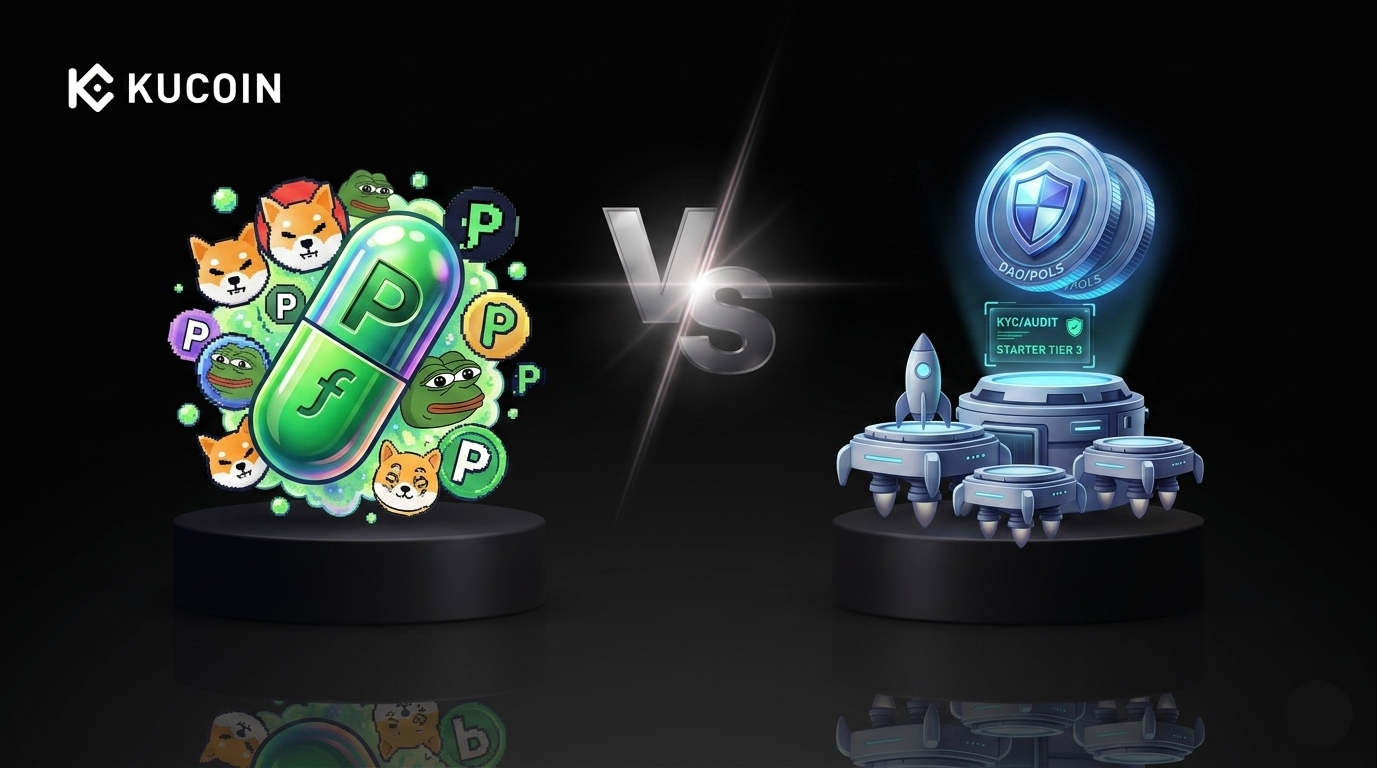
Key Takeaways:
-
Launch Process: Pump.fun offers instant, one-click, permissionless token deployment. Traditional token launchpads require rigorous vetting, audits, and applications.
-
Pricing Model: Pump.fun uses an algorithmic bonding curve for dynamic, zero-order-book pricing. Traditional token launchpads use fixed-price presales or structured auctions.
-
Liquidity Handling: Pump.fun automates liquidity migration to a decentralized exchange upon hitting a market cap goal. Traditional token launchpads require manual liquidity seeding and enforce lock-ups.
-
Risk & Trust: Traditional token launchpads mandate strict identity checks (KYC) and contract audits. Pump.fun operates anonymously, placing all security responsibility on the buyer.
-
Project Profile: Pump.fun is built for high-velocity meme coins and viral speculation. Traditional token launchpads cater to long-term Web3 applications and infrastructure.
Why Compare Pump.fun and Traditional Token Launchpads?
When exploring the fast-paced cryptocurrency ecosystem, investors and developers frequently ask: what is the difference between Pump.fun and Traditional Token Launchpads? For years, launching a new cryptocurrency demanded structural compliance, institutional backing, and heavily structured fundraising rounds. These avenues served as the trusted entry point for decentralized finance (DeFi) innovations and infrastructure platforms looking for long-term credibility.
However, the crypto landscape shifted dramatically with the rise of instant-generation protocols. Pump.fun emerged as a highly disruptive force on the Solana network, completely dismantling traditional capital barriers. By eliminating requirements for smart contract coding, upfront liquidity, and legal vetting, it introduced a frictionless environment for speculative tokens. Understanding how these two models contrast is vital for navigating modern Web3 markets, as one prioritizes institutional stability while the other prioritizes instant social expression.
How Do Pump.fun and Traditional Token Launchpads Work?
Pricing Models
The core operational distinction between these two ecosystems lies in how initial token values are discovered and scaled.
| Metric | Traditional Token Launchpads | Pump.fun Platform |
| Pricing Method | Fixed-price initial public offerings (IDOs/IEOs) | Algorithmic Bonding Curve |
| Initial Valuation | Pre-determined by the project team and launchpad | Starts near zero; scales dynamically per trade |
| Order Matching | Structured allocations or tiered lottery systems | Direct interaction with an automated smart contract |
Traditional platforms ensure everyone in a given tier pays the exact same price before secondary trading opens. Conversely, Pump.fun calculates prices via a mathematical formula. As investors purchase tokens from the contract, the supply expands along a virtual curve, making every subsequent purchase more expensive. This eliminates the need for an order book but introduces extreme block-by-block price volatility.
Liquidity Management
Liquidity infrastructure marks another massive structural divergence.
-
Traditional Token Launchpads: Developers must manually pair a percentage of raised capital with project tokens to form a pool on decentralized exchanges like Uniswap. To prevent fraud, platforms enforce programmatic lock-ups that restrict developers from pulling these funds for months or years.
-
Pump.fun: No external exchange is needed at launch. The smart contract holds the capital natively. Once a token reaches a specific threshold—historically a market cap of around $69,000 (roughly 85 SOL accumulated in the curve)—it automatically "graduates." The protocol instantly migrates the liquidity to Raydium or PumpSwap and permanently burns the liquidity keys to guarantee it can never be removed.
Speed and Accessibility
The effort required to go from an idea to an active asset highlights a significant operational divide.
Traditional launchpads function similarly to digital crowdfunding or venture networks. Teams must submit multi-page whitepapers, publish fully audited code, draft legal disclosures, and pass weeks of background evaluations.
Pump.fun strips away all friction. There are no technical requirements, whitepapers, or mandatory configuration fields. Anyone with a Web3 wallet can type a ticker name, upload an image, and deploy a fully functional token to the blockchain in under 60 seconds. To encourage volume, the creation mechanism has evolved from charging a minor setup fee to a completely free deployment model.
Risk and Security in Pump.fun and Traditional Token Launchpads
KYC and Audits in Pump.fun and Traditional Token Launchpads
Security oversight and compliance strategies differ greatly between these fundraising methods.
Traditional launchpad networks demand comprehensive identity authentication. Both the project founders and the participating retail investors must submit government identification via Know Your Customer (KYC) protocols to comply with regional regulations. Furthermore, smart contracts must be reviewed by security agencies like CertiK to guarantee the code contains no hidden backdoors.
Pump.fun bypasses compliance entirely in favor of permissionless anonymity. No KYC is required to create or trade. Because the underlying code is a standardized, immutable system replicated across every token created, individual code audits are unnecessary. However, while the system protects against technical code exploits, it provides zero protection against anonymous founders deploying a token and executing immediate marketing manipulations.
Scam Potential in Pump.fun and Traditional Token Launchpads
The nature of user risk changes fundamentally based on which platform style an investor chooses.
Risk Assessment: Traditional launchpads primarily expose investors to execution risk (the team fails to build their product). Pump.fun exposes investors to severe malicious intent risk (the creator actively tries to extract capital from buyers).
Because traditional platforms act as curation gatekeepers, blatant financial scams are systematically filtered out. On Pump.fun, the absence of verification results in an environment where a vast majority of deployed assets trend rapidly toward zero. Bad actors utilize advanced on-chain tools to buy out their own token launches at the lowest possible bonding curve prices, waiting for public hype to build before dumping their entire supply onto late-stage buyers.
Target Audience of Pump.fun and Traditional Token Launchpads
Creators on Pump.fun and Traditional Token Launchpads
The professional profiles of creators utilizing these platforms rarely overlap.
-
Traditional Platforms: Attract software engineers, corporate Web3 enterprises, and financial architects. These teams are seeking long-term startup capital, often in the millions, to fund ongoing research, engineering salaries, and multi-year product development.
-
Pump.fun: Attracts internet communities, meme creators, and short-term traders. Creators are not building technical applications; they are weaponizing internet culture, humor, and viral news events to capture immediate social media attention.
Investors in Pump.fun and Traditional Token Launchpads
Investor habits match the underlying assets provided by each framework.
Investors choosing traditional launchpads use a strategic, multi-year horizon mindset. They seek fundamental value, utility integration, and governance rights, accepting long token vesting schedules in exchange for potential equity-style appreciation.
Traders on Pump.fun operate with a high-frequency speculative mindset. They intentionally hunt for extreme, short-term price movements, attempting to buy into a bonding curve early and exit for profit within hours or minutes. They disregard traditional metrics like token utility, relying instead on real-time social engagement metrics and wallet tracking.
Ecosystem Impact of Pump.fun and Traditional Token Launchpads
Virality vs Utility in Pump.fun and Traditional Token Launchpads
The systemic influence exerted by these competing philosophies shapes the identity of the wider blockchain market.
Traditional launchpads validate the core technical proposition of crypto. They act as the origin point for critical decentralized infrastructure, cross-chain bridges, and decentralized file storage systems. They prioritize technological integration and measurable value creation above all else.
Pump.fun introduces an era of pure market speculation and cultural monetization. It strips away the pretense that a digital asset requires a software application to possess value. While critics argue this shifts the focus away from meaningful technological progress, supporters view it as a highly efficient mechanism for community formation. It drives massive network transaction volume and brings immense liquidity to layer-1 blockchains like Solana, demonstrating that internet culture is itself a highly liquid financial vertical.
Summary
The divide between these launch mechanisms reflects a broader evolution in the decentralized finance space. Established platforms continue to mirror early-stage venture capital structures. They protect participants through intense contract auditing, developer identity checks, and planned vesting horizons, but they require significant capital and preparation time from project creators.
In contrast, algorithmic, instant-launch platforms prioritize absolute accessibility. By executing token distribution via automatic bonding curves rather than fixed public rounds, they allow anyone to instantly test market interest without financial or technical friction. While this setup has ignited a massive wave of cultural assets and viral speculation, it eliminates retail investor protections. Ultimately, choosing between these two frameworks depends on whether an investor wants to back the long-term infrastructure of Web3 or trade the rapid, volatile waves of digital attention.
FAQs
Is it safer to use Pump.fun or Traditional Token Launchpads?
Traditional Token Launchpads are generally safer due to vetting and protections. Pump.fun carries higher scam risks but offers fair-launch mechanics that limit some traditional rug vectors.
Which is cheaper to launch on between Pump.fun and Traditional Token Launchpads?
Pump.fun is significantly cheaper, allowing users to deploy tokens for virtually free, requiring only minor blockchain network gas fees. Traditional launchpads require substantial upfront capital, often totaling thousands of dollars, to cover legal vetting, mandatory third-party code audits, marketing obligations, and platform listing fees.
Are there rug pulls on Pump.fun and Traditional Token Launchpads?
Yes, but they take different forms. Traditional launchpads use KYC and audits to minimize outright theft, though projects can still experience economic failure. Pump.fun's automated architecture mathematically prevents traditional liquidity-drain rug pulls, but because it is unvetted, creators frequently execute "dev dumps"—purchasing large percentages of their own supply secretly and selling everything simultaneously to crash the token price.
Do I need to code for Pump.fun and Traditional Token Launchpads?
No programming skills are required to use Pump.fun, as the platform provides a standardized, pre-built smart contract layout that activates via a simple web interface. For a traditional launchpad, while the funding portal handles the capital collection mechanics, the project team must still write, debug, and maintain the complex smart contract code powering their actual Web3 product or ecosystem.
Create a free KuCoin account to discover the next crypto gems and trade over 1,000 global digital assets today. Create Now!
Further Reading:


