
What is the Difference Between EVM vs. Non-EVM Chains: Developer Experience?
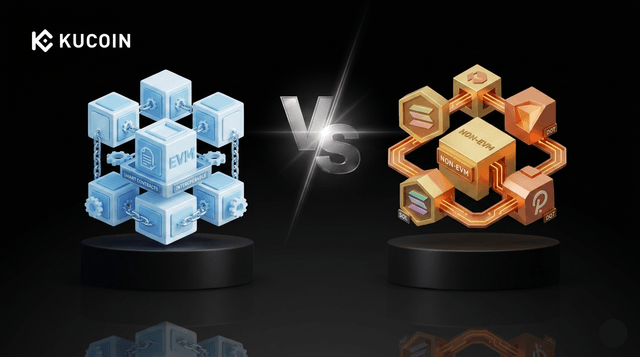
Key Takeaways
-
Language Accessibility: EVM-compatible chains utilize Solidity, which offers a lower barrier to entry, whereas Non-EVM chains often employ Rust or Move for enhanced safety and performance.
-
Tooling Maturity: The EVM ecosystem benefits from a decade of standardized tooling (like Hardhat and Foundry), while Non-EVM environments are rapidly evolving with high-performance, custom frameworks.
-
Execution Paradigms: Non-EVM chains frequently support parallel execution, offering higher scalability that attracts developers of high-frequency applications, contrasted with the serial execution of standard EVM.
In the architectural landscape of blockchain technology, the execution environment serves as the foundational layer upon which decentralized applications (dApps) are constructed. This environment, often referred to as a Virtual Machine (VM), dictates how code is written, how transactions are processed, and how data is stored. For developers and technical analysts, the primary debate centers on the Ethereum Virtual Machine (EVM) versus Non-EVM chains.
The choice between these two paradigms is not merely a technical preference; it is a strategic decision that influences a project's security, speed-to-market, and future scalability. Understanding the nuances of Developer Experience (DX) within these ecosystems provides critical insight into where the next wave of innovation—and subsequently, liquidity—is likely to manifest. Exploring the KuCoin blog can provide further context on how these technical choices influence market trends.
Overviews: Defining the Virtual Machine Paradigms
The Ethereum Virtual Machine (EVM)
The EVM is the software platform that developers use to create dApps on Ethereum and its numerous compatible networks. It functions as a decentralized state machine that executes scripts known as smart contracts. Due to its early arrival, EVM-compatibility has become industry standard. Chains such as Polygon, BNB Chain, and Avalanche C-Chain leverage this architecture to tap into Ethereum’s vast developer pool and existing infrastructure.
Non-EVM Chains
Non-EVM chains refer to blockchains that have developed their own proprietary execution environments. These architectures are often built to address specific perceived limitations of the EVM, such as its inability to process transactions in parallel or its high storage costs. Notable examples include Solana (using the Solana Virtual Machine or SVM), Aptos and Sui (utilizing MoveVM), and Polkadot (using WebAssembly or WASM). These networks represent a "clean slate" approach to blockchain engineering.
Key Difference: The Developer Experience (DX)
The Developer Experience is a multifaceted metric that encompasses programming languages, debugging tools, documentation quality, and the ease of deployment.
-
Programming Languages and Syntax
The most immediate difference lies in the coding language. EVM developers primarily use Solidity, a high-level, contract-oriented language designed specifically for the EVM. Its syntax is influenced by JavaScript and C++, making it approachable for traditional web developers.
Conversely, Non-EVM chains often utilize Rust (Solana, Polkadot, Near) or Move (Aptos, Sui). Rust is a systems programming language that emphasizes memory safety and concurrency. While it offers superior performance and prevents many common bugs at the compiler level, it has a significantly steeper learning curve than Solidity. Move, specifically designed for digital assets, treats tokens as "resources" that cannot be copied or dropped accidentally, providing a different security model entirely.
-
Tooling and Infrastructure
Developer productivity is heavily reliant on the quality of available tools. The EVM ecosystem has a massive head start. Tools like Hardhat, Foundry, and Truffle allow for sophisticated testing, local network simulation, and automated deployments. Furthermore, because so many chains use the same VM, a developer can deploy the same code across multiple crypto markets with minimal adjustments.
Non-EVM chains are in a phase of rapid infrastructure development. While frameworks like Solana’s Anchor have significantly improved the DX by providing a structure similar to EVM tools, developers in these ecosystems often find themselves building their own "middleware" or working with less mature documentation compared to the vast repositories available for Ethereum.
-
State Management and Execution Logic
The EVM processes transactions serially—one after another. This simplifies the developer's mental model regarding state changes but limits the network's throughput. Non-EVM architectures frequently implement parallel execution. For a developer, this requires a more complex understanding of how different smart contracts interact, as they must ensure that concurrent operations do not conflict. However, the reward is a significantly higher capacity for transactions per second (TPS).
Pros and Cons of Each Ecosystem
EVM Ecosystem
Pros:
-
Vast Open-Source Libraries: Developers can leverage thousands of audited contracts (e.g., OpenZeppelin) to build complex protocols quickly.
-
Interoperability: Ease of moving assets and logic across different EVM-compatible layers.
-
Standardized Learning: A developer proficient in Solidity can work across dozens of different blockchains.
Cons:
-
Technical Debt: The EVM’s architecture carries legacy limitations that make scaling difficult without complex Layer 2 solutions.
-
Security Vulnerabilities: Solidity’s flexibility can lead to logic errors like re-entrancy attacks if the developer is not highly experienced.
Non-EVM Ecosystems
Pros:
-
High Performance: Native support for parallel processing and sub-second block times.
-
Enhanced Safety Features: Languages like Move and Rust provide stronger guarantees against common smart contract exploits.
-
Innovative Architectures: Ability to implement features like account abstraction or on-chain order books more efficiently.
Cons:
-
Ecosystem Fragmentation: Each Non-EVM chain often requires a unique set of skills and tools.
-
Higher Entry Barrier: The complexity of the languages and the relative lack of "beginner-friendly" documentation can deter new developers.
Use Cases: Selecting the Right Architecture
The decision of where to build often depends on the specific requirements of the decentralized application.
-
DeFi and Liquidity Aggregators: For protocols where deep liquidity and "money lego" composability are paramount, the EVM remains the dominant choice. Most established lending protocols and stablecoin issuers reside here.
-
High-Frequency Gaming and SocialFi: Applications requiring thousands of low-cost, near-instant interactions are increasingly choosing Non-EVM chains. The low latency of these networks provides a user experience more akin to traditional web applications.
-
Asset-Heavy Protocols: For projects focused on complex digital assets or intricate supply chain management, the MoveVM (used by Sui and Aptos) offers a resource-oriented model that simplifies the tracking of non-fungible or semi-fungible items.
Monitoring official announcements regarding network upgrades and ecosystem grants can often signal which architecture is currently gaining the most developer traction.
Conclusion
The evolution of blockchain technology has moved past a "one size fits all" approach. The EVM provides a stable, highly documented, and liquid environment that is ideal for rapid deployment and traditional financial applications. On the other hand, Non-EVM chains offer a glimpse into the future of high-performance decentralized computing, albeit with a more demanding development process.
Ultimately, the "best" environment is determined by the goals of the project. As cross-chain messaging protocols become more sophisticated, the distinction between these ecosystems may blur, allowing developers to enjoy the best of both worlds. For now, mastering the nuances of each remains a critical skill for any participant in the KuCoin ecosystem.
FAQs
What is the primary difference in programming languages between EVM and Non-EVM?
The EVM primarily uses Solidity, a language designed specifically for smart contracts that is relatively easy to learn. Non-EVM chains often use general-purpose systems languages like Rust or specialized languages like Move, which offer higher performance and safety but are more difficult to master.
Can a developer easily migrate an EVM dApp to a Non-EVM chain?
No. Migrating from an EVM chain to a Non-EVM chain usually requires a complete rewrite of the smart contract logic in a different language and a fundamental redesign of how the application interacts with the blockchain's state.
Why is tooling considered better in the EVM ecosystem?
The EVM has been around much longer than most Non-EVM alternatives. This has allowed for the creation of a comprehensive suite of compilers, debuggers, local development environments, and security auditing tools that have been tested on thousands of projects.
Does the choice of VM affect the end-user experience?
Yes. It indirectly affects the user through transaction costs, confirmation speeds, and the types of wallets they must use. Non-EVM chains often offer lower fees and faster speeds, but may require users to install new, chain-specific wallet software.
Is one architecture more secure than the other?
Both have different security profiles. The EVM is more battle-tested, meaning its vulnerabilities are well-understood. Non-EVM chains often use languages that prevent certain types of bugs by design, but the underlying virtual machines themselves may be less "stress-tested" by time.
Join 30 million global users on the world’s leading crypto exchange by signing up for your free account now. Register Now!
Further reading


