
What is the difference between Airdrop Farming and Yield Farming?
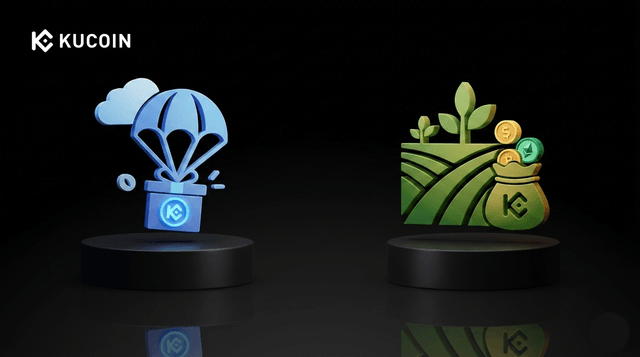
Key Takeaways
-
Core Philosophy: The primary technical divide is in the nature of the reward; airdrop farming focuses on speculative future token distributions through protocol interaction, whereas yield farming relies on predictable, continuous returns (APY) by providing liquidity.
-
Capital Requirements: Airdrop farming is often accessible with minimal capital, relying more on consistent time-weighted activity and Sybil-resistant "wallet narratives," while yield farming requires substantial capital to generate meaningful returns after gas fees.
-
Ecosystem Architecture: Airdrop farmers act as early network stress-testers and bootstrappers for new Layer-2s and dApps, while yield farmers act as foundational liquidity providers that keep decentralized exchanges (DEXs) and lending markets functional.
-
Risk Profiles: Both approaches carry unique risks; airdrop farmers face the opportunity cost of time and high smart contract risks on unproven protocols, while yield farmers battle impermanent loss (IL) and shifting token emission rates.
The race to maximize on-chain returns has led to a major shift in how users deploy their capital and time in decentralized finance (DeFi). To understand Airdrop Farming vs. Yield Farming, one must look beyond the surface level of "free crypto" and examine the economic philosophies that power these billions of dollars in network incentives.
Both models allow users to extract value from crypto ecosystems without giving up control of their private keys. However, the "different" in their approach impacts everything from capital efficiency to the predictability of the reward.
The 6W Framework of DeFi Returns
To categorize the positioning of these two yield strategies, we can apply the 6W principles:
-
Who: Executed by on-chain sleuths and early adopters (Airdrop Farmers) versus capital-heavy DeFi strategists and liquidity providers (Yield Farmers).
-
What: The process of strategically interacting with tokenless protocols (Airdropping) versus locking capital in smart contracts to earn trading fees and token emissions (Yielding).
-
Where: Airdrop farming often occurs on early-stage Layer-2s, testnets, or new dApps, whereas yield farming thrives on established DEXs (like Uniswap or Curve) and lending protocols (like Aave).
-
When: As the defining crypto earning trends of 2026, they represent the shift towards sophisticated "wallet narratives" and risk-adjusted stablecoin strategies.
-
Why: To solve the "cold start problem" for new networks by generating initial user activity (Airdrops), and to ensure deep liquidity for decentralized trading (Yield Farming).
-
How: By utilizing consistent, multi-month interactions to build an on-chain footprint, or by depositing asset pairs into a liquidity pool (LP) smart contract.
Airdrop Farming vs. Yield Farming: Core Strategy Differences
The core technical differences lie in how they generate returns, how they deploy capital, and how they manage protocol exposure.
The Core Focus (Speculative Interaction vs. Liquidity Provision)
This is the most significant technical "different."
-
Airdrop Farming (Speculative Interaction): Farmers execute transactions, such as bridging, swapping, minting NFTs, or voting in governance, on platforms that do not yet have a token. The goal is to build a robust on-chain history (a "wallet narrative") that qualifies the user for a future retroactive token distribution. The reward is unknown until the Token Generation Event (TGE).
-
Yield Farming (Liquidity Provision): Users provide tangible assets to a protocol to facilitate its core function. For example, depositing USDC and ETH into a DEX liquidity pool allows other traders to swap between the two. The farmer earns a known, albeit fluctuating, Annual Percentage Yield (APY) derived from actual trading fees and protocol emissions.
Capital Requirements and Sybil Resistance
-
Airdrop Farming (Time and Volume Weighting): By 2026, projects have deployed advanced AI Sybil detection. It is no longer about blindly clicking buttons. Success requires consistent, time-weighted activity over months to prove genuine usage. While large volume helps, retail users can still secure allocations with $100–$500 by demonstrating deep, consistent interaction across a specific ecosystem.
-
Yield Farming (Capital Dominance): Returns are strictly proportional to the capital deployed. Earning a 10% APY on a $100 deposit yields a negligible $10 per year, which is easily erased by gas fees on networks like Ethereum. Meaningful yield farming requires significant capital and an active understanding of concentrated liquidity management to mitigate impermanent loss.
Ecosystem Strategy: The Network Bootstrapper vs. The Market Maker
The market has rewarded these two paths in different ways.
Airdrop Farming: The Network Bootstrapper
By 2026, airdrop farming has cemented its status as the premier distribution model for decentralized protocols. Because of the regulatory need to decentralize governance, projects rely on farmers to distribute supply widely. If you are looking to turn time and small capital into massive asymmetric returns—by discovering the next major Layer-2 or prediction market—you will likely focus on airdrop farming.
Yield Farming: The Market Maker
Yield farming has taken a more established, risk-adjusted approach. Through CeDeFi models and Liquid Staking Tokens (LSTs), it allows users to earn sustainable yield from real economic activity, rather than speculative token inflation. This predictability makes it a favorite for institutional players and whales looking to generate passive income on their stablecoins or blue-chip assets.
Trading Insights: Yield Dynamics in 2026
For a crypto participant, Airdrop Farming vs. Yield Farming translates into specific on-chain behaviors:
-
Risk vs. Reward: Airdrop farming carries low financial risk (mostly gas fees) but high "time risk" and smart contract vulnerabilities on unproven dApps. Yield farming carries high financial risk through Impermanent Loss (IL)—where the deposited assets lose value faster than the yield accrues.
-
Execution and Strategy: Airdrop hunters use burner wallets and space out interactions to appear organic. Yield farmers monitor technical indicators like the Average True Range (ATR) to adjust their concentrated liquidity ranges, ensuring their capital stays active and earns maximum fees.
-
Bridging and Liquidation: When an airdrop lands or a yield farm matures, moving capital efficiently is key. Using the KuCoin exchange as a bridge allows you to instantly deposit newly airdropped tokens or farmed yields on Layer-2s and cash them out or swap them without suffering high on-chain slippage.
For retail users who prefer a more streamlined experience, the KuCoin Lite Version provides a simplified interface to earn passive yield on assets through centralized Earn products, bypassing the complex smart contract risks of on-chain farming.
Summary of Key Differences
| Feature | Airdrop Farming | Yield Farming |
| Core Action | Strategic protocol interaction | Providing liquidity / Staking assets |
| Return Profile | Speculative, one-time lump sum (at TGE) | Predictable, continuous APY |
| Capital Requirement | Low (mainly requires gas fees & time) | High (returns proportional to deposit) |
| Primary Risk | Wasted time, Sybil filtering, Smart contract bugs | Impermanent Loss, Token depreciation |
| Target Audience | Early adopters, researchers, retail users | Whales, institutional capital, DeFi strategists |
| Market Role | Bootstrapping user metrics and network stress | Facilitating deep market liquidity |
Conclusion: The Future of On-Chain Rewards
In the debate of Airdrop Farming vs. Yield Farming, the "winner" is the end-user. Airdrop farming provides a high-upside environment for those willing to act as early beta testers, while yield farming is building the financial backbone for a deeply liquid multi-chain future. As we look forward, both mechanisms continue to push the boundaries of decentralized finance, ensuring that users are financially rewarded for the value they bring to the blockchain ecosystem.
FAQs
Is one method more profitable than the other?
It depends on your capital. For a user with $500, airdrop farming can realistically turn that into a $5,000+ allocation if they hit the right project. For a user with $100,000, yield farming in a stablecoin pool offering 10% APY provides a reliable, risk-adjusted $10,000 return, which is far more predictable than hunting airdrops.
Why do projects give away free money in airdrops?
Projects use airdrops to solve the "cold start problem." It incentivizes early users to test the network, builds a loyal community, serves as a massive marketing event, and importantly, helps decentralize the token supply to avoid regulatory scrutiny as an unregistered security.
Can I use the same wallet for both?
Technically yes, but it is highly discouraged in 2026. Airdrop farming involves interacting with new, unproven smart contracts that carry a high risk of being exploited. Yield farming involves storing significant capital. You should always use separate "burner wallets" for airdrop hunting to protect your main yield-generating assets.
What is Impermanent Loss in yield farming?
If you provide liquidity to a pool (e.g., ETH/USDC) and the price of ETH skyrockets, the automated market maker (AMM) rebalances your pool by selling your ETH for USDC. If you withdraw, you may find you have less total value than if you had simply held ETH in your wallet. The "different" in value is the impermanent loss.
How do I cash out my airdrops or yield?
You can seamlessly transfer your newly claimed tokens or farmed assets to KuCoin Markets. Ensure you select the correct native network (like Arbitrum, Base, or Solana) when depositing from your Web3 wallet to instantly trade against deep USDT or ETH liquidity.
Join 30 million global users on the world’s leading crypto exchange by signing up for your free account now. Register Now!
Further reading:


