
What is the difference between Adoption Comparison?
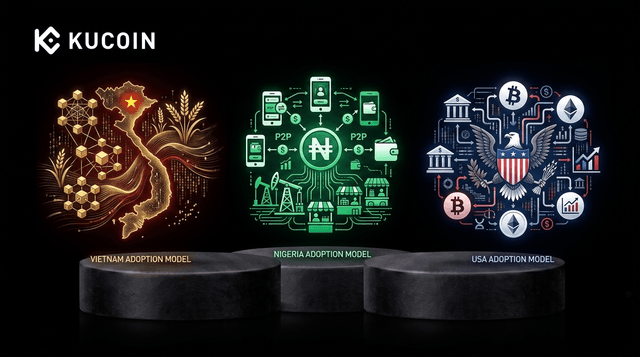
Key Takeaways
-
Diverse Adoption Drivers: Vietnam leads in grassroots DeFi and gaming; Nigeria dominates in P2P utility and inflation hedging; the USA leads in institutional capital and regulated infrastructure.
-
Economic Necessity: Emerging markets like Nigeria and Vietnam prioritize crypto for practical financial services, while high-income markets like the USA treat it primarily as an investable asset class.
-
Demographic Trends: Adoption in Vietnam and Nigeria is heavily skewed toward a younger, mobile-first population, whereas U.S. ownership is concentrated among prime-earning adults (ages 30–59).
-
Institutional Shift: The USA has successfully transitioned toward an institutional-grade market through regulated ETFs and corporate treasury allocations.
Global cryptocurrency integration is not a uniform process. The "Crypto Adoption: Vietnam vs. Nigeria vs. USA" comparison reveals three distinct models of digital asset utility. While one region may lead to total transaction volume, another may lead to the percentage of the population using digital assets for daily survival or wealth preservation.
Understanding the differences between these adoption models is essential for navigating the crypto markets. The divergence between retail-driven "grassroots" adoption and capital-heavy "institutional" adoption defines the current state of the industry. Detailed research on these regional shifts is regularly updated on the KuCoin blog.
Vietnam: The Leader in Grassroots Participation
Vietnam consistently ranks among the top nations globally for cryptocurrency adoption, driven by a unique blend of high digital literacy and a vibrant retail ecosystem.
-
DeFi and Gaming Integration
The Vietnamese market is characterized by a deep engagement with Decentralized Finance (DeFi) and blockchain-based gaming. A significant portion of the population utilizes non-custodial wallets to interact with play-to-earn platforms and yield-generating protocols. This high technical proficiency allows the local population to bypass traditional financial intermediaries, positioning Vietnam as a global hub for decentralized application (dApp) usage.
-
Retail-First Market Structure
Unlike Western markets, Vietnam’s crypto economy is overwhelmingly retail-driven. With a median age under 33 and high smartphone penetration, the population has embraced digital assets as a primary vehicle for alternative investment. While formal local exchanges have faced regulatory ambiguity, global platforms remain the primary entry point for millions of users.
Nigeria: Cryptocurrency as Financial Infrastructure
In Nigeria, cryptocurrency adoption is a matter of economic necessity rather than purely speculative interest. The country has one of the highest per-capita adoption rates in the world.
-
Inflation Hedging and Stablecoin Utility
Faced with persistent currency devaluation, Nigerian users have turned to USD-pegged stablecoins to preserve their purchasing power. Stablecoins function as a "digital dollar," providing a stable store of value that is more accessible than physical foreign currency. This utility extends to small business operations, where digital assets are used for international payments and inventory procurement.
-
Peer-to-Peer (P2P) Resilience
Nigeria possesses one of the most robust Peer-to-Peer (P2P) trading networks globally. Due to historical restrictions on direct bank-to-exchange transfers, the population developed sophisticated P2P systems that facilitate the exchange of local currency for digital assets. For traders monitoring these developments, official announcements regarding African regulatory frameworks offer vital context on how these informal markets are being brought into the regulated fold.
USA: The Institutional Powerhouse
The United States represents the institutional pillar of global adoption. While its grassroots rankings may be lower than Vietnam or Nigeria, its influence on market liquidity and infrastructure is unmatched.
-
Regulated Investment Vehicles
The U.S. market has matured through the approval of regulated exchange-traded products, such as spot Bitcoin and Ethereum ETFs. These vehicles have allowed pension funds, family offices, and traditional asset managers to allocate capital to digital assets within a familiar legal framework. By 2026, U.S. institutional products represent a substantial portion of the total circulating supply of major cryptocurrencies.
-
Corporate Treasury and Federal Policy
The United States has seen a marked increase in corporate treasury adoption. Public companies increasingly hold digital assets on their balance sheets as a strategic reserve. Furthermore, federal policy has shifted toward establishing a clearer regulatory perimeter for stablecoin issuers and digital asset custodians, providing the legal certainty required for large-scale enterprise integration.
Comparative Matrix: Vietnam vs. Nigeria vs. USA
| Metric | Vietnam | Nigeria | USA |
| Primary Driver | DeFi, Gaming, Yield | Inflation Hedge, Remittances | Institutional Allocation, ETFs |
| Primary Demographic | Tech-Savvy Youth (18-35) | Unbanked/Underbanked & Youth | Prime-Earning Adults (30-59) |
| Market Infrastructure | Retail/Global Exchanges | P2P/Stablecoin Utility | Regulated ETFs/Custody |
| Dominant Assets | Altcoins, Gaming Tokens | Stablecoins (USDT/USDC) | Bitcoin, Ethereum |
| Regulatory Tone | Sandbox/Informal | Mandatory/Maturing | Formal/Federal |
For users of the KuCoin lite version, these regional differences mean that the global KuCoin ecosystem must provide tools ranging from simple stablecoin conversions for Nigerian users to diverse altcoin pairs for the Vietnamese market and institutional-grade security for Western participants.
Global Implications of Regional Adoption
The "multipolar" nature of crypto adoption ensures that the industry remains resilient. If one region faces regulatory headwinds, the utility-driven adoption in another provides a floor for activity.
-
Capital Flow: The USA provides the "top-down" capital that drives market valuations.
-
Utility Innovation: Nigeria and Vietnam provide the "bottom-up" use cases that prove the technology's real-world value as financial plumbing.
-
Infrastructure Standardization: As these markets converge, the industry is seeing a standardization of compliance (such as the Travel Rule) and technical interoperability across different jurisdictional tiers.
Conclusion
The comparison of cryptocurrency adoption across Vietnam, Nigeria, and the USA illustrates that there is no single path to digital integration. Vietnam thrives on technical innovation and retail gaming; Nigeria utilizes digital assets as a critical hedge against economic volatility; and the USA provides the institutional framework and massive capital required for long-term sustainability.
As these three distinct models continue to evolve, they collectively build a more robust and diverse global financial system. The success of one model often complements the others, creating a global network where digital assets serve as both a speculative investment and a necessary tool for financial inclusion.
FAQs
Why does Vietnam rank higher in grassroots adoption than in the USA?
Vietnam’s ranking is higher in grassroots adoption because a larger percentage of its individual population uses crypto for daily activities like gaming and DeFi. In contrast, U.S. adoption is more concentrated among high-net-worth individuals and institutions.
Is crypto adoption in Nigeria decreasing?
While some rankings may fluctuate, active utility-driven adoption in Nigeria remains among the highest globally. The use of stablecoins for daily business and remittances continues to grow regardless of price volatility.
How have ETFs changed the U.S. crypto adoption?
ETFs have moved the U.S. market from "retail-speculative" to "institutional-strategic." They allow traditional investors to gain exposure to digital assets without the need for managing private keys or navigating unregulated exchanges.
Which country uses stablecoins the most?
Nigeria is a global leader in stablecoin usage for real-world utility (remittances and savings). In the USA, stablecoins are primarily used for trading liquidity and institutional settlement.
What are the main barriers to adoption in these countries?
In Vietnam, it is regulatory ambiguity; in Nigeria, it is the relationship between the central bank and P2P platforms; in the USA, it is the ongoing development of comprehensive federal legislation.
Create a free KuCoin account to discover the next crypto gems and trade over 1,000 global digital assets today. Create Now!
Further reading:


