
What is Yield Farming in crypto?
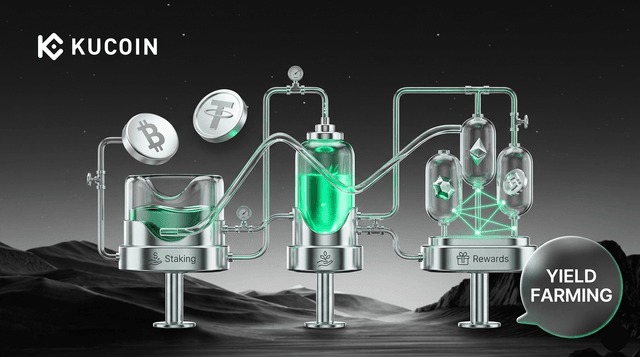
The cryptocurrency ecosystem provides a powerful, automated alternative that allows Web3 participants to put their idle digital assets to work: yield farming. Yield farming is a core financial mechanism that powers decentralized marketplaces by incentivizing token holders to lock up their capital in exchange for high-yield rewards. Whether you are trading major tokens or exploring passive income opportunities, mastering yield farming fundamentals is essential for navigating modern decentralized markets.
Key Takeaways
-
Yield farming is the decentralized process of locking up crypto assets in smart contracts to generate passive yields and token rewards.
-
Most yield farming protocols operate by having users provide dual-token liquidity to Automated Market Maker (AMM) decentralized trading pools.
-
Farmers earn incentives through a combination of accumulated user transaction fees, protocol interest rates, and newly minted governance token distributions.
-
Core structural risks include extreme asset price volatility, devastating smart contract code exploits, and the unique phenomenon of impermanent loss.
Defining the Yield Farming Concept
Yield farming, also frequently referred to as liquidity mining, is an innovative investment strategy where cryptocurrency holders temporarily lock up or lend their digital assets within decentralized protocol smart contracts. By supplying this vital capital, users provide the necessary depth that allows decentralized marketplaces to execute peer-to-peer trades without traditional order books or corporate financial intermediaries.
In return for performing this marketplace service, the protocol automatically distributes recurring financial payouts to the user. When you trade digital assets on the Exchange, you tap into highly liquid markets. For investors who want to step out of active spot trading and shift toward passive accumulation, yield farming serves as a high-velocity capital efficiency tool.
How Yield Farming Works Dynamically
The operational backbone of modern yield farming relies on automated structures called liquidity pools, which are managed by Automated Market Makers (AMMs).
The Liquidity Provision Phase
Unlike centralized exchanges that match buyers and sellers manually, an AMM DEX utilizes crowdsourced smart contract vaults holding pairs of tokens (for example, ETH and USDT in equal value proportions). An investor who deposits their tokens into these vaults becomes a Liquidity Provider (LP). Upon depositing, the protocol mints unique "LP Tokens" that represent the user's exact percentage share of that specific asset pool.
The Multi-Stream Reward Pipeline
Once capital is deployed, yield farmers typically accumulate returns through three distinct economic channels:
-
Transaction Fee Shares: Every time a trader executes a swap utilizing that specific liquidity pool, a minor fee (typically 0.3%) is collected and distributed proportionally among all active LP token holders.
-
Governance Token Rewards: To attract capital away from competitors, newly launched DeFi protocols distribute their own native governance tokens to active farmers as an additional inflationary bonus.
-
Yield Compounding (Farming): Advanced users take their newly minted LP tokens and lock them into secondary lending vaults or yield optimizers to maximize their yield compounding velocity.
Staking vs. Yield Farming: Understanding the Differences
New crypto participants frequently confuse staking with yield farming. While both generate passive income, they feature completely different technical architectures.
| Financial Metric | Cryptographic Staking | Decentralized Yield Farming |
| Underlying Mechanism | Securing a Proof of Stake (PoS) consensus network node. | Providing operational liquidity to AMM trading pools. |
| Token Requirements | Requires locking a single native blockchain asset. | Typically requires depositing pairs of diverse tokens. |
| Yield Complexity | Stable, highly predictable APY set by the protocol. | Highly variable yields that fluctuate based on trading volume. |
| Risk Environment | Low to Moderate; risk is tied to node slashing penalties. | Higher; exposed to smart contract bugs and price slippage. |
| Optimal Use Case | Long-term asset holding and foundational network defense. | Active portfolio optimization and short-term capital deployment. |
The Core Strategic Risks of Yield Farming
While the promise of triple-digit Annual Percentage Yields (APYs) can be highly appealing, yield farming is an advanced financial strategy that carries severe risk vectors:
Impermanent Loss (IL)
Impermanent loss is the most critical risk specific to AMM liquidity pools. It occurs when the price ratio of your deposited tokens diverges significantly from the moment you locked them into the smart contract. If one token spikes in value while the other crashes, the AMM's mathematical formula forces the pool to automatically sell your winning asset to rebalance the pool. If you withdraw your assets during this divergence, your net losses can completely wipe out any transaction fees you accumulated.
Smart Contract Exploits and Code Flaws
Decentralized yield farming protocols are completely open-source, meaning their code lines are publicly viewable. If a sophisticated hacker uncovers a hidden programming oversight, logical bug, or zero-day vulnerability within the smart contract architecture, they can execute flash-loan exploits to drain the crowdsourced liquidity vaults instantly, leaving farmers holding worthless claims.
Conclusion
Yield farming represents one of the most innovative breakthroughs in decentralized finance, turning passive digital asset holders into active market-making engines that maximize capital efficiency. By locking up dual-token assets within automated liquidity pools, participants capture multi-stream rewards driven by global trading fees and protocol incentives. However, because the DeFi landscape features high token price volatility, complex mathematical balance mechanics, and smart contract security risks, users must exercise disciplined risk management. By combining your personal crypto due diligence with the heavily secured, deeply liquid wealth tools provided, you can successfully navigate and profit from the evolving Web3 economy.
FAQs
What does APY mean in cryptocurrency yield farming?
Annual Percentage Yield (APY) represents the projected rate of return earned on an investment over one year, taking into account the compound interest effects generated by continuously reinvesting your farming rewards back into the pool.
Can I lose my principal capital while yield farming?
Yes. If the underlying tokens you deposit suffer a permanent market price crash, or if the protocol's underlying smart contracts are breached by an exploit, the total dollar value of your principal portfolio can drop significantly.
How often do yield farming reward rates change?
Yield farming reward rates are highly dynamic, fluctuating in real-time based on the total volume of capital locked in the pool and the daily transaction fee revenue generated by open market traders.
Is impermanent loss permanent after a withdrawal?
Yes. Impermanent loss remains "on paper" as long as your assets are locked inside the liquidity pool and the price ratio fluctuates. The moment you physical withdraw your tokens, the loss becomes permanently locked in.
Further Reading:


