
What is Tokenomics in crypto?
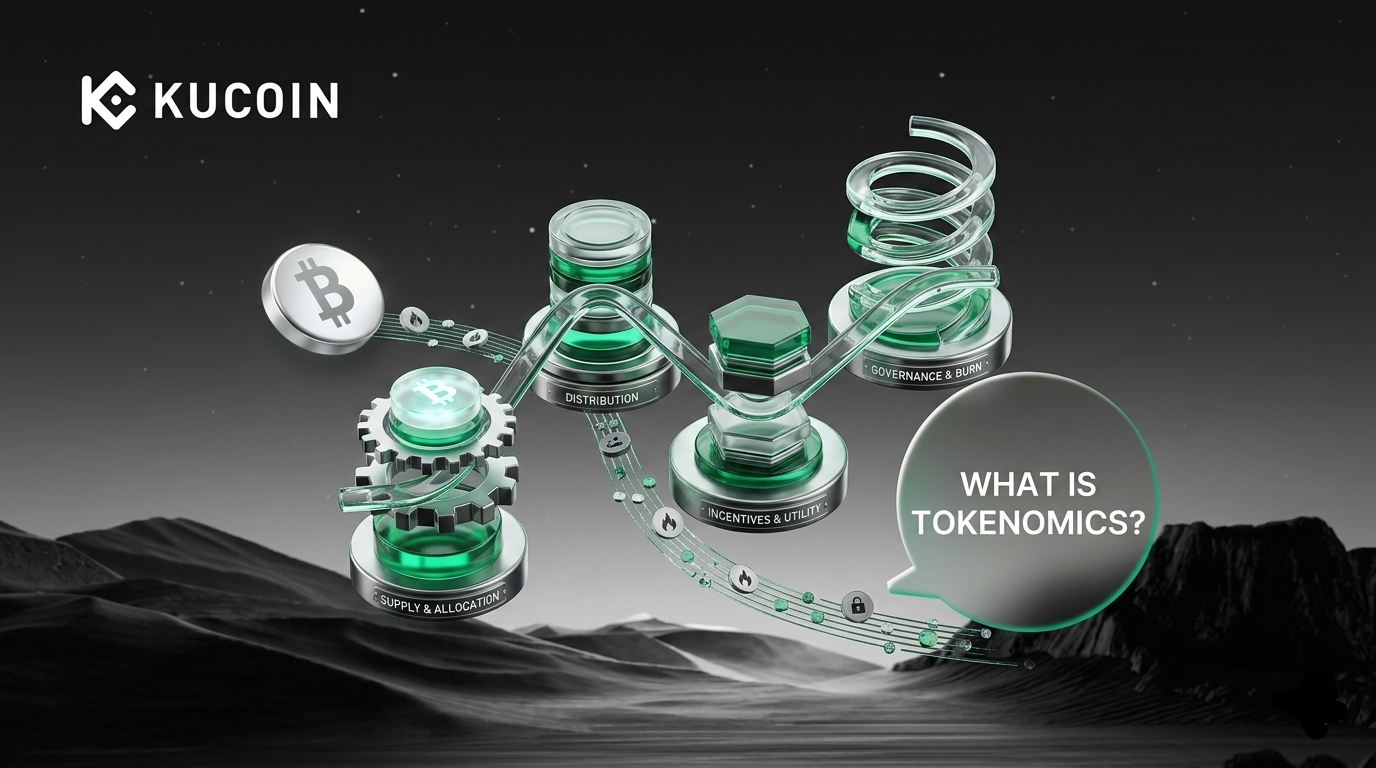
When evaluating traditional investments, analysts rely on corporate financial statements, earnings reports, and cash flow models to determine a company's underlying value. In the cryptocurrency ecosystem, public protocols do not have traditional balance sheets. Instead, their entire economic model, supply scheduling, and utility architecture are governed by a foundational concept known as tokenomics. Tokenomics is the architectural blueprint that dictates how a digital asset behaves, incentivizes participants, and captures long-term value. Whether you are building a diversified digital portfolio or executing strategic trades, mastering tokenomics is the single most critical skill for separating high-utility projects from short-term speculative hype.
Key Takeaways
-
Tokenomics is a portmanteau of "token" and "economics," encompassing all parameters that dictate a cryptocurrency's supply, distribution, and overall utility.
-
A project’s supply model—whether inflationary, deflationary, or fixed—directly determines its long-term scarcity and open-market value dynamics.
-
Token allocation structures outline how supply is divided among founders, private venture capital investors, public communities, and ecosystem treasuries.
-
Strong utility frameworks generate sustainable organic demand by embedding tokens into gas fee processing, governance voting, or staking reward models.
Defining the Tokenomics Concept
Tokenomics refers to the comprehensive study of the economic characteristics, mathematical design choices, and structural incentives that govern a cryptocurrency token. It combines behavioral game theory, computer logic, and monetary economics to build a self-sustaining decentralized financial system.
A well-engineered tokenomics model creates a balanced loop of supply and demand. It rewards early network participants, funds ongoing protocol development, manages inflation, and builds intrinsic utility.
The Core Pillars of a Tokenomics Structure
To evaluate a digital asset's long-term sustainability, smart investors break down its tokenomics model into four fundamental pillars:
Supply Dynamics (Circulating vs. Maximum Supply)
The mathematical limit placed on a token's supply dictates its foundational scarcity.
-
Maximum Supply: The absolute limit of tokens that can ever exist in perpetuity (e.g., Bitcoin's hard cap of 21 million).
-
Total Supply: The number of tokens that have already been minted, excluding any coins programmatically burned.
-
Circulating Supply: The exact quantity of tokens currently unlocked, accessible, and actively trading in public order books.
Allocation, Vesting, and Cliff Schedules
How the initial supply is distributed among various stakeholders is a primary indicator of market risk. A standard allocation splits supply between project founders, foundation treasuries, staking rewards, and early private investors (Venture Capitalists).
To prevent early insiders from immediately dumping their cheap allocations onto public retail buyers, reputable protocols implement Vesting Schedules (a gradual release of tokens over months or years) and Cliffs (a mandatory lockup period before any vesting begins).
Monetary Policy: Inflationary vs. Deflationary Models
Blockchains rely on structural mechanics to manage token value over time:
-
Inflationary Tokens: The protocol continuously mints new tokens over time to reward validators or fund ecosystem development, which can dilute value if demand does not keep pace.
-
Deflationary Tokens: The system permanently removes tokens from active circulation via transactional fee-burning mechanisms (like Ethereum's EIP-1559) or scheduled buy-backs, enforcing long-term digital scarcity.
Evaluating Token Utility and Value Capture
A common flaw in weak projects is launching a token with high inflation but zero actual utility. For a tokenomics model to capture and retain value, the token must serve vital operational functions within its native ecosystem:
-
Network Gas Fees: Paying for processing data and smart contract executions (e.g., ETH on Ethereum).
-
Cryptographic Staking: Locking tokens as economic collateral to secure a Proof of Stake network node in exchange for yield rewards.
-
Protocol Governance: Granting holders voting power to dictate fee models, roadmap adjustments, and treasury asset deployment within a DAO.
-
Ecosystem Incentives: Acting as the primary medium of exchange, in-game currency, or collateral within decentralized finance (DeFi) platforms.
High-Quality vs. High-Risk Tokenomics: A Comparative Analysis
Understanding the structural red flags within a token's architectural layout is crucial for safeguarding your trading capital.
| Economic Metric | High-Quality Tokenomics Architecture | High-Risk Tokenomics Red Flags |
| VC Allocation | Minor percentage; balanced widely across the public community. | Over 50% held by private insiders and anonymous founders. |
| Vesting Guardrails | Multi-year linear unlock schedules with prolonged cliffs. | Immediate token unlocks at launch, risking massive dumps. |
| Value Mechanisms | Fee-burning protocols or supply caps to enforce scarcity. | Infinite, uncapped printing loops with zero deflationary checks. |
| Core Utility | Intertwined with gas fees, staking yields, and governance. | Purely speculative; lacks practical utility within the network. |
Conclusion
Tokenomics is the absolute bedrock of fundamental analysis in cryptocurrency, transforming raw cryptography into a functional digital economy. By managing supply schedules, enforcing structural scarcity via deflationary mechanics, and creating robust token utility, tokenomics aligns the financial self-interest of global users with the long-term success of the underlying protocol. While navigating volatile markets demands ongoing due diligence, evaluating token allocation ratios and vesting cliffs provides a massive analytical edge.
FAQs
What does the term "Fully Diluted Valuation" mean?
Fully Diluted Valuation (FDV) is the projected total market capitalization of a cryptocurrency if its entire maximum token supply were currently in active circulation, calculated by multiplying max supply by the current market price.
Why are token vesting schedules important for retail buyers?
Vesting schedules bind founders and private investors to long-term lockups. This prevents insiders from immediately liquidating massive blocks of cheap tokens at launch, shielding retail buyers from sudden market price crashes.
How does token burning increase a cryptocurrency's value?
Token burning permanently removes coins from the circulating supply. According to the basic laws of supply and demand, reducing the available supply while demand remains steady or increases naturally exerts upward pressure on price.
Can a project change its tokenomics model after launch?
Yes. If a project utilizes a decentralized autonomous organization (DAO) framework, token holders can cast governance votes to alter emission schedules, adjust staking parameters, or implement new transaction fee-burning mechanisms.
Further Reading:


