
What is Stablecoin Peg in crypto?
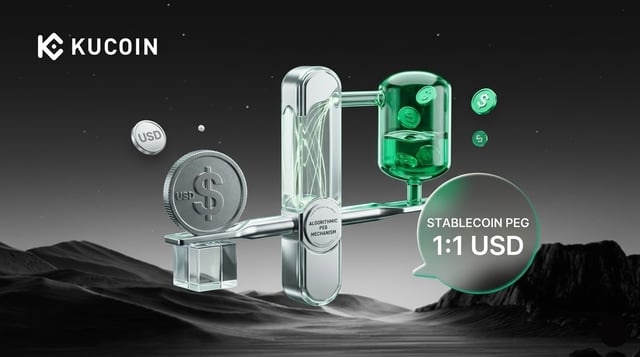
The cryptocurrency market is globally renowned for its high price volatility, where digital assets can experience massive fluctuations within a single trading session. While this dynamism attracts active day traders, it creates a significant barrier for everyday commerce, lending, and reliable value storage. To bridge this gap, developers engineered stablecoins—digital assets designed to maintain a steady price. The core mechanism that enables this function is the "peg."
Key Takeaways
-
A stablecoin peg is the fixed price ratio established between a cryptocurrency and an external anchor asset, most commonly the US Dollar.
-
Centralized stablecoins maintain their peg by backing every circulating token with equivalent real-world fiat cash and short-term treasury reserves.
-
Decentralized options preserve their value peg through automated smart contract over-collateralization algorithms that adjust to market volatility.
-
De-pegging occurs when an imbalance in supply and demand or a lack of collateral forces the token’s price to drift from its anchor.
Defining the Stablecoin Peg Concept
In traditional finance, a currency peg occurs when a government fixes its nation's exchange rate to another country's currency or a precious metal. In Web3, a stablecoin peg is the programmatic baseline that anchors a cryptocurrency’s market value directly to an external asset, most frequently the US Dollar (at a strict 1:1 ratio), the Euro, or physical gold. The primary utility of a stablecoin peg is to combine the borderless, instant, and programmatic benefits of blockchain technology with the predictable price stability of traditional global fiat currencies
How Stablecoin Pegs Maintained Dynamically
To maintain a consistent, rigid price peg in a volatile market environment, different stablecoin protocols utilize completely different financial architectures and algorithmic stabilization strategies.
Fiat-Collateralized Pegs
Fiat-collateralized stablecoins are the most dominant tokens in the crypto ecosystem. They rely on an explicit 1:1 asset redemption model managed by a centralized issuer. Companies like Tether (USDT) and Circle (USDC) hold physical cash, bank deposits, and highly liquid short-term treasury bills in secure bank reserves. If the open-market price of the stablecoin drops slightly due to heavy selling, arbitrage traders will buy the cheap tokens and redeem them directly with the issuer for a full $1.00 of real-world fiat, shrinking the circulating supply and naturally pushing the market price back up to parity.
Crypto-Collateralized Pegs
To operate without traditional centralized banks, decentralized stablecoins rely on automated smart contracts and blockchain over-collateralization. To mint a decentralized stablecoin like Dai (DAI), users must lock up high-value cryptocurrencies (such as ETH) into a smart contract vault. Because crypto prices are highly volatile, these protocols enforce strict over-collateralization ratios (e.g., $150 worth of ETH to mint $100 of stablecoins). If the collateral value drops too close to the minted stablecoin balance, the protocol automatically liquidates the underlying assets to maintain the economic health of the peg.
Comparing the Primary Stablecoin Peg Mechanisms
Different stablecoin anchoring models offer varying trade-offs between centralized safety, collateral backing, and decentralized trust.
| Stablecoin Type | Peg Stabilization Source | Primary Advantage | Major Structural Vulnerability |
| Fiat-Backed | 1:1 traditional cash reserves and short-term debt bills. | Deepest market liquidity and absolute price stability. | Relies heavily on centralized compliance and external bank audits. |
| Crypto-Backed | Over-collateralized digital assets held in smart contracts. | Highly transparent, decentralized, and censorship-resistant. | Vulnerable to forced liquidations during sudden market flash crashes. |
| Algorithmic | Smart contract token mint-and-burn mechanics. | Highly capital-efficient and completely automated. | High risk of permanent "death-spiral" de-pegging during market panic. |
Understanding De-Pegging: When the Anchor Breaks
While stablecoin pegs are designed to remain permanent, extreme market panics, structural flaws, or regulatory clampdowns can trigger a de-pegging event. De-pegging occurs when the open-market price of a stablecoin drifts significantly away from its intended target (e.g., dropping to $0.95 or lower).
If a centralized issuer faces a sudden run on its reserves and cannot fulfill rapid redemption requests, public trust collapses, causing a massive sell-off. For algorithmic or under-collateralized stablecoins, a severe market crash can outpace the smart contract’s ability to liquidate collateral, triggering an irreversible "death spiral" that permanently breaks the peg and renders the asset worthless.
Conclusion
Stablecoin pegs are the crucial economic connective tissue of the Web3 landscape, transforming volatile blockchain networks into functional systems practical for global lending, cross-border payments, and automated wealth management. Whether backed by tangible cash reserves in an institutional bank vault or governed by advanced mathematical liquidation code on a public ledger, a stable and reliable peg provides the predictable unit of account that drives mainstream cryptocurrency adoption. By understanding the unique structural mechanisms and risk factors behind different peg models, investors can safeguard their capital far more effectively. To access premium financial instruments, manage market volatility, and trade deeply liquid stablecoin pairings, you can open your secure account today on KuCoin.
FAQs
What does it mean when a stablecoin de-pegs?
De-pegging occurs when a stablecoin's open-market trading price drifts significantly away from its fixed target value (such as dropping below $1.00), usually driven by systemic protocol failure, asset shortfalls, or market panic.
Is USDT or USDC safer for maintaining its peg?
Both maintain highly secure pegs backed by massive fiat reserves. USDT possesses the deepest historical trading liquidity, while USDC focuses heavily on regulatory compliance and regular public asset audit reports conducted by top-tier accounting firms.
How do arbitrage traders protect a stablecoin peg?
When a stablecoin drops below $1.00, arbitrageurs buy the cheap tokens on the open market and redeem them with the issuer for exactly $1.00, making a profit while reducing circulating supply to restore the peg.
Can an over-collateralized stablecoin de-peg?
Yes. During extreme market flash crashes, the price of the underlying crypto collateral can drop so quickly that the automated smart contracts cannot execute liquidations fast enough, causing the stablecoin to temporarily or permanently de-peg.
Further Reading:


