
What is Spread in crypto?
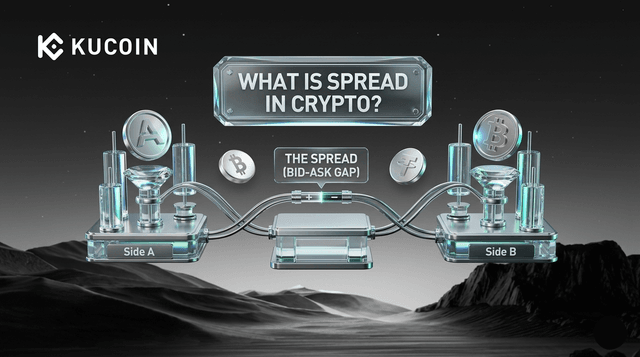
Understanding the bid-ask spread is essential for any trader looking to maximize profitability on a crypto exchange. Often overlooked, the spread represents the "hidden cost" of trading . The difference between the highest price a buyer will pay and the lowest price a seller will accept. Because these costs can compound and significantly impact your bottom line, mastering how to navigate liquidity, volatility, and timing is a vital edge. On our platform, we prioritize deep order books and high trading volumes to ensure some of the tightest spreads in the industry, helping you keep more of your returns.
Key Takeaways
-
Spread in crypto is the difference between the highest price a buyer is willing to pay (bid) and the lowest price a seller is willing to accept (ask).
-
A tighter spread means higher liquidity and lower hidden trading costs — crucial for profitable crypto trading.
-
Spreads widen during volatility, low-liquidity periods, or major news events, directly impacting your entry and exit prices.
-
On our crypto exchange platform, we maintain some of the tightest spreads in the industry through deep order books and high trading volume.
-
Understanding and minimizing spread can save you hundreds or even thousands in hidden costs every month.
What Is Spread in Crypto Trading?
Spread in crypto (also called the bid-ask spread) is one of the most important yet often overlooked concepts for anyone trading on a crypto exchange. Simply put, it is the gap between the buy price (bid) and the sell price (ask) of any cryptocurrency at any given moment.
For example, if Bitcoin is quoted as:
-
Bid: $68,450 (what buyers are offering)
-
Ask: $68,480 (what sellers are asking)
The spread is $30. That $30 difference is the hidden cost you pay the moment you buy and then immediately sell the same asset.
Why Spread Matters More in Crypto Than in Traditional Markets
Crypto markets operate 24/7 with massive volatility. A 1–2% spread on a low-cap token can wipe out your entire profit target, whereas blue-chip stocks on traditional exchanges often trade with spreads under 0.01%.
Understanding the bid-ask spread is critical for any crypto investor because it functions as a hidden cost that is automatically deducted during a trade rather than being displayed as an upfront fee. This cost is particularly impactful because it compounds with every round-trip transaction, meaning the total expense grows each time you buy and subsequently sell an asset. By mastering how spreads work, retail traders can effectively level the playing field against high-frequency traders and market makers who traditionally profit from these price gaps, ensuring a more transparent and cost-effective trading experience.
Factors That Influence Crypto Spreads
Several variables determine how wide or tight the spread becomes:
Liquidity
High-volume pairs (BTC/USDT, ETH/USDT) on our platform typically have spreads below 0.05%. Low-volume altcoins can exceed 2–5%.
Volatility
During flash crashes or sudden pumps, spreads can widen instantly as market makers pull liquidity.
Market Events
ETF approvals, regulatory news, or halvings cause temporary spread spikes.
Exchange Choice
Tier-1 CEXs like ours maintain tighter spreads than most DEXs or smaller platforms because of deeper order books and professional market makers.
How to Minimize Spreads When Trading Crypto
To maximize profitability and minimize slippage, savvy traders on our exchange consistently employ a set of high-liquidity strategies. By focusing exclusively on deep-liquidity pairs like BTC, ETH, SOL, and USDT, you ensure that large entries and exits have a minimal impact on the market price. Rather than using market orders that subject you to the full spread, we recommend utilizing limit orders to place your bid or ask directly inside the current spread. This approach is most effective when executed during peak liquidity hours, typically avoiding weekends and low-volume Asian trading sessions when spreads tend to widen.
For those seeking more granular control, our advanced trading view allows you to monitor order-book depth in real time. To further optimize your execution, you can enable "post-only" mode, which ensures your limit order is only added to the book as a maker, preventing you from accidentally taking liquidity and paying the spread.
Spread vs Trading Fees — Don’t Confuse the Two
Many beginners mix them up.
-
Spread = cost of crossing the order book (immediate execution cost).
-
Trading Fees = maker/taker fees charged by the exchange (0.01–0.1% on our platform).
Total round-trip cost = Spread + 2 × Trading Fee.
On our crypto exchange, we combine ultra-low fees with industry-leading tight spreads, giving you the lowest possible total cost of trading.
Summary
Spread in crypto is the invisible gap between bid and ask prices that directly affects every trade you make. A narrow spread signals healthy liquidity and lower costs, while a wide spread can destroy profits before you even start. By choosing a high-liquidity platform like ours, trading major pairs, using limit orders, and timing your entries, you can keep spreads under control and maximize your returns. Master the spread, and you master one of the biggest hidden edges in crypto trading.
Start your crypto journey in minutes by creating a secure KuCoin account with no initial deposit required. Sign Up Now!
FAQs
What is spread in crypto?
Spread in crypto is the difference between the bid (buy) price and ask (sell) price of a cryptocurrency. It represents the hidden cost of trading and is displayed live on every order book.
How is spread calculated in crypto?
Spread = Ask Price − Bid Price. Percentage spread = [(Ask − Bid) / Mid Price] × 100, where Mid Price is the average of bid and ask.
Why do crypto spreads widen suddenly?
Spreads widen during high volatility, low liquidity, major news events, or outside peak trading hours. Market makers pull orders to protect themselves, increasing the gap.
Is spread the same as trading fees?
No. Spread is the cost of crossing the order book, while trading fees are the maker/taker commission charged by the exchange. Both add to your total cost.
How can I see the spread on your crypto exchange platform?
Log in → select any trading pair → look at the top of the order book or the live ticker. We display both absolute spread and percentage spread in real time.
Do long-term holders need to worry about spread?
Only when entering or exiting positions. HODLers who rarely trade are less affected, but even they benefit from tight spreads when rebalancing or taking profits.
Which pairs have the tightest spreads on your platform?
BTC/USDT, ETH/USDT, SOL/USDT, and all major stablecoin pairs consistently show the narrowest spreads thanks to massive daily volume and dedicated market makers.
Further Reading:


