
What is Public Key in crypto?
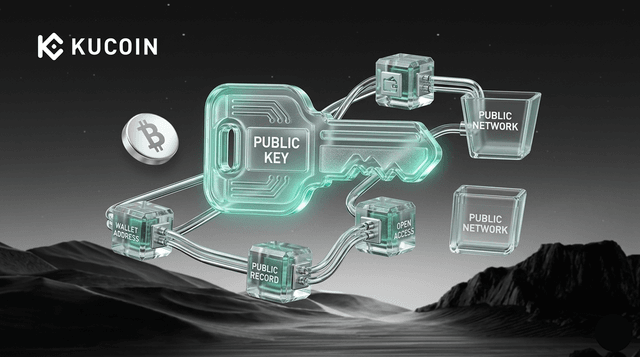
In the decentralized world of cryptocurrency, transactions occur securely across a global network without the need for a central clearinghouse or bank. This level of trustless security is made possible by a branch of mathematics known as asymmetric cryptography, or public-key cryptography. While the private key acts as your secret digital signature to approve transactions, the public key serves an entirely different, highly visible purpose. Understanding what a public key is and how it functions is essential for mastering crypto security.
Key Takeaways
-
A public key is a cryptographically generated cryptographic code used to verify digital signatures and safely derive visible wallet addresses.
-
Public keys are publicly viewable on the blockchain network, allowing anyone to send digital funds to your destination wallet safely.
-
Through one-way asymmetric cryptography, public keys are mathematically derived from private keys, but reverse-engineering a private key is impossible.
-
While a public key verifies transaction authenticity, the derived public wallet address acts as the simplified account number for daily use.
Defining the Public Key in Crypto
A public key is a large alphanumeric string derived through advanced mathematics that allows you to receive cryptocurrency transactions from other network participants. It forms half of a cryptographic key pair, working in tandem with a corresponding private key.
Think of your public key as your public bank routing number or an email address. Anyone on the network can see it, search for it on a public ledger explorer, and use it to send digital assets to you. When you execute trades or initiate transfers on the Exchange, the underlying network uses public keys to route funds accurately while maintaining transparent data integrity.
How Public Keys Work: Asymmetric Cryptography
The core innovation behind blockchain security is asymmetric cryptography. Unlike symmetric encryption, where the same key locks and unlocks data, asymmetric systems utilize two distinct keys for different functions.
The Private Key Creates the Public Key: When you initialize a crypto wallet, it creates a secret private key. The wallet software then applies a complex mathematical formula, such as the Elliptic Curve Digital Signature Algorithm (ECDSA), to generate your unique public key.
The One-Way Mathematical Door: This mathematical derivation is strictly a one-way process. It is incredibly easy for your private key to calculate your public key, but it is computationally impossible to reverse-engineer a public key to reveal its source private key.
Verifying Transactions: When you send crypto, your private key creates a digital signature. The entire global network of nodes then uses your public key to verify that the signature is authentic without ever needing to see your private key.
Public Key vs. Wallet Address vs. Private Key
New cryptocurrency investors often confuse a public key with a public wallet address. While they are closely related, they serve structurally different purposes within a blockchain ledger.
| Component Type | Visibility Level | Primary Operational Function |
| Private Key | Strictly Secret | Digitally signs transactions to authorize spending. |
| Public Key | Publicly Viewable | Verifies the validity of the private key’s signature. |
| Wallet Address | Publicly Viewable | A shortened, hashed version of the public key used for sending funds. |
To make public keys user-friendly, blockchain protocols pass the raw public key through a series of cryptographic hashing functions (like SHA-256 and RIPEMD-160) and add an identifier. This shortens the data string into a clean, readable wallet address, reducing typing errors during manual transactions.
The Role of Public Keys in the Transaction Lifecycle
To understand the practical necessity of public keys, consider the step-by-step lifecycle of a standard peer-to-peer crypto transfer:
-
Initiation: Alice wants to send 1 BTC to Bob. Bob shares his public wallet address (derived from his public key) with Alice.
-
Signing: Alice creates a transaction on the ledger and signs it using her secret private key, creating a tamper-proof digital signature.
-
Broadcasting: The transaction data, Alice’s digital signature, and Alice’s public key are broadcasted to the distributed network of nodes.
-
Validation: Network validators use Alice's public key to verify that the digital signature matches her account parameters. Once confirmed, the block updates.
-
Settlement: The Bitcoin moves from Alice's balance to Bob’s address. Bob can now unlock those funds using his own private key.
Conclusion
Public keys are the open gates of the blockchain ecosystem, allowing seamless, decentralized value transfer while keeping your underlying funds completely secure. By working hand-in-hand with private keys through the magic of asymmetric cryptography, public keys enable global validators to verify the authenticity of a transaction without compromising user security. For any investor navigating Web3, knowing how these keys interact with public addresses is foundational.
To experience secure, optimized wallet infrastructure and explore a massive selection of digital assets, you can begin your journey today by creating an account on KuCoin.
FAQs
Is it safe to share my public key or wallet address with others?
Yes, it is entirely safe. Your public key and derived wallet address are designed to be shared publicly so other network participants can send digital assets directly to your account.
Can someone find my private key if they know my public key?
No. Public keys are derived from private keys using one-way cryptographic algorithms. It is mathematically impossible to reverse-engineer a public key to uncover the corresponding private key.
Why don't we use raw public keys as wallet addresses?
Raw public keys are exceptionally long and complex data strings. Blockchains hash them into shorter, cleaner wallet addresses to save on-chain storage space and minimize user typos during transactions.
Does a single private key generate multiple public keys?
In modern Hierarchical Deterministic (HD) wallets, a single master seed phrase can generate a vast sequence of distinct private keys, each of which in turn derives its own unique public key and wallet address.
Further Reading:


