
What is Proof of Stake (PoS) in crypto?
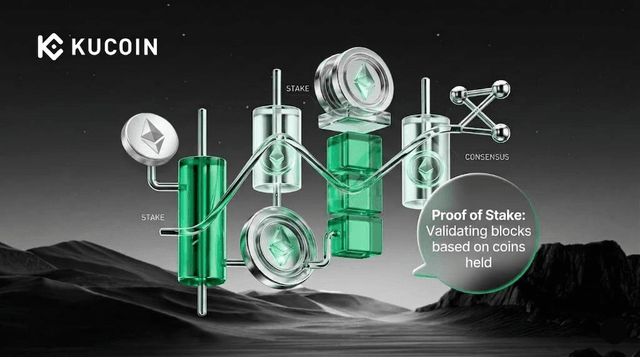
The evolution of blockchain technology has led to a fundamental shift in how we secure digital assets. While Bitcoin introduced the world to decentralized finance through Proof of Work (PoW), the industry has largely pivoted toward a more efficient, scalable alternative: Proof of Stake (PoS).
Whether you are looking to earn passive rewards on an exchange or simply trying to understand the tech behind Ethereum and Solana, grasping the mechanics of PoS is essential for any modern crypto participant.
Key Takeaways
-
Proof of Stake (PoS) is a consensus mechanism where participants "stake" their tokens to validate transactions.
-
Unlike Proof of Work (PoW), PoS does not require massive amounts of electricity or specialized hardware.
-
Validators are selected based on the number of coins they hold and are willing to "lock up" as collateral.
-
PoS enables faster transaction speeds and significantly lower environmental impact.
Understanding Consensus: Why Blockchains Need "Proof"
Before diving into PoS, we must address the fundamental question: What is Proof of Work (PoW)?
In a decentralized network, there is no central bank to verify that a transaction is legitimate. Instead, the network uses a "consensus mechanism." In a Proof of Work system (used by Bitcoin), "miners" compete to solve complex mathematical puzzles using high-powered computers. The first to solve the puzzle earns the right to update the blockchain and receives a reward.
However, PoW has two major drawbacks: it consumes as much energy as small nations and struggles to process thousands of transactions per second. This is where Proof of Stake enters the frame.
How Does Proof of Stake (PoS) Work?
In a PoS system, the "work" is replaced by "stake." Here is the step-by-step breakdown:
-
Staking: Participants (validators) lock up a specific amount of the network’s native cryptocurrency (e.g., ETH for Ethereum) in a smart contract.
-
Selection: Instead of a race to solve a puzzle, the protocol randomly selects a validator to propose the next block. Your chances of being selected are usually proportional to the amount of crypto you have stored.
-
Validation: Other validators "attest" that the block is valid. Once enough attestations are gathered, the block is added to the chain.
-
Rewards & Penalties: The chosen validator earns transaction fees and newly minted coins. If a validator acts maliciously or goes offline, they face "slashing" a penalty where a portion of their stake funds is destroyed.
PoS vs. PoW: The Core Differences
| Feature | Proof of Work (PoW) | Proof of Stake (PoS) |
| Security Source | Computing Power (Hashrate) | Capital (Staked Tokens) |
| Energy Use | Extremely High | Minimal (99.9% lower) |
| Hardware | Specialized ASICs/GPUs | Standard Servers |
| Scalability | Low (Slower transactions) | High (Faster finality) |
| Primary Examples | Bitcoin, Litecoin | Ethereum, Solana, Cardano |
Why Proof of Stake Matters in 2026
For users of a crypto exchange, PoS has moved from a technical concept to a financial opportunity. The transition of Ethereum from PoW to PoS (known as "The Merge") proved that large-scale blockchains could be both secure and sustainable.
-
Eco-Friendly Investing: PoS removes the "environmental guilt" often associated with crypto, making it more attractive to institutional and ESG-conscious investors.
-
Lower Barrier to Entry: You don't need a $10,000 mining rig to participate. Most exchanges allow you to "delegate" your stake, meaning you can earn rewards even with small amounts of crypto.
-
Network Utility: Because PoS is more scalable, it supports the high-speed requirements of Decentralized Finance (DeFi) and NFTs.
Summary
Proof of Stake has become the industry standard for new blockchain protocols. By replacing physical energy with economic collateral, PoS offers a faster, greener, and more accessible way to achieve network consensus. While Proof of Work remains the gold standard for pure security in the form of Bitcoin, Proof of Stake provides the infrastructure necessary for the next generation of global digital finance.
FAQs
Is Proof of Stake more secure than Proof of Work?
Both are highly secure but rely on different defense mechanisms. PoW is secured by the cost of electricity and hardware, making it nearly impossible to "fake" work. PoS is secured by the threat of losing money (slashing). While PoW has a longer track record, PoS makes a "51% attack" incredibly expensive, as the attacker would have to buy and risk half of the entire network's value.
Can I lose my money while staking?
There are two main risks: Slashing (if your validator breaks network rules) and Volatility (if the price of the coin drops while your funds are locked). Using a reputable crypto exchange for staking often provides "Slashing Protection" to mitigate these risks.
Does "Proof of Stake" mean the rich get richer?
Critics argue that those with more coins have a higher chance of being selected, potentially leading to centralization. However, many protocols use "age of stake" or "delegated" models to ensure a more even distribution of influence and rewards among all participants.
What are the best PoS coins to watch?
As of 2026, the leading PoS ecosystems include Ethereum (ETH), Solana (SOL), Cardano (ADA), and Avalanche (AVAX). Each offers different staking yields and network capabilities.
Further Reading:


