
What is Margin Trading in crypto?
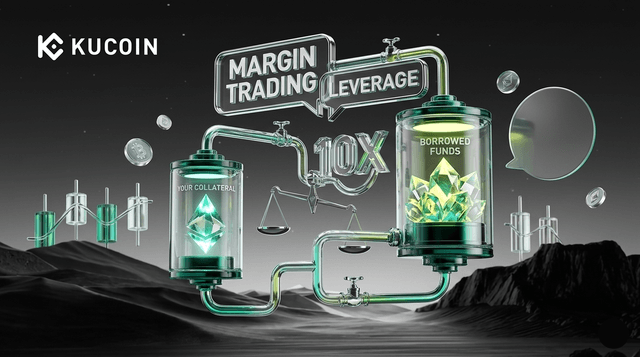
Margin trading is a powerful financial tool that allows you to leverage your existing holdings as collateral to borrow funds from an exchange. By doing so, you can command a market position significantly larger than your actual account balance—amplifying your buying power and potential returns. Whether you are "longing" to profit from Bitcoin's climb toward new resistance levels or "shorting" to hedge against a broader market correction, margin trading provides the flexibility to trade in any market direction. However, with increased opportunity comes increased responsibility; the same leverage that multiplies gains also accelerates losses, making a firm grasp of Initial Margin, Maintenance Thresholds, and 2026 Regulatory Protections essential for every modern trader.
This guide explores the mechanics of margin trading in today’s regulated environment, comparing Isolated and Cross Margin modes, and outlining the essential risk management steps needed to trade safely on platforms like KuCoin.
Key Takeaways
-
Margin trading allows you to borrow funds from an exchange to open positions larger than your actual account balance (e.g., using $1,000 to trade $5,000 with 5x leverage).
-
Your existing assets act as "margin" or collateral. If the trade goes against you, this collateral is used to cover potential losses.
-
Unlike spot trading, margin trading enables you to profit from both rising markets (Longing) and falling markets (Shorting).
Understanding Margin Trading in 2026
In 2026, margin trading has become the primary method for traders to maximize capital efficiency in the cryptocurrency market. At its core, margin trading is the practice of using your existing digital assets as collateral to borrow additional funds from an exchange. This borrowed capital creates leverage, allowing you to control a significantly larger market position than your initial deposit would allow.
How Margin Trading Works
When you initiate a margin trade, you are required to commit a portion of the total trade value, known as the Initial Margin. The exchange provides the remainder of the funds, for which you typically pay a small interest fee.
The Multiplier
If you apply 5x leverage to a $2,000 deposit, you are effectively trading with $10,000.
Profit Amplification
A 10% increase in the asset's price results in a $1,000 gain on your $10,000 position—effectively a 50% return on your initial $2,000.
Risk Amplification
Conversely, a 10% drop results in a $1,000 loss, wiping out half of your collateral.
Isolated vs. Cross Margin: Managing Risk
To help traders navigate 2026’s market dynamics, our platform offers two distinct margin modes:
Isolated Margin
Risk is confined to a single trading pair. If your position is liquidated, only the margin allocated to that specific trade is lost.
Cross Margin
Your entire account balance acts as collateral for all open positions. This provides a larger buffer against liquidation during short-term price "wicks," but puts your whole wallet at risk if the market suffers a broad correction.
Summary
Margin trading in crypto is a powerful financial strategy that uses borrowed capital to amplify potential returns. By using your assets as collateral, you can access larger market exposure and profit from both bullish and bearish trends through longing and shorting. However, the increased buying power comes with the risk of liquidation, which occurs if your account equity falls below the Maintenance Margin. In today's regulated environment, successful margin trading requires a disciplined approach, including the use of stop-loss orders and a thorough understanding of the 2026 liquidity frameworks.
Start your crypto journey in minutes by creating a secure KuCoin account with no initial deposit required. Sign Up Now!
FAQs
Is margin trading the same as leverage trading?
While often used interchangeably, there is a technical difference. Margin refers to the collateral you provide, while leverage is the multiplier effect (the ratio) created by the borrowed funds. Margin trading is the activity of using leverage in the spot or derivatives market.
What is the "Maintenance Margin"?
The maintenance margin is the minimum amount of equity you must maintain in your account to keep a leveraged position active. If your balance falls below this threshold due to market movements, your position will be automatically liquidated.
Can I margin trade any cryptocurrency?
Most exchanges limit margin trading to high-liquidity assets like Bitcoin (BTC), Ethereum (ETH), and major stablecoins. In 2026, regulated exchanges only offer margin on assets that meet strict "Volatilty and Liquidity" standards to protect users from flash crashes.
Are there fees for margin trading?
Yes. Since you are borrowing funds from the exchange, you will typically pay an interest fee (often called a borrowing rate). These rates vary based on market demand for the asset you are borrowing.
Further Reading:


