
What Is Layer 2(L2) in Blockchain?
Key Takeaways
-
Layer 2 protocols are secondary frameworks built directly on top of Layer 1 blockchains to solve scalability and transaction fee issues.
-
L2 networks process transaction bundles entirely off-chain before submitting summarized execution data back to the secure Layer 1 mainnet.
-
Optimistic and Zero-Knowledge (ZK) rollups represent the leading Layer 2 scaling technologies dominating the current decentralized application landscape.
-
Layer 2 scaling solutions successfully inherit the rigorous, immutable security guarantees of their underlying Layer 1 parent blockchains.
The Core Concept of Layer 2 Blockchains
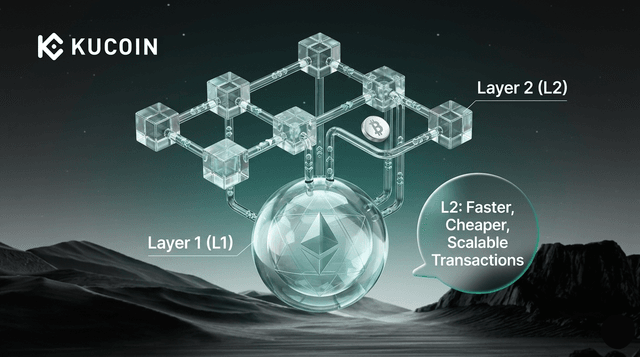
A Layer 2 blockchain refers to a secondary protocol or network built over an existing Layer 1 blockchain framework. The underlying Layer 1 network serves as the ultimate source of truth, managing final settlement, data availability, and security consensus. Meanwhile, the Layer 2 protocol acts as a high-speed execution engine.
By shifting the heavy computational burden of processing individual transactions off the main network, Layer 2 platforms dramatically lower gas fees and boost throughput. Think of Layer 1 as a busy supreme court that only settles final verdicts, while Layer 2 networks are administrative offices handling thousands of individual filings to prevent court congestion.
How Does a Layer 2 Network Work?
The fundamental operational mechanism of a Layer 2 blockchain centers on a process called off-chain transaction execution and on-chain settlement. Instead of flooding the Layer 1 mainnet with thousands of micro-transactions, the L2 framework handles these actions in a separate, dedicated execution environment.
-
Transaction Aggregation: Users submit their daily transactions directly to the Layer 2 network instead of the main layer.
-
Off-Chain Bundling: The L2 sequencer collects thousands of these distinct user actions and compiles them into a single, compact data packet.
-
Data Compression: The sequencer compresses the execution data to minimize storage requirements.
-
On-Chain Proof Submission: The L2 network sends this compressed bundle along with a cryptographic proof back to the Layer 1 blockchain for final, immutable storage.
Comparing Layer 1 and Layer 2 Networks
Understanding the structural differences between these two architectural layers is essential for navigating the decentralized finance ecosystem efficiently.
| Core Architectural Feature | Layer 1 Blockchain (Base Infrastructure) | Layer 2 Blockchain (Scaling Framework) |
| Primary Structural Purpose | Decentralized consensus, data availability, and ultimate settlement. | High-speed transaction processing and cost minimization. |
| Transaction Execution Location | Executed directly on the main distributed public ledger. | Processed entirely off the base chain in external environments. |
| Security Architecture | Maintained natively by its own node validators or miners. | Derived completely from the underlying parent L1 blockchain. |
| Throughput Capacity (TPS) | Extremely limited (typically ranging from 15 to 30 TPS). | Scalable to thousands of transactions per second. |
| Average Cost Per Action | High gas fees during heavy network congestion. | Fractions of a cent, offering micro-transaction viability. |
Primary Types of Layer 2 Scaling Solutions
Developers utilize several distinct cryptographic approaches to build high-performance Layer 2 scaling platforms.
Optimistic Rollups
Optimistic rollups assume all off-chain transactions are completely valid by default. They do not submit immediate proofs of validity to the main Layer 1 network. Instead, they implement a fixed "challenge period" during which any network participant can submit a fraud proof if they detect a malicious transaction. If fraud is proven, the fraudulent block is rolled back. Prominent examples include Arbitrum (ARB) and Optimism (OP).
Zero-Knowledge (ZK) Rollups
Zero-Knowledge rollups utilize highly advanced mathematical proofs called validity proofs (such as SNARKs or STARKs) to validate transactions instantly. Every single bundle submitted to Layer 1 contains an immutable cryptographic proof proving the transactions are valid. Because validation happens mathematically upfront, ZK-rollups do not require a lengthy challenge period, allowing for near-instant asset withdrawals to the base layer.
State Channels and Sidechains
State channels allow participants to execute two-way transactions off-chain, only writing the opening and closing balances to the Layer 1 ledger. The Bitcoin Lightning Network is a prominent example. Sidechains, while often grouped with L2s, are actually independent blockchains running parallel to L1 with their own consensus mechanisms.
Prominent Examples of Layer 2 Ecosystems
The Layer 2 landscape features multi-billion dollar ecosystems. On the KuCoin Spot Market, users can actively track and trade the native governance tokens powering these scaling innovations:
-
Arbitrum (ARB): The market-leading Optimistic rollup protocol for Ethereum, hosting a massive decentralized finance ecosystem with deep liquidity.
-
Optimism (OP): A highly modular Optimistic rollup that developed the OP Stack, an open-source blueprint enabling developers to launch custom L2 networks.
-
Polygon (MATIC/POL): A comprehensive scaling suite that features high-speed sidechains, ZK-rollups, and decentralized app development infrastructure.
-
Starknet (STRK): A decentralized, permissionless Validity Rollup (ZK-rollup) operating as an L2 over Ethereum, utilizing the highly scalable Cairo programming language.
Conclusion
Layer 2 scaling solutions represent a monumental paradigm shift in blockchain architecture, transforming congested networks into highly scalable ecosystems capable of global adoption. By shifting execution off-chain while anchoring absolute security to Layer 1, L2 networks resolve the challenges of high transaction fees and slow performance. As Web3 applications transition toward mass consumer adoption, Layer 2 infrastructure will remain a critical foundation for decentralized growth. To participate in this evolving market, users can securely purchase and trade top Layer 2 tokens using the comprehensive trading services found on the KuCoin Exchange.
FAQs
Are my digital assets safe when using a Layer 2 network?
Yes. Layer 2 networks anchor their final transaction data directly onto the underlying Layer 1 blockchain, meaning they inherit the full security and immutability guarantees of the highly secure parent mainnet.
Why are transaction fees so much cheaper on Layer 2?
Layer 2 networks bundle thousands of individual transactions into a single data packet. This allows the cost of publishing data to the Layer 1 mainnet to be divided among thousands of users, lowering individual gas fees.
What is the difference between Optimistic and ZK rollups?
Optimistic rollups assume transactions are valid and rely on a challenge period for fraud detection. ZK-rollups use instant cryptographic validity proofs to verify transactions mathematically without requiring any waiting periods.
Can I transfer assets directly between different Layer 2 networks?
Yes. While transferring traditionally requires going through Layer 1, many modern cross-chain bridges and advanced multi-chain centralized trading platforms like KuCoin support direct, low-cost asset deposits and withdrawals across various Layer 2 options.
How can I start investing in Layer 2 scaling technologies?
You can easily invest in the infrastructure powering Layer 2 scaling by purchasing their native utility or governance tokens, such as ARB, OP, or STRK, on secure platforms like KuCoin.
Further Reading:


