
What is Gas Fee in crypto?
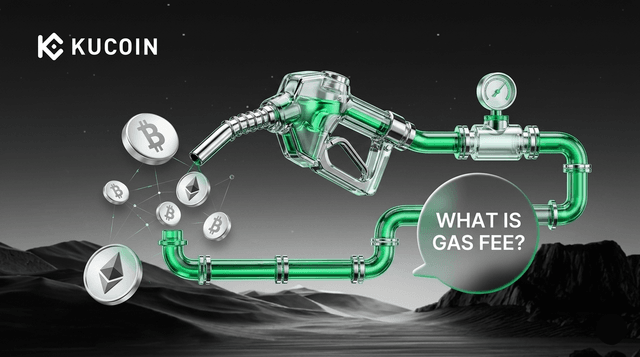
If you’ve ever tried to send Ethereum or swap a token on a decentralized exchange, you’ve encountered a "Gas Fee." But what is a gas fee in crypto, and why does it change so often? A gas fee is the transaction fee paid to network validators (or miners) to process and secure your transaction on a blockchain. Think of it as the "fuel" required to power the decentralized world computer. As we move through 2026, gas fees remain the most critical factor in determining the speed and cost of your on-chain activities, from minting NFTs to trading on Layer 2 networks.
Key Takeaways
-
Network Fuel: Gas fees represent the computational effort required to execute a transaction or smart contract on a blockchain.
-
Supply and Demand: Fees are not fixed; they fluctuate based on network congestion. High demand leads to "Gas Wars" and higher costs.
-
Gwei Units: On Ethereum, gas is measured in Gwei, a tiny fraction of ETH ($10^{-9}$ ETH), used to calculate the final price of a transaction.
-
Layer 2 Savings: Using Layer 2 (L2) solutions like ZK-Rollups can reduce gas fees by up to 95% compared to the Ethereum mainnet.
-
EIP-4844 Impact: In 2026, the introduction of "blobs" has significantly lowered gas costs for data-heavy operations.
What is a Gas Fee and How Does It Work?
The "Highway Toll" Analogy
To understand what a gas fee is, imagine a highway. The blockchain is the road, and your transaction is a car. To use the road, you must pay a toll. When the highway is empty, the toll is cheap. However, during rush hour, the toll price increases. Those willing to pay a higher "priority fee" get to skip the line and have their transactions processed first by validators.
How Gas is Calculated (The 2026 Formula)
Since the London Upgrade and subsequent 2026 optimizations, the total cost of a transaction is generally calculated as:
Total Fee = (Base Fee + Priority Fee) * Gas Limit
-
Base Fee: The minimum amount of gas required for a transaction to be included in a block. This is set by the network and is "burned" (destroyed) to manage supply.
-
Priority Fee (Tip): An optional tip you pay to validators to prioritize your transaction.
-
Gas Limit: The maximum amount of gas you are willing to spend. Simple transfers have a low limit (e.g., 21,000 units), while complex smart contracts require much more.
Why Gas Fees Matter for Your Trading Strategy
As a user on our exchange, understanding gas is the difference between a profitable trade and a costly mistake:
-
Timing Your Transactions
Gas prices usually drop during late-night hours (UTC) or weekends when fewer people are trading. In 2026, many traders use "Gas Trackers" to set alerts for when fees drop below a certain Gwei threshold.
-
The Rise of Layer 2 (L2)
If Ethereum's mainnet gas is too high, most users now migrate to Layer 2 networks like zkSync, Starknet, or Polygon. These networks "roll up" thousands of transactions into one, splitting the mainnet gas fee among all users, resulting in fees that are often less than $0.01.
-
Failed Transactions
If you set your Gas Limit too low, the network might run out of "fuel" before the transaction is finished. In this case, your transaction fails, but the gas is still consumed because the validators still performed the work. Always use the "Recommended" gas setting in your wallet to avoid this.
Summary
While they can be frustrating during periods of high demand, gas fees are essential for preventing spam and rewarding the validators who keep the blockchain secure. By utilizing Layer 2 scaling and monitoring Gwei prices, you can significantly reduce your overhead and maximize your trading efficiency. In the modular future of 2026, gas fees are becoming more predictable and affordable, opening the door for the next billion Web3 users.
FAQs
Why is Ethereum gas so much more expensive than other chains?
Ethereum is the most decentralized and secure smart contract platform, which creates massive demand for its limited "block space." Chains like Solana or Sui use different consensus mechanisms to offer lower fees, but they have different decentralization trade-offs.
Does the gas fee go to the exchange?
No. When you withdraw funds or interact with a DApp, the gas fee goes directly to the blockchain validators, not our exchange. We only charge a small service fee for processing the withdrawal.
Can I get a refund on a gas fee?
No. Once a transaction is submitted to the blockchain and processed by a validator, the gas is spent, regardless of whether the transaction was successful or if you made a mistake.
What is "Gwei"?
Gwei is a denomination of Ether (ETH). One Gwei is equal to 0.000000001 ETH. It is the standard unit used to measure the price of gas to avoid dealing with many decimal points.
How has EIP-4844 changed gas fees in 2026?
EIP-4844 introduced "blobs," which allow Layer 2 networks to store data on Ethereum much more cheaply. This has led to a dramatic decrease in the gas fees users pay when using L2-integrated applications on our exchange.
Further Reading:


