
What is Block Reward in crypto?
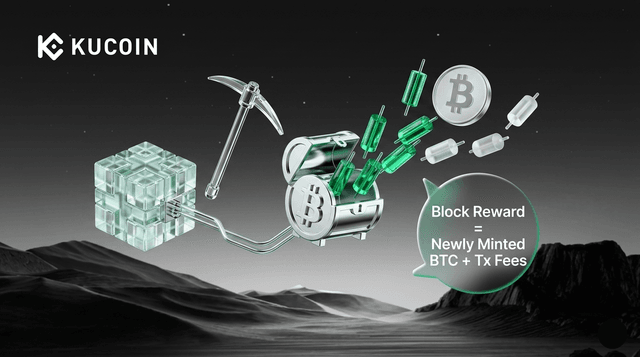
In the decentralized world of cryptocurrency, networks do not rely on centralized entities like banks to clear transactions and maintain security. Instead, they depend on a global, distributed web of participants known as miners or validators. To incentivize these participants to dedicate their computational power and capital to the network, blockchains utilize an economic mechanism called a block reward. Understanding how block rewards function is vital for any crypto investor looking to analyze tokenomics, inflation, and network sustainability.
Key Takeaways
-
A block reward is the crypto distributed by a blockchain protocol to miners or validators for successfully verifying and recording a new block.
-
Block rewards typically consist of a mixture of freshly minted native tokens and accumulated user transaction fees from that specific block.
-
To control inflation and enforce long-term scarcity, major blockchains implement halving mechanisms that automatically slash block rewards at regular intervals.
-
Proof of Work networks award block rewards for computational mining, whereas Proof of Stake networks distribute them based on token staking parameters.
What Is a Block Reward and How Does It Work?
A block reward refers to the financial compensation given to a blockchain network participant who successfully validates a new block of transactions and appends it to the public ledger. It serves as the primary economic engine that drives decentralization, ensuring that independent actors worldwide are financially motivated to keep the network honest and operational.
When a transaction occurs, such as buying crypto on the Exchange and withdrawing it to a private wallet, that transaction is broadcasted to the network. Miners or validators collect these transactions, verify their legitimacy, and pack them into a block. The participant who wins the right to finalize that block receives the designated block reward as a payout from the protocol.
The Two Core Components of a Block Reward
A block reward is not always composed entirely of newly created supply. In most modern blockchain architectures, the total reward distributed per block is a combination of two distinct economic elements:
-
Newly Minted Tokens (Subsidy): This is the inflationary component of the reward, where the protocol creates entirely new coins out of thin air according to a strict mathematical schedule.
-
Transaction Fees (Gas Fees): These are the fees paid by users to have their transactions prioritized and processed in that block. As the network grows, these fees make up a larger portion of the total reward
Total Block Reward = Block Subsidy + Transaction Fees
Block Rewards Across Different Consensus Mechanisms
The method by which a network participant qualifies to receive a block reward depends entirely on the blockchain’s underlying consensus mechanism.
Proof of Work (PoW) Block Rewards
In PoW networks like Bitcoin and Litecoin, miners deploy specialized hardware to solve complex cryptographic puzzles. The first miner to find the mathematical solution wins the right to broadcast the new block and claims the block reward. This process requires a significant amount of electricity and computational energy.
Proof of Stake (PoS) Block Rewards
In PoS networks like Ethereum, Solana, raw computing power is replaced by financial stake. Participants lock up, or "stake," a specific amount of the network's native token to become validators. The protocol randomly selects a validator to propose and confirm the next block based on the size of their stake, distributing a block reward to them for honest behavior.
The Halving Mechanism: Enforcing Scarcity
To prevent infinite inflation and mimic the scarcity of precious metals, several prominent Layer 1 blockchains use a deflationary mechanism called "halving." This programmatic rule slashes the block subsidy by exactly 50% after a predetermined number of blocks have been mined.
| Blockchain Network | Initial Block Reward | Current Block Reward (As of 2026) | Halving Interval |
| Bitcoin (BTC) | 50 BTC | 3.125 BTC | Every 210,000 blocks (~4 years) |
| Litecoin (LTC) | 50 LTC | 6.25 LTC | Every 840,000 blocks (~4 years) |
As these block subsidies continuously diminish over time, networks will eventually rely 100% on user transaction fees to reward their validators and miners, shifting the entire economic model to a fee-based structure.
Why Block Rewards Matter to Crypto Traders
For investors actively managing portfolios on the KuCoin Spot Market, tracking block rewards provides vital insights into market dynamics.
Supply and Demand Dynamics
The issuance of new tokens via block rewards directly dictates a asset's inflation rate. When a halving event cuts the block reward in half, the daily influx of new supply entering the market drops significantly. If demand for the asset remains steady or increases while the production rate falls, it historically triggers upward pressure on market prices.
Network Security and Stability
Block rewards must remain high enough to cover the operational costs of miners and validators. If block rewards drop too low and transaction fees do not increase enough to compensate, some participants may shut down their operations. Monitoring this balance helps long-term investors evaluate whether a network can remain secure over the next decade.
Conclusion
Block rewards are the foundational incentive structures that make decentralized, secure, and trustless blockchain networks a reality. By blending newly minted token subsidies with transaction fees, block rewards align the financial self-interest of global operators with the security needs of the wider network. Whether a protocol relies on energy-intensive mining or capital staking, understanding how its block rewards scale over time gives you an edge in assessing its long-term investment viability.
FAQs
What happens when block rewards eventually drop to zero?
When the block subsidy hits zero, miners and validators will be incentivized purely by transaction fees. The network's survival will depend on transaction volume being high enough to sustain operational costs.
Can block rewards be altered or changed?
Generally, no. Block rewards are hardcoded into the network's core protocol rules. Modifying them requires an absolute community consensus and a network hard fork, which is incredibly difficult to achieve.
How do block rewards affect crypto inflation?
Block rewards act as the primary source of supply inflation for cryptocurrencies. As new coins are minted and distributed to validators, the overall circulating supply increases until the maximum cap is reached.
Where can I trade coins that offer block rewards?
You can buy, sell, and trade a massive array of cryptocurrencies that utilize proof-of-work or proof-of-stake block rewards by accessing the secure spot and futures markets on KuCoin.
Further Reading:


