
What Is an Altcoin in Crypto?
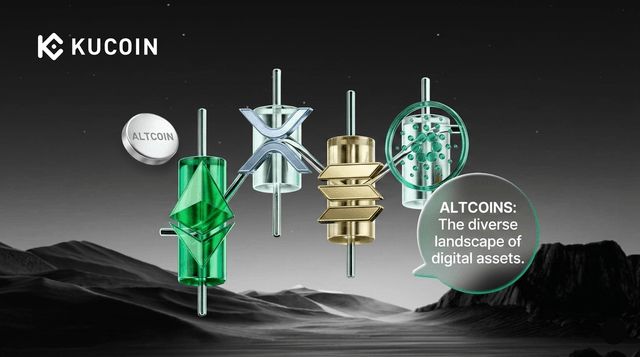
The cryptocurrency market has grown from a single experimental digital asset into a massive, multi-trillion-dollar financial ecosystem. At the genesis of this digital revolution stood Bitcoin, the pioneer cryptocurrency designed as a decentralized peer-to-peer cash network. However, as blockchain technology advanced, developers realized that decentralized ledgers could serve purposes far beyond basic value transfers. This realization sparked the creation of thousands of alternative digital assets, collectively known as altcoins. Whether you are building a diversified long-term portfolio or exploring active spot markets on KuCoin, mastering altcoin fundamentals is essential for identifying high-potential sectors.
Key Takeaways
-
An altcoin refers to any cryptocurrency alternative to Bitcoin, spanning utility tokens, stablecoins, memes, and Layer 1 protocol assets.
-
Altcoins are engineered to improve upon Bitcoin’s limitations, offering advanced smart contracts, rapid execution speeds, and specific utility.
-
The altcoin market features diverse functional architectures, including Proof of Stake governance layers, decentralized finance structures, and tokenized real-world assets.
-
Altcoins generally exhibit higher price volatility than Bitcoin, presenting both substantial speculative upside opportunities and increased capital loss risks.
Defining the Altcoin Concept
The term "altcoin" is a portmanteau of "alternative" and "coin." By historical definition, it encompasses every single cryptocurrency operating in the marketplace other than Bitcoin (BTC).
While Bitcoin remains the premier digital store of value or "digital gold," altcoins serve as the functional engines driving technological experimentation. They introduce programmable logic, advanced privacy frameworks, scalable consensus mechanisms, and specialized application layers.
Primary Categories of Altcoins and How They Work
The altcoin landscape is exceptionally diverse. Rather than viewing them as a single monolithic asset class, smart investors categorize altcoins based on their unique technical architectures and underlying utility.
Native Layer 1 Blockchain Tokens
These altcoins function as the foundational native assets powering independent Layer 1 public ledgers. They are utilized to pay for network validation gas fees and reward consensus actors. The most prominent example is Ethereum (ETH), which introduced programmable smart contracts. Other major high-performance Layer 1 altcoins include Solana (SOL), Cardano (ADA), and the KuCoin Community Chain (KCC), each utilizing distinct cryptographic protocols to optimize transaction throughput.
Stablecoins
Stablecoins are a specialized subset of altcoins engineered to maintain a fixed value pegged directly to an external asset, most commonly traditional fiat currencies like the US Dollar. Tokens like Tether (USDT) and USD Coin (USDC) eliminate extreme crypto price fluctuations by backing their circulating supplies with real cash reserves. They serve as the vital economic pricing baseline across global trading pairs.
Utility and Governance Tokens
Unlike independent coins, tokens are built on top of pre-existing blockchain architectures using standardized smart contract frameworks (such as Ethereum's ERC-20).
-
Utility Tokens: Grant users specific access rights to a protocol’s services or application features.
-
Governance Tokens: Function like decentralized digital shares, allowing holders to vote on protocol upgrades, fee structures, and treasury fund deployments within a Decentralized Autonomous Organization (DAO).
Bitcoin vs. Altcoins: A Structural Analysis
Understanding the operational variations and market dynamics between the pioneer asset and alternative tokens is crucial for successful portfolio construction.
| Financial Metric | Bitcoin (BTC) | Altcoins (Alternative Tokens) |
| Primary Utility | Digital store of value and peer-to-peer cash. | Smart contracts, dApp ecosystems, and governance. |
| Market Volatility | Moderate relative to the broader crypto market. | High to exceptionally high, especially for low-caps. |
| Supply Dynamics | Absolute programmatic cap of 21 million coins. | Varies; can be inflationary, deflationary, or capped. |
| Consensus Baseline | Battle-tested Proof of Work mining model. | Dominantly energy-efficient Proof of Stake setups. |
| Listing Vetting | Universal; serves as the baseline crypto pair. | Subjective; projects must prove real-world utility. |
Navigating "Altcoin Season" and Market Capitalization
For traders executing strategies on the Spot Market, tracking the relationship between Bitcoin and altcoins is a primary method for identifying macro market trends. This dynamic is measured using Bitcoin Dominance, which tracks Bitcoin's percentage share of the total global cryptocurrency market capitalization.
When Bitcoin dominance drops significantly while total market volume increases, it triggers a phase known as "Altcoin Season." During these periods, investor capital shifts down the risk curve, flowing away from Bitcoin and into high-growth Layer 1 ecosystems, decentralized finance (DeFi) assets, GameFi tokens, and meme coins. While these phases can yield massive short-term returns, they are highly speculative and subject to sudden, sharp market corrections.
Conclusion
Altcoins are the indispensable technological and economic drivers of the Web3 economy, turning simple decentralized ledgers into programmable financial systems, virtual gaming worlds, and borderless enterprise networks. By expanding upon the foundational code of Bitcoin, altcoins offer diverse options spanning highly liquid stablecoins, scalable Layer 1 protocols, and decentralized governance platforms. While navigating alternative digital assets demands disciplined risk management due to their higher price volatility, their long-term structural utility remains key to the growth of Web3.
FAQs
Is Ethereum considered an altcoin?
Yes. By historical definition, every single cryptocurrency launched after Bitcoin, including major blue-chip protocols like Ethereum (ETH), is classified as an alternative coin or altcoin.
What causes altcoins to have higher volatility than Bitcoin?
Altcoins generally possess smaller circulating market capitalizations and lower trading liquidity than Bitcoin, meaning smaller buy or sell order volumes can trigger much larger percentage price fluctuations.
Can an altcoin lose its entire financial value?
Yes. If an altcoin project is completely abandoned by its developers, fails to achieve real-world utility adoption, or suffers an unpatchable smart contract exploit, its market value can crash permanently to zero.
What is the difference between a coin and a token?
A coin operates natively on its own independent Layer 1 blockchain architecture (e.g., SOL). A token is a digital asset built on top of an existing parent network via smart contracts (e.g., ERC-20).
Further Reading:


