
What Is Time-Locked Vaults in Crypto?
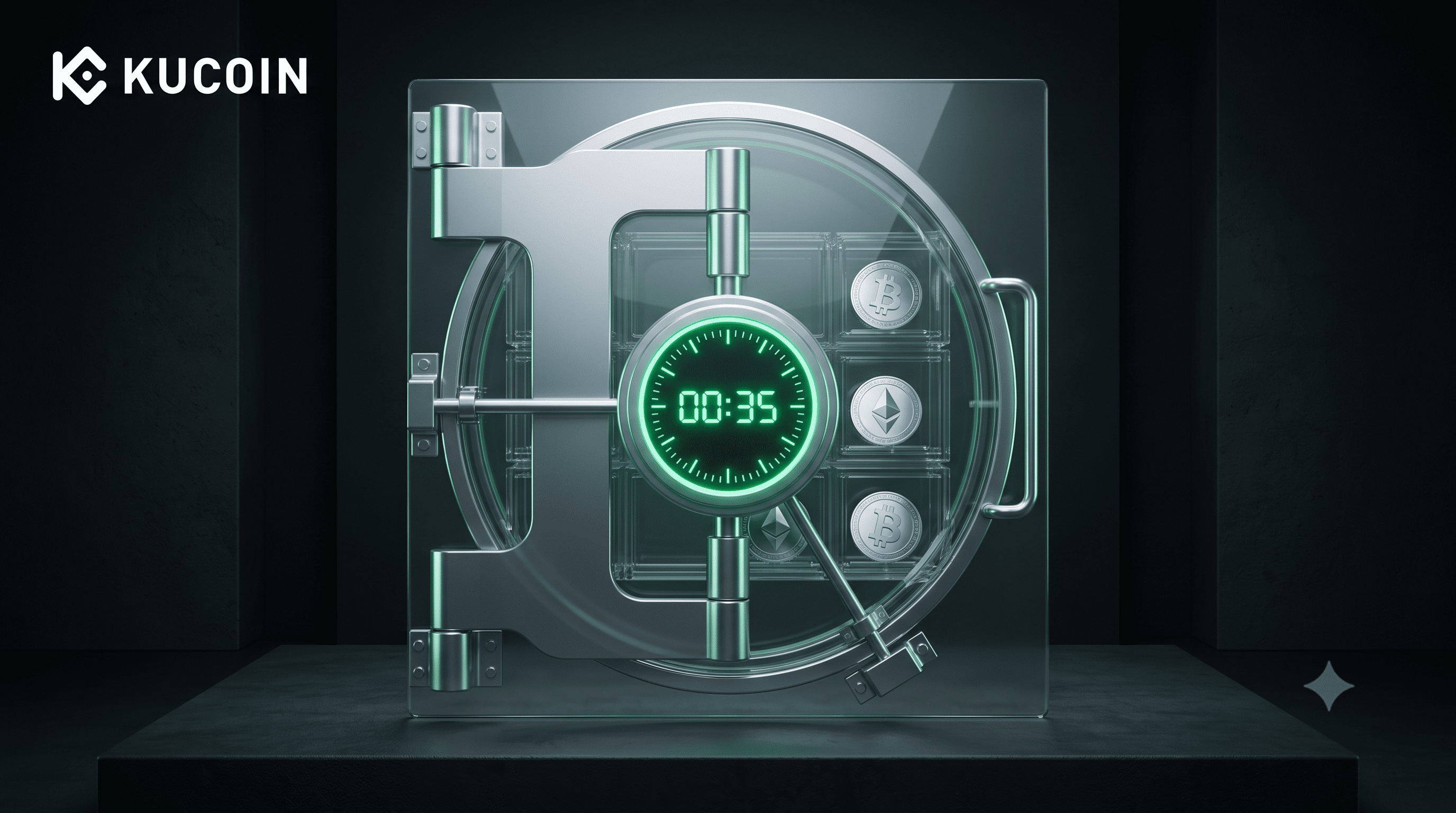
In the uncompromising world of digital assets, speed is usually seen as a virtue. However, when it comes to security, speed can be a liability. Time-locked vaults are specialized smart contracts or protocol-level features that intentionally slow down the movement of funds. To understand how Time-locked vaults in crypto work, imagine a high-security bank vault that, even with the correct key, requires a 48-hour "countdown" before the door actually swings open.
As we move through 2026, time-locking has evolved from a niche developer tool into a standard consumer safety feature, protecting global digital asset holdings against physical coercion, account takeovers, and impulsive trading.
Key Takeaways
-
Forced Patience: A time-lock imposes a mandatory waiting period (from hours to months) between a withdrawal request and the actual release of funds.
-
Anti-Theft Buffer: This delay creates a "Reaction Window," allowing the true owner to detect and cancel unauthorized transactions before they become permanent.
-
Coercion Resistance: By making immediate access mathematically impossible, vaults deter "wrench attacks" or physical threats where a victim is forced to reveal their keys.
-
Programmable Governance: Institutions use time-locks to ensure that major protocol changes or large treasury moves are transparently announced days before they execute.
The 6W Framework of Time-Locked Vault Mechanics
To define the role of temporal security in 2026, we apply the 6W principles:
-
Who: Utilized by long-term HODLers, Institutions, and DAO Treasuries who prioritize wealth preservation over day-trading liquidity.
-
What: A smart contract "enclosure" that freezes assets until a specific block height or calendar timestamp is reached.
-
Where: Deployed directly on the blockchain (On-Chain), ensuring the market transparency of all pending movements.
-
When: Activated whenever a "Withdraw" or "Transfer" command is initiated; the vault enters a "Pending" state until the timer expires.
-
Why: To eliminate the risk of a "single-point-of-failure" where a stolen private key leads to an instant, irreversible loss.
-
How: By using opcodes like CLTV (CheckLockTimeVerify) or CSV (CheckSequenceVerify) to make transactions unspendable by anyone until the lock condition is satisfied.
How It Works: The "Two-Step" Security Protocol
The technical answer to how time-locked vault work involves splitting a single action into two distinct phases.
-
The Commitment Phase
When you want to move funds out of a vault, you don't just "send" them. You broadcast an "Intent to Withdraw." This transaction is recorded on the blockchain but has not moved the coins yet. It merely starts the clock.
-
The Alert & Recovery Window
During the lock period (e.g., 72 hours), the vault is in a "Vulnerable" but "Recoverable" state. The owner receives notifications via mobile alerts or official security announcements. If the withdrawal was fraudulent, the owner could use a "Recovery Key" or "Cancel" function to sweep the funds back to a secondary, even more secure cold wallet.
-
The Execution Phase
Only after the timer hits zero can the final "Release" transaction be broadcast. Because blockchain's consensus rules enforce this timer, even the most skilled hacker cannot bypass the wait once the vault is set.
Evolution in 2026: "Active" and "Covenant" Vaults
The 2026 landscape has seen significant upgrades to the vault concept, often detailed in the KuCoin Blog's technical research:
-
OP_VAULT (Covenants): In the Bitcoin ecosystem, new "covenant" protocols allow users to pre-program exactly where their funds can go after the time-lock expires, preventing hackers from redirecting the coins to their own addresses.
-
Yield-Bearing Vaults: Modern vaults are no longer "frozen capital." They can be programmed to actively participate in staking or lending while the time-lock is active, ensuring your portfolio continues to grow without sacrificing the "Reaction Window" security.
-
Multi-Sig Integration: Most institutional vaults combine time-locking with a 3-of-5 multisig. This means a hacker would need to steal 3 keys and wait 7 days without being detected to successfully steal the funds.
For retail investors who want these high-tier protections without writing code, the KuCoin Lite Version offers simplified "Lock-up" and "Vault" products that provide the benefits of temporal security with a user-friendly interface.
Comparison: Regular Wallet vs. Time-Locked Vault
| Feature | Standard Wallet | Time-Locked Vault |
| Transaction Speed | Instant | Delayed (Hours to Days) |
| Theft Recovery | Impossible once broadcast | Possible during the "Reaction Window" |
| Coercion Risk | High (Immediate access) | Low (Funds are mathematically "stuck") |
| Best For | Daily spending & trading | Long-term savings & large holdings |
Conclusion: The Era of Enforced Patience
Time-locked vaults represent a fundamental shift in crypto philosophy: from "moving fast and breaking things" to "moving slowly and securing everything." By introducing a temporal barrier, we effectively "defang" the hacker, turning an instant catastrophe into a manageable security event.
As the volatility and value of the crypto market continue to rise in 2026, the use of time-locks is no longer just for "whales"—it is the baseline for anyone who treats their digital assets as serious, long-term wealth. Monitoring your vault status is the final step in achieving true peace of mind in a decentralized world.
See why millions of traders choose the People’s Exchange—create your KuCoin account in under 60 seconds. Sign Up Now!
FAQs
Can I cancel a time-lock once it has started?
It depends on the vault's design. Most security-focused vaults allow you to cancel a withdrawal and reset the lock, but they do not allow you to speed up the withdrawal.
What if I forget my "Recovery Key" during a hack?
If you lose both your primary key and your recovery key, the funds might stay locked in the vault until the pre-set expiration date. This is why having a robust seed-phrase-fragmentation strategy is essential when using vaults.
Does a time-lock protect me if the exchange goes down?
If you are using a self-custodial "On-Chain" vault, yes. Your funds are secured by the blockchain itself, not the exchange. However, if you are using a custodial vault, you are still reliant on the platform's solvency.
Is there a fee for using a time-lock?
Technically, yes. You usually pay a small transaction fee (gas) to "Initiate" the withdrawal and another to "Finalize" it after the timer ends.
Which blockchains support time-locked vaults?
Most major chains like Bitcoin (via CLTV/Vaults), Ethereum (via Smart Contracts), and Solana support temporal locking. You can find announcements for new vault protocol launches on most major crypto data platforms.


