
What is Social Recovery Setup in Crypto?
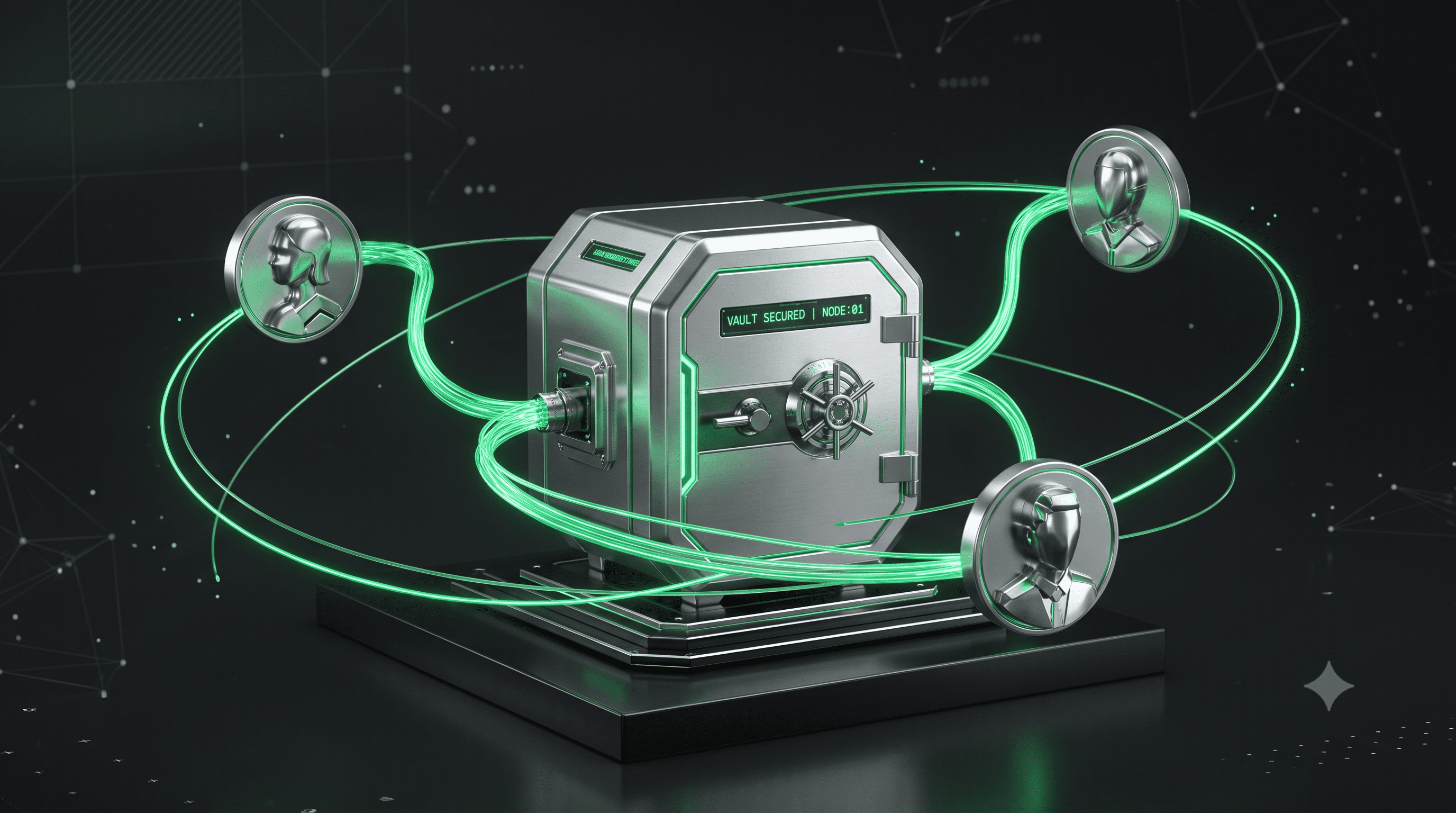
Key Takeaways
-
Eliminates Seed Phrase Vulnerability: Social recovery removes the risk of permanent fund loss due to a misplaced or stolen private key.
-
Leverages Trusted Networks: It utilizes a group of "Guardians"—friends, family, or devices—to authorize the recovery of a lost account.
-
Core of Smart Accounts: This mechanism is a primary feature of Account Abstraction (ERC-4337), transforming crypto wallets into programmable software.
-
Balances Security and UX: It provides a Web2-like "forgot password" experience without compromising the self-custodial nature of decentralized finance.
Definition and Evolution of Social Recovery
Social recovery is a security mechanism for cryptocurrency wallets that allows users to regain access to their funds if they lose their signing key. Unlike traditional "Externally Owned Accounts" (EOAs)—the standard wallets used by MetaMask or Ledger—which rely entirely on a 12-to-24-word seed phrase, social recovery treats the wallet as a smart contract.
In the early stages of blockchain development, the mantra was "not your keys, not your coins." While these empowered users, it created a massive barrier to entry: one lost piece of paper meant total financial ruin. Social recovery represents the evolution of Web3 toward Account Abstraction. It outperforms early-stage models by decoupling the "account" from the "signer." By doing so, it creates a fail-safe that mimics the recovery options found in centralized banking while maintaining the sovereign, trustless principles of the blockchain.
How Social Recovery Works: The Core Mechanism
The underlying protocol logic of social recovery is built on the concept of Guardians. Here is how cryptographic data flow typically functions:
-
The Guardian Selection: When a user sets up a social recovery wallet, they designate a set of "Guardians." These can be other wallet addresses owned by the user, trusted individuals, or even institutional services.
-
The Threshold Logic: The wallet's smart contract is programmed with a specific rule, such as "3-of-5" or "2-of-3." This means that to trigger a recovery, a majority of the Guardians must sign a transaction confirming the change.
-
The Recovery Request: If the user loses their primary key, they initiate a "Recovery Mode" using a new public key.
-
Authorization Flow: The Guardians receive a request to approve this new key. Once the threshold is met (e.g., 3 out of 5 Guardians sign), the smart contract updates the "owner" variable to the new key.
-
The Security Delay: Most social recovery setups include a "time-lock." This allows the original owner to cancel a recovery attempt if it was initiated maliciously by a group of colluding Guardians.
Key Benefits for Users and Developers
Social recovery matters because it addresses the "onboarding bottleneck" of the crypto industry:
-
Lower Barriers to Entry: New users no longer need to live in fear of losing a seed phrase. This makes crypto approachable for the "non-technical" majority.
-
Enhanced Security: It mitigates the risk of physical theft of seed phrases. Even if an attacker finds your backup, social recovery settings can be used to lock or migrate the account.
-
Regulatory-Ready Architecture: As institutional adoption grows, social recovery allows for "compliant" recovery paths where regulated entities can act as one of several guardians, providing a safety net for enterprise-level assets.
-
Cost-Effective Transactions: By integrating with Layer-2 scaling solutions, social recovery smart accounts can bundle transactions (paymasters), reducing gas fees and simplifying the interaction for the end user.
Real-World Applications in the Crypto Ecosystem
Social recovery is transforming abstract code into functional utility across various sectors:
-
DeFi (Decentralized Finance): In high-stakes DeFi trading, the ability to recover an account ensures that long-term yield-farming positions aren't permanently locked due to a hardware failure.
-
NFTs and Gaming: Players holding valuable in-game assets or rare digital art use social recovery to ensure their "digital identity" survives the loss of a physical device.
-
DAO Governance: Large-scale organizations use social recovery-like structures for their multisig treasuries, ensuring that the death or disappearance of a single board member doesn't freeze the organization’s capital.
Top Projects Implementing Social Recovery
Several leading protocols are currently pioneering this technology:
| Project | Type | Key Feature |
| Argent | Mobile Smart Wallet | One of the first to popularize Guardians on Ethereum and Starknet. |
| Safe (formerly Gnosis Safe) | Multi-Sig / Infrastructure | The industry standard for institutional social recovery and asset management. |
| Soulbound Tokens (SBTs) | Identity Protocol | Proposed by Vitalik Buterin, these tokens can act as a "proof of identity" to facilitate recovery. |
| Braavos | Starknet Wallet | Utilizes hardware signers and social recovery for a seamless mobile experience. |
Implementation Challenges and Future Outlook
Despite its promise, social recovery faces technical hurdles. One major challenge is fragmentation; if a user has wallets on five different chains, they may need to manage five different sets of Guardians. This increases the management overhead.
Security Auditing Requirements are also higher for these wallets. Because the security rests on a smart contract rather than simple cryptography, any bug in the contract code could lead to a mass exploit.
Looking toward 2026, the roadmap involves "Cross-Chain Account Abstraction," where a single social recovery setup on a mainnet can control accounts across all Layer-2 and Layer-3 ecosystems. We expect to see "Guardian-as-a-Service" providers emerge, offering professionalized, encrypted recovery options that don't rely solely on a user's social circle.
FAQ about Social Recovery
Can my Guardians steal my money?
Generally, no. In a standard setup (like a 3-of-5 threshold), a single Guardian has no power over your funds. Only a majority of Guardians acting together can change the access key. Furthermore, time-locks give you the chance to cancel any unauthorized recovery.
Is social recovery different from a Multi-Sig?
Yes. A Multi-Sig requires multiple signatures for every transaction. Social recovery only requires multiple signatures when you need to recover the account. For daily trading, you still use just one key.
What happens if I lose my Guardians?
This is why "Guardian hygiene" is important. It is recommended to choose a mix of people, your own hardware devices, and perhaps a third-party service to ensure you never lose the majority of your recovery path.
Sign up for KuCoin today to buy, sell, and manage your entire crypto portfolio in one simple dashboard. Register Now!


