
What is Risk-to-Reward Ratio in Crypto?
Key Takeaways
-
Definition: The Risk-to-Reward ratio measures the potential profit of a trade relative to its potential loss.
-
Calculation: It is calculated by dividing the amount you stand to lose (risk) by the amount you expect to gain (reward).
-
Strategic Value: A "good" ratio (like 1:3) allows a trader to remain profitable even if they lose more than 50% of their trades.
-
Execution: Successful use of the ratio requires strict adherence to Stop-Loss and Take-Profit orders.
Navigating the volatile waters of a crypto exchange requires more than just luck; it requires a mathematical edge. Whether you are scalping Bitcoin or holding long-term positions in altcoins, understanding the Risk-to-Reward Ratio (R/R ratio) is the difference between blowing your account and sustainable growth.
Understanding the Basics: What is Risk-to-Reward Ratio?
In the world of cryptocurrency trading, the Risk-to-Reward ratio is a formula used by investors to manage their capital and protect themselves from the market's inherent volatility. Essentially, it tells you if the "squeeze is worth the juice."
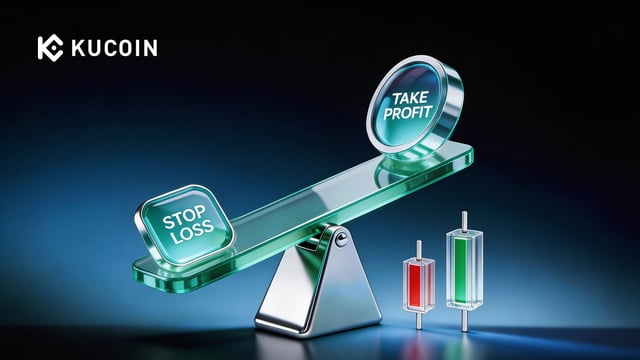
When we talk about "risk," we are referring to the price distance between your entry point and your Stop-Loss. The "reward" is the distance between your entry point and your Take-Profit target. By comparing these two, you gain a clear picture of your trade's efficiency before you even click "buy."
Why Risk-to-Reward Ratio Matters in Crypto
Cryptocurrency markets are known for "black swan" events and massive price swings. Without a predefined R/R ratio, traders often fall victim to emotional trading—holding onto losing positions too long (hope) or exiting winning positions too early (fear).
How to Calculate the Risk-to-Reward Ratio for Your Trades
Calculating this metric is straightforward, but it requires honesty about your exit points. To find the ratio, use the following formula:
Risk-to-Reward Ratio = (Entry Price - Stop-Loss Price) / (Take-Profit Price - Entry Price)
Example of a 1:3 Risk-to-Reward Ratio Setup
Imagine Bitcoin (BTC) is trading at $60,000. You believe it will rise, so you set the following parameters:
-
Entry: $60,000
-
Stop-Loss: $58,000 (Risk = $2,000)
-
Take-Profit: $66,000 (Reward = $6,000)
In this scenario, your ratio is $2,000 : $6,000$, which simplifies to 1:3. This means for every $1 you risk, you are aiming to make $3.
| Component | Price Level | Value in USD |
| Entry Point | $60,000 | - |
| Stop-Loss (Risk) | $58,000 | $2,000 |
| Take-Profit (Reward) | $66,000 | $6,000 |
| Final R/R Ratio | - | 1:03 |
The Role of Win Rate vs. Risk-to-Reward Ratio
One of the biggest misconceptions in crypto trading is that you need a high win rate to be successful. In reality, your Risk-to-Reward ratio dictates how high your win rate actually needs to be.
The Mathematics of Profitability
If you use a 1:1 ratio, you must win more than 50% of your trades to break even. However, if you use a 1:3 ratio, you only need to be right 25% or 30% of the time to remain in the green.
Common Mistakes When Using Risk-to-Reward Ratio in Crypto
While the concept is simple, execution is where most traders fail. On a high-leverage crypto exchange, small errors in calculating your ratio can lead to liquidation.
-
Setting "Ghost" Stop-Losses
A ratio is useless if you don't actually set a Stop-Loss order on the exchange. Many traders use "mental stops," but in a 24/7 market like crypto, prices can crash while you sleep.
-
Unrealistic Reward Targets
It’s easy to set a 1:10 ratio on paper. However, if the price of an asset has never reached that "reward" level, or if there is massive resistance in the way, your ratio is based on fantasy rather than market structure.
-
Ignoring Position Sizing
Risk-to-Reward is only half the battle. You must also decide what percentage of your total wallet is at stake. Even with a great 1:3 ratio, if you "all-in" on one trade, a single Stop-Loss hit could end your trading career.
Summary: Mastering Risk-to-Reward Ratio for Long-Term Success
To survive in the crypto industry, you must think like a casino owner, not a gambler. The casino doesn't win every hand; it wins because the mathematical odds (the "edge") are in its favor over thousands of hands.
By consistently applying a positive Risk-to-Reward ratio, you create your own "house edge." You accept that losses are a cost of doing business and ensure that your winning trades are large enough to cover those costs and still provide a profit.
-
Analyze the market structure (Support/Resistance).
-
Define your exit points before entering.
-
Calculate the ratio to ensure it meets your minimum threshold (e.g., 1:2).
-
Execute with discipline using our exchange's advanced order types.
Create a free KuCoin account to discover the next crypto gems and trade over 1,000 global digital assets today. Create Now!
FAQs: Frequently Asked Questions about Risk-to-Reward Ratio
What is a good Risk-to-Reward ratio for beginners?
For most beginners, a 1:2 or 1:3 ratio is recommended. This provides a safety net, allowing you to be wrong more than half the time while still protecting your capital. Avoid 1:1 ratios until you have a very high proven win rate.
Can I use Risk-to-Reward ratio with leverage?
Yes, but you must be extremely careful. Leverage multiplies both your risk and reward. When trading with leverage on an exchange, calculate your Stop-Loss based on the liquidation price to ensure you aren't wiped out before your strategy has time to play out.
How does market volatility affect the Risk-to-Reward ratio?
In high volatility, you may need "wider" Stop-Losses to avoid being stopped out by random price noise (wicks). This means your Take-Profit target must also be further away to maintain a healthy ratio.
Is a higher Risk-to-Reward ratio always better?
Not necessarily. A 1:10 ratio sounds great, but the probability of the price reaching that target is much lower than a 1:2 target. The "sweet spot" is finding a ratio that balances a realistic price target with a meaningful profit.
Does the Risk-to-Reward ratio work for HODLing?
While primarily a trading tool, long-term investors use it to decide entry points. If you believe an altcoin can go to $100 (Reward) but might drop to $10 (Risk), and it's currently at $30, you can calculate if the long-term investment fits your risk profile.


