
What is Emotional Trading in Crypto?
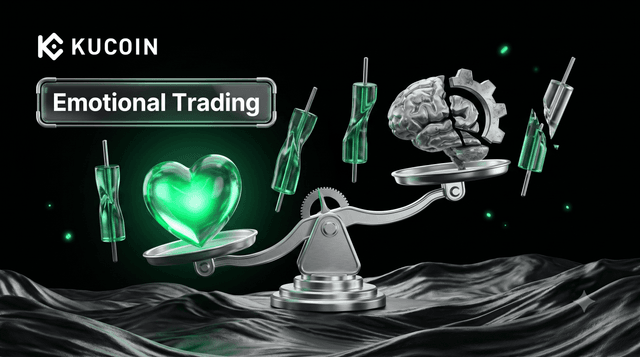
The rapid-fire nature of the digital asset market often turns the trading floor into a psychological battlefield. While technical indicators and on-chain metrics provide the "what" and "where" of price action, understanding emotional trading provides the "why." In an ecosystem characterized by high volatility and 24/7 liquidity, mastering the psychological element is essential for enhancing the efficiency, security, and long-term scalability of a trader’s decentralized portfolio.
Key Takeaways
-
Psychological Volatility: Emotional trading refers to making investment decisions based on feelings like fear, greed, or FOMO (Fear of Missing Out) rather than technical analysis or fundamental logic.
-
The Impulse Loop: It creates a cycle of "buying high and selling low," which acts as a significant barrier to capital preservation in the Web3 space.
-
Strategic Mitigation: Utilizing automated tools, such as limiting orders and trading bots, can help decouple human bias from execution, leading to more consistent performance.
-
Market Sentiment Correlation: High levels of collective emotional trading often signal market tops (excessive greed) or bottoms (extreme fear), providing contrarian indicators for advanced participants.
Defining the Evolution of Sentiment-Driven Markets
In the context of Web3, emotional trading is the deviation from a pre-defined strategy due to cognitive biases or intense affective states. Unlike traditional equities, where institutional "circuit breakers" and closing bells provide moments of reflection, the crypto market operates as a continuous stream of data. This environment amplifies the "fight or flight" response in human biology.
The evolution of this phenomenon has shifted from the early Bitcoin "pizza days"—driven by hobbyist curiosity—to a sophisticated landscape where retail sentiment is often weaponized by whales or algorithmic entities. While early blockchain models relied on simple peer-to-peer transfers, the modern DeFi and NFT era introduces complex incentive structures that trigger dopamine hits similar to gaming, making the "human element" a critical vulnerability in the decentralized ecosystem.
Mechanics of the Emotional Trade: The Neural Protocol
The underlying logic of emotional trading follows a repeatable pattern that mirrors a poorly optimized smart contract. When a protocol experiences a sudden price surge, the "Greed Logic" is triggered:
-
Input: Rapid green candles and social media hype (Proof-of-Social-Authority).
-
Processing: The brain’s amygdala bypasses the prefrontal cortex (the "Analytical Layer").
-
Execution: The trader enters a position at the local top without a stop-loss.
-
Data Flow: As the price corrects, "Panic Logic" takes over, leading to a liquidity exit at the worst possible price.
This "consensus of emotion" is what powers the massive liquidations seen during market flushes. Cryptographic principles may secure the network, but they cannot secure a trader against their own neurological impulses.
Why Managing Emotions Benefits Users and Developers
For participants in crypto space, moving beyond emotional trading offers several structural advantages:
-
Lower Barriers to Professionalism: By adopting disciplined frameworks, beginners can compete more effectively with institutional desks.
-
Enhanced Capital Privacy and Security: Emotional traders are more likely to fall for "rug pulls" or phishing scams due to the urgency of FOMO. A calm approach allows for better due diligence on smart contract security.
-
Cost-Effective Execution: Reducing "revenge trading" (trying to "win back" losses) prevents unnecessary transaction fees and slippage from frequent, poorly timed swaps.
-
Regulatory-Ready Mindset: As the industry moves toward clearer frameworks, traders who operate with documented, logic-based strategies are better prepared for the reporting and compliance requirements of 2026.
Practical Utility in the DeFi and NFT Ecosystem
Emotional trading manifests differently across various crypto sectors, transforming abstract market sentiment into functional (or dysfunctional) utility:
-
DeFi Liquidity Providing: Investors often pull liquidity during minor price dips out of fear, missing out on fee accumulation. Rational actors use hedged positions to manage impermanent loss.
-
NFT "Floor Price" Speculation: The subjective nature of digital art makes it a hotbed for emotional attachment. Traders often "marry" their bags, refusing to sell even as the metadata utility diminishes.
-
Infrastructure Governance: DAOs (Decentralized Autonomous Organizations) can suffer from emotional voting, where short-term price concerns override the long-term technical roadmap of the protocol.
Strategic Frameworks for Overcoming Behavioral Bias
While not "projects" in the traditional sense of a Layer 1 blockchain, several methodologies and tools serve as the leading "protocols" for mitigating human error:
| Tool/Strategy | Function | Web3 Implementation |
| DCA (Dollar Cost Averaging) | Removes timing bias | Automated smart-buys regardless of price. |
| Trading Bots | Rule-based execution | Deploying Grid or Martingale bots on exchanges. |
| Fear & Greed Index | Sentiment analysis | Using aggregate data to identify overbought/oversold zones. |
| Journaling | Data-driven reflection | Logging the "Why" behind every trade to identify triggers. |
Future Outlook: The Intersection of AI and Psychology in 2026
The roadmap for navigating emotional trading is shifting toward AI-Assisted Guardrails. By 2026, we expect to see:
-
Sentiment-Aware Interfaces: Wallets and exchanges may integrate "cooling off" periods or warnings when they detect a high frequency of high-risk trades in a short window.
-
Security Auditing for the Mind: Just as we audit code, traders will increasingly use "psychological audits" to identify their personal technical hurdles and fragmentation of focus.
-
AI Copilots: Personalized AI assistants that monitor a trader's historical performance and provide real-time alerts when a trade deviates from their documented strategy.
Despite these advancements, the fundamental challenge remains: the human brain evolves slower than blockchain code. The long-term winners in the crypto ecosystem will be those who prioritize psychological resilience as much as technical literacy.
FAQs for Emotional Trading
Is emotional trading always bad?
While usually detrimental, "intuition" developed over years of chart-watching can sometimes help. However, for 95% of traders, strictly adhering to a data-driven plan outperforms gut feelings.
How can I stop "revenge trading" after a loss?
The most effective method is a mandatory 24-hour "circuit breaker." Step away from all screens to allow your cortisol levels to reset, ensuring your next move is based on logic, not a desire for "payback."
Do institutional traders feel these emotions?
Yes, but they use rigid risk management protocols—such as hard stop-losses and position sizing—to ensure that even if they feel the emotion, it cannot execute a trade.
What is the best indicator for market sentiment?
The Crypto Fear & Greed Index is a popular starting point, but monitoring funding rates on perpetual futures provides more granular data on whether the market is overly "long" (greedy) or "short" (fearful).
See why millions of traders choose the People’s Exchange—create your KuCoin account in under 60 seconds. Sign Up Now!


