
What is emotional-state dashboarding in crypto?
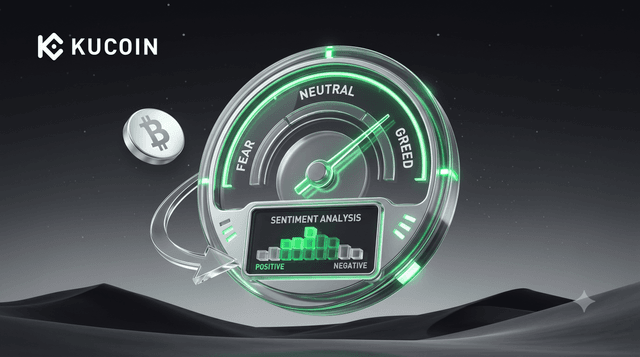
In the hyper-volatile crypto market of March 2026, the most significant barrier to consistent profitability isn't a lack of data—it's the human element. While algorithmic bots execute trades with cold, mathematical precision, human traders remain susceptible to the powerful biological triggers of fear, greed, and exhaustion. As we navigate a landscape dominated by rapid-fire social sentiment and 24/7 market cycles, top-tier traders on platforms like KuCoin are adopting a new discipline: Emotional-State Dashboarding.
Emotional-state dashboarding is the systematic practice of quantifying and visualizing your psychological health alongside your market data. By treating your internal state—such as stress levels, confidence, and heart rate variability as a manageable data set, you can identify the precise moments when "The Tilt" or FOMO begins to override your technical analysis. In an era where "always-on" markets can lead to rapid cognitive decline, this dashboard acts as a vital "circuit breaker," allowing you to step back before your emotions dictate your PnL. Mastering this reflective approach ensures that while the "herd" is reacting to market noise, you are responding to your own high-performance framework.
This guide explores the three layers of emotional tracking, from macro market sentiment to personal biometric data—and provides a practical framework for building a dashboard that turns your psychological profile into a competitive advantage.
Key Takeaways
-
Emotional-state dashboarding is the practice of tracking and visualizing psychological metrics (fear, greed, stress) alongside market data.
-
To identify patterns where emotions—rather than analysis—drive trading decisions.
-
It ranges from manual "emotional journals" to advanced AI-driven dashboards that monitor vitals like heart rate or social sentiment.
-
Reduces impulsive behaviors like FOMO (Fear Of Missing Out) and panic selling.
What is Emotional-State Dashboarding?
Emotional-state dashboarding is a systematic method of logging, quantifying, and visualizing a trader's psychological health and mood in real-time or post-trade.
While a traditional crypto dashboard shows you Bitcoin’s RSI (Relative Strength Index) or liquidity depths, an emotional-state dashboard tracks your internal indicators. By putting a "face" on your feelings, you can treat your emotions as just another data point to be managed, rather than a force that controls you.
The Three Layers of Emotional Dashboarding
Macro Sentiment
This involves tracking tools like the Crypto Fear & Greed Index. It tells you if the "herd" is euphoric or terrified.
Micro Sentiment
This is self-reported data. Before clicking "Buy," a trader logs their current state: Are you tired? Stressed? Overconfident after a win?
Biometric Data
Some advanced setups now integrate wearable tech to monitor heart rate variability (HRV) and cortisol triggers, automatically flagging when a trader is too "heated" to make rational choices.
Why Crypto Traders Need to Track Their Emotions
In traditional finance, markets close. In crypto, the "always-on" nature creates a breeding ground for burnout and impulsive decision-making. Emotional-state dashboarding addresses several critical "human" risks:
-
Breaking the Cycle of Revenge Trading
After a loss, the human brain often seeks to "win it back" immediately. An emotional dashboard visualizes this spike in aggression, acting as a "circuit breaker" that alerts the trader to step away.
-
Identifying "The Tilt"
Borrowed from poker terminology, "tilting" is when a trader loses their cool. By looking at a dashboard that correlates high stress levels with poor trade outcomes, a trader can see the literal cost of their anger or anxiety.
-
Fighting FOMO
When a meme coin is "mooning," your emotional dashboard might show a spike in "excitement" or "greed" metrics. Seeing this visual representation helps you realize you are chasing a narrative rather than a technical setup.
How to Build Your Own Emotional-State Dashboard
You don't need a PhD in psychology to start dashboarding. You can begin with a simple framework:
| Metric | How to Track It | Why it Matters |
| Confidence Level | Scale of 1–10 | High confidence often leads to over-leveraging. |
| Physical Stress | Heart rate or "Tension Check" | Physical tension usually precedes a panic sell. |
| Market Sentiment | Fear & Greed Index | Helps you stay contrarian when the crowd is greedy. |
| Sleep Quality | Hours of Rest | Sleep deprivation is the #1 cause of "fat finger" errors. |
Summary
What is emotional-state dashboarding at its core? It is the transition from reactive trading to reflective trading. In an industry where everyone has access to the same charts and news, the winner is often the one who can remain calm when others are panicking. By visualizing your mental state, you turn your greatest weakness—unregulated emotion—into a manageable data set.
Start your crypto journey in minutes by creating a secure KuCoin account with no initial deposit required. Sign Up Now!
FAQs
Is emotional-state dashboarding the same as sentiment analysis?
Not exactly. Sentiment analysis tracks the market's mood (via Twitter/X or news). Emotional-state dashboarding focuses on the individual trader's internal psychological state.
What are the best tools for emotional tracking?
For beginners, a trading journal (like Coin Market Manager or Excel) is best. For advanced users, integrating wearable tech (like an Oura ring or Whoop) with your trading log is the gold standard for 2026.
Can a dashboard stop me from losing money?
A dashboard won't change the market, but it will change your response to it. It acts as a mirror, showing you the habits that lead to losses so you can fix them.


