
What is Algo-trust Dependency in Crypto?
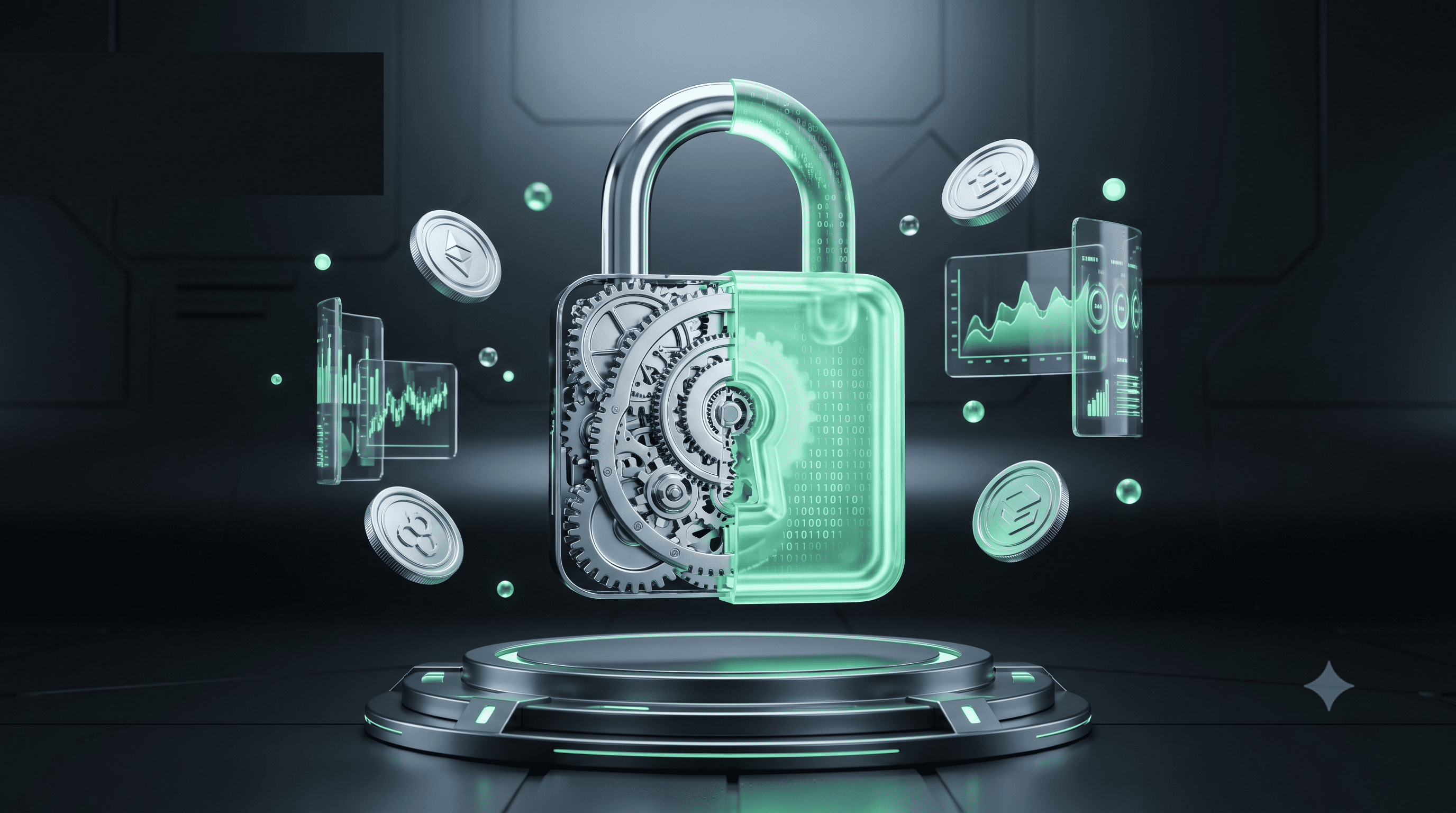
The rapid evolution of decentralized finance (DeFi) and Web3 has shifted the foundational paradigm of how we verify value. At the heart of this shift is Algo-trust dependency, a structural reliance on mathematical proofs and automated protocols rather than human intermediaries. This concept represents the transition from "Don't be evil" (the mantra of centralized tech) to "Can't be evil" (the promise of code-governed systems).
Key Takeaways
-
Shift in Verification: Algo-trust dependency moves the burden of proof from centralized institutions (banks, escrow services) to immutable smart contracts and consensus algorithms.
-
Elimination of Counterparty Risk: By relying on "code as law," users can engage in complex financial transactions without needing to trust the integrity or solvency of the other party.
-
Scalability and Speed: Automated trust allows for sub-second execution of global transactions that would otherwise require days of manual auditing and clearinghouse settlement.
-
The "Oracle" Link: While the internal logic of a blockchain is trustless, algo-trust often depends on the integrity of data feeds (Oracles) to interact with the physical world.
Defining and Tracing the Rise of Algo-trust
Algo-trust dependency refers to a system architecture where the security, validity, and execution of transactions are entirely contingent upon algorithmic logic. In traditional finance, trust is "social"—you trust a bank because of its reputation, regulatory oversight, and legal recourse. On Web3, trust is "computational"—you trust the system because mathematics makes it impossible for a transaction to be reversed or falsified once consensus is reached.
The Evolution from Social to Mathematical Trust
The origins of this dependency date back to the 2008 Bitcoin Whitepaper, which introduced the Proof of Work (PoW) consensus. This was the first time "trust" was successfully outsourced to a decentralized network of machines. As Web3 matured, the scope of algo-trust expanded from simple value transfer to complex logic via Ethereum’s smart contracts.
Compared to early-stage blockchain models, modern algo-trust dependency is more sophisticated. It now incorporates Zero-Knowledge Proofs (ZKPs) and Multi-Party Computation (MPC), allowing for high-speed throughput and privacy that centralized systems—prone to data breaches and human error—simply cannot match.
Mechanism of Action: The Logic of Algorithmic Reliability
The core mechanism of algo-trust dependency functions through a layered stack of cryptographic principles and data flow protocols.
-
Cryptographic Primatives
At the base layer, hashing algorithms (like SHA-256) and digital signatures (ECDSA) ensure that data is tamper-proof. Once a user initiates a trade on a decentralized exchange (DEX), their private key generates a signature that the algorithm verifies without ever "seeing" the key itself.
-
Smart Contract Determinism
The data flow is governed by "if-then" logic. For instance, in a collateralized loan protocol, the algorithm is programmed to liquidate a position if the collateral value drops below a certain threshold. There is no loan officer to appeal to; the trust is dependent on the code's objective execution.
-
Consensus Finality
Algo-trust is solidified through the consensus layer. Whether using Proof of Stake (PoS) or directed acyclic graphs (DAGs), the dependency lies in the economic incentives that make it more profitable for nodes to follow the rules than to break them.
Strategic Advantages for Users and Developers
For the modern crypto participant, moving toward an algo-trust model offers several transformative benefits:
-
Lowered Entry Barriers: Traditional finance requires credit scores and identity verification (KYC). Algo-trust systems are permissionless; as long as you have the assets and the code recognizes your transaction, you can participate.
-
Enhanced Privacy through ZK-Rollups: Advanced algo-trust models allow users to prove they have the funds for a trade without revealing their total balance or transaction history, significantly boosting on-chain privacy.
-
Cost-Efficient Infrastructure: By removing the "middleman tax" (fees paid to bankers, lawyers, and brokers), developers can build dApps with significantly lower overhead, passing those savings to the end-user.
-
Regulatory-Ready Architecture: Modern algo-trust protocols are increasingly incorporating "compliance-as-code." This allows for automated reporting and adherence to international standards without compromising decentralization.
Practical Utility in the Current Crypto Landscape
Algo-trust dependency is no longer a theoretical concept; it is the engine behind the most successful sectors of the crypto economy:
Decentralized Finance (DeFi)
Automated Market Makers (AMMs) like Uniswap rely entirely on mathematical formulas ($x * y = k$) to determine asset prices. Traders depend on the algorithm to provide liquidity and fair pricing without a central order book.
Real-World Assets (RWA)
In the tokenization of real estate or gold, algo-trust ensures that the digital token accurately represents the underlying physical asset through cryptographic auditing and automated legal compliance.
Infrastructure & DePIN
Decentralized Physical Infrastructure Networks (DePIN) use algo-trust to reward users for providing hardware services (like 5G hotspots or storage). The dependency here ensures that rewards are distributed fairly based on verifiable "Proof of Work" or "Proof of Coverage."
Leading Protocols Advancing Algo-Trust Technology
Several projects are currently at the forefront of refining how we depend on algorithmic trust:
| Project | Core Focus | Anthropomorphic Implementation |
| Virtuals Protocol | AI x Gaming | Enables the creation of "on-chain personalities" that can sing, dance, and trade within gaming ecosystems. |
| Myshell | Creator Economy | Allows users to create AI "companions" with specific voices and personalities that live on the blockchain. |
| Olas (Autonolas) | Infrastructure | A network for co-owning AI agents that perform complex off-chain tasks with on-chain transparency. |
| Fetch.ai | Autonomous Agents | Focuses on "AI Twins" that can negotiate and execute commerce on behalf of their human creators. |
Technical Hurdles and the 2026 Roadmap
Despite its strengths, algo-trust dependency faces significant implementation challenges.
Security and Auditing
The biggest risk in an algo-trust system is "code risk." If the algorithm has a bug, the trust is broken. This has led to a massive surge in the importance of formal verification—a mathematical approach to proving that a piece of code will always behave as intended.
Fragmentation and Liquidity
As more chains emerge, trust becomes fragmented. The industry is currently working on cross-chain communication protocols that allow algo-trust to be "exported" from one blockchain to another without introducing new vulnerabilities.
The Path to 2026
Looking toward 2026, the roadmap for algo-trust involves the integration of AI-driven auditing. AI agents will likely be used to monitor smart contracts in real-time, identifying potential exploits before they can be triggered. Furthermore, the rise of "Intent-centric" design will allow users to define a desired outcome, leaving the algorithm to find the most trustworthy and efficient path to achieve it.
FAQs for Algo-trust Dependency
Is algo-trust dependency safer than traditional banking?
It depends on the context. While it eliminates human corruption and error, it introduces technical risks. However, for users in regions with unstable banking systems, algo-trust provides a level of predictability and global access that traditional banks cannot match.
Can an algorithm be "hacked"?
Technically, an algorithm is math, and math cannot be hacked. However, the implementation of that math in code (smart contracts) can have vulnerabilities. This is why using audited protocols with high Total Value Locked (TVL) is critical for risk management.
How do I interact with algo-trust systems?
Most users interact with these systems through Web3 wallets and dApps. Every time you swap a token on a DEX or deposit into a lending pool, you participate in an algo-trust dependent ecosystem.
See why millions of traders choose the People’s Exchange—create your KuCoin account in under 60 seconds. Sign Up Now!


