

Wildberries Freezes Investments: Causes, Consequences, and Seller Support Amid Drone Attacks
Introduction
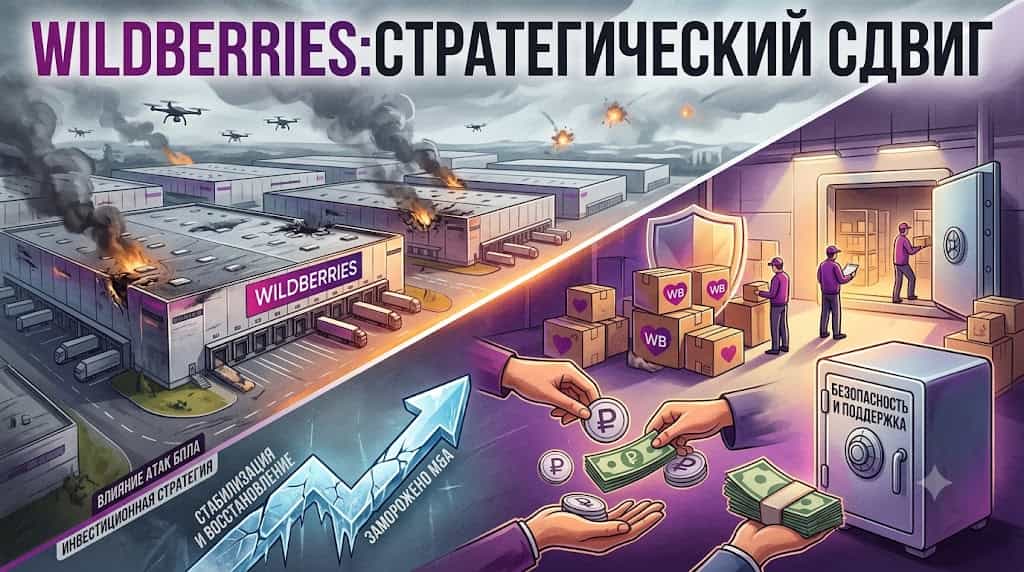
Recent drone attacks on the logistics centers of Wildberries, Russia's largest online retailer, have led to unprecedented changes in its investment strategy. Wildberries has frozen its investment program and mergers and acquisitions (M&A) deals to focus on supporting affected sellers and ensuring the security of its infrastructure. This decision, while forced, reflects the company's adaptation to new challenges and its desire to stabilize operations in a high-risk environment. In this article, we will examine in detail the reasons for this move, its consequences for sellers and consumers, and the long-term development prospects for Wildberries against the backdrop of these events.
Why Did Wildberries Suspend Its Investment Programs?
Drone Attacks and Warehouse Damage
Wildberries was forced to suspend its investment programs due to numerous unmanned aerial vehicle (UAV) attacks on its logistics centers, which resulted in significant damage and casualties. These incidents compelled the company to redirect its resources and attention toward security and recovery. Since July 18, 2026, Wildberries logistics facilities in various regions of Russia have come under attack, including Kotovsk (Tambov region), Elektrostal (Moscow region), Krasnodar, Nevinnomyssk (Stavropol region), Shushary (St. Petersburg), Utkina Zavod (Leningrad region), Simferopol, Ryazan, Penza, Sarapul (Udmurtia), and Volgograd ]. These attacks resulted in fires, destruction of warehouse space, and the death and injury of employees. For example, seven employees were killed in Kotovsk, and one person died in Elektrostal, with dozens injured. Total direct damage from the attacks is estimated at approximately 75 billion rubles, of which about 50 billion rubles are for goods, 20 billion for warehouses, and 5 billion for equipment. Indirect damage could amount to another 20–30 billion rubles due to downtime, seller churn, and increased security costs.
These attacks not only caused direct damage to infrastructure and goods but also created serious operational challenges. The company faced the need for emergency staff evacuation, restructuring of logistics chains, and ensuring continuity of supplies under conditions of high uncertainty. For instance, following the attacks in Kotovsk and Elektrostal, Wildberries had to temporarily suspend facility operations and redirect product flows to other warehouses. This led to temporary delivery delays and put additional pressure on the remaining logistics capacities. Given the scale and geography of the attacks, the company was forced to admit that continuing an aggressive investment policy under such conditions was impractical and risky. Furthermore, the incidents highlighted the vulnerability of large logistics hubs to new types of threats, necessitating a review of security approaches at all levels. This includes not only physical protection but also the development of new emergency response protocols and the strengthening of cybersecurity.
Company Priorities: Security and Support
In response to the situation, Wildberries' absolute priority has become ensuring the physical security of infrastructure, restructuring business processes, and providing financial assistance to affected employees and sellers. The company stated that all resources are concentrated on helping the severely injured and the families of the deceased, as well as maintaining the inventory turnover of partners . Consequently, external acquisitions (M&A) and non-core capital expenditures have been completely "frozen." This means that Wildberries is temporarily abandoning plans to expand through the purchase of new assets to direct all efforts toward stabilizing current operations and supporting its ecosystem.
RWB representatives emphasized that ensuring security at the company's facilities is now an "absolute priority." This includes not only physical warehouse protection but also a review of all business processes to minimize risks in the future. Additionally, the company is actively working on restoring damaged facilities and creating a more resilient logistics network. This shift in priorities reflects the Wildberries management's deep understanding of current challenges and a commitment to long-term stability, even if it requires a temporary abandonment of ambitious expansion plans. Supporting affected sellers is also a key element of this strategy, as they form the core of the marketplace's ecosystem. The company realizes that without a stable and loyal seller base, it is impossible to ensure the platform's sustainable development. Therefore, support measures are aimed not only at compensating for damage but also at restoring trust and creating favorable conditions for further work.
How Does Wildberries Support Affected Sellers?
Financial Assistance and Compensation
Wildberries is actively implementing measures to ensure financial compensation and address working capital issues for sellers whose goods were damaged in the attacks. The company has already paid out several tranches of compensation to hundreds of thousands of small and medium-sized enterprises. For example, on July 30, Wildberries transferred the second tranche of support payments to sellers, with over 97,000 entrepreneurs receiving support, following a first tranche for more than 88,000 entrepreneurs. This testifies to the scale and speed of the measures being taken. Additionally, Wildberries' subsidiary financial institutions—WB Bank and WB Finance—provided affected sellers with credit holidays to ease their financial burden. These measures include a three-month deferral on loans and borrowings with a freeze on principal and interest payments, as well as the cancellation of account maintenance fees and commissions for ruble transfers for sellers.
In addition to direct financial payments and credit holidays, Wildberries is also actively advising sellers on product insurance and future risk minimization. The company understands that many small and medium-sized enterprises lack sufficient experience in risk management, especially in emergency situations. Therefore, information support and recommendations for optimizing logistics processes and diversifying supplies are provided. At the government level, steps are also being taken: Russia's Deputy Prime Minister has instructed the development of support measures for entrepreneurs affected by the attacks on Wildberries warehouses. This underscores the seriousness of the situation and a comprehensive approach to its resolution, aimed at minimizing negative consequences for business. The government recognizes that the damage caused by the attacks has affected a significant portion of small and medium-sized businesses and is actively seeking ways to provide targeted assistance. These joint efforts by Wildberries and the state are aimed at helping sellers recover and continue their activities, ensuring the stability of the entire marketplace ecosystem.
Impact on Consumers and Logistics
Short-Term Delays and Maintaining Basic Services
In the short term, consumers may face local logistics delays in some regions and product categories; however, Wildberries' basic services continue to function. The attacks led to the loss of about 10% of Wildberries' warehouse capacity, and its restoration will require significant investment, estimated in the tens of billions of rubles. For example, restoring warehouse capacity after the July 18 attacks is estimated at up to 33 billion rubles. Despite this, the company has concentrated all its efforts on maintaining inventory turnover and ensuring the smooth operation of existing infrastructure. The goal is to prevent a complete collapse of the logistics network, even if it means a temporary suspension of new expansion. Wildberries states that the attacks did not lead to a systemic failure in the platform's operation; logistics chains were restructured, and other warehouses and pickup points continue to operate.
The company is actively informing users about possible changes in delivery times and offering alternative options for receiving orders. In some cases, to minimize delays, goods may be redirected to other warehouses or pickup points. This allows Wildberries to maintain a high level of service despite the extraordinary circumstances. It is important to note that while some regions may experience temporary difficulties, the platform's overall operability and its ability to process orders remain at a high level. This is achieved through the flexibility of the logistics system and rapid response to emerging problems. Furthermore, Wildberries is actively investing in the development of new logistics solutions and technologies that will increase the resilience and efficiency of supply chains in the long term. This includes the implementation of automated warehouse management systems, optimization of delivery routes, and expansion of the partner pickup point network.
Long-Term Prospects and Market Reaction
The current suspension of Wildberries' investments is seen as a temporary strategic adjustment rather than a permanent end to expansion. According to sources close to the company, after completing several current large deals, RWB (Wildberries and Russ) will suspend new negotiations on mergers and acquisitions . This does not mean a complete abandonment of M&A but indicates a more cautious and selective approach to new acquisitions. Market experts, such as Alexei Fedorov, Chairman of the Council for E-commerce Development of the Chamber of Commerce and Industry, believe that this could lead to a 20–30% decrease in the volume of the M&A market in e-commerce, but a total cessation of deals will not occur. Other major players, such as X5, Magnit, and Yandex, continue to show activity in the market. This indicates that the market is adapting, and Wildberries is likely to return to an active strategy after the situation stabilizes.
The e-commerce market in Russia continues to demonstrate steady growth, and Wildberries, as its leader, has a strong position for recovery and further development. A temporary pause in investments will allow the company to consolidate its resources, optimize existing operations, and strengthen its internal structure. This could lead to more efficient and sustainable growth in the long term. Experts note that such strategy adjustments are normal practice for large companies facing unforeseen circumstances and should not be seen as a sign of weakness or decline. Moreover, this situation could become a catalyst for innovation in security and logistics, which will ultimately benefit the entire industry. Wildberries is likely using this period to rethink its strategy and implement cutting-edge solutions that will make it even more competitive in the market.
Possible Timeline for Returning to an Active Investment Strategy
According to expert estimates, Wildberries will be able to return to an active investment strategy no earlier than the second quarter of 2027. This requires a cessation of attacks on infrastructure, as well as government support measures for sellers and the provision of tax breaks to Wildberries itself due to force majeure circumstances. Mikhail Zhiganov of Strategy Partners believes the current pause is a temporary adjustment of investment priorities rather than a refusal by RWB to expand further. This underscores that the company is not abandoning its long-term goals but is forced to adapt to current realities.
Returning to active investment activity will depend on several key factors. First, a complete stabilization of the security situation and the cessation of attacks on logistics facilities. Second, the effective implementation of government support measures for affected entrepreneurs and Wildberries itself, which will allow the company to restore financial stability faster. Third, the successful integration of previously acquired assets and optimization of internal processes. Once these conditions are met, Wildberries will be able to resume its expansion, perhaps with even greater efficiency and strategic foresight, given the experience gained. This period can also be used to strengthen partnerships and expand cooperation with other market participants, allowing for the creation of a more resilient and mutually beneficial ecosystem.
Should You Invest in the E-commerce Sector on KuCoin?
Against the backdrop of instability in traditional sectors of the economy caused by various external factors, many investors are looking for alternative opportunities to grow their capital. The cryptocurrency market, despite its volatility, offers unique prospects for growth and portfolio diversification. KuCoin, as one of the world's leading cryptocurrency exchanges, provides a wide range of trading tools, innovative products, and a high level of security. If you are considering investing or trading cryptocurrency, KuCoin offers a reliable and convenient platform to achieve your financial goals. Register on KuCoin today to start your journey in the world of digital assets and take advantage of cutting-edge technologies and a global community of traders.
Join KuCoin 9th Anniversary Trading Campaign
KuCoin is celebrating its 9th anniversary with a special platform campaign filled with exclusive rewards, trading activities, and limited-time offers. Don’t miss the chance to participate and enjoy the benefits as the exchange marks nine years of growth and innovation. Visit the official campaign page now:

Conclusion
The freeze of Wildberries' investment programs is a direct consequence of recent drone attacks on its logistics centers, which led to significant losses and the need to reorient resources. The company has focused on ensuring infrastructure security and providing comprehensive support to affected sellers, including financial compensation and credit holidays. Despite short-term logistics difficulties, Wildberries strives to maintain the stability of core operations. Experts view this move as a strategic pause rather than a final abandonment of expansion, expecting a resumption of active investment activity no earlier than the second quarter of 2027, provided the situation stabilizes and government support is received. This situation highlights the vulnerability of large logistics operators to external threats and demonstrates their ability to quickly adapt and redistribute priorities to maintain business resilience.
Frequently Asked Questions (FAQs)
1. What is the main reason for freezing Wildberries' investment programs?
The main reason is the damage to Wildberries' warehouses resulting from drone attacks, which forced the company to redirect resources toward infrastructure security and supporting affected sellers.
2. What support measures does Wildberries provide to affected sellers?
Wildberries provides phased compensation payments, credit holidays through WB Bank and WB Finance, and actively collaborates with the Russian government to develop additional support measures for small and medium-sized businesses.
3. Will the investment freeze affect regular buyers?
In the short term, local delivery delays are possible in some regions and for certain product categories. However, Wildberries is making every effort to maintain the stable operation of core logistics chains and minimize inconvenience to buyers.
4. Does this mean the end of Wildberries' expansion?
No, it does not mean the end of expansion. Experts regard this as a temporary strategic adjustment aimed at stabilizing the business and focusing on core operations. The company plans to return to active development after the situation normalizes.
5. When does Wildberries plan to resume active investment activity?
According to analyst estimates, Wildberries will be able to resume active investment activity no earlier than the second quarter of 2027, provided there is a complete cessation of attacks on infrastructure and the necessary government support, including tax breaks, is obtained.
Disclaimer : This material is provided for informational purposes only and does not constitute financial, investment, legal, or tax advice. Transactions involving cryptocurrencies and tokenized assets carry substantial risks — including price volatility, limited liquidity, counterparty exposure, and the potential for total loss of invested capital. Readers should conduct their own research and, where appropriate, consult a qualified professional before making any financial decisions.