

Russia Crypto Regulation 2026: Ministry of Finance Aims to Repatriate 10 Million Crypto Wallets
Introduction
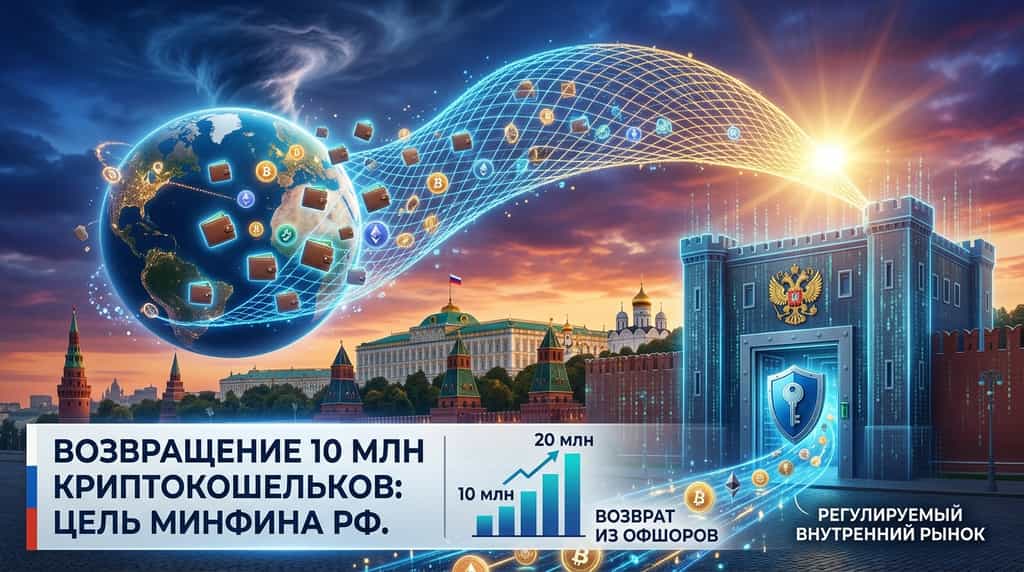
Russia holds an estimated 3.7 trillion rubles ($40 billion) in digital assets across 20 million domestic investors, according to official statements from Deputy Finance Minister Ivan Chebeskov via TASS in September 2026. Over 10 million crypto wallets belonging to Russian citizens are currently hosted on foreign platforms, driving the Ministry of Finance to launch a comprehensive regulatory push to bring these digital assets back into the state-regulated domestic framework.
Why Is Russia’s Ministry of Finance Targeting 10 Million Foreign Crypto Wallets?
The Russian Ministry of Finance aims to repatriate assets from over 10 million offshore crypto wallets to secure tax revenue, enforce national financial supervision, and prevent capital flight. According to data provided by Deputy Finance Minister Ivan Chebeskov, Russian citizens execute roughly 50 billion rubles ($540 million) in daily cryptocurrency transactions, a significant volume of liquidity operating outside state sovereign control.
By legalizing state-sanctioned digital asset trading floors, the Russian government intends to create a domestic financial environment where crypto holders can seamlessly transfer funds without facing punitive legal measures or cross-border banking bottlenecks.
How Does Russia Plan to Repatriate Foreign Crypto Assets into Domestic Platforms?
Russia plans to attract foreign crypto liquidity by connecting state-regulated domestic exchanges to international liquidity pools and offering seamless arbitrage settlement. Deputy Finance Minister Ivan Chebeskov highlighted that global trading venues showed active commercial interest during the drafting of Russia's digital asset oversight laws.
The strategy relies on two primary mechanisms:
-
Direct Liquidity Bridges: Establishing technical channels between state-approved Russian platforms and foreign exchanges to ensure deep order books and unified pricing.
-
Arbitrage Incentives: Relying on market market-makers and institutional traders to exploit price discrepancies, effectively bridging liquidity gaps and maintaining fair valuation across borders.
What Penalties Face Unlicensed Crypto Trading Operations in Russia?
The Russian State Duma is enacting strict criminal penalties during its 2026 autumn legislative session for operating unlicensed cryptocurrency exchanges or failing to register with the Bank of Russia. Deputy Finance Minister Ivan Chebeskov clarified that criminal liability specifically targets illegal exchange operators and commercial liquidity providers rather than regular citizens conducting personal digital asset transactions.
The severity of criminal charges depends entirely on the volume of revenue generated or financial damage caused by the unauthorized entity, effectively shutting down shadow exchange offices across the country.
What Key Risks Do Industry Experts Foresee for Russia’s Crypto Infrastructure?
Market experts warn that fragmented domestic liquidity and international sanctions could create a discounted, isolated "painted crypto" market within Russia. Sergey Shvetsov, Chairman of the Supervisory Board at the Moscow Exchange (MOEX), noted that establishing 12 to 25 separate domestic liquidity hubs will dilute market depth, resulting in fragmented order books rather than a robust national trading environment.
Additionally, Vladislav Kochetkov, Chairman of the Board at Finam Investment Group, emphasized the risk of market isolation:
"Without direct integration into global clearing networks, Russia risks forming a closed crypto ecosystem where digital assets trade at significant discounts compared to prevailing international spot prices."
How Does Central Bank Supervision Impact Illegal Exchange Offices?
The Bank of Russia is executing a targeted campaign to systematically eliminate unauthorized physical and online crypto exchange services. Central Bank officials confirmed that unverified cryptocurrency transactions remain a primary origin point for illicit cash flows, prompting strict oversight of all domestic fiat-to-crypto gateways.
By eliminating illegal over-the-counter (OTC) desks and non-compliant online swap services, the Bank of Russia forces market participants onto regulated platforms, ensuring full Know Your Customer (KYC) and Anti-Money Laundering (AML) compliance across all fiat conversion channels.
Beyond the Headlines: What KuCoin 5.0 Means for You
Market news moves fast — but where you act on it matters just as much. This October, KuCoin launches KuCoin 5.0, transforming KuCoin into a rebuilt platform. Here's what actually changes for you:
-
One account for everything. Older platforms split your money across separate "spot," "margin," and "futures" accounts and expected you to understand why. KuCoin 5.0's unified account removes that entirely — deposit once, and everything is simply there (only available to VIPs for now).
-
Stocks, indices, and commodities. KuCoin 5.0 expands beyond crypto into global markets. When crypto chops sideways and equities rally (or the reverse), you rotate in minutes instead of opening a brokerage account and waiting days for fiat rails.
-
Real-world assets (RWA). Tokenized exposure to traditional assets like commodities, right inside your crypto account. One of the fastest-growing segments in global finance is no longer reserved for institutions — you access it from the same balance you trade with.
-
Earn while you learn. Not ready to trade? KCUSD lets your stablecoins earn daily, auto-compounding interest. The lowest-stress way to put your idle deposit to work for 4% yield.
-
An AI assistant in plain language. Ask questions, get market context, understand what you're looking at — built into the platform, no jargon required.
-
An app that doesn't overwhelm. Faster, cleaner, and consistent — intuitive from the first tap, not after a tutorial.
-
Safety you can check, not just trust. A MiCAR-licensed EU entity, Proof of Reserves you can verify yourself, and internationally certified security (SOC 2 Type II, ISO 27001:2022).
Create your account in minutes — and start on the platform built for where crypto is going, not where it's been.
Conclusion
Russia's Ministry of Finance is implementing a clear strategy to bring over 10 million foreign crypto wallets and 3.7 trillion rubles in digital assets back under domestic state regulation. By creating state-sanctioned trading venues, connecting to international liquidity pools, and introducing strict criminal penalties for unlicensed exchange operators, Russian authorities aim to curb capital flight while formalizing digital asset trading within the country.
However, structural challenges remain, as experts from the Moscow Exchange and Finam highlight risks of liquidity fragmentation and discounted domestic token valuations. As the Bank of Russia intensifies its crackdown on unauthorized cash exchange services, compliance and transparency are taking center stage in the Russian crypto landscape. Investors and market participants must stay informed on evolving legal frameworks to ensure seamless and legal asset management.
Frequently Asked Questions (FAQs)
Will regular Russian crypto investors face criminal charges for holding Bitcoin?
No, regular Russian citizens holding or trading digital assets for personal use do not face criminal charges under the proposed legislation. The 2026 State Duma bill specifically targets unlicensed exchange operators, unauthorized commercial trading desks, and platforms failing to register with the Bank of Russia.
How much crypto liquidity is estimated to be held by Russian citizens?
Russian citizens hold at least 3.7 trillion rubles (approximately $40 billion) in digital assets across an estimated 20 million investors, according to official Ministry of Finance statements.
What is the estimated daily crypto trading volume in Russia?
Daily cryptocurrency transaction volume within Russia reaches approximately 50 billion rubles (around $540 million), highlighting high domestic market engagement.
Why do experts warn about a "painted cryptocurrency" market in Russia?
Industry analysts warn that if domestic exchanges remain isolated from international clearing channels, locally traded digital assets could trade at artificially low prices compared to global spot markets.
How many crypto wallets does the Russian government hope to repatriate?
The Russian Ministry of Finance specifically targets the repatriation of assets from over 10 million user wallets currently hosted on foreign cryptocurrency platforms.
Disclaimer
This article is for informational purposes only and does not constitute financial, legal, or investment advice. Always conduct your own research before interacting with digital assets or utilizing cryptocurrency exchanges.