

USDT in Russia After the New Crypto Law: What Changes for Stablecoin Holders
2026/07/24 15:29:00
Introduction
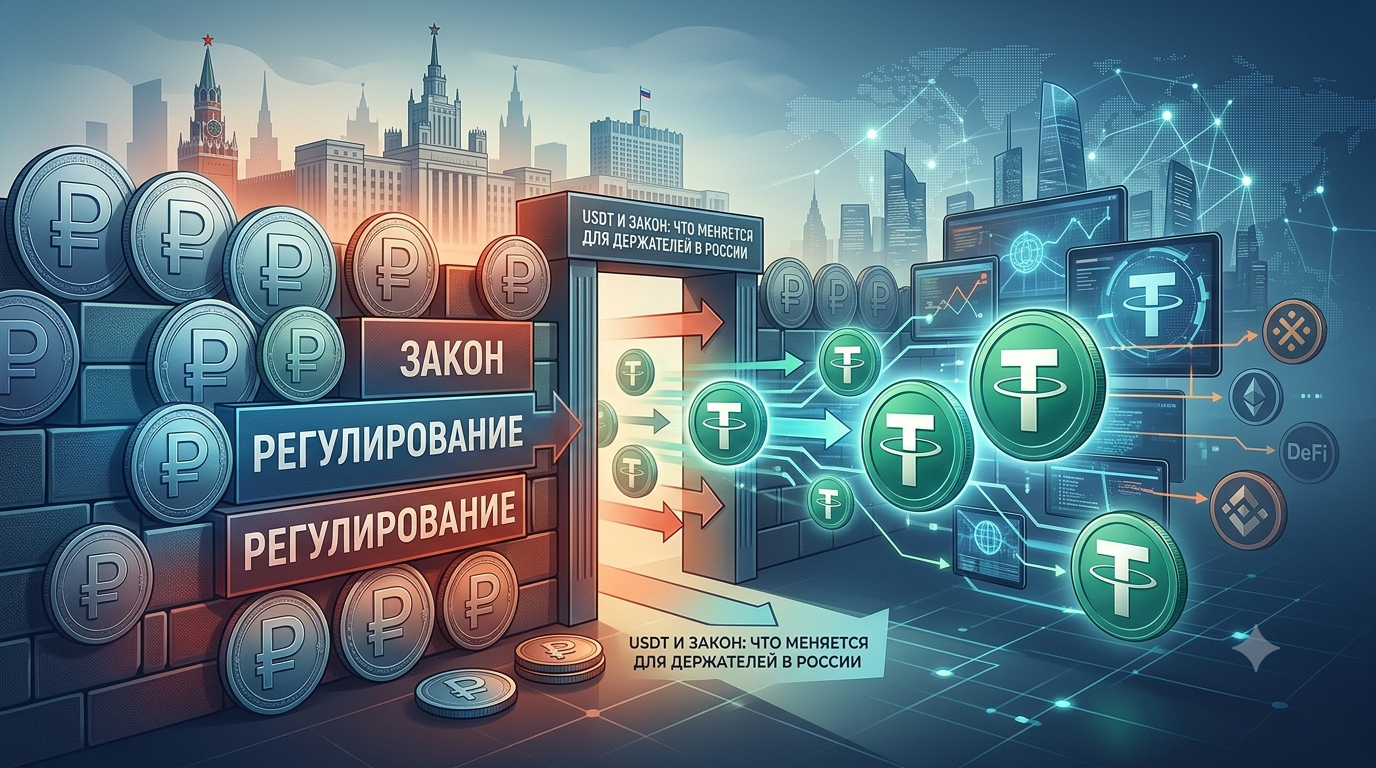
USDT's market capitalization exceeds $184 billion, and for most Russian traders this stablecoin has long replaced the dollar as the settlement currency on crypto exchanges. But starting September 1, 2026, Russia's new law "On Digital Currencies and Digital Rights" takes effect, and USDT's status under the new framework remains uncertain: it doesn't fit the classic definition of a digital currency and will most likely be regulated as a separate category of instrument. That means the familiar way of working with USDT — direct purchase, exchange custody, free withdrawal — may not be available to most retail investors, at least initially. Below is a breakdown of the rules already adopted, the risks that remain, and what stablecoin holders should do now.
What the State Duma decided on July 21 and when the rules take effect
On July 21, 2026, the State Duma passed the federal law "On Digital Currencies and Digital Rights," establishing rules for crypto circulation in Russia. The law's main provisions take effect on September 1, 2026, with a transition period running until July 1, 2027 to give market participants time to adapt.
The law introduces five categories of regulated market organizations: exchanges, brokers, asset managers, depositories, and exchange services. Each faces requirements around capital, staffing, recordkeeping, and hosting core infrastructure within Russia. After July 1, 2027, crypto transactions outside regulated organizations will become impossible — banks will be required to refuse any other transactions.
The key point for USDT holders: the law doesn't use familiar terms like "bitcoin" or "cryptocurrency" in the everyday sense. Instead, Article 2 introduces the terms "foreign digital instrument" and "non-deliverable foreign digital instrument" — a category that analysts believe dollar-pegged stablecoins are most likely to fall under.
Why USDT isn't classified as an ordinary digital currency
USDT will most likely be regulated under a special regime rather than treated the same as bitcoin. Maxim Bokov, chief AML/KYT analyst at the operator Shard, points out that the concept of a "non-deliverable foreign digital instrument," which appeared ahead of the second reading, describes assets that certify monetary claims — in other words, stablecoins. According to him, this implies a dedicated regulatory regime, and the familiar retail use of USDT will likely remain unavailable in the early stages.
Denis Polyakov, head of the Digital Economy practice at law firm GMT Legal, suggests separating two scenarios for USDT use: within Russia's domestic market and abroad. If the Bank of Russia adds USDT to the so-called "white crypto list," retail investor transactions up to a certain limit (reportedly around 300,000 rubles per intermediary per year) would become possible. If a trader holds assets on a foreign exchange or a non-custodial wallet, any operations with USDT except direct conversion to rubles would remain available — ruble conversions would only be permitted through licensed Russian intermediaries.
What requirements the Bank of Russia sets for approving cryptocurrencies
To be included on the list of assets available to retail investors on regulated exchanges, an asset must meet three criteria: average market capitalization above 5 trillion rubles (about $64 billion) over two years, average daily trading volume above 1 trillion rubles (about $12 billion), and at least five years of public price history on a foreign exchange with trading volume starting at 100 billion rubles ($1.2 billion).
According to CoinMarketCap data as of July 23, 2026, four assets formally meet these requirements: bitcoin, Ethereum, USDT, and the second-largest stablecoin, USDC, issued by Circle. However, the specific list of coins isn't fixed in the law's text, and public statements from central bank and government officials on this list have differed.
Formally meeting the capitalization and liquidity criteria doesn't guarantee automatic inclusion on the retail investor list. The regulator reserves the right to weigh additional factors, including issuer jurisdiction and sanctions risk — which is why USDT and USDC, despite leading in trading volume, remain under heightened scrutiny from the Bank of Russia, unlike decentralized assets such as bitcoin and Ethereum, which have no single issuer capable of freezing users' tokens.
What risks "unfriendly" stablecoins carry
The Bank of Russia has repeatedly called USDT and other dollar-pegged tokens risky assets precisely because of the possibility of issuer-side freezes. In early June, Deputy Finance Minister Ivan Chebeskov said that additional investor-protection mechanisms are being developed for cryptocurrencies from unfriendly jurisdictions — both technical safeguards and economic incentives such as higher fees or recommendations to shift into other assets.
The risk isn't hypothetical: in mid-July 2026, the United States sanctioned wallets belonging to Iran's central bank and froze more than $130 million in USDT. Crypto analyst and author of the GFiS Channel Telegram channel Taisia Romanova believes there's a fairly high potential risk that Western blockchain-analysis systems could flag the addresses of regulated Russian intermediaries for sanctions. She notes that a well-designed depository liquidity architecture can make this process harder, but not eliminate it entirely — at best, it can delay the point at which address clustering occurs.
At the same time, Bokov notes that market participants have already built up experience countering sanctions flagging: for example, the exchange HTX, which was hit by UK sanctions in May 2026, regularly rotates its wallet addresses, making them harder to trace. Risks for clients remain, but they've become more manageable.
Deputy Finance Minister Ivan Chebeskov has previously clarified that the idea of fully banning unfriendly stablecoins from the Russian market was ultimately dropped precisely because of their popularity among the public. That said, the regulator still prioritizes ruble-pegged tokens and digital assets from friendly jurisdictions — meaning that even if legal access to USDT emerges, the terms for working with it could end up less favorable than for alternative instruments. Both qualified and retail investors are expected to face the same rules for stablecoin investments as for other cryptocurrencies — no separate, preferential regime is planned for USDT.
Will USDT appear on Russian exchanges and exchange services
The odds of seeing USDT freely traded on regulated platforms or licensed exchange services remain low for now. Bokov considers a scenario of limited access more realistic — for example, restricted to qualified investors and participants in foreign trade operations, for whom the law provides separate rules.
Romanova takes a more optimistic view: over time, the asset is likely to remain accessible given its versatility and demand. Meanwhile, the exchange-services market itself has already begun to change. The new law defines an exchange service as any entity conducting two or more transactions worth over 3.5 million rubles per month. Such companies must join a special Bank of Russia registry, hold capital of at least 15 million rubles, and join a self-regulatory organization for the financial market.
Nikita Zuborev, senior analyst at the aggregator Bestchange.ru, notes that the exchange-services market is already reacting to these requirements: major banks — Alfa-Bank, T-Bank, VTB, and Sber — have announced plans to offer crypto services, while exchange services themselves have started assessing their readiness to join a self-regulatory organization. In his forecast, small exchange services will be forced either to consolidate or exit the legal market.
According to Zuborev, larger players see the new regulation as a source of business opportunity, and the industry broadly expects that most existing exchange services will be able to register and remain in business. At the same time, the role of exchange-service monitoring platforms is shifting: from simple information aggregators, they're turning into filters for legal operators, requiring mandatory verification of registry status with the central bank plus additional AML screening of every transaction. A year after the law takes effect, the analyst predicts, the public exchange-services registry will become the main data source for this kind of filtering, while foreign platforms — including overseas crypto exchanges — will fall into a legal gray zone and get flagged by monitoring services as operating "outside Russia's legal framework."
Romanova points to another side of this process: the high barrier to entry into the licensed-participant registry means most of the market will go to professional players — banks and brokerage firms. In her assessment, some large exchange services will be able to enter the legal field, but small and mid-sized platforms will be forced either to shut down or move from a gray zone into a fully illegal one. Regulated services will give retail investors a relatively safe way to interact with crypto, but according to her, most crypto users have little interest in going legal and will keep using their familiar exchange services — meaning the risk of receiving poor-quality service, or even losing funds, will rise substantially for that group.
What happens to access via foreign platforms
Until July 1, 2027, foreign crypto platforms — including those based in Belarus — remain just as accessible to individuals as they are today. Alexey Korolenko, executive director of the crypto broker Cifra Markets, explains that after that date, access to such platforms will continue, but only via foreign bank accounts. He also notes that the law doesn't impose direct bans on certain categories of market participants — for example, companies engaged in foreign trade activity or miners.
Cooperation between the Bank of Russia and Belarus is developing separately: regulators in both countries are working to simplify mutual access to crypto services, and on July 18, 2026, a decree on crypto banks took effect in Belarus — platforms that combine crypto and banking operations. According to the Belarusian National Bank's list, such banks will be able to offer up to 26 cryptocurrencies and 11 types of services, including crypto deposits, loans, staking, and asset custody.
How EU sanctions affect USDT's future in Russia
The crypto sector remains one of the priority targets of Western restrictions. European Council President António Costa named cryptocurrencies among the key focus areas of the EU's 21st sanctions package against Russia, alongside energy, financial services, and trade. European Commission President Ursula von der Leyen had earlier spoken of the possibility of a full ban on providing crypto services in third countries, aimed at limiting the platforms Russia uses to circumvent restrictions.
This means that even if the Bank of Russia allows USDT into domestic circulation, the infrastructure for working with the asset will remain under constant pressure from external restrictions — the risk of freezes and sanctions-related address flagging will persist regardless of what the Russian regulator decides.
On July 23, 2026, Ireland's Minister for European Affairs Helen McEntee said EU ambassadors had agreed on a draft of new anti-Russia restrictions, which still needs approval from the Council of the EU. European Commission President Ursula von der Leyen clarified that the sanctions would affect 32 Russian banks, the shadow fleet, the oil price cap, and combatants' entry into the EU, while EU foreign policy chief Kaja Kallas added that the 21st package would include more than a hundred banks and crypto-exchange operators. The previous, 20th sanctions package took effect on May 24, 2026, and already introduced a full sectoral ban on crypto companies and platforms established in Russia that handle fund transfers, along with a ban on any EU support for developing the digital ruble. This trend toward tightening shows that regulatory pressure on crypto infrastructure linked to Russia will keep intensifying regardless of whatever rules the Bank of Russia sets domestically.
Should you hold and trade USDT on KuCoin
For traders working with USDT outside Russia's regulated domestic framework, choosing a reliable international platform with transparent infrastructure remains key. KuCoin is one of the world's largest exchanges, known for its broad range of trading pairs and its positioning as an exchange "for everyone," backed by deep liquidity across both top-tier and altcoin markets.
For users concerned about the safety of their funds, the platform offers verified transparency mechanisms: strict KYC verification procedures and a regularly published Proof of Reserves, which lets users confirm that client assets are backed by the exchange's actual reserves. This matters especially given the overall rise in regulatory pressure on the stablecoin market — reserve transparency reduces risks tied to liquidity and platform solvency.
Join KuCoin 9th Anniversary Trading Campaign
KuCoin is celebrating its 9th anniversary with a special platform campaign filled with exclusive rewards, trading activities, and limited-time offers. Don’t miss the chance to participate and enjoy the benefits as the exchange marks nine years of growth and innovation. Visit the official campaign page now:
Conclusion
The new law "On Digital Currencies and Digital Rights" doesn't give a direct answer to the question of USDT's fate in Russia, but it sets the framework within which that answer will emerge over the coming year. USDT will most likely not be treated the same as classic digital currencies like bitcoin, and will instead get the status of a separate "non-deliverable foreign digital instrument" subject to a special regulatory regime. Retail investor access to the asset will depend on whether the Bank of Russia adds the stablecoin to its "white crypto list," as well as on the regulator's willingness to account for the sanctions risk tied to Tether as an issuer.
Until September 1, 2026, and throughout the transition period ending July 1, 2027, USDT holders retain access to the asset through familiar channels, including foreign platforms. But as requirements for exchange services and banks tighten, that access will gradually shift toward licensed intermediaries, and the risks of freezes and sanctions-related address flagging will remain a significant factor regardless of what the Russian regulator ultimately decides.
Frequently Asked Questions
1. When does Russia's crypto law take effect?
The main provisions of the law "On Digital Currencies and Digital Rights" take effect on September 1, 2026, with a transition period for market participants running until July 1, 2027.
2. What is a "non-deliverable foreign digital instrument"?
It's a term from Article 2 of the new law describing a foreign digital asset that certifies purely monetary claims — a category that, according to experts, dollar-pegged stablecoins like USDT will most likely fall under.
3. Can Tether freeze the USDT of Russian users?
Yes, the theoretical risk exists, since Tether is an issuer from an unfriendly jurisdiction and has the technical ability to restrict access to tokens at specific addresses — a risk confirmed by precedents of asset freezes carried out at OFAC's request.
4. What happens to exchange services once the law takes effect?
Exchange services conducting more than two transactions worth over 3.5 million rubles per month must join the Bank of Russia's registry, hold capital of at least 15 million rubles, and belong to a self-regulatory organization; platforms that don't meet these requirements will be forced out of the legal market.
5. Will access to foreign crypto exchanges remain available after 2027?
Yes, but starting July 1, 2027, such access will only be possible using foreign bank accounts, while transactions within Russia's domestic framework will be limited to regulated organizations.