

Samsung Confirms Stablecoin Support for Samsung Wallet at Galaxy Unpacked 2026
2026/08/11 14:53:00
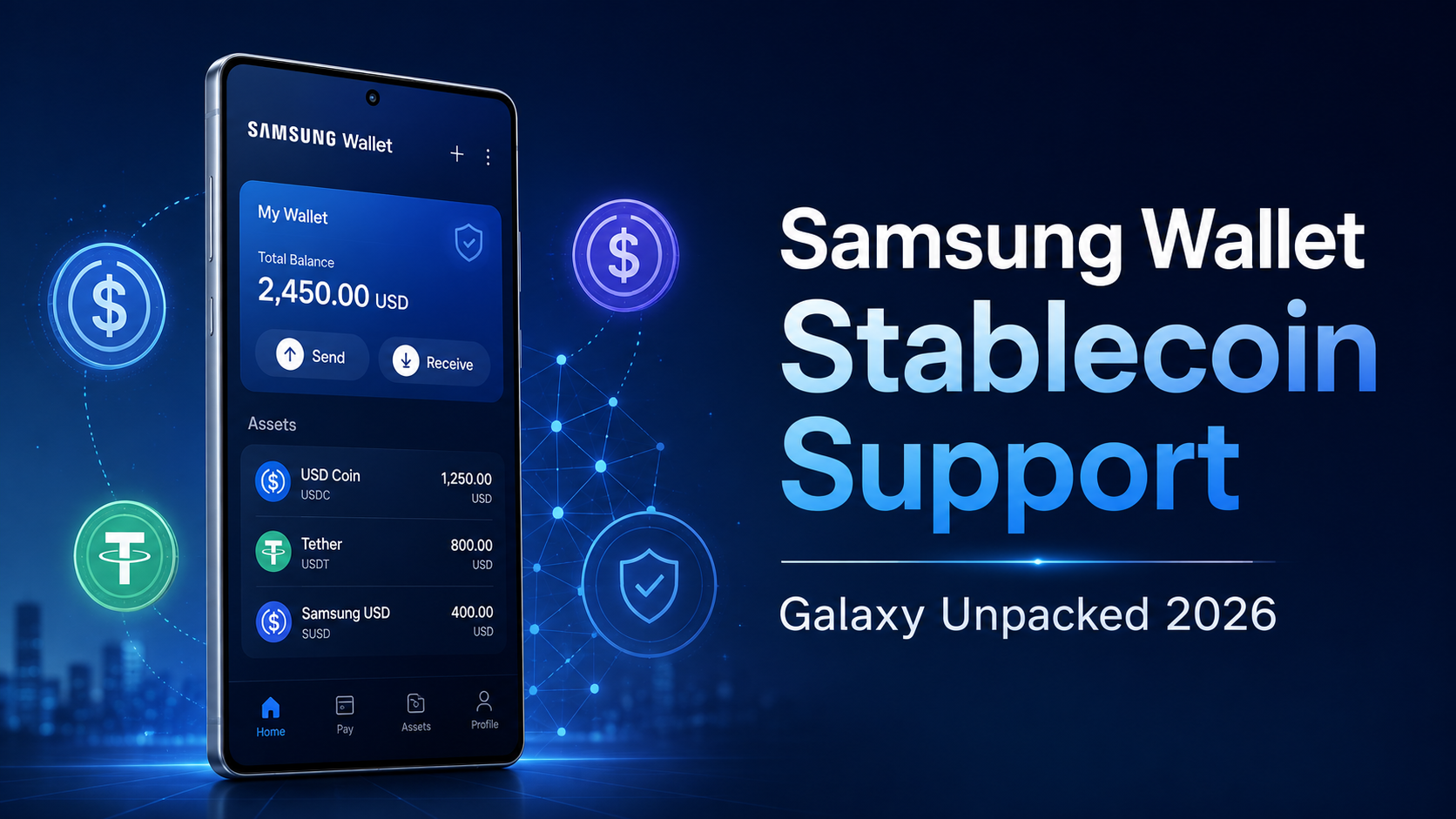
Samsung is preparing to bring stablecoins closer to mainstream mobile payments through Samsung Wallet, potentially creating a new connection between Galaxy smartphones and blockchain-based digital money. At Galaxy Unpacked on July 22, 2026, Samsung outlined plans to introduce native stablecoin functionality as part of a broader expansion of its digital wallet ecosystem. The announcement is significant because Samsung Wallet already combines payment cards, digital IDs, passes, rewards and other services within Galaxy devices, giving the company an existing consumer platform through which stablecoins could eventually reach a much wider audience. The move also comes as stablecoins are moving beyond their original role as trading tools and are increasingly being explored for cross-border transfers, digital settlement, remittances and online payments.
Samsung's involvement could help make stablecoin payments on Galaxy phones more accessible by placing blockchain-based assets inside a mobile experience users already understand. However, several important details remain unresolved. Samsung has not announced a firm launch date, confirmed the first supported markets or identified the blockchain networks that will process transactions. USDC appeared during Samsung's presentation, but the company has not formally confirmed it as a launch asset or announced a specific Circle partnership for the feature. These unanswered questions will determine how Samsung Wallet stablecoin support works in practice and whether it develops mainly as a digital-asset feature or becomes a broader part of Samsung's mobile payments ecosystem.
Samsung Wallet Stablecoin Support at Galaxy Unpacked 2026
Samsung's decision to bring stablecoin support to Samsung Wallet could become one of the company's most important moves in digital payments. At Galaxy Unpacked 2026, Samsung confirmed plans to expand Wallet beyond traditional payment cards, digital IDs, passes and rewards by adding support for blockchain-based digital value. The announcement immediately drew attention across the crypto and payments industries because Samsung combines an established mobile wallet with a large global Galaxy ecosystem. If the feature develops into a seamless way to store, transfer or eventually spend stablecoins, Samsung could help move blockchain payments closer to consumers who currently have little reason to use a dedicated cryptocurrency application.
The announcement should not, however, be interpreted as confirmation that every Galaxy user will immediately gain access to stablecoin payments. Samsung has introduced the direction of the product but has yet to provide the detailed rollout plan needed to understand how broadly the service will operate. Questions around regulation, compatible devices, supported currencies and payment infrastructure could all affect how quickly Samsung expands the feature between markets. These details will ultimately determine whether stablecoin functionality becomes a specialised digital-asset feature or a core component of Samsung's broader mobile payment ecosystem.
Samsung Confirms Native Stablecoin Support for Samsung Wallet
Samsung confirmed its stablecoin plans during Galaxy Unpacked on July 22, 2026, where the company presented a broader vision for Samsung Wallet as a platform capable of managing different forms of digital value. Native stablecoin functionality would place blockchain-based assets closer to payment and identity services already available within Samsung Wallet, potentially allowing Galaxy users to interact with stablecoins through a familiar smartphone interface. That approach could be particularly important for consumers who may understand mobile payments but have never used wallet addresses, blockchain networks or conventional crypto applications.
Stablecoins also fit naturally into Samsung's broader push toward digital financial services because their relatively stable value makes them better suited to certain payment and settlement use cases than highly volatile crypto assets. A dollar-linked stablecoin, for example, can theoretically move across blockchain networks while maintaining a value close to the currency it represents. This makes stablecoins attractive for transfers, remittances, online payments and settlement between businesses. Samsung has not yet said which of these applications will be supported, but integrating stablecoins into Samsung Wallet creates the foundation for a broader digital payment experience if the company chooses to expand in that direction.
USDC Appears in Samsung Wallet Stablecoin Plans
USDC became one of the most discussed elements of Samsung's announcement after the dollar-backed stablecoin appeared in the Galaxy Unpacked demonstration. The appearance has led to widespread expectations that USDC could eventually become one of the assets supported through Samsung Wallet. Such a choice would be understandable because USDC is already used across multiple blockchain networks for trading, payments, settlement and cross-border transfers, giving it established liquidity and infrastructure within the digital-asset market.
Samsung has nevertheless stopped short of formally confirming USDC as a launch asset. It has also not announced a dedicated Circle partnership tied specifically to the Samsung Wallet stablecoin feature. This distinction matters because an asset shown during a product demonstration may illustrate how Samsung expects the service to look without confirming the final commercial configuration. Samsung could eventually support USDC, several different stablecoins or different assets depending on regional regulation and technical partnerships. Until more information is released, USDC is best described as a stablecoin featured in Samsung's presentation rather than a fully confirmed launch asset.
Samsung Wallet Stablecoin Launch Details Remain Unconfirmed
Samsung has yet to disclose several details that will determine how its stablecoin integration works in practice. The company has not provided a firm release date, identified the first markets to receive the feature or specified which Galaxy smartphones will be eligible. Samsung has also not announced which blockchain networks will process stablecoin transactions or whether customers will control their own private keys. These decisions will directly affect transaction fees, speed, security, interoperability and the level of technical knowledge required from users.
Another unresolved issue is how closely stablecoins will connect with Samsung's established payment functionality. Simply allowing users to hold and transfer digital assets would create a different product from one that enables consumers to spend stablecoins at ordinary merchants or convert digital assets automatically during checkout. The latter could have much greater implications for mobile commerce and mainstream crypto adoption, but Samsung has not confirmed that level of functionality. For now, the central development is clear: Samsung intends to integrate stablecoins into Samsung Wallet, while the final assets, networks, payment capabilities and rollout structure remain to be announced.
How Stablecoin Payments Could Work on Samsung Galaxy Phones
Samsung's planned stablecoin functionality could make blockchain-based payments feel more like using a conventional mobile wallet. Traditional crypto transactions often require users to choose a blockchain network, copy lengthy wallet addresses, understand transaction fees and manage separate applications. Integrating those processes into Samsung Wallet could allow more of the technical infrastructure to remain in the background. The exact payment flow has not been disclosed, but Samsung has several possible ways to simplify how Galaxy users hold, send and potentially spend stablecoins.
A successful implementation would depend less on simply adding a stablecoin balance to the app and more on removing the complexity surrounding blockchain transactions. Mainstream mobile payment users generally expect transactions to be quick, predictable and easy to reverse or troubleshoot when something goes wrong. Blockchain payments operate differently, particularly when transactions are irreversible or require network-specific fees. Samsung's challenge will therefore be to combine the advantages of stablecoin settlement with the simplicity consumers already expect from modern digital wallets.
Samsung Wallet Could Simplify Stablecoin Transfers and Digital Payments
One of the clearest potential uses for stablecoins on Samsung Galaxy phones is moving digital value between users. Stablecoins are designed to track a reference asset, usually a fiat currency such as the US dollar, which can make them more practical for transfers than cryptocurrencies whose prices may move sharply within a short period. If Samsung integrates stablecoin balances, addresses and transaction histories directly into Wallet, Galaxy users could potentially send or receive digital assets without navigating the more technical interfaces associated with many standalone crypto wallets.
A more sophisticated version could eventually connect stablecoin balances with Samsung's broader payment environment. A user might select a stablecoin as a funding source while the underlying infrastructure manages blockchain settlement or conversion automatically. Samsung has not confirmed this type of merchant-payment system, so it should not be presented as an existing feature. However, hiding technical processes such as network selection and wallet addresses could be crucial if Samsung wants to make stablecoin payments attractive to mainstream consumers rather than limiting the feature to experienced crypto users.
The same approach could become useful for international payments if Samsung eventually allows stablecoin transfers between supported markets. Conventional cross-border transfers can involve multiple intermediaries, exchange-rate spreads and settlement delays, while blockchain-based stablecoins can move value across networks without relying on the same chain of correspondent banks. Whether Samsung chooses to support this use case will depend on local regulation, compliance requirements and partnerships, but cross-border payments remain one of the areas where smartphone-based stablecoin functionality could eventually offer practical value.
Blockchain Networks, Wallet Security and Transaction Fees Will Shape the Experience
The blockchain networks supported by Samsung Wallet will have a major influence on how practical stablecoin payments become. Networks differ in transaction speed, fees, stablecoin liquidity and compatibility with external wallets and services. Samsung has not identified which blockchains will be used, leaving open an important question about whether Galaxy users will need to understand network selection or hold separate tokens to pay transaction fees. A mainstream payment experience would likely need to minimise these complications wherever possible.
Security and custody are equally important. Samsung already operates device-level security systems across its Galaxy ecosystem, but supporting stablecoins introduces new questions around private-key management, account recovery and unauthorised transactions. A self-custodial structure would give users greater direct control over their assets but could make recovery more difficult if credentials are lost. A custodial structure managed with a regulated partner could simplify the experience while requiring users to trust an external provider to safeguard their assets. Samsung has not disclosed which approach it intends to use.
Transaction fees could also influence adoption. Consumers accustomed to card payments generally do not think about blockchain gas fees or network congestion when making everyday purchases. If Samsung can abstract those costs through its payment infrastructure, users may interact with stablecoins without needing to understand the blockchain operating underneath. If customers are instead required to manage network tokens and fluctuating fees themselves, stablecoin payments could remain too complicated for widespread everyday use. How Samsung approaches fees, custody, recovery and network complexity will therefore be just as important as which stablecoins it ultimately supports.
Why Samsung’s Stablecoin Strategy Could Matter for Crypto and Mobile Payments
Samsung's move toward stablecoin support could matter far beyond adding another digital asset feature to Samsung Wallet. The larger opportunity is distribution. Crypto wallets have traditionally required users to download separate applications, understand blockchain networks and manage unfamiliar payment flows. Samsung already has an established mobile wallet experience across its Galaxy ecosystem, meaning stablecoins could be introduced through a platform that many smartphone users already understand. If Samsung succeeds in making stablecoin transfers and payments feel as straightforward as using a conventional digital wallet, it could reduce one of the most persistent barriers to mainstream crypto adoption: complexity.
Samsung's involvement also arrives as the broader payments industry is paying closer attention to blockchain-based payments. Stablecoins are increasingly being explored by financial institutions, fintech companies, payment networks and technology groups seeking faster or more programmable ways to move digital value. Samsung does not need to replace existing card networks or banking services for its strategy to matter. Even adding stablecoins as another payment option within a familiar mobile wallet could help normalize blockchain-based money among consumers who have previously associated crypto mainly with trading and speculation.
Samsung Could Bring Stablecoins Closer to Everyday Smartphone Users
The potential impact becomes more significant when Samsung's broader digital-asset strategy is considered. Samsung affiliates have expanded their exposure to crypto infrastructure, including their 2026 investment in Dunamu, the operator of Upbit, while Samsung has previously supported blockchain wallets and crypto-related services on Galaxy devices. These developments suggest that stablecoins are being considered within a wider shift toward digital payments rather than as an isolated product experiment. For consumers, that could eventually mean a closer connection between traditional mobile payments, blockchain-based assets and other financial services inside a single smartphone ecosystem.
Samsung's participation could also increase competitive pressure across the payments industry. A major smartphone manufacturer integrating stablecoins into its wallet may encourage other technology companies and digital-payment providers to evaluate similar functionality, particularly if consumers begin expecting mobile wallets to support both traditional money and blockchain-based assets. That competition could accelerate experimentation around stablecoin payments, digital wallets, remittances and blockchain settlement, potentially pushing providers to improve transaction speed, lower costs and simplify the user experience.
There is also an important distinction between potential reach and actual adoption. Samsung's global Galaxy ecosystem provides a large distribution opportunity, but simply making stablecoins available does not guarantee that consumers will use them. Adoption will depend on whether stablecoins solve a meaningful problem better than existing payment methods. Users are more likely to embrace the technology if it provides clear advantages in areas such as international transfers, online commerce or settlement while remaining as convenient as conventional mobile payments.
The wider effect on crypto adoption will therefore depend on whether Samsung can turn stablecoins into something useful outside existing cryptocurrency markets. Trading remains an important stablecoin use case, but their longer-term role could increasingly involve payments, remittances, commerce and digital settlement. If Samsung Wallet eventually makes those functions accessible without requiring users to understand the underlying blockchain infrastructure, stablecoin payments could become a more familiar part of everyday mobile finance. Samsung's scale alone cannot guarantee that outcome, but its ability to place digital assets inside a mainstream smartphone experience gives the strategy considerably greater significance than a typical crypto wallet integration.
|
KuCoin is celebrating its 9th anniversary with a special platform campaign filled with exclusive rewards, trading activities, and limited-time offers. Don’t miss the chance to participate and enjoy the benefits as the exchange marks nine years of growth and innovation. Visit the official campaign page now:
|
Conclusion
Samsung's decision to bring stablecoin functionality to Samsung Wallet represents another sign that blockchain-based payments are moving closer to mainstream financial technology. The company's advantage is not simply its ability to support digital assets, since crypto wallets have existed for years. Its larger advantage is the possibility of integrating stablecoins into an established mobile ecosystem where users already manage payment cards, passes, identification and other everyday services. At the same time, the most important questions are still unanswered. Samsung has not confirmed the final stablecoin list, blockchain networks, custody structure, eligible Galaxy devices, regional rollout or exact release date. USDC's appearance during Galaxy Unpacked provides a useful indication of what Samsung is exploring, but it should not be confused with confirmation that USDC or Circle will be part of the final launch.
The long-term significance of Samsung Wallet stablecoin support will depend on what users can actually do with it. If the feature remains mainly a way to store and transfer crypto assets, its impact may be limited to existing digital-asset users. If Samsung eventually connects stablecoins with merchant payments, cross-border transfers and its wider mobile payment environment while hiding much of the underlying blockchain complexity, the company could help move stablecoins from specialist crypto infrastructure toward everyday consumer finance.
FAQs
Is Samsung launching its own stablecoin?
Samsung has not announced plans to issue a Samsung-branded stablecoin. Its current strategy focuses on bringing support for stablecoin assets into Samsung Wallet rather than creating a new digital currency. If Samsung eventually supports stablecoins issued by third parties, those issuers would remain responsible for matters such as reserves, redemption and maintaining the token's intended value.
Will Samsung Wallet replace a traditional crypto wallet?
Not necessarily. Samsung Wallet could offer a simpler experience for holding or transferring supported stablecoins, while dedicated crypto wallets may continue to provide broader access to tokens, blockchain networks, decentralised applications and DeFi services. The comparison will depend heavily on Samsung's eventual custody model and the number of networks and assets it supports.
Could Samsung Wallet stablecoins be used for international transfers?
Stablecoins can be useful for cross-border transfers because blockchain networks can move digital value internationally without following the same settlement process as traditional bank transfers. Samsung has not confirmed international person-to-person stablecoin transfers, however, and availability could differ significantly between countries because of local financial and crypto regulations.
Will users need a bank account to buy stablecoins through Samsung Wallet?
Samsung has not disclosed how users will fund or redeem stablecoin balances. Depending on the eventual model, customers could potentially use bank transfers, payment cards, crypto deposits or services provided by a regulated partner. Whether a bank account is required will therefore depend on the payment and conversion infrastructure Samsung chooses for each market.
Could Samsung Wallet stablecoin payments create tax obligations?
They could, depending on local tax rules. Some jurisdictions treat the sale, exchange or spending of digital assets as a reportable transaction, even when the asset is a stablecoin. Using Samsung Wallet would not automatically change those obligations, so users may still need to maintain transaction records and determine how local tax rules apply.
What happens if a stablecoin loses its peg in Samsung Wallet?
Holding a stablecoin through Samsung Wallet would not necessarily protect users if the underlying asset falls below its intended value. Stablecoins can face risks related to reserves, liquidity, redemptions, issuer solvency and market confidence. Users should therefore consider the stability and structure of the individual stablecoin rather than assuming every token labelled a stablecoin carries the same level of risk.
Disclaimer: This article is for informational purposes only and does not constitute investment advice. Market forecasts, company plans and technology adoption may change, so readers should conduct their own research before making financial decisions.