

Franklin Templeton Expands Crypto Accessibility with Bitcoin Dividend-Reinvestment ETP Features
Introduction
The evolution of institutional digital asset products has reached a new milestone as global asset manager Franklin Templeton officially activates Bitcoin dividend-reinvestment features for its Exchange-Traded Products (ETPs). As traditional finance continues to merge with decentralized technology, investors are increasingly looking for sophisticated financial instruments that mirror traditional equity behaviors. This development bridges the gap between passive crypto holding and traditional yield-compounding strategies, offering a streamlined path for capital growth in digital asset portfolios.
What Are Bitcoin Dividend-Reinvestment ETP Features?
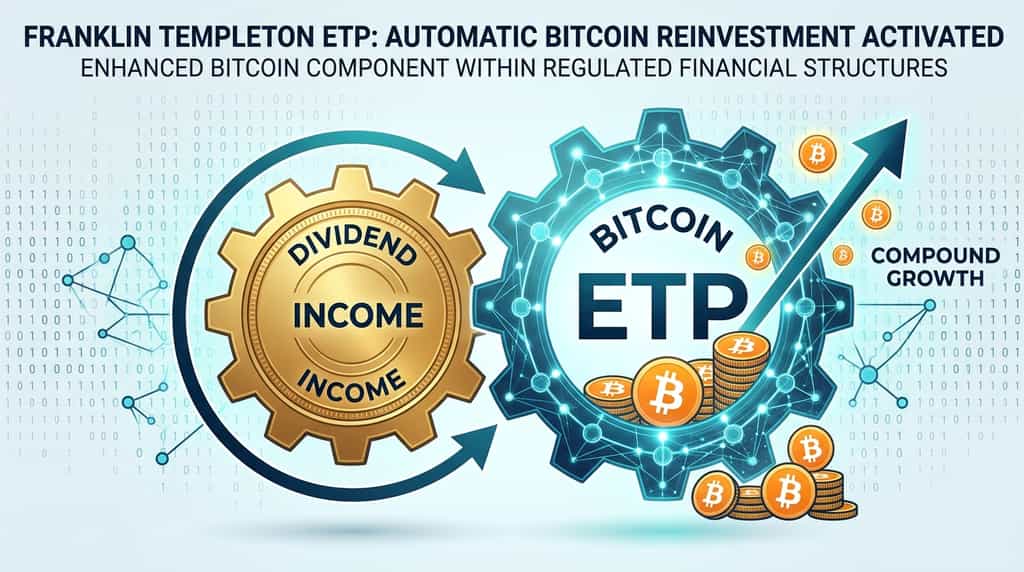
Bitcoin dividend-reinvestment ETP features allow institutional and retail investors to automatically reinvest distributions, yields, or corporate actions derived from crypto-backed investment vehicles directly back into underlying Bitcoin assets without manual intervention. According to recent product announcements from Franklin Templeton, this functionality replicates traditional Dividend Reinvestment Plans (DRIPs) common in equities, automating compounding growth for long-term holders.
The mechanism operates by capturing any cash distributions, staking yields (where applicable under regulatory frameworks), or structured payouts within the ETP wrapper and immediately routing them to purchase additional fractional shares or units of the spot asset. By eliminating manual rebalancing, investors reduce transactional friction and maintain continuous market exposure. This automated approach addresses one of the primary inefficiencies of traditional crypto custody, where managing yield manually often incurs network fees and execution delays.
How Do Automated Reinvestments Impact Long-Term Crypto Portfolios?
Automated reinvestment features significantly enhance compounding returns over extended holding periods by ensuring that capital remains fully deployed in the market. Based on historical data from traditional equity index funds, automated compounding can increase total portfolio returns by several percentage points over a five-to-ten-year horizon compared to manual dividend collection.
When applied to volatile digital assets like Bitcoin, the benefits of dollar-cost averaging through automated reinvestment become even more pronounced. Instead of accumulating idle cash distributions during market downturns, investors automatically acquire more units at lower prices. This systematic accumulation smooths out volatility and reinforces disciplined portfolio management without requiring active oversight from the investor.
Why Are Traditional Asset Managers Expanding Crypto ETP Functionality?
Traditional asset managers are introducing advanced ETP features to capture institutional capital that demands the same operational sophistication found in traditional equity and fixed-income markets. According to market analysis by CoinGecko, total crypto exchange-traded product assets under management remain in the tens of billions, driven largely by institutional demand for regulated, compliant exposure vehicles.
Institutional allocators face strict fiduciary mandates that often prohibit holding spot crypto directly on decentralized exchanges or managing complex hardware wallet keys. By embedding equity-grade features like dividend reinvestment into familiar ETP wrappers, managers like Franklin Templeton lower the barriers to entry for pension funds, endowments, and wealth management platforms. This feature expansion is a direct response to a mature market demanding professional-grade tooling rather than simple spot tracking.
What Are the Operational and Regulatory Implications for Investors?
Activating advanced ETP features introduces specific administrative and tax considerations that investors must evaluate before participating. According to recent regulatory filings, automated distributions within tax-advantaged accounts such as IRAs or pensions remain sheltered, whereas taxable brokerage accounts may trigger capital gains or income reporting requirements upon each reinvestment cycle.
Furthermore, investors must consider the management fee structures associated with actively managed or feature-rich ETP wrappers. While convenience and compounding efficiency are major advantages, higher expense ratios can erode net returns if the underlying asset underperforms. Reviewing the fund prospectus and understanding how custodian fees interact with automated purchases is essential for optimizing net portfolio performance.
Conclusion
The activation of Bitcoin dividend-reinvestment features by Franklin Templeton marks a pivotal step forward in the institutionalization of digital assets. By bringing traditional equity-compounding mechanisms into regulated crypto ETPs, asset managers are bridging the gap between legacy finance and blockchain technology. These features not only simplify portfolio management for institutional allocators but also establish a new standard for how digital asset products deliver long-term value. As regulatory frameworks evolve and product offerings mature, automated compounding tools will likely become an industry standard, further integrating cryptocurrency into mainstream wealth management strategies.
Frequently Asked Questions
What is a Bitcoin dividend-reinvestment ETP?
A Bitcoin dividend-reinvestment ETP is a financial product traded on traditional exchanges that automatically uses any generated yields or cash distributions to purchase additional Bitcoin units, compounding the investor's holdings without manual trades.
Do I need a crypto wallet to invest in Franklin Templeton's ETP?
No, ETPs are traded through traditional brokerage accounts, meaning investors do not need to manage private keys, seed phrases, or external crypto wallets to gain exposure to the underlying asset.
Are reinvested dividends subject to taxes?
In taxable accounts, automated reinvestments of dividends or yields may trigger taxable events depending on local tax jurisdictions. Investors should consult a qualified tax professional regarding specific account types like IRAs or standard brokerages.
How do ETP management fees affect compounding returns?
ETP management fees are typically deducted directly from the fund's assets under management. While automated reinvestments help maximize compounding, higher expense ratios can offset these gains if not properly evaluated against fund performance.
Can retail investors access these advanced ETP features?
Yes, retail investors who have access to traditional brokerage accounts that support these specific ETP listings can utilize automated reinvestment settings offered by their brokers or financial platforms.
Disclaimer
This general market information, possibly from third-party, commercial, or sponsored sources, is provided for reference and educational purposes only and does not constitute financial or investment advice, an offer, solicitation, or guarantee. We disclaim liability for its accuracy, completeness, reliability, and any resulting losses. Investments/trading are risky; past performance doesn’t guarantee future results. Users should research, judge prudently, and take full responsibility. For further details, please consult KuCoin’s Terms of Use and Risk Disclosure.