

What Is EIP-8141? How Ethereum Could Make Wallets Easier and Safer to Use
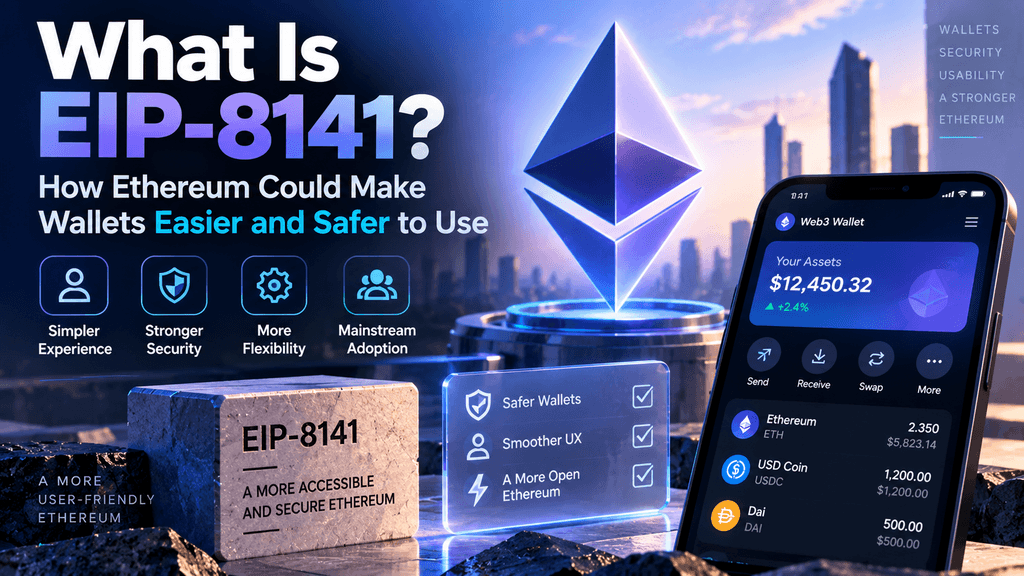
Ethereum wallets are becoming easier to use, but users still face friction such as needing ETH for gas, multiple approvals for a single DeFi action, and complex private-key recovery. EIP-8141, or Frame Transaction, aims to simplify Ethereum wallets through sponsored gas, transaction batching, programmable validation and stronger recovery options. These changes could make Ethereum transactions feel more familiar to everyday users while giving wallet developers greater flexibility behind the scenes. The proposal is scheduled for the Hegotá upgrade, expected in 2027, although it remains in Draft status and could still change before mainnet activation.
What Is EIP-8141 and How Do Frame Transactions Work on Ethereum?
EIP-8141, also known as Frame Transaction, is an Ethereum proposal designed to bring native account abstraction deeper into the network’s transaction system. Today, a typical Ethereum transaction follows a relatively fixed structure in which a user signs an action and normally needs ETH available to cover the gas fee. EIP-8141 would make that process more programmable by allowing validation, gas payment and execution to be handled separately. This could give Ethereum wallets more flexibility to support features such as sponsored gas, transaction batching, alternative authentication methods and more advanced account recovery.
The proposal has gained greater attention because it is scheduled for inclusion in Ethereum’s Hegotá upgrade, currently expected in 2027, although the EIP specification itself remains in Draft status and could still change before activation. If implemented, EIP-8141 could make Ethereum transactions feel less technical for ordinary users while giving wallet developers more control over how accounts authorise actions, pay fees and interact with decentralised applications. For the wider Ethereum ecosystem, this would represent another step towards making smart accounts and native account abstraction part of the normal wallet experience rather than a specialised feature.
How Ethereum Frame Transactions Work
The main innovation in EIP-8141 is the introduction of Frame Transactions, which divide a transaction into programmable steps called frames. Instead of requiring one transaction structure to handle everything at once, different frames can perform different roles. One frame might validate that a user has authorised the transaction, another could determine who pays the gas fee, while additional frames could execute actions such as approving a token, interacting with Ethereum smart contracts or completing a decentralised exchange swap. The current EIP-8141 specification allows a Frame Transaction to contain multiple frames, giving developers more freedom to design complex transaction flows.
This structure could also make it easier to combine several related actions into a smoother user experience. For example, a token approval and swap could be organised within the same transaction flow rather than requiring users to confirm multiple separate transactions. EIP-8141 also supports atomic batching, allowing selected actions to be grouped so they either complete together or roll back if the required sequence fails. This could reduce unnecessary wallet prompts and make interactions with Ethereum applications more intuitive, particularly for users who are unfamiliar with blockchain transaction mechanics.
Why EIP-8141 Matters for Ethereum Account Abstraction
EIP-8141 is important because it moves Ethereum closer to native account abstraction, where wallets can behave more like programmable digital accounts rather than accounts permanently tied to one fixed transaction model. This could allow wallets to support sponsored transactions, key rotation, spending controls, recovery systems and alternative signature methods while reducing the need for users to manage every technical detail themselves. In the longer term, the same flexibility could also make it easier for Ethereum wallets to adopt new cryptographic authentication methods, including potential post-quantum security systems, making EIP-8141 relevant not only to wallet usability but also to the future security of Ethereum accounts. The broader goal is to let wallet software handle more complexity automatically while users retain direct control over their assets and permissions.
How EIP-8141 Could Make Ethereum Wallets Easier With Sponsored Gas and Transaction Batching
One of the biggest goals of EIP-8141 is to make Ethereum wallets feel less complicated for everyday users. By separating transaction validation, gas payment and execution, Frame Transactions could allow wallets to hide more of the technical steps that currently create friction for newcomers. Two of the most important possibilities are sponsored gas payments and transaction batching, which could make interacting with decentralised applications feel more straightforward. These features could be particularly important for onboarding users who are familiar with conventional digital payments but not blockchain gas mechanics.
How Sponsored Gas Could Let Users Transact Without Holding ETH
Under Ethereum’s traditional transaction model, users generally need ETH in their wallets before they can send tokens, interact with a smart contract or use a decentralised application. EIP-8141 could change that experience by allowing another party to pay the gas fee on the user’s behalf. A wallet, application or paymaster could sponsor the transaction, while the user may reimburse that cost through another arrangement, including an ERC-20 token such as a stablecoin. This could remove one of the most common onboarding obstacles for new Ethereum users: needing to acquire ETH before they can perform even a relatively simple onchain action.
Sponsored gas could also give developers more freedom to design applications that feel closer to familiar web and mobile services. For example, a platform could cover transaction fees for a new user, include gas costs within a service charge or allow users to reimburse fees using an asset they already hold. Importantly, this does not mean Ethereum would stop using ETH for underlying network fee settlement. Instead, EIP-8141 separates the user from the gas payer, allowing another account or service to cover the required ETH while handling reimbursement separately. This approach could simplify the visible payment experience without changing ETH’s underlying role in Ethereum’s gas system.
How Transaction Batching Could Reduce Wallet Prompts and Simplify DeFi
EIP-8141 could also improve Ethereum wallet usability by allowing several related actions to be organised within a single Frame Transaction. Today, some DeFi interactions require users to approve one transaction and then confirm another before completing their intended action. With transaction batching, a wallet could organise steps such as token approval and a swap into a more streamlined transaction flow, reducing repeated confirmations and making complex onchain interactions easier to follow.
Frame Transactions can also support atomic batching, where selected actions are grouped so they either complete together or roll back if the required sequence fails. This could improve convenience while reducing the chance of users being left with an unwanted partially completed process. For Ethereum wallets and decentralised applications, the broader benefit could be a cleaner experience with fewer prompts, fewer manual steps and less need for users to understand the technical structure behind each blockchain interaction. As Ethereum applications become more complex, reducing unnecessary transaction friction could play an important role in improving mainstream wallet usability.
How EIP-8141 Could Improve Ethereum Wallet Security With Key Rotation, Recovery and Quantum Protection
EIP-8141 could strengthen Ethereum wallet security by making account validation more programmable and less dependent on one permanent signing setup. That flexibility may allow wallets to support safer key management, more practical recovery options and easier adoption of new cryptographic standards over time, which is particularly important as Ethereum moves towards more advanced forms of native account abstraction. Rather than relying on one security model for every account, wallets could potentially apply different authentication rules based on the needs and risk profile of each user.
How Key Rotation Could Improve Ethereum Wallet Security
One of the most important security benefits of EIP-8141 is the potential for key rotation, which could reduce the long-term risk of relying on a single private key. If a key is compromised, lost or considered insecure, a programmable account could potentially replace it with a new authorised key without forcing the user to abandon the account itself. This could help preserve the same wallet address, assets and onchain history while improving control over account access. More flexible validation rules could also support multiple signing methods, hardware devices or different security requirements for high-value transactions, giving Ethereum wallets more options to protect users against key theft and credential compromise.
How EIP-8141 Could Support Better Wallet Recovery
EIP-8141 could also make Ethereum wallet recovery more flexible by allowing developers to build recovery rules into programmable account logic. Instead of depending entirely on one seed phrase, wallets could potentially support recovery methods involving trusted contacts, multiple devices, time delays or multi-step approval processes. The proposal does not create one standard recovery system by itself, but it could provide the underlying infrastructure needed for wallet developers to design safer recovery experiences. This may be especially valuable for mainstream users who find traditional seed-phrase management difficult, while still allowing advanced users and organisations to choose stricter security models.
Why EIP-8141 Matters for Post-Quantum Ethereum Security
EIP-8141 is also relevant to Ethereum’s longer-term post-quantum security strategy because programmable validation could make it easier for accounts to move from today’s signature systems to newer cryptographic methods in the future. If advances in quantum computing eventually threaten existing public-key cryptography, Ethereum wallets may need to adopt alternative signature schemes without unnecessarily disrupting user accounts. EIP-8141 does not make Ethereum quantum-resistant on its own, but the flexibility created by Frame Transactions could provide wallet developers with a more practical path for introducing post-quantum authentication as stronger cryptographic standards mature.
EIP-8141, the Hegotá Upgrade and the Future of Ethereum Wallets
EIP-8141 is scheduled for inclusion in Ethereum’s Hegotá upgrade, which is currently expected in 2027, making Frame Transactions one of the most important wallet-focused developments on Ethereum’s roadmap. The proposal itself remains in Draft status, so some technical details may still evolve before activation. If implemented as planned, EIP-8141 would move Ethereum further towards native account abstraction, giving wallet developers a more flexible protocol-level foundation for building programmable accounts and improving how users interact with onchain applications. Its inclusion would also show how Ethereum’s roadmap is increasingly focusing on usability and account design alongside network scalability and protocol efficiency.
How Hegotá Could Shape the Next Generation of Ethereum Wallets
The Hegotá upgrade could mark an important step in Ethereum’s transition from traditional externally owned accounts towards more capable and programmable wallet experiences. EIP-8141 would not replace existing approaches such as ERC-4337 or EIP-7702 overnight, but it could bring more account-abstraction functionality directly into Ethereum’s transaction layer. This could reduce dependence on specialised external infrastructure and make it easier for wallet developers to build features around flexible authentication, fee management, account permissions and transaction controls. Over time, these changes could help Ethereum wallets feel more like modern financial applications while users continue to retain control of their assets.
The broader impact will depend on how quickly wallets, decentralised applications and infrastructure providers adopt Frame Transactions after Hegotá. Developers could use the new transaction model to create different account experiences for individual users, institutions and businesses, including wallets with customised security policies and more automated transaction flows. EIP-8141 therefore represents more than a technical Ethereum upgrade: it could become an important foundation for the future of Ethereum wallets, smart accounts and native account abstraction, although real-world adoption and the final user experience will ultimately depend on how the ecosystem implements the technology.
🔥 Beyond the Headlines: What KuCoin 5.0 Means for You
Market news moves fast — but where you act on it matters just as much. This October, KuCoin launches KuCoin 5.0, transforming KuCoin into a rebuilt platform. Here's what actually changes for you:
-
One account for everything. Older platforms split your money across separate "spot," "margin," and "futures" accounts and expected you to understand why. KuCoin 5.0's unified account removes that entirely — deposit once, and everything is simply there.
-
Stocks, indices, and commodities. KuCoin 5.0 expands beyond crypto into global markets. When crypto chops sideways and equities rally (or the reverse), you rotate in minutes instead of opening a brokerage account and waiting days for fiat rails.
-
Real-world assets (RWA). Tokenized exposure to traditional assets like commodities, right inside your crypto account. One of the fastest-growing segments in global finance is no longer reserved for institutions — you access it from the same balance you trade with.
-
Earn while you learn. Not ready to trade? KCUSD lets your stablecoins earn daily, auto-compounding interest. The lowest-stress way to put your idle deposit to work for 4% yield.
-
An AI assistant in plain language. Ask questions, get market context, understand what you're looking at — built into the platform, no jargon required.
-
An app that doesn't overwhelm. Faster, cleaner, and consistent — intuitive from the first tap, not after a tutorial.
-
Safety you can check, not just trust. A MiCAR-licensed EU entity, Proof of Reserves you can verify yourself, and internationally certified security (SOC 2 Type II, ISO 27001:2022).
Create your account in minutes — and start on the platform built for where crypto is going, not where it's been.
Conclusion
EIP-8141 could represent a major evolution in how Ethereum wallets and accounts work. By introducing Frame Transactions and moving account abstraction closer to the protocol level, the proposal could give wallet developers greater flexibility over transaction authorisation, fee payment, account security and application interactions. For users, the most noticeable result may be simpler wallet experiences in which many of Ethereum’s technical requirements are handled automatically rather than exposed during every transaction. That could help reduce one of Ethereum’s long-standing barriers to broader adoption: the gap between powerful onchain functionality and an easy everyday user experience.
The proposal could also have longer-term implications beyond convenience. More programmable accounts may make Ethereum better equipped to support evolving authentication methods, institutional security requirements and future cryptographic upgrades. With EIP-8141 scheduled for Hegotá but still in Draft status, its final design and adoption remain important developments to watch. If the technology performs as intended, Frame Transactions could help move Ethereum closer to wallets that combine blockchain self-custody with the usability and security features people expect from modern digital applications.
FAQs
Does EIP-8141 replace Ethereum’s existing transaction system?
No. EIP-8141 introduces Frame Transactions as a new transaction type rather than immediately removing Ethereum’s existing transaction formats. Traditional transactions could continue to operate while wallets and applications gradually adopt the new model. This gradual approach could give developers and infrastructure providers time to integrate Frame Transactions without requiring every Ethereum user to change how they transact immediately.
Will existing Ethereum wallets need to create a new address for EIP-8141?
Not necessarily. The current EIP-8141 design includes support intended to let existing externally owned accounts (EOAs) access several Frame Transaction capabilities. The exact experience will depend on how individual wallet providers implement the proposal after it reaches Ethereum mainnet. For many users, future wallet upgrades could potentially introduce these capabilities without requiring an entirely new Ethereum identity.
Can users pay Ethereum gas directly in USDC under EIP-8141?
EIP-8141 could allow users to cover transaction costs through arrangements involving USDC or other ERC-20 tokens, but Ethereum’s underlying network fee would still ultimately be paid in ETH by the gas-paying account or sponsor. The user could reimburse that payer separately using another asset. This distinction is important because EIP-8141 changes who handles the gas payment, rather than removing ETH from Ethereum’s fee settlement system.
Does EIP-8141 replace ERC-4337 account abstraction?
No. ERC-4337 and EIP-8141 take different approaches to account abstraction. ERC-4337 provides smart-account functionality through additional infrastructure such as bundlers, while EIP-8141 aims to bring more account-abstraction capabilities directly into Ethereum’s native transaction layer. The systems may coexist as the ecosystem develops, particularly while wallets and applications transition towards more protocol-native account functionality.
What is the difference between EIP-8141 and EIP-7702?
EIP-7702, introduced through the Pectra upgrade, allows existing Ethereum accounts to use smart-contract functionality and access more advanced wallet features. EIP-8141 goes further by proposing a native transaction framework where validation, payment and execution can be separated into programmable frames. In this sense, EIP-8141 represents another stage in Ethereum’s broader effort to make traditional accounts more flexible and programmable.
Disclaimer: This article is for informational purposes only and does not constitute investment advice. Market forecasts, company plans and technology adoption may change, so readers should conduct their own research before making financial decisions.