

CLARITY Act Vote Delayed Until September: US Senate Postpones Crypto Market Structure Bill
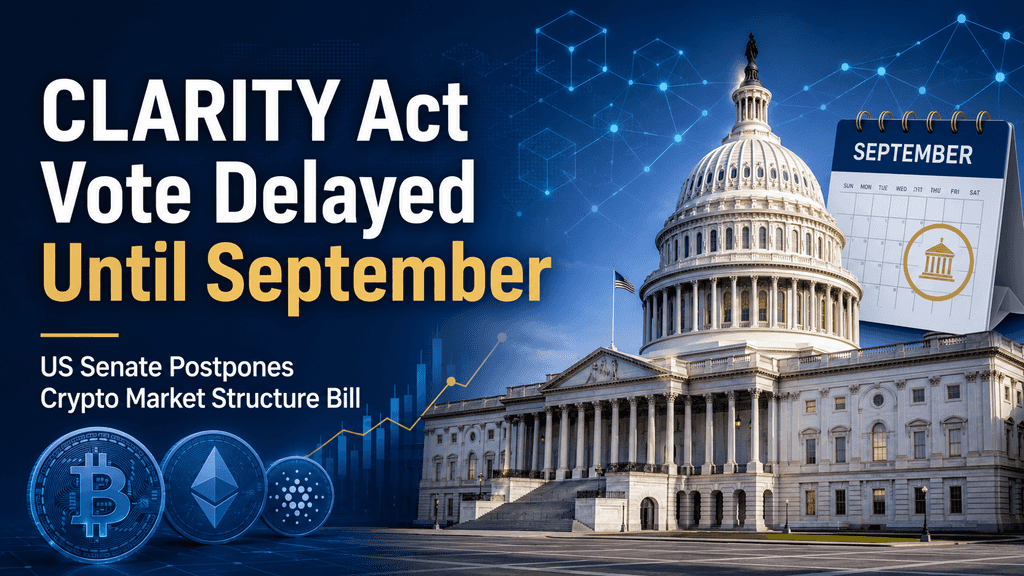
The CLARITY Act has become one of the most closely watched pieces of US crypto legislation in 2026 as lawmakers consider how digital asset markets should be regulated at the federal level. The Senate did not complete action on the crypto market structure bill before leaving for its August recess, shifting attention to September and raising new questions about whether lawmakers can build enough support to move H.R. 3633 forward. The next major step is scheduled for September 15, when senators are expected to consider cloture on the motion to proceed rather than hold a final vote on the bill itself.
The distinction matters for crypto companies, investors and financial institutions following the legislation. The CLARITY Act could influence how federal regulators oversee digital assets, how crypto businesses register and operate, and how areas such as stablecoin rewards, DeFi, token issuance and market compliance are treated under US law. With several legislative hurdles still remaining, the September Senate action will provide an important indication of whether comprehensive US crypto market structure legislation can continue advancing in 2026.
Why the CLARITY Act Senate Vote Was Delayed Until September
The US Senate did not complete a vote on the CLARITY Act before lawmakers left Washington for the August recess, pushing the next major procedural step into September. The delay reflected several unresolved issues rather than one single dispute. Senators were still negotiating parts of the crypto market structure bill involving stablecoin rewards, government ethics rules, illicit-finance safeguards and the broader division of regulatory responsibilities across the digital asset market. A crowded Senate calendar also limited the time available to reach an agreement before the recess. The postponement has extended uncertainty around one of the most closely watched US crypto regulation proposals of 2026, especially for exchanges, stablecoin issuers, DeFi platforms and other digital asset businesses seeking clearer federal rules.
The delay does not mean the CLARITY Act has been dropped. Before the Senate adjourned, Majority Leader John Thune filed cloture on the motion to proceed to H.R. 3633, keeping the legislation on a path toward further debate. The Senate is expected to return on September 14, while the cloture motion is scheduled to ripen on September 15. That vote would determine whether the Senate can move ahead with consideration of the bill, rather than serving as a final vote on passage. If the motion clears the required threshold, senators could still debate the legislation, propose amendments and hold additional votes before the CLARITY Act advances further.
Stablecoin Rewards, Ethics Rules and DeFi Oversight Remain Key Issues
Stablecoin rewards and government ethics provisions remain among the most important issues in the CLARITY Act negotiations. Banks and some lawmakers have raised concerns that crypto platforms could offer stablecoin rewards resembling interest-bearing deposits without being subject to the same regulatory framework as traditional banks. The latest Senate text attempts to distinguish passive yield earned simply for holding a payment stablecoin from rewards connected to activities such as payments, staking, liquidity provision or loyalty programmes. Lawmakers are also debating restrictions intended to prevent senior public officials and their families from financially benefiting from digital assets while in office. Other areas still under discussion include anti-money-laundering requirements, DeFi oversight and how provisions developed by the Senate Banking and Agriculture committees should work together. These unresolved questions help explain why the CLARITY Act Senate vote moved into September and could influence how quickly Congress can establish a broader US crypto market structure framework.
What the September 15 CLARITY Act Vote Means for US Crypto Regulation
The September 15 CLARITY Act vote could become one of the most important US crypto policy events of 2026 because it will test whether the Senate is ready to move forward with a broader federal framework for digital asset markets. The vote will not decide final passage, but it could determine whether lawmakers begin formal consideration of H.R. 3633 and move closer to resolving long-standing questions around crypto oversight, market registration, stablecoin activity and DeFi regulation. For exchanges, token issuers, investors and financial institutions, the outcome will provide a clearer signal of how much political support exists for comprehensive US crypto market structure legislation.
September 15 Is a Key Procedural Test for the CLARITY Act
The September 15 CLARITY Act vote will be an important procedural test for the future of the US crypto market structure bill. Senators are expected to vote on cloture for the motion to proceed to H.R. 3633, which means the immediate question is whether the Senate should formally begin considering the legislation. Because cloture on legislation generally requires 60 votes, the result could show whether the CLARITY Act has enough bipartisan support to move through one of its most difficult Senate hurdles. However, the September 15 vote should not be described as a final vote on passage. If cloture succeeds, senators could still debate the bill, propose amendments and hold additional votes before reaching a final decision, making the vote a major step in the legislative process rather than its conclusion.
The CLARITY Act Could Redefine SEC and CFTC Crypto Oversight
A major reason the CLARITY Act matters for US crypto regulation is its attempt to establish clearer boundaries between the Securities and Exchange Commission and the Commodity Futures Trading Commission. The bill seeks to create a more defined framework for determining when a digital asset falls under securities rules and when it should be treated as a digital commodity subject to CFTC oversight. That distinction could affect token issuers, crypto exchanges, brokers and other digital asset businesses that have faced years of uncertainty over which regulator has authority over specific activities. If the bill advances, Senate debate could shape future registration, disclosure and market-conduct requirements, while regulators would still need to develop detailed rules before the new framework could be fully implemented.
Exchanges, DeFi and Stablecoin Platforms Could Face Clearer Federal Rules
The wider impact of the CLARITY Act could extend across several major areas of the US digital asset market. Crypto exchanges and other intermediaries may face clearer registration, disclosure and compliance requirements, while parts of the DeFi sector could be affected by rules involving anti-money-laundering obligations, decentralisation standards and web-based interfaces. Stablecoin businesses are also watching the legislation closely because the Senate text addresses the difference between passive yield for simply holding a payment stablecoin and rewards tied to activities such as payments, staking, liquidity provision or loyalty programmes. The final wording could influence how crypto companies structure products and how traditional financial institutions compete with digital asset platforms, making the September 15 vote an important signal for the future direction of US crypto regulation.
What Happens Next for the CLARITY Act and the US Crypto Market Structure Bill
The next phase of the CLARITY Act will depend heavily on whether senators can turn procedural support into enough agreement to move the broader crypto market structure legislation through the chamber. The Senate is scheduled to return for regular business on September 14, while the cloture motion on the motion to proceed to H.R. 3633 is set to ripen at 2:15 p.m. on September 15. From there, the legislation could enter a more detailed period of Senate consideration in which lawmakers debate the text, negotiate changes and decide whether there is enough support for the bill to reach final passage.
Senate Debate and Amendments Could Reshape the CLARITY Act
If senators clear the procedural hurdle and agree to take up the CLARITY Act, attention will shift from simply getting the bill onto the floor to the details of the legislation itself. Senate rules allow lawmakers to consider amendments during the legislative process, meaning provisions in H.R. 3633 could still be revised before a final vote. That creates another important stage for negotiations over areas where lawmakers want different regulatory approaches. Changes made on the Senate floor could affect the political coalition supporting the bill, with some amendments potentially attracting additional votes while others could make final passage more difficult.
The amount of time required for this stage will also depend on how Senate leaders manage debate and whether lawmakers can reach agreements over amendments and voting procedures. Invoking cloture can limit further consideration of a matter, but it does not eliminate the broader legislative process or automatically produce final passage. As a result, even a successful September procedural vote would not guarantee that the CLARITY Act quickly clears the Senate. Investors and crypto businesses are likely to watch subsequent floor agreements, amendments and vote counts for stronger evidence of whether comprehensive US crypto market structure legislation has a realistic path forward in 2026.
Final Senate Passage Would Still Not Make the CLARITY Act Law
Even if the CLARITY Act eventually wins final Senate approval, additional steps could remain before the legislation reaches the president. Because the House previously passed H.R. 3633 and the Senate has developed its own approach to the legislation, any differences between the versions approved by the two chambers would ultimately need to be resolved. Under the US legislative process, the House and Senate must approve the same legislative text before a bill can be presented to the president. That means substantial Senate amendments could send the legislation back into another round of congressional consideration rather than directly to the White House.
The months after the September vote could therefore be just as important as the procedural vote itself. A Senate breakthrough would demonstrate meaningful momentum for a federal crypto market structure framework, but lawmakers would still need to maintain enough support through amendments, final passage and any effort to reconcile the legislation with the House. The Senate’s official August 7 record confirms that Majority Leader John Thune filed cloture on the motion to proceed to H.R. 3633 before the chamber adjourned, ensuring that the bill remains positioned for action when senators return. For the US crypto industry, the central question after September 15 will therefore shift from whether the CLARITY Act can reach the Senate floor to whether Congress can produce a final version capable of completing the legislative process.
|
KuCoin is celebrating its 9th anniversary with a special platform campaign filled with exclusive rewards, trading activities, and limited-time offers. Don’t miss the chance to participate and enjoy the benefits as the exchange marks nine years of growth and innovation. Visit the official campaign page now:
|

Conclusion
The delay of the CLARITY Act Senate vote until September keeps the future of US crypto market structure regulation unresolved, but the legislation remains active. The September 15 procedural vote will provide an important test of whether senators can assemble enough support to begin moving H.R. 3633 through the next stage of Senate consideration. A successful vote would strengthen the bill's momentum, although it would still leave debate, amendments and potentially difficult negotiations ahead.
For the US crypto industry, the larger issue is whether Congress can ultimately turn years of regulatory debate into a workable federal framework. The final shape of the CLARITY Act could have long-term implications for crypto exchanges, token issuers, stablecoin businesses, DeFi platforms and traditional financial institutions entering digital asset markets. September 15 will therefore be an important date to watch, but the path from a Senate procedural vote to a completed US crypto market structure law is likely to involve several more legislative steps.
FAQs
Is the CLARITY Act already law in the United States?
No. The CLARITY Act has not yet become US law. Although the House passed H.R. 3633 in 2025, the Senate must still complete its own consideration of the legislation. Any final version must be approved in identical form by both chambers before it can be sent to the president.
Why is the CLARITY Act important for crypto companies operating in the US?
The CLARITY Act could give crypto companies a more predictable federal framework for determining which regulator oversees particular assets and activities. Greater regulatory clarity could affect licensing decisions, product launches, compliance planning and where digital asset businesses choose to operate. However, much would still depend on the final Senate text and later rulemaking by federal regulators.
Could the Senate change the House-passed version of the CLARITY Act?
Yes. Senators can amend the legislation during consideration, meaning the Senate version could differ substantially from the bill previously approved by the House. If that happens, the two chambers would need to resolve those differences and approve the same final text before the legislation could move to the president.
Would the CLARITY Act immediately change crypto regulations if it passes?
Not necessarily. Even after enactment, many provisions could require federal agencies to develop detailed regulations, registration procedures, disclosure standards and compliance guidance. Crypto companies may therefore face a transition period before the new framework is fully operational.
Could the CLARITY Act affect crypto token launches in the United States?
Potentially. The Senate framework includes rules addressing digital asset offerings and certain qualifying crypto assets, which could create a more defined route for some token issuers to raise capital while meeting disclosure and eligibility requirements. The final impact would depend on how lawmakers define qualifying assets and how regulators implement those provisions.
What could the CLARITY Act mean for crypto investors?
For investors, clearer federal rules could make it easier to understand which regulatory protections apply when using exchanges or investing in certain digital assets. The legislation may also lead to more standardised disclosure requirements. However, regulatory clarity would not remove normal crypto risks such as price volatility, project failure, cybersecurity threats or liquidity problems.
Disclaimer: This article is for informational purposes only and does not constitute investment advice. Market forecasts, company plans and technology adoption may change, so readers should conduct their own research before making financial decisions.