

Anthropic on the US-China AI Race: Implications for Global AI and Crypto Markets
2026/05/18 07:11:48
Introduction
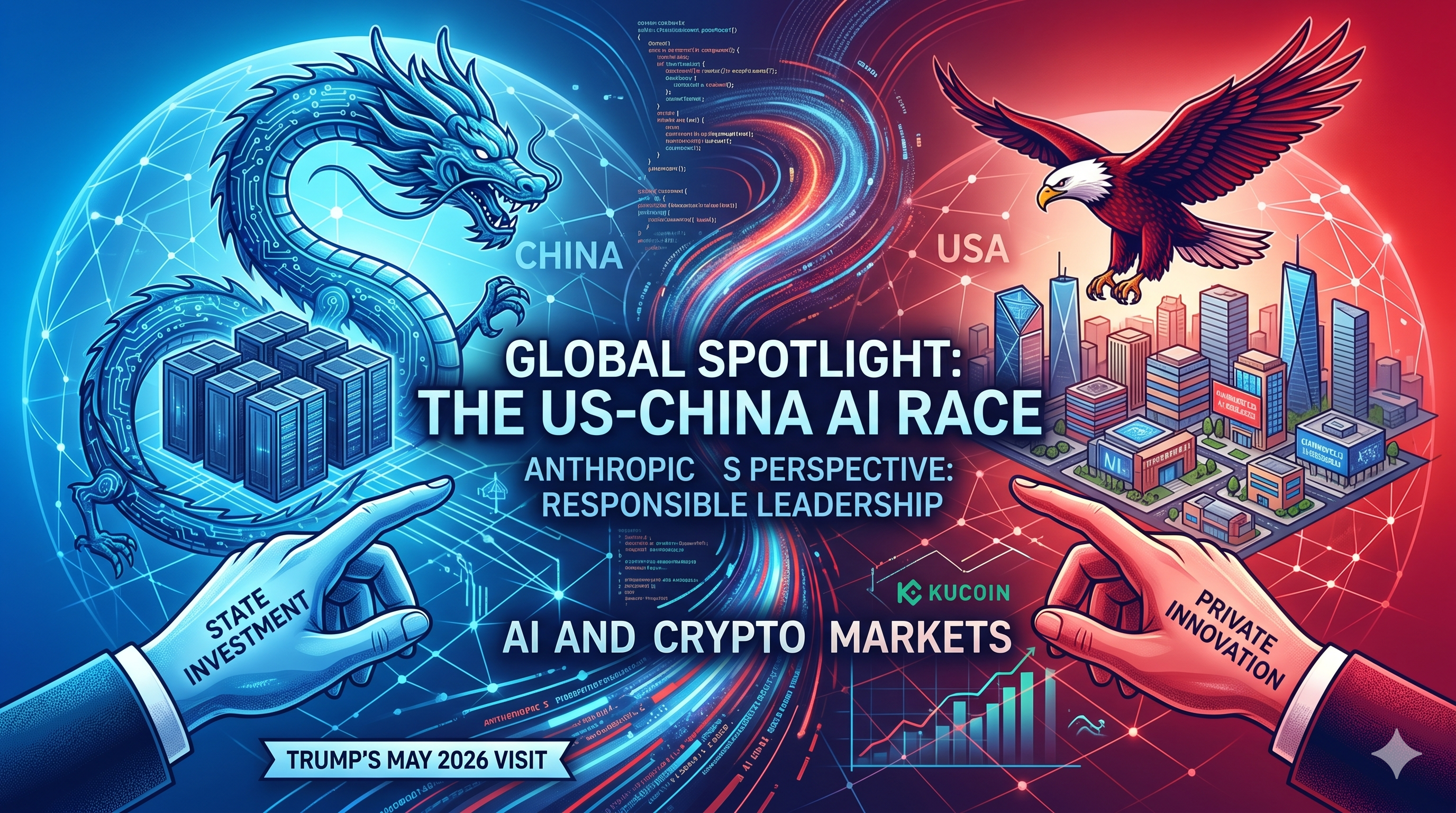
With Trump’s May 13, 2026 visit to China, the global spotlight is on the escalating US-China AI race. Governments and private firms alike are competing to dominate artificial intelligence technology, from large language models to autonomous systems. The competition is not just technical — it has far-reaching implications for economic growth, national security, and emerging markets such as cryptocurrency.
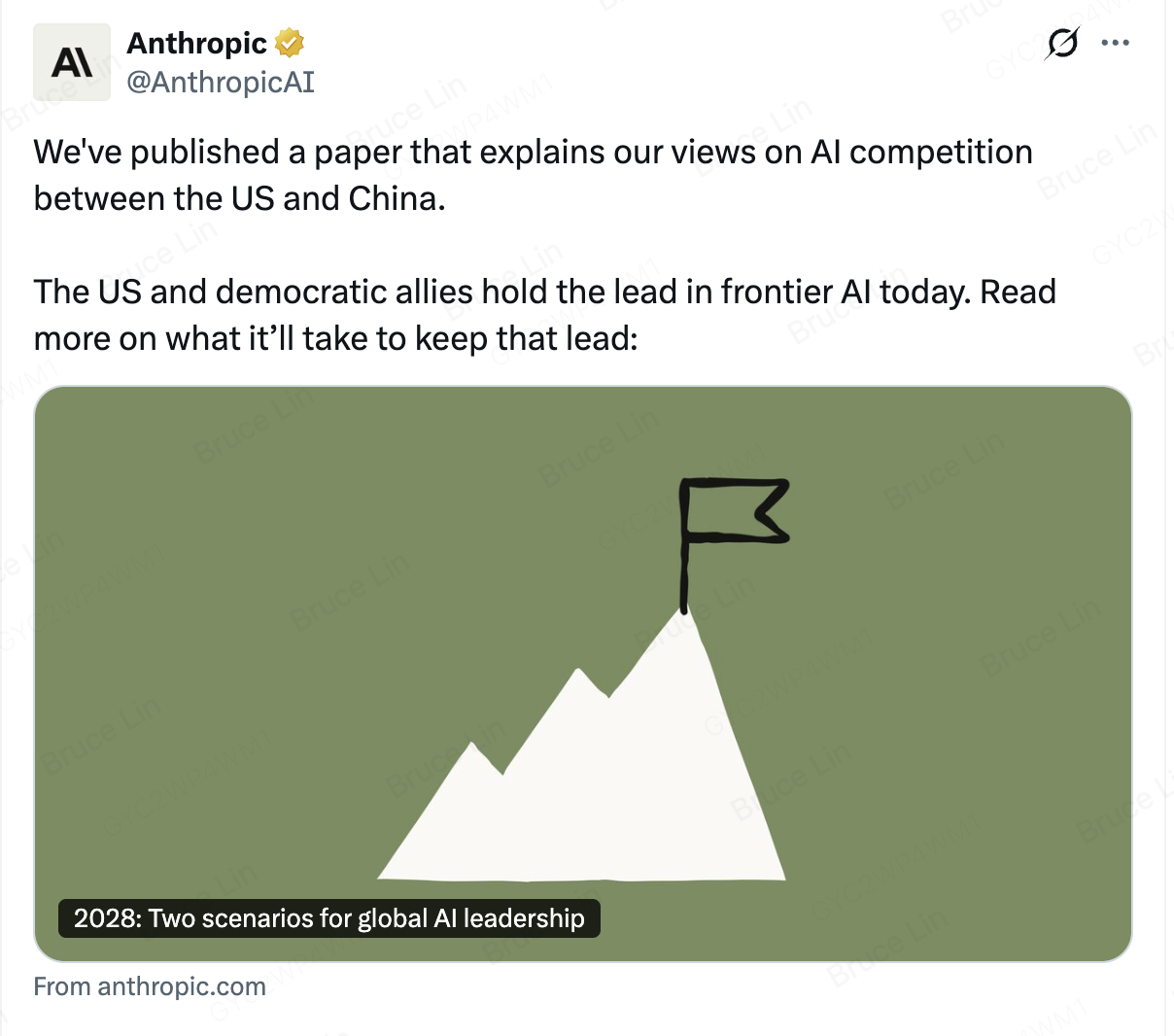
Anthropic, one of the leading AI companies, provides a unique perspective on this high-stakes technological competition. The company’s 2028 AI Leadership report outlines two possible future scenarios for AI development and emphasizes the critical role of responsible innovation. For investors and policymakers, understanding Anthropic’s insights is key. This article explores the US-China AI race, Anthropic’s strategic vision, and what it means for global AI markets, AI and crypto investments, and geopolitical dynamics.
Anthropic’s approach, combined with current events like:
-
Trump’s May 2026 China Visit, highlights how international relations shape technological leadership,
-
while Why Anthropic Is Worth $1.4 Trillion shows the company’s massive influence on the AI economy and investment opportunities.
What Is the US-China AI Race?
The US-China AI race is a competition to achieve global dominance in artificial intelligence technology. Both nations invest heavily in research, development, and deployment of AI systems that can impact industries ranging from finance to defense.
Historical Context of US-China Tech Competition
Tensions between the US and China over technology have grown since the early 2010s, with semiconductor supply chains, cybersecurity, and cloud computing as key battlegrounds. AI has become the latest frontier, with both countries aiming to set international standards and capture market share.
Key AI Capabilities in Focus
The race focuses on high-performance computing, large language models, autonomous vehicles, and AI-driven cybersecurity. The US leads in commercial AI applications and startup ecosystems, while China has made significant state-backed investments in AI talent and supercomputing infrastructure. According to a May 2026 report by the Center for AI Policy, China’s AI patent filings grew 38% year-over-year, while the US saw a 25% increase in the same period, highlighting the rapid acceleration in innovation.
Anthropic’s Perspective on AI Leadership
Anthropic emphasizes that the future of AI leadership depends on balancing rapid innovation with safety, ethics, and regulation. Their 2028 AI Leadership report outlines two potential scenarios for AI development, each with distinct global implications.
Scenario 1 — Competitive Acceleration
In the competitive acceleration scenario, countries and companies prioritize rapid AI development over safety and coordination. Geopolitical tension, particularly between the US and China, drives a technological arms race.
-
AI deployment focuses on maximizing short-term competitive advantage.
-
Regulatory frameworks lag behind innovation, increasing the risk of unsafe AI systems.
-
Investments surge in high-performance AI, LLMs, and automation.
The consequence is that while innovation accelerates, global AI risks rise. Anthropic warns that unchecked competitive acceleration could lead to unsafe AI applications, market volatility, and misaligned AI systems impacting industries like finance, cybersecurity, and autonomous transport.
Scenario 2 — Coordinated Safety Leadership
The second scenario emphasizes responsible AI leadership through international coordination and safety-focused innovation.
-
Governments and companies collaborate on AI standards, regulations, and ethical frameworks.
-
Investments prioritize interpretable, human-aligned AI systems.
-
Knowledge-sharing reduces redundant research and mitigates systemic risks.
This scenario reduces technological risk and promotes long-term stability in AI markets, but may slow the speed of competitive advantage. Anthropic argues that coordinated leadership is crucial for sustainable growth, stabilizing global markets, and creating more predictable conditions for AI and crypto investments.
Implications of Anthropic’s Scenarios
Anthropic stresses that both scenarios could unfold simultaneously in different regions. Strategic choices today will determine the balance between rapid innovation and responsible governance, shaping the trajectory of global AI markets, investments, and international technology policies.
How US-China Tensions Affect Global AI Markets
The ongoing geopolitical tension between the US and China has direct implications for global AI markets. Companies in both countries are racing to secure talent, patents, and AI infrastructure, impacting innovation cycles and investment flows.
Impacts on AI Funding and Venture Capital
Venture capital in AI startups has surged globally. According to PitchBook data from April 2026, global AI funding reached $38.7 billion in Q1 2026, up 42% year-over-year. The US remains a hub for AI startups, while China’s state-backed investments drive larger-scale, strategically aligned projects. These funding trends signal that investors see AI as a critical growth sector, but geopolitical tensions introduce risk premiums.
Effects on Cryptocurrency Markets
AI developments increasingly influence cryptocurrency markets. Algorithmic trading, AI-based analytics, and blockchain integration are reshaping crypto asset management. Market volatility often correlates with geopolitical news — for instance, following Trump’s May 13 China visit, Bitcoin and Ethereum saw temporary spikes due to investor speculation on AI-driven technological competitiveness. Anthropic notes that AI leadership can indirectly drive crypto adoption and DeFi innovations by improving predictive analytics and risk assessment tools.
Anthropic’s Role in Shaping the AI Arms Race
Anthropic positions itself as a leader advocating for safe and scalable AI development. By promoting responsible innovation, it influences both private sector strategies and international policy discussions.
Partnerships with US and International Firms
Anthropic collaborates with major tech companies and research institutions across the US, Europe, and Asia. These partnerships accelerate AI R&D while embedding safety protocols, ensuring that advancements are aligned with ethical standards.
Implications for AI Regulation and Export Controls
Anthropic’s perspective informs discussions on AI governance, export controls, and cross-border technology regulations. By promoting ethical frameworks, the company seeks to prevent hazardous competition that could destabilize markets, including AI-linked cryptocurrency investments.
Should You Invest in AI or Crypto Amid US-China Tensions?
Investing in AI or crypto in the context of the US-China AI race offers opportunities, but requires careful risk management.
-
Strategic Diversification: Spread investments across AI-focused companies, including Anthropic-backed ventures and crypto projects benefiting from AI integration.
-
Monitor Geopolitical Events: US-China relations, such as Trump’s May 2026 China visit, directly impact market volatility.
-
Leverage KuCoin Trading Tools: KuCoin provides access to AI-driven token analytics, futures trading, and diversified crypto portfolios, allowing investors to capitalize on emerging trends while managing risk.
Investors should focus on long-term growth trends in AI and blockchain sectors while avoiding speculative overexposure during periods of heightened geopolitical tension.
Conclusion
The US-China AI race is a defining technological and geopolitical contest of the 2020s, shaping global innovation, investment patterns, and market stability. Anthropic’s 2028 AI Leadership report outlines two potential futures: competitive acceleration and coordinated safety leadership. Both scenarios offer distinct risks and opportunities, emphasizing the importance of ethical, regulated, and strategically managed AI development.
For investors and policymakers, Anthropic’s insights highlight how AI leadership, market strategies, and international relations intersect. US-China tensions, current events like Trump’s May 2026 China visit, and Anthropic’s positioning underscore the interconnectedness of AI, crypto, and global economic trends. Understanding these dynamics is essential for navigating the AI arms race, assessing market volatility, and identifying growth opportunities in emerging sectors.
By following responsible investment strategies and leveraging platforms like KuCoin, market participants can benefit from the transformative potential of AI while mitigating systemic risks. Anthropic’s approach illustrates that leadership in AI is not only about technological capability but also about strategic foresight and global cooperation.
FAQs
-
How does Anthropic evaluate AI risk in global markets? Anthropic assesses risk based on alignment, interpretability, and safety of AI systems, emphasizing scenarios that balance innovation with responsible deployment.
-
Will the US-China AI race affect cryptocurrency prices? Yes. AI developments influence crypto markets through algorithmic trading, predictive analytics, and investor sentiment tied to geopolitical events.
-
What makes Anthropic’s AI approach unique? Anthropic combines cutting-edge AI research with a strong focus on ethics, safety, and policy guidance, positioning it as a responsible industry leader.
-
How does Trump’s China visit influence tech markets? Diplomatic engagements like Trump’s May 2026 visit affect investor confidence, regulatory outlook, and cross-border technology trade, impacting both AI and crypto markets.
-
Can investors benefit from AI-related crypto projects? Yes. Crypto projects leveraging AI for predictive analytics, trading algorithms, or blockchain integration can offer growth opportunities, especially on platforms like KuCoin.