

Why Russian Non-Financial Enterprises Saw Foreign Currency Demand Surge 37.7% to 1.5 Trillion Rubles in September 2026
Introduction
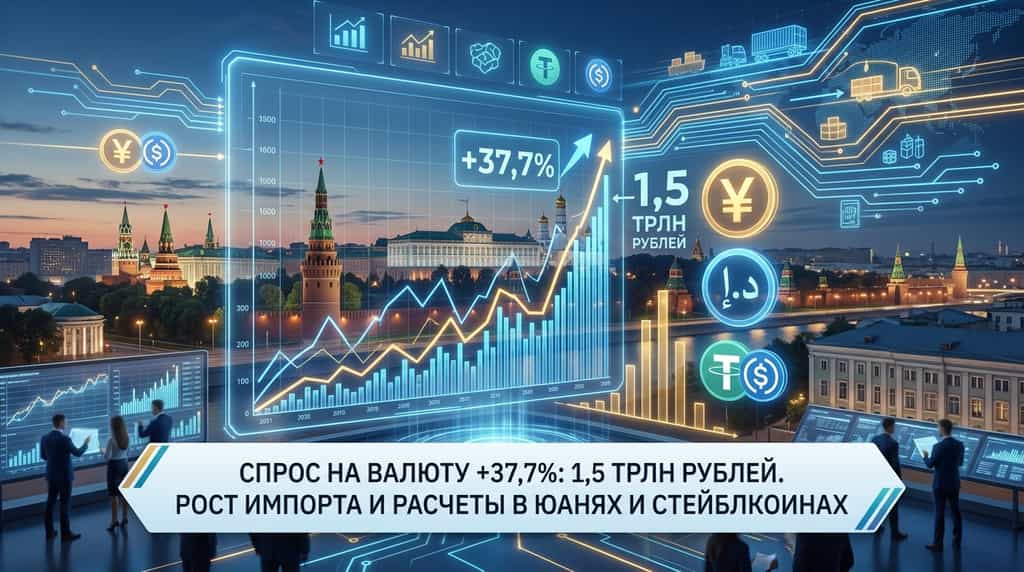
In September 2026, Russian non-financial enterprises purchased 1.5 trillion rubles ($16.2 billion equivalent) in foreign currency—marking a sharp 37.7% month-over-month surge from August levels. Driven by seasonal import settlement deadlines, supply chain realignments toward Asian corridors, and corporate balance sheet hedging against ruble volatility, this capital reallocation highlights how businesses in emerging markets manage sovereign FX exposures. Understanding these cross-border capital dynamics is crucial for digital asset traders navigating international liquidity shifts, macro currency risks, and alternative cross-border payment mechanisms.
What Caused the 37.7% Demand Surge in Foreign Currency Among Russian Enterprises in September 2026?
Seasonal import purchasing schedules, cross-border payment restructuring, and corporate currency hedging directly triggered the 37.7% month-over-month increase in corporate FX purchases to 1.5 trillion rubles in September 2026. Russian corporate treasuries intensified foreign exchange acquisitions to meet third-quarter trade commitments, settle cross-border supply contracts, and secure operational reserves in non-Western foreign currencies such as the Chinese Yuan (CNY) and UAE Dirham (AED).
Seasonal Quarter-End Trade Obligations and Import Prepayments
Quarter-end commercial obligations historically create concentrated seasonal demand for foreign currencies among non-financial corporations. Based on balance of payments monitoring from regional central banks and international trade tracking agencies in October 2026, corporate buyers systematically buy foreign exchange toward the close of Q3 to fulfill advance payment clauses in manufacturing, machinery, and consumer goods contracts.
Industrial enterprises operating across energy, technology, and manufacturing sectors faced dual pressures in September 2026: replenishing winter inventories and settling supply contracts established earlier in the year. The concentration of these contract obligations within a single month generated an unprecedented demand spike on domestic currency exchanges, forcing corporate treasurers to absorb available FX liquidity.
Supply Chain Settlement Realignment Toward Asian Currency Corridors
The ongoing structural pivot toward Eastern trade partners has concentrated foreign currency demand within specific non-Western fiat assets, particularly the Chinese Yuan. According to foreign exchange turnover metrics published by specialized financial data providers in October 2026, the Chinese Yuan accounted for over 40% of total exchange-traded FX volume in Moscow during September 2026.
As traditional Western banking channels remain restricted, non-financial firms must hold larger operational balances in regional currencies to avoid settlement delays. Russian import-export businesses have adapted by establishing multi-currency treasury operations, using Asian financial centers to facilitate international trade, which inherently elevates ongoing demand for foreign currency liquidity.
How Does Foreign Currency Allocation Impact the Stability of the Russian Ruble?
Excess corporate demand for foreign currency directly weakens local exchange rates by absorbing domestic fiat liquidity and reducing available foreign currency reserves on local markets. When non-financial companies purchased 1.5 trillion rubles worth of foreign currency in September 2026, the temporary imbalance between foreign currency buyers and sellers exerted downward pressure on the ruble's purchasing power across spot currency pairs.
Exchange Rate Volatility and Corporate Hedging Dynamics
Corporate currency buying sprees increase short-term exchange rate volatility across both spot and derivative markets. According to foreign exchange trading figures reported by central monetary data repositories in October 2026, peak corporate buying in late September caused short-term exchange rate fluctuations of up to 2.5% in the RUB/CNY and RUB/USD currency pairs over single trading sessions.
To defend against further ruble depreciation, non-financial enterprises engage in proactive currency hedging. By converting excess ruble cash reserves into foreign currencies or stable digital assets, corporate treasuries attempt to lock in exchange rates for future international obligations. However, this collective hedging behavior creates a self-reinforcing cycle, driving corporate FX demand higher and putting further pressure on the local currency.
| Currency Driver | Market Impact on Ruble Liquidity | Corporate Strategic Response |
| Import Settlement | Absorbs local spot FX liquidity | Pre-purchasing foreign currency |
| Quarter-End Debt Servicing | Creates short-term liquidity bottlenecks | Cash-flow matching via foreign accounts |
| Inflationary Expectations | Weakens domestic purchasing power | Diversifying into hard assets & crypto |
| Capital Outflow Constraints | Restricts cross-border fiat banking | Utilizing digital assets and stablecoins |
Strict international banking regulations and correspondent banking constraints have forced Russian non-financial firms to adopt alternative payment networks, secondary currency hubs, and decentralized financial tools to conduct international commerce. Traditional SWIFT transfers face frequent compliance holds, leading corporate treasuries to diversify their payment infrastructure beyond conventional fiat channels.
Transitioning to Non-Western Fiat and Intermediary Financial Hubs
To bypass Western clearing networks, companies rely heavily on financial intermediaries operating within neutral jurisdiction hubs, including the UAE, Kazakhstan, and Turkey. According to global trade finance reports published by international commerce organizations in October 2026, cross-border corporate settlements routed through intermediary trade hubs grew by more than 18% quarter-over-quarter in Q3 2026.
While these alternative fiat channels allow cross-border transactions to proceed, they often incur higher intermediary fees, FX conversion spreads, and administrative delays. As a result, corporate treasuries must buy larger volumes of foreign currency in advance to account for transaction friction and floating exchange rates.
The Emerging Role of Digital Assets and Crypto Infrastructure in Corporate Settlements
Faced with fiat settlement delays, corporate treasurers increasingly view blockchain technology and cryptocurrencies as viable tools for fast, borderless liquidity management. According to cryptocurrency market data compiled by CoinGecko in October 2026, global stablecoin transaction volume reached $1.2 trillion in Q3 2026, driven in part by international trade settlement adoption in emerging and restricted markets.
Digital assets offer several structural advantages for cross-border corporate liquidity:
-
Settlement Speed: Transfers execute in minutes on public blockchains, eliminating days-long correspondent banking holds.
-
Constant Availability: Blockchain networks operate 24/7/365, bypassing traditional bank cut-off times and holiday schedules.
-
Reduced Intermediary Costs: Direct wallet-to-wallet transfers remove third-party intermediary bank fees.
Why Is Institutional and Corporate Interest Moving Toward Stablecoins and Digital Assets?
Corporate treasuries operating in high-volatility FX environments adopt stablecoins and digital assets to maintain stable purchasing power, reduce FX conversion costs, and secure instant cross-border settlement channels. As global regulatory frameworks around digital finance mature, stablecoins have evolved from speculative trading instruments into essential cash management tools for international commerce.
Stablecoins as a Hedge Against Local Fiat Depreciation
When local currencies experience sharp depreciation, stablecoins pegged to major global reserve currencies provide non-financial enterprises with an accessible store of value. Data from major crypto market intelligence platforms in October 2026 shows that corporate addresses holding dollar-pegged stablecoins expanded significantly during Q3 2026, reflecting broader institutional adoption for inflation hedging.
By holding digital assets on secure crypto trading platforms, companies preserve their purchasing power without needing direct access to Western correspondent banks. These digital reserves can be converted into local fiat or alternative foreign currencies as needed to fulfill supply chain obligations.
What Does Increased FX Volatility Mean for Crypto Market Liquidity and Trader Strategy?
Spikes in global FX volatility and corporate currency demand consistently drive increased trading activity across cryptocurrency spot and derivative markets. As capital seeks efficient, borderless liquidity outlets, crypto markets serve as vital venues for price discovery, risk hedging, and yield generation.
Increased Demand for Spot and Derivatives Liquidity
Volatile currency markets prompt institutional investors, market makers, and retail traders to rebalance their crypto portfolios. According to derivatives market metrics reported by CoinMarketCap in October 2026, global crypto open interest across major futures contracts reached $48.5 billion in September 2026, reflecting heightened positioning during periods of global macro uncertainty.
Traders utilize crypto derivatives, such as USDT-margined perpetual futures—to hedge against fiat currency fluctuations, capture arbitrage opportunities between regional fiat rates, and gain exposure to leading digital assets like Bitcoin (BTC) and Ethereum (ETH).
Crypto Arbitrage and Cross-Border Liquidity Pools
Large-scale corporate demand for foreign currencies creates temporary pricing discrepancies across global fiat-to-crypto order books. Arbitrage traders capitalize on these rate differences by buying digital assets in lower-priced fiat markets and selling them into high-demand fiat markets, helping to restore price equilibrium across international exchange platforms.
This continuous arbitrage activity enhances overall market efficiency, deepens liquidity pools, and ensures robust trading volume across major stablecoin pairs (e.g., USDT/TRY, USDT/BRL, USDT/EUR).
Beyond the Headlines: What KuCoin 5.0 Means for You
Market news moves fast — but where you act on it matters just as much. This October, KuCoin launches KuCoin 5.0, transforming KuCoin into a rebuilt platform. Here's what actually changes for you:
-
One account for everything. Older platforms split your money across separate "spot," "margin," and "futures" accounts and expected you to understand why. KuCoin 5.0's unified account removes that entirely — deposit once, and everything is simply there (only available to VIPs for now).
-
Stocks, indices, and commodities. KuCoin 5.0 expands beyond crypto into global markets. When crypto chops sideways and equities rally (or the reverse), you rotate in minutes instead of opening a brokerage account and waiting days for fiat rails.
-
Real-world assets (RWA). Tokenized exposure to traditional assets like commodities, right inside your crypto account. One of the fastest-growing segments in global finance is no longer reserved for institutions — you access it from the same balance you trade with.
-
Earn while you learn. Not ready to trade? KCUSD lets your stablecoins earn daily, auto-compounding interest. The lowest-stress way to put your idle deposit to work for 4% yield.
-
An AI assistant in plain language. Ask questions, get market context, understand what you're looking at — built into the platform, no jargon required.
-
An app that doesn't overwhelm. Faster, cleaner, and consistent — intuitive from the first tap, not after a tutorial.
-
Safety you can check, not just trust. A MiCAR-licensed EU entity, Proof of Reserves you can verify yourself, and internationally certified security (SOC 2 Type II, ISO 27001:2022).
Create your account in minutes — and start on the platform built for where crypto is going, not where it's been.
Conclusion
The 37.7% surge in foreign currency demand among Russian non-financial enterprises to 1.5 trillion rubles in September 2026 highlights the ongoing challenges businesses face in managing fiat liquidity amidst shifting trade corridors and currency volatility. Driven by quarter-end trade obligations, supply chain realignments toward Asian markets, and proactive corporate hedging, this capital movement underscores the crucial role of efficient FX management in international commerce.
As corporate treasuries and traders adapt to complex global banking environments, digital assets and stablecoins have emerged as vital infrastructure for fast, transparent, and low-cost cross-border liquidity. Cryptocurrencies provide a borderless alternative to traditional correspondent banking networks, offering 24/7 settlement and protecting capital against localized fiat depreciation.
Whether you are an institutional investor managing currency risk or an individual trader seeking to capitalize on global macro trends, KuCoin offers the security, deep liquidity, and advanced trading tools necessary to navigate volatile financial markets. Register on KuCoin today to explore a full suite of digital asset products and secure your financial strategy against global currency shifts.
Frequently Asked Questions (FAQs)
Why did Russian non-financial companies buy 1.5 trillion rubles of foreign currency in September 2026?
Russian non-financial companies purchased 1.5 trillion rubles in foreign currency in September 2026 due to a combination of quarter-end import settlement obligations, advance payments for foreign equipment and raw materials, and corporate treasury hedging against ruble volatility.
How does high corporate FX demand impact the value of the local currency?
High corporate FX demand weakens the local currency by creating a supply-demand imbalance where buyers absorb available foreign currency liquidity, putting downward pressure on spot exchange rates and increasing exchange rate volatility.
What foreign currencies are most in demand among Russian corporations?
The Chinese Yuan (CNY) is the most in-demand foreign currency among Russian corporations, accounting for over 40% of exchange-traded foreign currency volume due to expanding trade ties with Asian partners and restricted access to Western banking networks.
How do stablecoins assist companies with cross-border payments?
Stablecoins enable instant, 24/7 cross-border settlements on public blockchains, bypassing traditional correspondent banking delays, reducing intermediary transfer fees, and offering protection against local currency depreciation.
How can traders use KuCoin to hedge against currency volatility?
Traders can hedge currency volatility on KuCoin by converting local fiat or volatile assets into major dollar-pegged stablecoins like USDT or USDC, trading crypto futures contracts to hedge portfolio downside risk, or utilizing yield-generating products like KuCoin Earn to generate passive income on digital asset holdings.
Disclaimer
This article is for informational purposes only and does not constitute financial, legal, or investment advice. Always conduct your own research before interacting with digital assets.