

What Is SN24 (Omega Labs): The Largest Decentralized Multimodal Dataset in the Bittensor Ecosystem
2026/04/21 10:54:02
Introduction
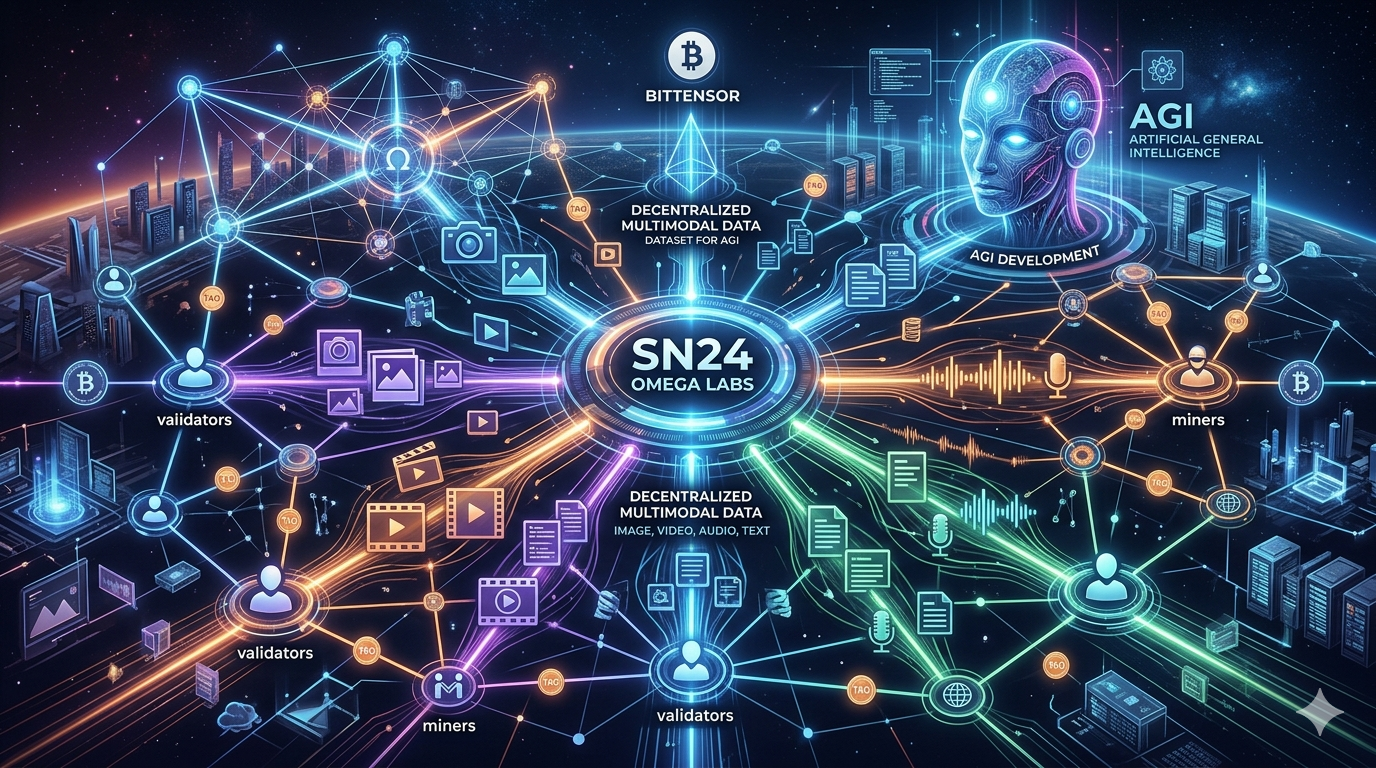
When Bittensor launched its 24th subnet (SN24) in early 2025, the project’s ambition was immediately clear: create the world’s largest decentralized multimodal dataset to accelerate the development of Artificial General Intelligence (AGI).
This is not just another blockchain subnet - it represents a fundamental shift in how AI training data can be collected, verified, and monetized. While traditional AI development relies on centralized data collection by large corporations, OMEGA Labs (SN24) is building a decentralized alternative where data contributors are rewarded for sharing images, videos, audio, and text. The question now is whether this approach can achieve the scale necessary to challenge centralized AI giants. With over 128 active subnets in the Bittensor ecosystem as of 2026, SN24 stands out as one of the most ambitious data infrastructure projects in the decentralized AI movement.
What Is Bittensor? Understanding the Decentralized AI Infrastructure
Bittensor is a decentralized blockchain network designed to create a marketplace for machine intelligence. Unlike traditional AI development, which is dominated by centralized tech giants, Bittensor operates as a peer-to-peer network where AI models compete to provide the best responses to queries, with contributors earning TAO tokens for their work.
The network functions through a dual-token system. The foundational token is TAO, which mirrors Bitcoin’s supply mechanics with a fixed maximum supply of 21 million tokens and a halving mechanism occurring approximately every four years. As of April 2026, the circulating supply stands at approximately 10.86 million TAO, with block rewards starting at 0.5 TAO and decreasing at each halvening event.
The second component is dynamic TAO (dTAO), introduced in February 2025. This innovation transformed each subnet into its own automated market maker with a natively assigned token. When dTAO launched, each subnet gained its own token that trades against TAO, creating liquid markets for subnet participation. This structural change revolutionized how subnets attract miners and validators, as token-based incentives now provide direct economic upside for contributors.
How Bittensor Subnets Work: The Modular AI Economy
Bittensor operates as a modular ecosystem where each subnet functions as a specialized AI marketplace. The network supports 128 or more active subnets, each focused on different AI use cases - from language models to compute resources to data generation.
The subnet architecture works through three primary participant roles. Validators stake TAO to verify the quality of AI responses provided by miners. Miners run AI models and supply computational resources to the network, earning TAO for serving queries. Delegators stake TAO to trusted validators, earning a share of validator emissions without running their own infrastructure.
This crypto-economic design creates powerful incentives for quality and competition. Subnets that deliver valuable AI services attract more queries, which generates more rewards for miners, which attracts more participation. The market mechanism self-regulates through the TAO token, allocating resources to the most valuable AI applications.
The introduction of dTAO added another layer to this economy. Each subnet now has its own token that can appreciate based on the subnet’s success. This creates asymmetric opportunities - early participants in successful subnets can benefit from token appreciation alongside the underlying AI service rewards.
What Is SN24 (Omega Labs)? The Decentralized Multimodal Data Initiative
Subnet 24, known as OMEGA Labs, represents one of the most ambitious data infrastructure projects in the Bittensor ecosystem. The subnet’s mission is straightforward but sweeping: create the world’s largest decentralized multimodal dataset to accelerate AGI development.
Multimodal data refers to collections that include multiple data types - images, videos, audio, and text. Traditional AI training requires massive amounts of this data, but current collection methods are centralized and often contentious regarding consent and compensation. OMEGA Labs proposes a decentralized alternative where data contributors are directly rewarded for their contributions.
The project operates on a simple principle. Data contributors upload multimodal content to the network. The subnet’s AI systems verify and validate the data quality. Contributors receive compensation in TAO or subnet tokens based on the quality and rarity of their contributions. This creates sustainable economics for data generation that don’t rely on corporate funding.
The roadmap for OMEGA Labs extends through 2026 with multiple phases. Phase 1 (Q4 2025) established the subnet and core features. Subsequent phases will build new capabilities for data processing, verification, and monetization. The long-term vision positions SN24 as critical infrastructure for decentralized AI development.
The Relationship Between SN24 and the Broader TAO Ecosystem
SN24 exists within the Bittensor ecosystem but serves a distinct function. While many subnets focus on providing AI inference or compute, SN24 focuses on data infrastructure - the foundational layer that enables AI models to exist.
Within the broader Bittensor architecture, subnets are organized by numerical identifier, with lower numbers representing earlier launches and higher numbers representing more recent additions. SN24 occupies a specific niche - it is one of the few subnets dedicated exclusively to data collection and verification rather than inference or computation.
The relationship between subnet tokens and TAO evolved significantly with dTAO. Under the original design, Bittensor subnets rewarded participants solely in TAO. The dTAO upgrade in February 2025 changed this fundamental dynamic. Each subnet now has its own token that trades against TAO in automated market makers. This means SN24 has its own subnet token that maintains a trading pair with TAO.
This structural change creates several important implications. First, the subnet token provides direct market-based valuation for the subnet’s services. As demand for SN24’s data increases, the token should theoretically appreciate. Second, subnet participants now have two sources of potential return: TAO emissions and subnet token appreciation. Third, the token creates liquid exit opportunities for contributors who want to realize their positions.
The broader ecosystem supports SN24 through Bittensor’s integrated infrastructure. Data from SN24 can theoretically feed into other subnets - language models, compute networks, and inference providers can all benefit from the multimodal dataset. This creates network effects where SN24’s success amplifies the entire ecosystem. Conversely, if other subnets grow rapidly, demand for training data increases, benefiting SN24.
From an investment perspective, SN24 represents a pure-play on decentralized AI data infrastructure. While TAO captures value from the entire Bittensor ecosystem through its role as the settlement token, SN24 specifically benefits from demand for decentralized multimodal training data. The subnet’s token provides direct exposure to this emerging market.
Understanding this relationship is crucial for Bittensor ecosystem investors. Those bullish on Bittensor as a whole might prefer holding TAO for diversified exposure. Those specifically bullish on the data infrastructure thesis might consider SN24 for concentrated exposure with higher risk and potentially higher return.
How to Trade TAO on KuCoin
Step 1: Create Your KuCoin Account
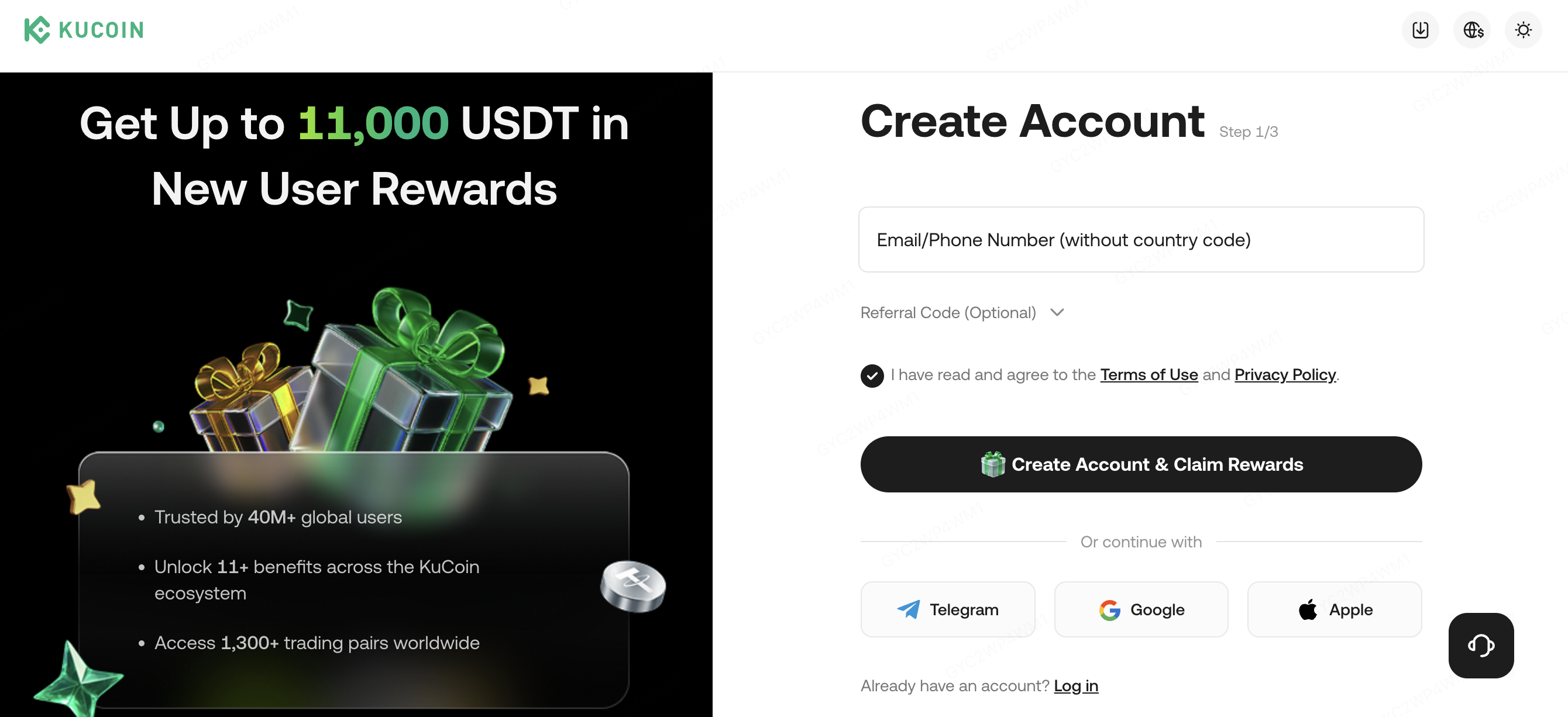
If you are ready to trade TAO, the first step is creating your KuCoin account. New users can register at KuCoin and Get Up to 11,000 USDT in New User Rewards - a substantial bonus that can boost your initial trading capital. Simply visit the KuCoin website or download the app, complete the registration process with your email or phone number, and verify your identity to unlock these rewards. The registration process takes just a few minutes, and the welcome bonus provides an excellent starting point for exploring TAO trading opportunities.
Step 2: Execute Your Trade
Once your account is set up, search for “TAO/USDT” in KuCoin’s trading interface. TAO offers strong liquidity for most position sizes. During periods of high volatility, consider using limit orders rather than market orders to manage slippage. Evaluate your entry point based on current market conditions and your risk tolerance before executing the trade.
Step 3: Position Management
Given the volatility inherent in AI crypto assets, establish clear profit targets and stop-loss levels before entering a position. The Bittensor ecosystem continues evolving rapidly, with new subnet launches and ecosystem developments occurring regularly. Monitor Bittensor documentation, subnet launches, and broader AI market sentiment. Adjust your position size based on ongoing risk assessment rather than emotional responses to price movements.
Conclusion
SN24 (Omega Labs) represents a critical experiment in decentralized AI infrastructure. By creating the world’s largest decentralized multimodal dataset, the project addresses one of the most significant bottlenecks in AI development - access to diverse, high-quality training data. Within the Bittensor ecosystem, SN24 serves a distinct infrastructure role that could benefit from broader AI demand.
The relationship between SN24 and TAO reflects the modular nature of Bittensor’s design. TAO provides broad ecosystem exposure, while SN24 offers targeted data infrastructure exposure. Both depend on the success of decentralized AI as a whole, but with different risk and return profiles.
The 2026 roadmap for SN24 provides clear milestones for evaluation. Success will ultimately be measured by the size and quality of the dataset, integration with other subnets, and adoption by AI developers. The thesis is compelling, but execution risk remains significant.
FAQs
Q: What is SN24 in the Bittensor ecosystem?
A: SN24 is Subnet 24, also known as OMEGA Labs. It is an initiative focused on creating the world’s largest decentralized multimodal dataset to advance AGI research. The subnet rewards contributors for sharing images, videos, audio, and text data.
Q: How does SN24 differ from other Bittensor subnets?
A: While many subnets focus on AI inference or compute, SN24 focuses specifically on data infrastructure. It addresses the data collection bottleneck that limits AI development, making it a foundational layer within the ecosystem.
Q: What is the relationship between SN24 and TAO?
A: TAO is the foundational token of the Bittensor network. SN24 is one subnet within the ecosystem, with its own subnet token that trades against TAO. SN24 contributes to the broader ecosystem by providing data infrastructure.
Q: When did SN24 launch?
A: SN24 launched in early 2025 alongside the dTAO implementation. The project has a multi-phase roadmap extending through 2026.
Q: How does data contribution work on SN24?
A: Data contributors upload multimodal content to the SN24 network. The subnet’s AI systems verify and validate data quality. Contributors receive compensation in TAO or subnet tokens based on the quality and rarity of their contributions.